 Chuckanut
 Why Larrabee's Exposure Is Hard on Windows
Homes along the Chuckanut Drive corridor and the Larrabee area sit right where Whatcom County's marine climate does its worst work. You've got salt-laden air coming off Samish and Bellingham Bay, wind that funnels along the bluffs, driving rain that hits window walls at an angle instead of falling straight down, and a wet season that stretches long enough to grow moss on anything that stays damp. None of that is unusual for western Washington, but the combination is harder on windows here than in a more sheltered inland neighborhood.
Salt air accelerates corrosion on hardware, fasteners, and metal cladding faster than people expect. Driving rain finds gaps that would never leak in a calmer climate, because wind pressure pushes water sideways and upward into places gravity alone wouldn't reach. And a long moss season means anything with a horizontal surface or a shaded, damp corner becomes a place for organic growth to take hold if it isn't detailed to shed water and dry out.
None of this means custom windows are a luxury here — it means the details of material, glazing, and installation matter more in Larrabee than they would somewhere drier and calmer.
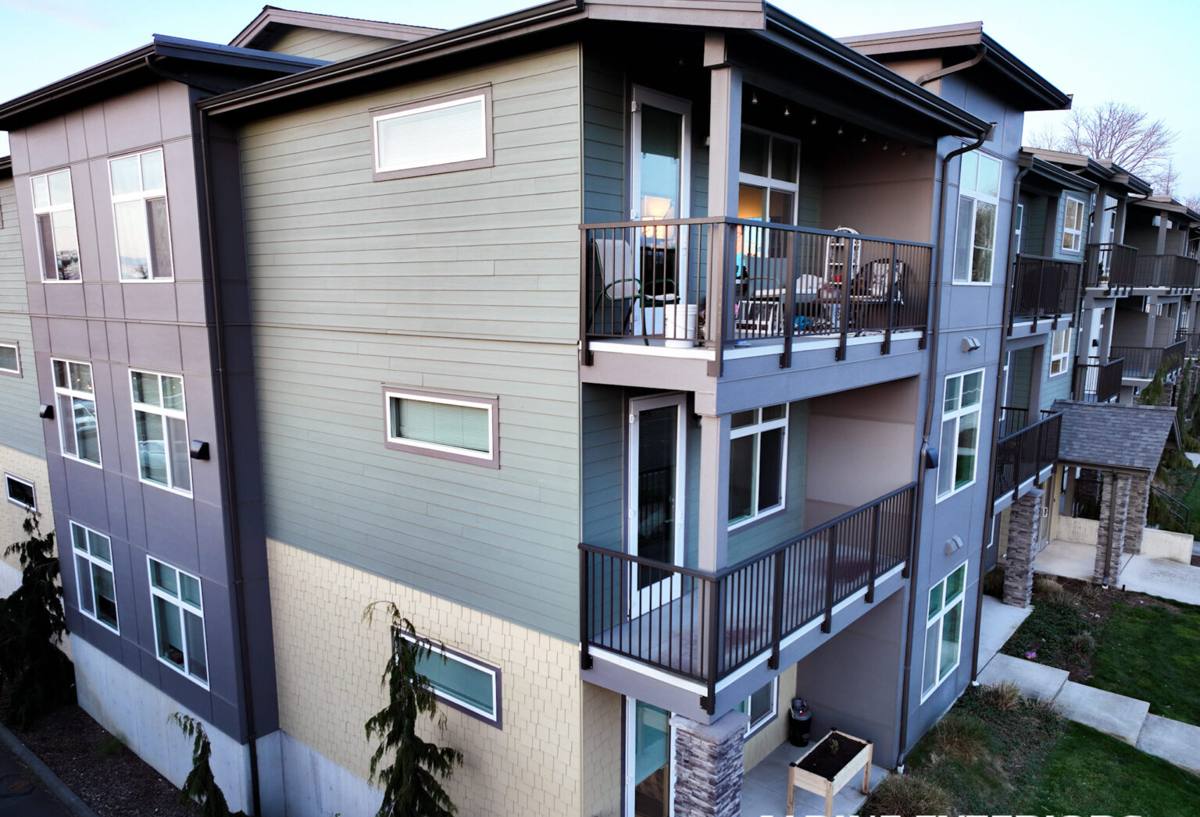
What "Custom" Actually Means for This Job
Custom doesn't necessarily mean unusual shapes or high-end finishes, though we do those too. Most of the time it means the window is built to the actual opening in your house rather than forcing your house to fit a stock size. That distinction matters a lot on older homes in this area, where framing has settled or shifted over the decades and openings are rarely perfectly square anymore.
- Exact measurement of each opening, including any out-of-square or out-of-level conditions
- Frame and sash sizing that accounts for the existing rough opening rather than requiring you to rebuild it
- Matching sightlines and trim profiles so new windows don't look like a patch job next to originals you're keeping
- Glass and hardware specified for the exposure that specific wall faces — a window on the weather side of the house needs different attention than one tucked under an eave
A true custom order also lets us address problem openings directly instead of working around them. If a window has been letting water in for years because of poor flashing, replacing it with a custom unit is the chance to fix the opening itself, not just swap the glass.
Frame Material Options for This Climate
What we weigh for coastal, high-moisture conditions
There's no single "best" window material for every home — it depends on your budget, the home's age and style, and how much maintenance you're willing to do. Here's how the common options compare for a Larrabee-area home dealing with salt air and heavy rain.
| Material | Moisture & salt resistance | Maintenance | Typical fit |
|---|---|---|---|
| Vinyl | Good — won't corrode or rot, seams are the main watch point | Low; occasional cleaning | Most homes, best value |
| Fiberglass | Very good — dimensionally stable, resists swelling and corrosion | Low | Higher-exposure walls, larger openings |
| Wood-clad | Depends heavily on cladding quality and installation detail | Higher — interior wood still needs upkeep | Homes prioritizing a traditional wood interior look |
| Aluminum | Poor without thermal breaks; prone to condensation and corrosion near salt air | Moderate | We generally steer clients away from bare aluminum in this exposure |
We don't push one brand or material on every job. What we push is honesty about trade-offs: wood-clad windows can look beautiful, but if the cladding or the joint between cladding and frame isn't detailed well, this climate will find the weakness. Vinyl and fiberglass hold up with less fuss, which is why they're what we recommend most often for the exposed sides of homes out this way.
Glass and Weatherproofing for Salt Air and Driving Rain
The glass package matters as much as the frame. For this area, we typically talk clients through:
- Low-E coatings to cut heat loss and reduce UV fading on interior floors and furniture
- Argon or krypton gas fill between panes for better insulation without added thickness
- Warm-edge spacers that reduce condensation risk at the glass edge — a real issue in a climate this humid
- Corrosion-resistant hardware — stainless or coated fasteners and hinges instead of standard steel, given the salt content in the air
Weatherproofing around the window is just as important as the unit itself. Driving rain pushed by wind off the water doesn't just test the window — it tests the flashing, the sill pan, and the sealant joints around the frame. A window can be top-quality and still leak if the opening underneath it wasn't detailed to shed water outward and downward.
Signs Your Current Windows Are Losing the Battle
Homeowners in Larrabee usually call us for one of a handful of recurring issues. If you're seeing any of these, it's worth having the window looked at before it turns into a bigger repair:
- Condensation or fogging between the panes of a double-pane window, which means the seal has failed
- Soft or discolored wood at the sill or lower frame corners
- Visible moss or dark green-black staining building up on the sill or trim
- Drafts you can feel near the frame on a windy day, even with the window latched
- Difficulty opening, closing, or locking a window that used to operate smoothly
- Paint or finish that's peeling specifically around the window opening, not the wider wall
Any one of these on its own might just need a repair. Several at once, or a window that's original to an older home, usually means it's more cost-effective to replace than to keep patching.
How We Install Custom Windows in Larrabee
- On-site assessment. We look at the opening, the exterior wall assembly, and the exposure that specific window faces — a bay window on the water side gets different treatment than one on a sheltered wall.
- Precise measurement and ordering. Every opening is measured individually; we don't assume openings match even when they look identical from the outside.
- Removal and opening inspection. Once the old window is out, we check the framing, sheathing, and any existing flashing for hidden rot or moisture damage before anything new goes in.
- Sill pan and flashing installation. This is the step that determines whether the window stays dry for the next twenty years. We build in a path for any water that gets past the window to drain back out, not into the wall.
- Window installation and shimming. The unit is set level, plumb, and square, and shimmed so it operates correctly without stressing the frame.
- Sealing and insulation. Gaps are insulated and sealed with materials rated for exterior use, not general-purpose caulk that will fail in a season or two.
- Exterior trim and finish work. Trim is finished to shed water away from the window rather than trap it against the frame.
- Final walkthrough. We check operation, sealing, and cleanup with you before we call the job done.
What Drives the Cost
Custom window pricing varies a lot based on size, material, glass package, and how much work the opening itself needs. Rather than quote a number that won't mean much without seeing your home, here's what actually moves the price:
| Factor | Why it matters |
|---|---|
| Frame material | Vinyl is typically the most affordable; fiberglass and wood-clad cost more |
| Window size and configuration | Large openings, bays, and multi-panel units cost more than standard single units |
| Glass package | Upgraded Low-E coatings and multiple gas-filled panes add cost but pay back in comfort and lower energy bills |
| Condition of the opening | Hidden rot or old flashing failures found during removal can add repair work before the new window goes in |
| Number of windows | Doing several at once typically costs less per window than one-off replacements over time |
We give a firm quote after we've actually looked at the openings — not a phone estimate — because on older Larrabee-area homes, what's behind the old window is often the real cost driver, not the window itself.
Living With Windows in a Moss-Prone Climate
Even a well-installed window needs a little seasonal attention out here. Moss and algae thrive on damp, shaded surfaces, and window sills and trim are exactly that. A few habits go a long way:
- Rinse sills and trim during your regular exterior cleaning, especially on shaded or north-facing walls
- Keep gutters clear so overflow isn't running down onto window trim below
- Check caulking and sealant joints once a year — UV and constant moisture cycling break them down faster here than in a drier climate
- Trim back vegetation that's shading a window and keeping it perpetually damp
None of this is heavy maintenance, but skipping it is how a good window installation turns into a moss-and-moisture problem five or ten years down the road.
Why Hire a Crew That Already Works This Area
Window installation looks similar on paper anywhere in the country, but the details that keep a window performing for decades are regional. A crew that's used to installing in a drier or more sheltered climate may not think twice about a flashing detail or sealant choice that's perfectly fine there and inadequate against Chuckanut's wind-driven rain. Knowing how water actually behaves against a bluff-side wall on a stormy day, and building the installation around that, comes from having done the work here before.
We're a Whatcom County crew. We're familiar with the exposure differences between a sheltered lot and a wall that takes the full brunt of weather off the bay, and we build accordingly — right materials, right flashing detail, right glass package for where your home actually sits.
If you're weighing a window replacement or repair for a home in or near Larrabee, we're glad to take a look and give you a straightforward, no-pressure estimate — just fill out the form below.