 Chuckanut
 Why Sehome Decks Wear Out Faster Than the Warranty Card Suggests
A deck built to a generic national spec doesn't hold up the same way in Sehome as it would somewhere dry and inland. This part of Whatcom County sits close enough to the water that salt-tinged air reaches siding, railings, and fasteners year-round, and it sits under a rain pattern that keeps wood and composite surfaces wet for long stretches at a time. Add in tree cover and shaded northern exposures common on hillside lots in this neighborhood, and you get a long moss and algae season that can start well before spring and linger into early summer.
None of that means a deck can't last. It means the details that get glossed over in a quick rebuild — flashing, fastener grade, ventilation under the boards, drainage at the base of posts — matter more here than they would in a drier climate. A deck replacement done right for Sehome is not the same job as a deck replacement done right in eastern Washington, even if the plans look identical on paper.
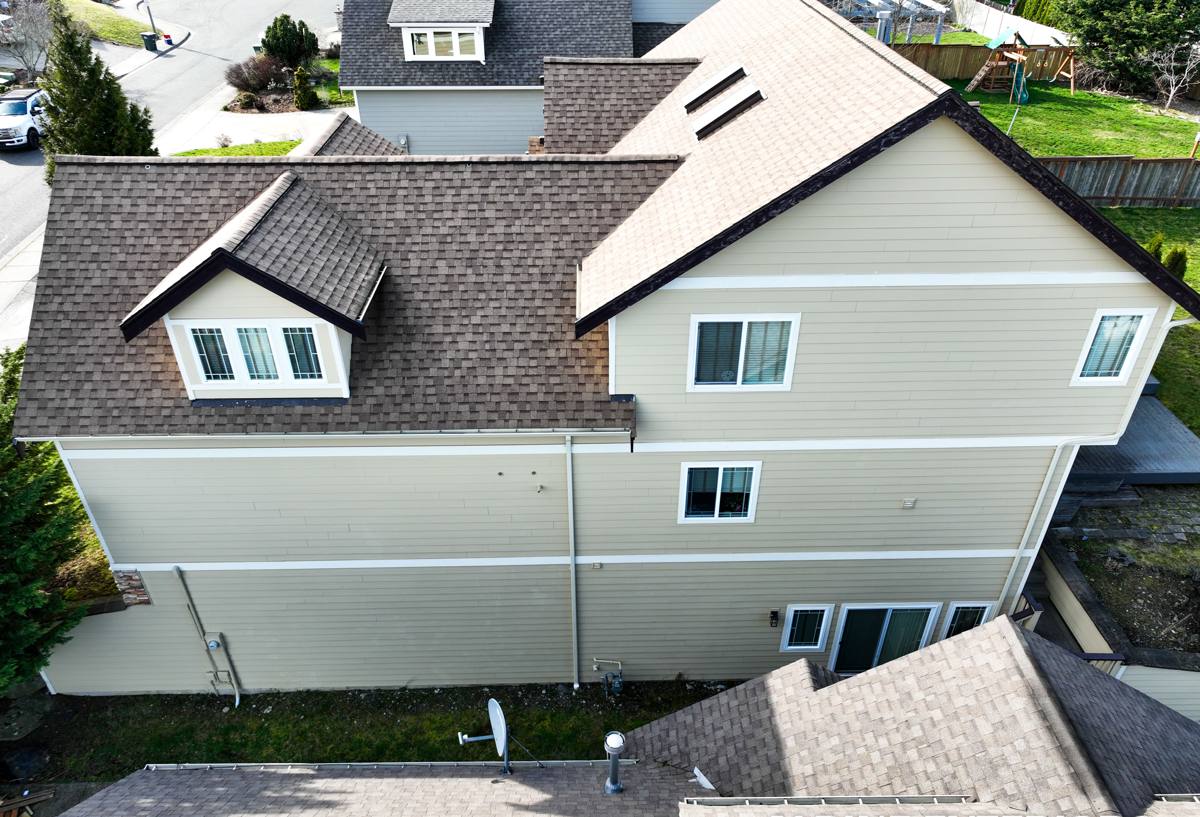
What Actually Fails First on a Local Deck
When we tear off an old deck in this area, the failure pattern is fairly consistent. It's rarely the decking boards themselves that force a full replacement — it's what's underneath and behind them.
The Ledger Board and Flashing
The ledger board is the framing member that bolts the deck to the house, and it's the single most common point of hidden rot we find. If it wasn't flashed correctly when the deck was built — or if the flashing has failed over the years — water works its way behind the ledger and into the house framing itself. This is slow, quiet damage. By the time it shows on the surface, the rot is often well established. Any honest deck replacement starts by assuming the old ledger flashing is inadequate until proven otherwise, because in this climate, undersized or missing flashing details tend to catch up with a structure eventually.
Fasteners and Hardware
Salt-influenced air corrodes standard fasteners faster than most homeowners expect. Nails and screws that would last decades in a dry inland climate can start streaking rust and losing grip strength years earlier here. We see this most on joist hangers, structural screws, and railing hardware — the pieces holding the deck together structurally, not just cosmetically.
Framing, Posts, and Footings
Post bases that sit in standing water or direct soil contact, and joists that don't get enough airflow underneath, rot from the inside before the surface ever shows a problem. On sites with limited under-deck airflow or persistent shade, this process moves faster than average.
Moss, Algae, and the Long Wet Season
Whatcom County's driving rain and extended damp stretches create ideal conditions for moss and algae on any horizontal wood surface that doesn't drain and dry quickly. On a deck, this isn't just cosmetic. Moss holds moisture against the board surface, and on wood decking that moisture accelerates rot at the exact spots where boards meet joists — the areas hardest to inspect without pulling boards up.
A deck that's designed with this in mind — proper board spacing, a slight slope for water runoff, joist tape or flashing over the framing, and decking material chosen with moss resistance in mind — will noticeably outlast one that wasn't. This is one of the biggest differences between a deck built to a generic plan and one built by a crew that deals with this climate every week.
Choosing the Right Decking Material for This Climate
There's no single "best" decking material — the right choice depends on budget, maintenance tolerance, and how much shade and moisture the specific deck will sit under. Here's how the common options actually perform under Whatcom County conditions:
| Material | How It Handles Rain & Moss | Maintenance | Typical Lifespan Here |
|---|---|---|---|
| Pressure-treated wood | Absorbs moisture; needs sealing to resist moss staining and cupping | Annual cleaning, re-sealing every 2-3 years | 10-15 years with upkeep |
| Cedar | Naturally rot-resistant but still needs sealing against moss and gray-out | Sealing every 1-2 years for appearance | 15-20 years with upkeep |
| Capped composite (e.g., Trex, TimberTech) | Resists moisture absorption; moss can still grow on the surface film if not cleaned | Occasional washing, no sealing | 25-30+ years |
| PVC decking | Fully moisture-resistant core; best resistance to staining in constant shade | Occasional washing | 25-30+ years |
We don't push one product on every job. A sun-exposed deck with good airflow can do perfectly well in cedar or treated wood if the owner is willing to maintain it. A shaded, damp deck tucked against tree cover is where capped composite or PVC earns its higher upfront cost — less time spent scrubbing moss, less risk of the moisture-driven rot that shortens wood deck life in this climate.
Framing Material Matters Too
The decking surface gets all the attention, but the framing underneath — the part nobody sees once it's built — is what actually determines how long the structure lasts. We use pressure-treated framing lumber rated for ground contact where it's called for, and we don't skip flashing tape over joists just because it adds a step. That tape is inexpensive insurance against exactly the kind of slow rot this climate encourages.
What a Correct Deck Replacement Actually Involves
"Replacement" done properly is more than pulling up old boards and dropping new ones on the same frame. Depending on the condition of what's there, a proper job includes:
- Full removal of the old decking, railing, and — where compromised — the framing
- Inspection of the ledger board connection and house framing behind it for hidden rot
- Correcting or upgrading ledger flashing to current standards, not just patching over the old detail
- Checking post footings for frost depth, drainage, and structural adequacy
- Reframing with appropriately rated lumber and corrosion-resistant fasteners
- Installing joist protection tape before decking goes down
- Installing decking with proper spacing and slope for water runoff
- Railing and stair installation to current code requirements
- Final inspection of fastener torque, board alignment, and drainage behavior
Skipping steps 2 through 6 is how a deck ends up needing structural repair five years after a "replacement" that only touched the surface. We price and scope jobs assuming the substructure needs a real look, not a glance.
Permits and Local Code Considerations
Deck work involving structural changes, height above a certain threshold, or attachment to the house typically requires a permit in this area, and inspections check exactly the details discussed above — ledger attachment, footing depth, railing height and baluster spacing, and stair geometry. Requirements and thresholds vary by jurisdiction within Whatcom County, so we confirm the specifics for the property before work starts rather than assuming a blanket rule. Pulling the right permit isn't a formality — it's a second set of eyes on the structural work that protects the homeowner if something is done wrong.
How We Work on Sehome Deck Projects
Because we work in this neighborhood regularly, our estimates start from a realistic sense of what a given lot and orientation usually need — how much shade the deck sits in, whether the site tends to hold moisture, what the existing structure was likely built with. A typical project runs:
- An on-site walkthrough where we check the ledger, framing, and footings before quoting, not after
- A written scope that separates "definitely needs replacing" from "worth inspecting further once we open it up"
- Material recommendations based on the deck's actual sun and moisture exposure, not a one-size-fits-all pitch
- Permit handling where required, coordinated with the local jurisdiction
- A framing and flashing standard we hold to on every job, regardless of which decking product is chosen
- A final walkthrough covering drainage, railing security, and basic care going forward
We'd rather flag a framing problem before the quote than discover it mid-project and have to renegotiate. That upfront honesty costs us nothing and saves the homeowner from surprises.
Caring for the New Deck Through the Wet Season
A well-built deck still needs some seasonal attention in this climate, especially through the wetter months. Keeping up with a short list of basics goes a long way toward hitting the upper end of a material's lifespan rather than the lower end:
- Sweep leaves and debris off the surface regularly in fall — trapped organic matter feeds moss growth
- Rinse or lightly scrub composite and PVC decking once or twice a year to keep surface moss and algae from taking hold
- Reseal wood decking on the manufacturer's recommended schedule, not just when it visibly grays
- Keep gutters and downspouts near the deck clear so runoff isn't dumping extra water onto or under the structure
- Check railing hardware annually for looseness or corrosion, especially on older galvanized fasteners
- Confirm that under-deck airflow paths (skirting vents, lattice gaps) stay clear of stored items and debris
Why Hiring a Crew That Already Works This Area Matters
A deck built from a plan set that ignores local conditions can look fine for the first year or two and still be set up to fail early. A crew that already works in Sehome and the surrounding Chuckanut and Whatcom County area has already seen how the local rain pattern, salt-influenced air, and moss season affect real decks over time — not in theory, but in the ledger boards and framing we've opened up on past jobs. That experience shows up in small decisions: where flashing tape goes, how much slope to build into the decking, which fastener grade to spec for a shaded, damp lot versus a sunny one. Those are the decisions that separate a deck that needs real work again in eight years from one that's still solid in twenty-five.
If you're weighing whether your current deck needs a repair or a full replacement, or you're ready to plan one, we're happy to take a look and give you a straight answer. Reach out for a free, no-pressure estimate using the form below.