 Chuckanut
 Why Board & Batten Fits Edison's Homes
Board and batten has a long history in this part of Whatcom County, and it's easy to see why homeowners in Edison keep asking for it. The vertical lines read as farmhouse, cabin, or modern depending on the trim details, and that flexibility matters in a community with older rural homes sitting alongside newer builds. It's a siding style that can look right on a barn-style outbuilding and equally right on a full home remodel.
But board and batten is also a style that punishes shortcuts. The seams between boards, the battens themselves, and the fastening pattern all create more opportunities for water to find a way in than a standard lap siding job. Done correctly, it's a durable, good-looking system. Done wrong, it's one of the faster ways to end up with hidden rot behind the wall. On a page like this, we want to walk through what Edison's climate specifically demands from this style, what correct installation actually involves, and why we only install it in one material.
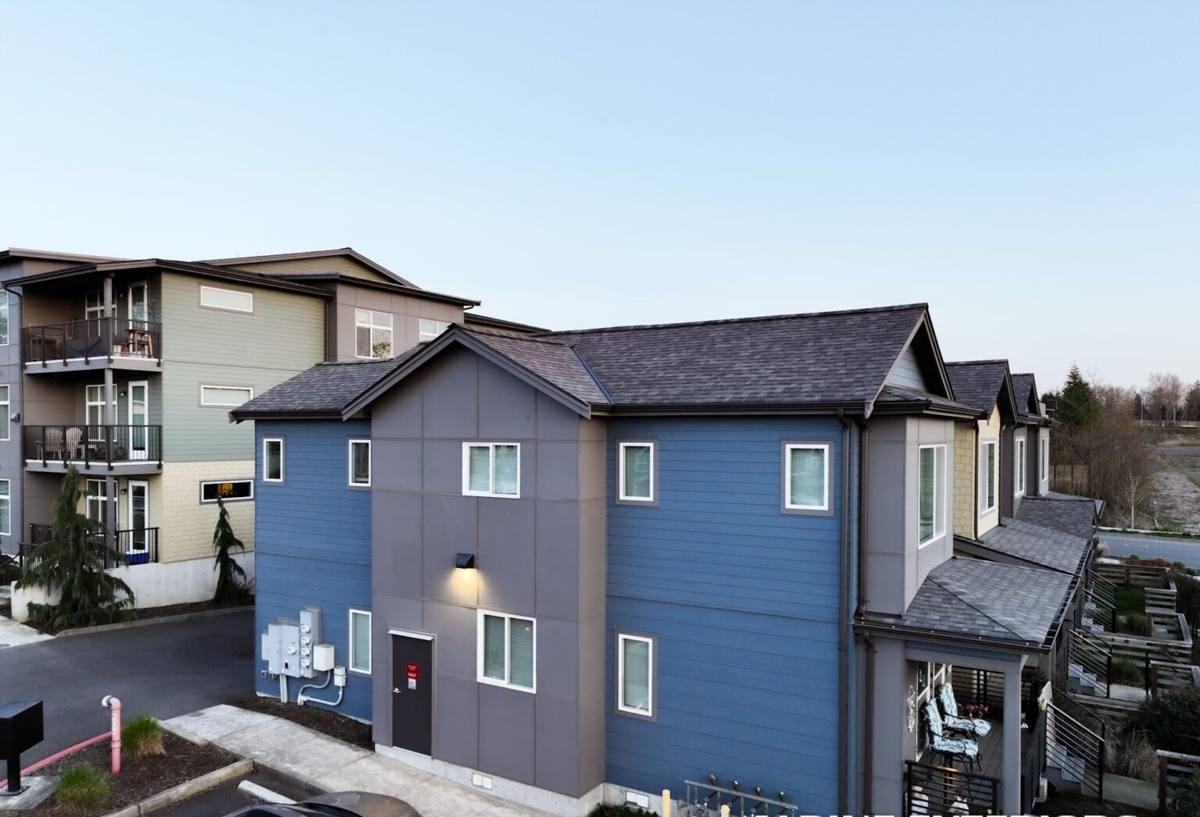
What This Climate Puts Vertical Siding Through
Edison sits close enough to the water that homes here deal with a combination of stresses that inland Washington siding jobs simply don't see as often. Board and batten's vertical seams are more exposed to all three of the following than a horizontal lap profile.
Salt Air
Airborne salt accelerates corrosion on fasteners, flashing, and any exposed metal trim. On a board and batten wall, the vertical battens create dozens of extra fastening lines compared to lap siding, so fastener quality and placement matter more here than almost anywhere else in the assembly.
Driving Rain
Wind-driven rain off the water doesn't just fall on a wall, it gets pushed sideways into it. Vertical board and batten seams run parallel to that wind-driven water path, which means the gap behind each batten and the drainage plane behind the boards have to actually work, not just look right from the ground.
A Long Moss Season
Whatcom County's wet, shaded months give moss and algae months to establish themselves on any siding that stays damp. Board and batten's raised battens create small ledges and shadow lines that hold moisture and organic debris longer than a flat lap profile does, especially on north-facing walls or under tree cover, which is common around Edison's more wooded lots.
What Correct Board & Batten Installation Requires
Most board and batten problems we get called out to inspect trace back to the installation, not the material. Here's what has to happen for the system to hold up in this climate.
A Real Drainage Gap
Board and batten should never be installed tight against a wall with no space to drain and dry. A furred-out or rainscreen-style gap behind the siding lets any moisture that gets past the outer layer drip down and evaporate instead of sitting against the sheathing.
Fastener Placement and Spacing
Both the base boards and the battens need to be fastened into solid framing, not just sheathing, and spaced to allow for the material's natural expansion and contraction. Boards fastened too tight to each other or over-driven at the nail head are a common cause of early cracking.
Flashing at Every Transition
Window and door heads, roof-to-wall intersections, and the base of the wall all need proper flashing detail before a single board goes up. Board and batten's vertical seams make it tempting to rely on caulk alone at these transitions — that's a mistake in a climate that gets this much driving rain.
Caulking as a Backup, Not a Strategy
Caulk should seal the small stuff. It should never be doing the structural job of keeping water out of a seam that wasn't flashed or lapped correctly in the first place. Caulk-dependent installations are the ones that fail first once the sealant ages.
Why We Install Only James Hardie for This Style
We get asked fairly often why we won't do board and batten in vinyl, LP SmartSide, primed spruce, or cedar. Each of those has real strengths, but none of them holds up to Edison's specific combination of salt air, driving rain, and a long moss season as consistently as we need a product to.
Vinyl board and batten is affordable and low-maintenance in dry climates, but it expands and contracts more than fiber cement, which stresses the seams that vertical siding already relies on, and it's more vulnerable to wind-driven rain finding its way behind the panels near the coast. Wood — cedar or primed spruce — looks beautiful when new, but board and batten's exposed batten edges are exactly where wood siding takes on moisture fastest, and this climate doesn't give wood many dry weeks to recover. LP SmartSide is an engineered wood product, which means its long-term performance still depends heavily on keeping every cut edge sealed — a maintenance commitment that's easy to fall behind on.
James Hardie fiber cement is non-combustible, dimensionally stable, and engineered specifically for wet climates through its HZ5 product line, which is built for exactly the Pacific Northwest conditions Edison sees. The factory-applied ColorPlus finish is baked on rather than field-applied, so the color holds up to salt air and UV without the fade and chalking that field-painted products show first. It's also backed by a strong transferable warranty when installed to Hardie's specifications — which is the other half of why we're strict about how we install it.
Board & Batten Material Comparison
| Factor | James Hardie Fiber Cement | Vinyl | Cedar / Primed Spruce | LP SmartSide |
|---|---|---|---|---|
| Moisture resistance in driving rain | Excellent when installed with proper drainage gap | Prone to water intrusion behind panels in wind-driven rain | Absorbs moisture at exposed batten edges | Depends on edge sealing at every cut |
| Salt air performance | Factory finish resists fade and corrosion-related wear | Can become brittle over time near coastal air | Weathers and requires more frequent refinishing | Finish can degrade faster in salt exposure |
| Moss / algae resistance | Dense, low-absorption surface resists growth | Can trap moisture at seams | Higher organic material, more prone to growth | Engineered wood core still moisture-sensitive |
| Fire performance | Non-combustible | Combustible | Combustible | Combustible |
| Typical maintenance | Periodic washing, minor caulk checks | Low, but seam and warp issues if it fails | Regular refinishing/sealing | Ongoing edge and seam sealing |
Our Process, Start to Finish
- On-site assessment: We look at wall orientation, tree cover, existing moisture damage, and how exposed each elevation is to wind-driven rain off the water.
- Tear-off and sheathing check: Removing the old siding lets us inspect the sheathing and framing underneath before anything new goes on — this is where hidden moisture problems get found and fixed, not covered up.
- Drainage plane and flashing: Weather-resistive barrier, flashing at every window, door, and roof intersection, and a proper furring or rainscreen gap go in before the first board.
- Board and batten installation: Hardie boards and battens are installed to manufacturer fastening and spacing specifications, into solid framing.
- Finish and detail work: Trim, caulking where it belongs, and a final walk-through so you know exactly what was done and why.
Keeping Board & Batten Siding Sound Year After Year
- Rinse siding annually, and more often on shaded or north-facing walls where moss tends to establish first
- Keep gutters clear so runoff doesn't sheet down the wall face during heavy rain
- Trim back vegetation and tree limbs that keep siding shaded and damp
- Check caulking at trim and penetrations once a year and touch up before gaps open
- Watch for chalking, staining, or soft spots near the base of walls, a sign moisture is getting behind the siding
- Have any visible fastener corrosion or popped nails addressed before the next wet season
Why a Crew That Already Works in Edison Matters
Board and batten installation isn't something to learn on the job. A crew that already works this stretch of Whatcom County knows which elevations in Edison take the worst of the driving rain, which lots hold moss longest, and how to detail a drainage plane for a home that's going to sit through decades of this specific climate rather than a generic one. That local pattern recognition is the difference between a board and batten job that looks good for a season and one that's still performing correctly in fifteen years.
We also know the practical side — permitting expectations, common framing conditions in this area's housing stock, and how to sequence a project around the wetter months so the wall isn't left exposed longer than it needs to be.
Ready to Talk About Your Home?
If you're considering board and batten siding for a home in Edison, we're happy to take a look and give you an honest read on what your walls need — no pressure, no hard sell. Request a free estimate using the form below and we'll walk the property with you.