 Chuckanut
 Edison's Climate Is Harder on Siding Than Most Homeowners Realize
Edison sits close to the water, tucked between tidal flats and farmland along the Chuckanut corridor, and that location comes with a specific set of siding problems. Salt-laden air moves in off the bay, wind-driven rain comes at walls sideways instead of straight down, and shaded, damp stretches of the property stay wet long enough each year to grow moss on anything that will hold it. None of this is unusual for a coastal community in this part of Washington, but it does mean that siding choices which work fine in a drier inland town can fail early here — peeling paint, swollen edges, soft spots at the bottom courses, and dark streaking that never fully washes off.
This page is specifically about James Hardie fiber cement siding as it applies to homes in and around Edison. We install only James Hardie, and we think homeowners here deserve a straight explanation of why that matters in this particular climate, not a generic pitch that could apply anywhere.
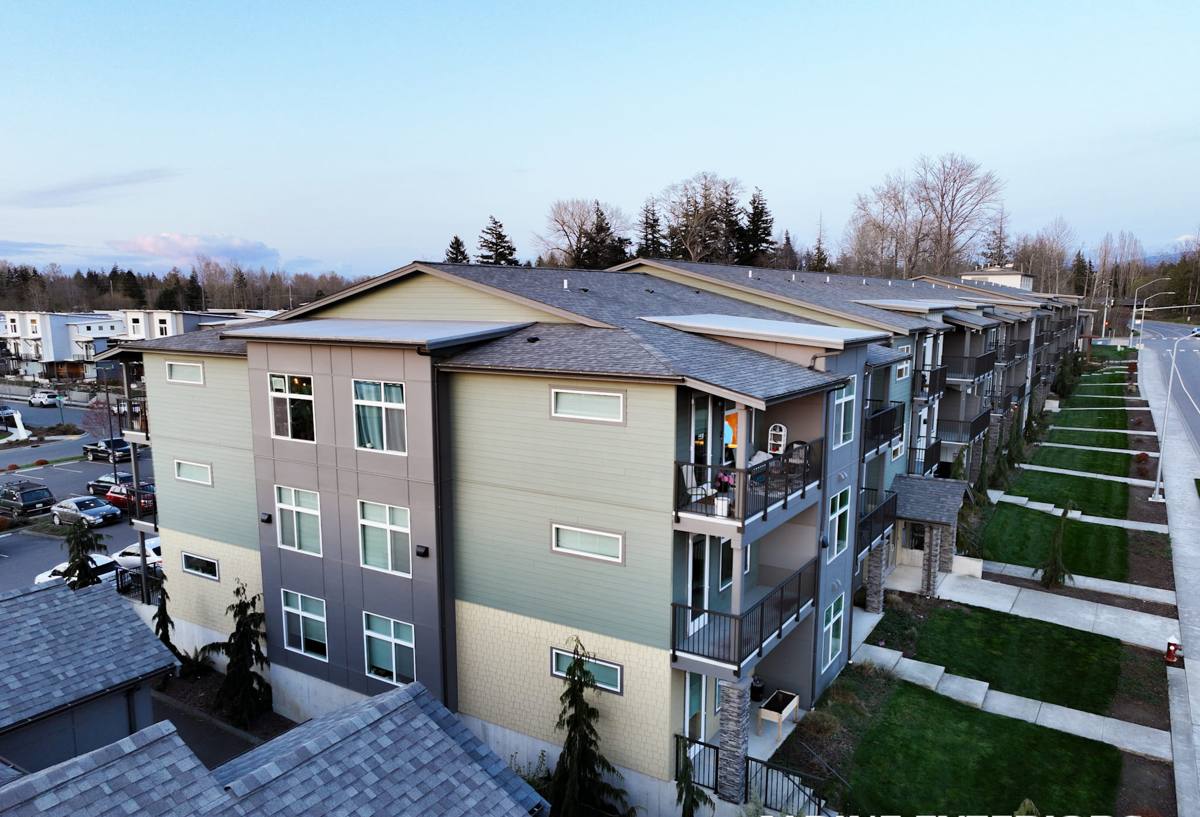
What Salt Air and Driving Rain Actually Do to a Wall
Salt Air
Airborne salt is hygroscopic — it pulls moisture out of the air and holds it against whatever surface it lands on. On painted wood or engineered wood siding, that means paint film breaks down faster than the can label promises, and any spot where the factory coating has been nicked or scratched becomes an entry point for water. On metal fasteners and trim, salt air accelerates corrosion, which is why fastener choice and flashing detail matter as much as the siding material itself.
Driving Rain
Storms moving in off the water don't just fall on a roof — they push rain horizontally into wall assemblies, especially on the windward elevations of a house. That means laps, seams, butt joints, and every penetration (hose bibs, vents, light fixtures) need to be detailed as if wind-driven water will find them, because eventually it will. A siding job that only holds up in calm, straight-down rain is a siding job that's going to leak in Edison.
The Long Moss Season
Shaded north walls, tree-lined lots, and the general damp stretch of fall through spring all add up to conditions where moss, algae, and mildew get a long runway to establish themselves. Once organic growth gets a foothold on a porous or poorly finished surface, it holds moisture against the substrate underneath, which speeds up whatever rot or paint failure is already starting.
Why We Standardized on James Hardie for Homes Like These
James Hardie fiber cement is engineered specifically to resist the combination of moisture, UV, and biological growth that this climate throws at a house. It's non-combustible, it doesn't swell or delaminate the way engineered wood products can when water gets behind them, and it holds its factory finish far longer than field-painted alternatives. That's why we don't install LP SmartSide, vinyl, Cemplank, Allura, primed spruce, or cedar — each of those has real strengths, but each also has a moisture, maintenance, or finish weak point that shows up faster in a place like Edison than it would somewhere dry and inland.
HZ5 Engineered Climate Products
James Hardie builds its siding in different HZ (HardieZone) formulations for different climates. Homes here fall into the range where HZ5 products are the right call — they're formulated for wetter, harsher climates, with a composition and finish designed to hold up to sustained moisture exposure rather than just occasional rain.
ColorPlus Technology
Most of what we install uses James Hardie's ColorPlus factory finish rather than field-applied paint. It's baked on in a controlled environment, it resists fading and chipping far better than site-applied paint, and it comes with its own finish warranty separate from the product warranty. In a salt-air environment, a factory finish that isn't relying on field conditions to cure properly is a real advantage, not a marketing detail.
What a Correct Installation Involves Here
Fiber cement siding is only as good as the assembly behind it. In a high-moisture coastal setting, a handful of details separate a job that lasts decades from one that causes problems in five years:
- A drainage plane (weather-resistive barrier) installed and lapped correctly, shingle-style, so any water that gets behind the siding has somewhere to go
- A rainscreen gap or furring where conditions call for it, so the back side of the siding can dry rather than staying damp against the sheathing
- Properly flashed windows, doors, and penetrations — the majority of siding failures we see start at a poorly flashed opening, not the field of the wall
- Correct fastener type, spacing, and depth per the James Hardie install spec, since over-driven or wrong fasteners void warranty coverage and invite water intrusion
- Proper clearance at the bottom of the wall (grade, decks, and roof lines) so siding isn't sitting in standing water or constant splash-back
- Caulking only where James Hardie's install guide actually calls for it — over-caulking traps moisture just as badly as under-caulking lets it in
Any one of these done wrong can undercut an otherwise good siding product. This is the part of the job that doesn't show up in a photo but determines whether the house is still performing well in twenty years.
Our Process for an Edison Siding Project
1. Walk-Through and Assessment
We start by looking at the specific exposures on your house — which walls take the worst wind-driven rain, where shade and moisture create moss-prone zones, and where the existing siding or trim is already showing stress. This shapes the detailing plan, not just the material list.
2. Tear-Off and Substrate Check
Once old siding comes off, we check the sheathing and framing underneath for hidden water damage. In this climate, it's common to find soft spots behind failed siding that weren't visible from outside — those get addressed before anything new goes up.
3. Weather Barrier and Flashing
This is the step that matters most long-term and shows the least. Proper lapping, flashing at every penetration, and a drainage path are installed to spec before a single piece of Hardie siding goes on.
4. Installation to James Hardie Spec
Siding, trim, and any transitions are installed following James Hardie's published fastening, clearance, and joint-treatment guidelines — the requirements that keep the manufacturer's warranty intact.
5. Final Walkthrough
We review the finished work with you, cover basic care (what to expect from ColorPlus finish, how to keep moss from establishing on shaded elevations), and make sure you have what you need for warranty registration.
Comparing Siding Options for a Property Like This
| Material | Behavior in Salt Air / Driving Rain | Moss & Algae Resistance | Finish Longevity |
|---|---|---|---|
| James Hardie (HZ5, ColorPlus) | Engineered for wet coastal climates; non-combustible; stable when properly flashed | Dense, low-porosity surface resists sustained growth better than porous materials | Factory-baked finish, separate finish warranty |
| Vinyl | Can warp or rattle under wind-driven rain cycles; seams are a weak point | Can trap moisture and grime in overlaps | Color is through-body but fades and chalks over time; no repaint option without replacement |
| LP SmartSide (engineered wood) | Vulnerable to swelling if moisture gets past a compromised seam or cut edge | Wood-based substrate is more susceptible if finish is breached | Field or factory finish, but wood core is the underlying risk |
| Cedar | Handsome but needs consistent maintenance to resist moisture in a wet climate | Naturally more prone to moss/algae without regular treatment | Requires repainting or restaining on a recurring cycle |
This isn't a claim that every alternative is unusable — it's why, as a company, we chose to specialize in one system rather than install several products with meaningfully different maintenance burdens in this specific climate.
Why Hiring a Crew That Already Works This Area Matters
A contractor who mostly works drier, inland jobs can install James Hardie siding correctly on paper and still miss the details that matter here — where the wind actually hits hardest on a given lot, which elevations need extra attention to drainage, or how much clearance to leave near tide-influenced ground moisture. Crews who work Edison and the surrounding Chuckanut area regularly see these patterns repeat from house to house, which is exactly the kind of judgment that doesn't come from a spec sheet alone.
It also matters for accountability. A local crew is easy to reach if a question comes up two years after the job, and they have a direct, ongoing interest in every house they've sided in the area holding up and looking right.
Signs Your Current Siding Is Losing the Fight
Before deciding whether replacement makes sense, it helps to know what to look for on a home in this environment:
- Paint that's peeling, bubbling, or chalking heavily on one or two specific elevations rather than evenly across the house
- Soft or spongy spots when you press on siding near the bottom courses or below windows
- Persistent dark streaking or moss that returns within a season of cleaning, especially on shaded walls
- Visible gaps, warping, or separation at seams and corner boards
- Rising energy bills with no other explanation, which can point to a compromised weather barrier
If you're seeing more than one of these, it's worth an inspection before the damage spreads to the framing underneath.
Get a Straight Answer for Your Property
If you're weighing a siding project in Edison or anywhere along the Chuckanut corridor, we're happy to take a look and give you an honest read on what your home actually needs — no pressure, no inflated scope. Use the form below to request a free estimate.