 Chuckanut
 Roof Repair Built for Edison's Particular Kind of Wear
Homes in the Edison area take a different kind of beating than roofs ten miles inland. You're close enough to the water to get salt-laden air on a regular basis, exposed enough to catch driving rain off Chuckanut's open stretches, and shaded enough by fir, cedar, and big-leaf maple that moss has a long, comfortable season to work on your shingles. None of that means your roof is doomed — it means repairs here have to account for things a roofer working a dry inland subdivision never has to think about.
This page is about roof repair specifically — not full tear-offs, not general roofing advice. If you've got a leak, a soft spot, a shingle that's lifted, or moss that's gone from cosmetic to structural, here's what actually needs to happen and why it matters that the crew doing it already knows this stretch of Whatcom County.
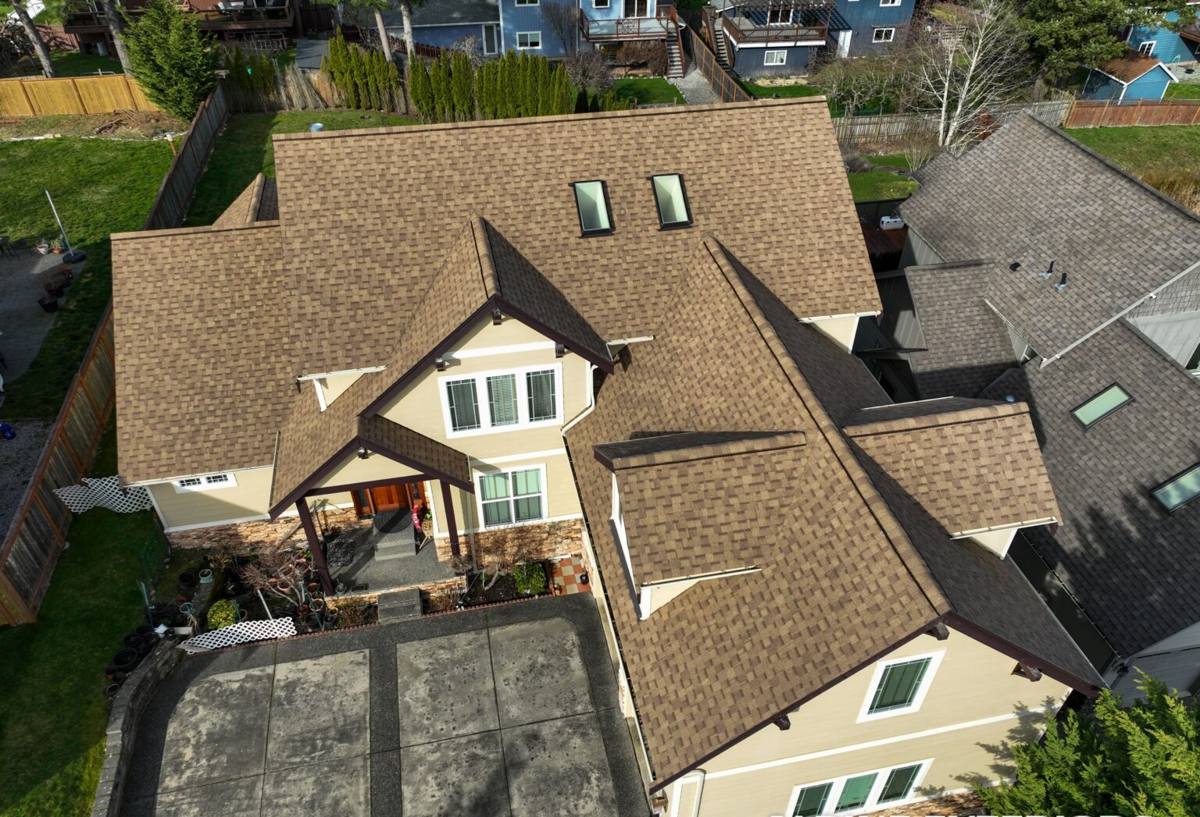
What Salt Air, Rain, and Moss Actually Do to a Roof
Salt Air
Salt-laden moisture doesn't just sit on the surface — it works into metal fasteners, flashing, and any exposed hardware, accelerating corrosion well beyond what you'd see on the same roof twenty miles inland. Galvanized nails and cheaper flashing can start showing rust streaks and pinholes years before a manufacturer's chart would predict. Once flashing corrodes at a seam or a nail head backs out from rust jacking, you get a leak path that has nothing to do with the shingles themselves.
Driving Rain
Wind-driven rain off the water doesn't fall straight down — it gets pushed sideways and upward under shingle edges, around vent boots, and into any flashing lap that isn't sealed correctly. A roof that would shed a calm rain just fine can leak during a sideways storm if the underlayment, step flashing, or valley details weren't built with wind-driven moisture in mind. This is why so many "mystery leaks" in this area only show up during specific storms, not every time it rains.
Moss Season
Between the marine layer, shade cover, and a wet season that runs long here, moss gets months of uninterrupted growing time on north-facing and shaded slopes. Moss isn't just unsightly — it holds water against the shingle surface, works its rhizoids under tab edges, and lifts shingles just enough for wind-driven rain to get underneath. Left alone through a full moss season, a section of roof that started with a small patch of green can end up with soft decking underneath it.
Signs Your Edison Roof Needs Repair Now
Most roof problems out here don't announce themselves as a dramatic leak on day one. They show up as smaller signs first. Worth checking for, or asking us to check for, before they turn into decking damage:
- Granule buildup in gutters or at downspout outlets — a sign shingles are wearing faster than they should
- Moss or thick lichen on north-facing slopes, especially where it's raised or lifted the shingle edge underneath it
- Rust staining below metal flashing, vent boots, or exposed fasteners
- Curling, cupping, or cracked shingles, particularly on slopes that get the most direct weather
- Soft or spongy spots when walked (we check this — please don't walk your own roof to test it)
- Water stains on interior ceilings, especially near chimneys, skylights, or where two roof planes meet
- Daylight visible through the attic at any point along the roof deck or ridge
- Gutters pulling away from the fascia, which often points to rot from long-term moisture, not just gutter age
What a Correct Roof Repair Actually Involves
A repair that holds up in this climate isn't just "replace the shingle you can see." It has to address the moisture path that caused the damage in the first place, or the same failure shows up again in a year or two. A properly done repair typically includes:
Finding the Real Source, Not Just the Visible Damage
Water travels. A stain on your ceiling under a skylight might trace back to failed step flashing two feet uphill, not the skylight itself. Any repair worth doing starts with tracing the actual moisture path — from the interior stain or attic sign, back up the roof plane, to the actual entry point.
Flashing First
Given how hard salt air is on fasteners and thin metal, flashing condition gets checked at every chimney, vent, skylight, and valley during a repair — not just the section that's currently leaking. Corroded or undersized flashing gets replaced with materials rated for coastal exposure, not the thinnest stock that meets code minimums.
Matching Materials Correctly
Shingle repairs need to match the existing roof's granule color, profile, and — just as important — its age and remaining flexibility, so the patch doesn't stand out or age at a different rate. On older roofs, this sometimes means pulling a matching shingle from a low-visibility area (like under a satellite mount or behind a chimney) rather than using a shingle that's ten shades brighter than everything around it.
Moss and Debris Removal Done the Right Way
Moss removal on an aging roof is not a job for a pressure washer. High-pressure water strips granules and drives moisture under shingle tabs, which does more damage than the moss itself. Correct moss removal is done by hand or with soft-wash methods, followed by a treatment that discourages regrowth without damaging the roofing material or the plants and soil below the roofline.
Sealing and Fastening for the Climate, Not Just the Code
Where fasteners are exposed to weather, corrosion-resistant hardware is used instead of standard galvanized, and exposed nail heads or seams get properly sealed rather than left to the shingle's overlap alone. It costs a little more up front and saves a callback in three years.
Common Roofing Materials in the Area — Repair Considerations
What your roof is made of changes how it fails, and how it should be repaired. Here's a general comparison for homes in this climate:
| Material | Moss Tendency | Salt Air / Corrosion Exposure | Typical Repair Pattern |
|---|---|---|---|
| Asphalt Composition Shingle | High on shaded slopes without upkeep | Moderate — fasteners and flashing are the weak point, not the shingle itself | Individual shingle and flashing replacement; granule loss common with age |
| Standing Seam Metal | Low — sheds moss more easily than shingles | Higher — seams, fasteners, and cut edges need corrosion-resistant detailing | Repairs concentrated at penetrations, seams, and fastener points rather than field panels |
| Cedar Shake | High — natural wood surface holds moisture and organic growth | Moderate — but moisture retention compounds rot risk near the coast | Individual shake replacement; requires matching weathering and grain, and vigilant moss control |
None of these materials are "wrong" for the area — each just comes with a different maintenance and repair rhythm. We repair what's already on your house rather than pushing a material switch during a repair visit; that's a separate conversation with its own trade-offs, not something to decide mid-repair.
How We Approach a Repair Call in Edison
- Inspection first. We walk the roof, the attic where accessible, and the interior signs you've noticed, and we photograph what we find before touching anything.
- A clear explanation of the cause. Before any work starts, you get a plain-English explanation of what's actually failing and why — not just a line item that says "repair roof."
- A written scope. You know what's being repaired, what materials are going on, and what's included before we start, not after.
- The repair itself. Done to the standard above — real flashing work where needed, matched materials, correct fastening, and moss addressed at the root rather than just cleared off the surface.
- A final check. We confirm the repair from both the roof surface and, where relevant, the attic side, so you're not left wondering if it actually solved the problem.
What Affects the Cost of a Roof Repair
Every repair is different, but the same handful of factors drive most of the cost difference between a simple visit and a more involved one:
| Factor | Why It Matters |
|---|---|
| Scope of the damage | A single flashing seam is a different job than a section of rotted decking under old moss growth |
| Roof pitch and access | Steeper roofs and multi-story sections take longer to work safely and affect equipment needs |
| Material match | Older or discontinued shingle profiles can take more effort to match than a common current product |
| Hidden decking damage | Repairs that turn out to involve soft or rotted sheathing cost more than a surface-level fix |
| Number of penetrations involved | Chimneys, skylights, and multiple vents each add flashing detail work |
As a rough sense of scale, a straightforward, localized repair — a section of flashing, a handful of shingles, a resealed vent boot — commonly falls in the low hundreds to around a thousand dollars. Repairs involving deck replacement, extensive moss damage, or multiple problem areas run higher. We'll always give you the real number for your roof after inspection, not a phone-quote guess.
Why It Matters That We Already Work This Area
A roofer who mostly works dry, inland neighborhoods can still do competent work, but they're guessing at things a crew that regularly works the Edison and Chuckanut stretch already knows firsthand: which roof orientations in this microclimate hold moss the longest, how far wind-driven rain typically pushes under a poorly lapped flashing here versus somewhere more sheltered, and what corrosion actually looks like on a five-year-old fastener that's been breathing salt air the whole time. That's not a sales pitch — it's the difference between a repair that's built for your actual conditions and one that's built for a textbook average.
It also means practical things: knowing which weather windows are realistic for a repair without rushing a seal coat that needs dry time, and not being surprised by how quickly moss returns on a shaded slope if the treatment step gets skipped.
Simple Maintenance That Extends a Repair's Life
A good repair lasts a lot longer with a little upkeep between visits. Worth doing yourself, or having checked during a routine visit:
- Clear gutters and downspouts at least twice a year — clogged gutters back water up under the roof edge
- Trim back overhanging branches where reasonable, to reduce shade and debris buildup on moss-prone slopes
- Have visible moss addressed before it spreads across a full slope, not after
- Check attic insulation and ventilation periodically — poor attic airflow accelerates moisture problems from the inside
- After any major windstorm, do a visual check from the ground for lifted or missing shingles
If you're seeing any of the warning signs above, or just want an honest read on where your roof stands, we're happy to take a look. The estimate is free, there's no pressure to book anything on the spot, and you'll get a straight answer about what's actually going on — use the form below to get in touch.