 Chuckanut
 Why Edison Homes Wear Out Siding Faster Than Most
Homes near Edison sit close enough to the water that salt air is a daily fact of life, not an occasional nuisance. Add the driving, wind-blown rain that comes off the Chuckanut coastline and a moss season that can stretch for most of the year in Whatcom County's shade and dampness, and you have a climate that is genuinely hard on exterior walls. Siding here doesn't just get wet — it gets wet at an angle, it stays wet longer because of tree cover and marine humidity, and it picks up a fine layer of salt that holds moisture against the surface even after the rain stops.
That combination is why siding that performs fine in a drier inland town can fail early in Edison: cupping, soft spots, peeling paint, and moss creeping up from the bottom courses are common complaints we hear from homeowners in this area. A siding replacement here isn't just about swapping old material for new — it's about choosing a product and installation method that can actually stand up to salt, rain, and moss, year after year.
Signs It's Time to Replace, Not Patch
A lot of homeowners try to get one more season out of failing siding with caulk and touch-up paint. Sometimes that's reasonable. Other times it's throwing money at a problem that's already moved past the surface. Watch for:
- Soft, spongy, or crumbling spots when you press on the siding, especially near the bottom edge and around windows
- Paint that keeps failing in the same spots within a year or two of repainting
- Visible cupping, warping, or buckling boards
- Moss or dark streaking that returns almost immediately after cleaning
- Gaps opening up at seams, corners, or trim where caulk keeps cracking
- A musty smell or soft drywall on interior walls that back up to exterior siding
Any one of these can be a localized repair. Several together, especially on a home more than 15-20 years old, usually means the underlying material and moisture barrier are compromised across the wall, not just at one spot.
What a Correct Siding Replacement Actually Involves
Replacing siding correctly is mostly about what happens underneath it, not the finished look. In a climate like Edison's, skipping these steps is exactly how a brand-new siding job ends up failing in five years instead of thirty.
Tear-off and Wall Inspection
Old siding comes off in full, not patched around. That's the only way to actually see the sheathing underneath — rot, soft spots, or old water damage don't show up until the wall is opened. Any damaged sheathing gets replaced before anything new goes up.
Weather-Resistive Barrier
A new, continuous moisture barrier goes over the sheathing, lapped correctly from the bottom up so water is always directed outward and down, never trapped behind the cladding. This layer matters more in a driving-rain climate than almost anything else in the job.
Flashing at Every Penetration
Windows, doors, hose bibs, vents, and any other wall penetration get proper flashing integrated with the weather barrier. This is the detail that separates a siding job that lasts from one that leads to hidden rot two years later — and it's also the step that gets rushed or skipped most often by crews unfamiliar with coastal conditions.
Correct Fastening and Clearances
Fiber cement siding has specific fastening patterns, nailing zones, and minimum clearances from the ground, roofline, and decks. Getting these wrong doesn't show up right away — it shows up as premature moisture intrusion a few years down the road.
Factory-Finished Material
Using a factory-applied finish rather than field-painting the siding after installation gives a more consistent, durable topcoat that's better prepared to handle salt exposure and constant damp than paint applied on-site.
Why We Install Only James Hardie Fiber Cement
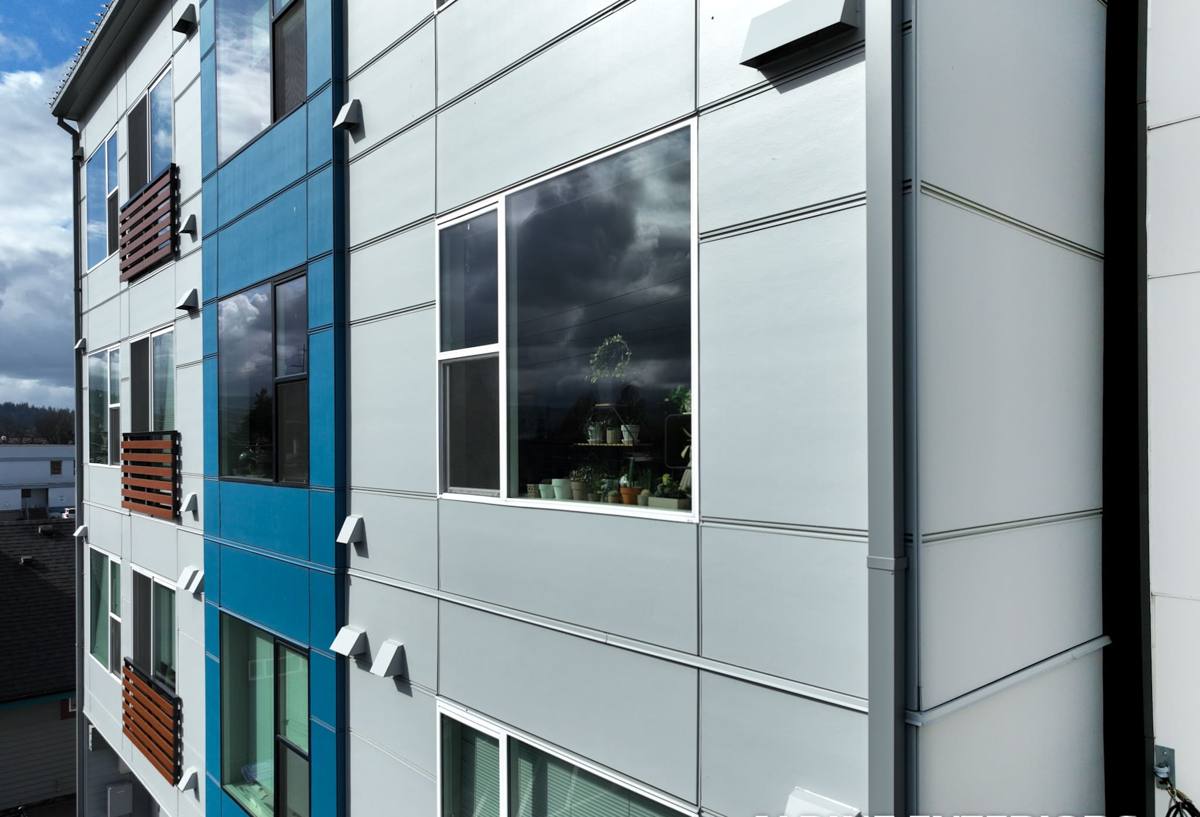
We made a decision as a company to install James Hardie fiber cement siding exclusively — not vinyl, not LP SmartSide, not cedar, not other fiber cement brands. That's not a marketing position, it's a practical one built around what actually holds up in this region's weather.
Fiber cement is non-combustible and dimensionally stable, meaning it doesn't expand, contract, warp, or cup the way wood-based products can when they cycle through wet and dry conditions repeatedly. Hardie's HZ5 product line is specifically engineered for the kind of cold, wet, high-moisture climate found along the Whatcom County coastline. The factory ColorPlus finish is baked on and warranted separately from the substrate, which matters in an area where paint failure from salt and moisture is a real, recurring issue. And Hardie backs the product with a strong, transferable warranty — useful for homeowners who may sell in the years ahead.
We're not going to tell you every other product on the market is worthless — that's not honest, and it's not our call to make about materials we don't install. What we will say is that after years of doing exterior work in this climate, we standardized on one product because it's the one we're confident will still look and perform correctly a decade or two from now, and it's the one we're willing to put our workmanship warranty behind.
Comparing Siding Options for a Coastal Whatcom County Climate
| Factor | James Hardie Fiber Cement | Vinyl | Wood / Engineered Wood |
|---|---|---|---|
| Moisture resistance | Strong when installed to spec; won't rot | Doesn't rot, but seams and expansion gaps can let water behind panels | Vulnerable to swelling, rot, and moss if moisture gets in |
| Salt air performance | Factory finish holds up well to coastal exposure | Can become brittle and fade faster near salt air | Finish breaks down faster; more frequent recoating needed |
| Fire resistance | Non-combustible | Combustible, can melt/warp near heat sources | Combustible |
| Maintenance | Occasional wash; repaint decades out if ever | Low maintenance but limited repair options if cracked | Regular repainting/staining, moss and mildew treatment |
| Typical lifespan (installed correctly) | 30+ years | 20-30 years | 15-25 years, climate-dependent |
This table reflects general industry characteristics of each material category, not specific product claims. Your actual results depend heavily on installation quality regardless of which material you choose — which is really the bigger variable in most siding failures we see.
Our Siding Replacement Process
- On-site assessment — we walk the exterior, check for soft spots, moisture damage, and problem areas specific to your home's exposure to wind and rain.
- Written estimate — scope, product selection, color, and timeline laid out clearly before any work starts.
- Tear-off and sheathing repair — old siding removed, any damaged sheathing replaced, wall opened up so nothing is hidden.
- Weather barrier and flashing installation — the part of the job that determines whether the siding lasts.
- Hardie siding installation — installed to manufacturer fastening and clearance specs, not shortcuts.
- Final trim, caulking, and cleanup — site left clean, debris hauled away.
- Walkthrough — we go over the finished work with you before calling the job done.
What to Look for Before Hiring Anyone for This Job
- Do they inspect and photograph the sheathing before covering it back up, or just re-side over what's there?
- Can they explain their flashing detail at windows and doors, specifically?
- Do they follow the manufacturer's fastening and clearance specs, or "how we've always done it"?
- Is the warranty in writing, and does it cover workmanship separately from the material?
- Have they worked on homes in similar coastal, high-moss conditions before — not just siding in general?
Why Local Experience in the Edison Area Matters
Siding installation isn't identical everywhere. A crew that mostly works drier, inland areas may not think twice about moss growth patterns, salt residue on siding, or how driving rain off the water hits a wall differently than a straight-down rain does. Around Edison and the broader Chuckanut corridor, we've seen firsthand where moisture tends to collect on homes exposed to the bay-facing winds, which sides of a house need the most attention to flashing and drainage, and how quickly moss reestablishes itself if the wrong clearances are used at the base of the wall.
That local pattern recognition doesn't replace following the manufacturer's install specs — it adds to it. It means catching the small decisions, like where extra flashing attention pays off or how low siding can safely sit near grade, before they become a callback a few years later.
Living With Hardie Siding After Installation
One advantage of fiber cement in this climate is how little upkeep it needs compared to wood-based alternatives. A periodic rinse to knock off salt residue and organic buildup, keeping gutters clear so water isn't sheeting down the wall, and trimming back vegetation that holds moisture against the siding will do most of the work. There's no annual repainting cycle to plan around, and the factory finish is built to handle the kind of damp, shaded conditions that cause moss and mildew to take hold on other materials.
If your siding is showing its age or you're planning ahead for a replacement, we're happy to take a look and give you a straightforward, no-pressure estimate — no obligation, just an honest read on what your home actually needs.