 Chuckanut
 "Energy-efficient windows" is one of those phrases that gets used so often in this trade that it stops meaning anything specific. For a Samish homeowner, it should mean something concrete: windows and an installation that actually reduce heat loss, resist the wind-driven rain and salt air this part of Whatcom County deals with, and keep performing that way for the next twenty-plus years rather than just the first winter. This page walks through what that looks like in practice — the window itself, the install details that matter more than most people realize, and how we approach the work in Samish specifically.
What "Energy-Efficient" Actually Means for a Window
Every window sold today carries an NFRC label with a handful of numbers on it, and most of what determines real-world performance comes down to three of them. U-factor measures how much heat the window lets through — lower is better, and it's the number that matters most for a heating-dominated climate like ours. Solar heat gain coefficient (SHGC) measures how much solar heat passes through the glass, which matters less here than in a sunnier climate but still affects comfort on south- and west-facing walls. Air leakage measures how much outside air sneaks through the window assembly itself, independent of the glass performance — and in a climate that spends a lot of the year pushing wind-driven rain sideways into walls, that number is tied directly to how well the unit was installed, not just how it was manufactured.
None of those numbers mean much in isolation. A window with an excellent U-factor and a sloppy installation will still leak air and let bulk water past the flashing. We look at the whole package — the window's ratings and the install plan together — rather than selling a number off a spec sheet.
Why Samish's Climate Pushes Windows Harder Than the Label Suggests
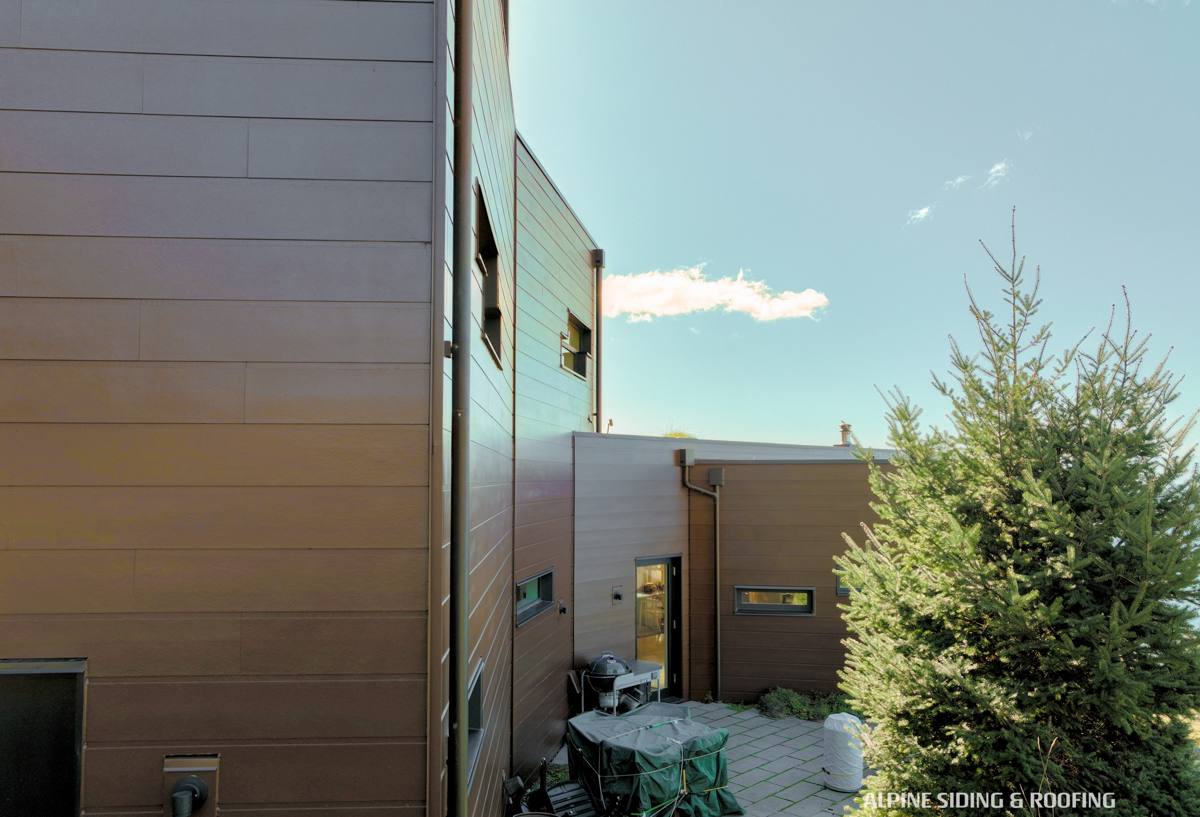
Samish sits close enough to the water that homes here take on a combination of conditions a window's factory testing doesn't fully replicate. Salt-laden air off the bay accelerates corrosion on hardware and lower-quality frame components. Storms coming off the Pacific don't just drop rain straight down — they drive it sideways into south- and west-facing walls, testing every seam and flashing detail a window has. And the damp, often shaded conditions common around Chuckanut and the broader Samish area support a moss season that can run most of the year, holding moisture against sills and trim longer than a drier inland climate ever would.
A window built to a national energy code minimum can still perform well thermally and fail at the details that actually matter here. That's the gap we're trying to close on every project — matching the product and the install to what this specific stretch of Whatcom County actually does to a window over time, not just what a lab test measured.
Salt Air and Hardware
Locks, hinges, balance systems, and screws are usually the first things to show wear in a salt-air environment, well before the glass or frame itself shows any problem. Lower-grade hardware can start binding or corroding within a few years on a home exposed to consistent salt air, which is why hardware quality is worth asking about specifically rather than assuming all windows in a given price range are equal on that point.
Wind-Driven Rain and the Weak Points
Rain that hits a wall sideways behaves differently than rain that falls straight down — it finds horizontal seams, nail flanges, and sill details that a calmer climate's installation guidance doesn't really stress-test. The window unit itself is rarely where a leak starts. It's almost always at the transition between the window and the wall: the flashing, the sill pan, the sealant joints. A high-performance window installed without those details done correctly will leak exactly like a cheap one.
A Moss Season That Doesn't Give Much Recovery Time
Shaded, north-facing walls around Samish can stay damp for long stretches, especially where tree cover or neighboring structures block sun and wind. That environment is exactly what moss and mildew need to establish themselves on sills, trim, and lower sash rails, and sustained moisture against those surfaces shortens the life of even a well-built window if drainage and clearance weren't planned for from the start.
Frame Materials and Glass Packages Worth Considering
Frame material affects both thermal performance and how well a window holds up to sustained coastal moisture, and the honest trade-offs are worth walking through rather than assuming one material is right for every home.
| Frame Material | Salt-Air Durability | Thermal Performance | Maintenance |
|---|---|---|---|
| Vinyl | Good — won't corrode, seams can be a weak point if poorly welded | Solid, especially in multi-chambered profiles | Low |
| Fiberglass | Very good — dimensionally stable, resists corrosion | Strong, low thermal expansion helps seals last | Low |
| Wood-clad (aluminum or fiberglass exterior) | Good on the clad exterior; depends on quality of the cladding and joints | Strong, especially with a wood interior | Moderate — exterior clad reduces upkeep, but joints need attention |
| Aluminum | Fair — prone to corrosion pitting near salt air without a quality finish | Weakest unless thermally broken | Low to moderate |
For most exposed walls in Samish, we lean toward vinyl or fiberglass frames because they hold up to sustained coastal moisture with the least ongoing maintenance. A wood-clad unit can still be the right call when the interior wood look matters to you and the exterior cladding is a quality product installed correctly — it's a legitimate choice, just one that depends more on getting the details right.
On the glass side, double-pane with a low-E coating and an argon or krypton gas fill is the standard efficient package for this climate, and it's what most homes here need. Triple-pane glass adds meaningful thermal performance and sound reduction, at added cost and weight, and tends to make more sense on north-facing walls, homes near a busier road, or for owners specifically prioritizing comfort near large glass areas. Warm-edge spacers, which separate the panes of glass, are worth asking about specifically — they reduce condensation risk at the edge of the glass, which matters in a climate this damp.
What a Correct Energy-Efficient Window Install Actually Involves
Flashing and Weatherproofing Come First
Before efficiency numbers matter at all, the opening has to be weatherproofed correctly. That means a sill pan to direct any water that gets past the window back outside rather than into the wall, properly lapped flashing tape sequenced so water always sheds downward and outward, and careful integration with the house wrap or weather-resistive barrier already on the wall. This is the step that decides whether a window stays dry for decades or develops a slow leak that isn't obvious until there's damage behind the siding.
Air Sealing the Rough Opening
The gap between the window frame and the rough opening needs to be sealed with a low-expansion foam or backer rod and sealant — not just stuffed with fiberglass insulation, which does little to stop air movement. A window with an excellent U-factor rating will still feel drafty if that perimeter gap wasn't sealed properly, and it's one of the easiest details to shortcut because it's hidden once the trim goes back on.
Why the Install Matters as Much as the Window Itself
The window's factory rating tells you what's possible under ideal conditions. Whether a home in Samish actually gets that performance, and stays leak-free, depends on the installation. That's true everywhere, but it matters more here than it would in a milder, drier climate, because the margin for a shortcut to go unnoticed is smaller.
Our Process for a Samish Window Project
- On-site assessment — we look at existing window condition, wall exposure, and which elevations take the most direct wind-driven rain
- Honest product recommendation — frame material and glass package matched to your budget and each wall's actual exposure, not a one-size answer for the whole house
- Measurement and ordering — precise field measurements and a realistic lead-time estimate before you commit
- Removal and opening inspection — old units come out carefully, and we check for hidden rot or prior flashing failures before anything new goes in
- Installation, flashing, and air sealing — sill pan, flashing sequence, and perimeter air sealing done to a standard built for this climate, not the manufacturer's bare minimum
- Trim and finish — exterior trim integrated cleanly with the surrounding siding
Costs and Trade-Offs
We won't quote a number without seeing the actual openings, but the factors that consistently move price on a window project are the same ones worth understanding before you start getting estimates.
| Factor | Why It Matters |
|---|---|
| Frame material | Vinyl is typically the most affordable; fiberglass and wood-clad options cost more but offer different durability and appearance trade-offs |
| Glass package | Double-pane low-E is standard; triple-pane adds cost and weight in exchange for added thermal and sound performance |
| Number of openings | A full-house replacement typically has better per-unit pricing than a handful of individual windows |
| Opening condition | Rot, prior leaks, or out-of-square framing add repair work before a new window can go in correctly |
| Grid patterns and specialty shapes | Divided-lite grids, arches, or custom shapes add manufacturing and installation time |
| Removal and disposal | Old window and any incidental siding or trim removal add labor beyond the window install itself |
Checklist: What to Ask Before You Sign
- Ask for the specific U-factor and air leakage numbers for the window being quoted, not just an "energy-efficient" label
- Ask what the sill pan and flashing plan looks like for your specific walls, especially any facing the water or prevailing weather
- Confirm how the perimeter gap between frame and rough opening will be sealed
- Get a written scope covering removal, disposal, and any trim or siding repair near the openings
- Ask what's covered under warranty for the window unit versus the installation labor — they're often separate
- Get a realistic lead time in writing, especially for anything beyond standard stock sizes
Why Hiring a Crew That Already Works in Samish Matters
Manufacturer installation instructions are written for average conditions, and Samish's combination of salt air, wind-driven rain, and a long moss season isn't average. A crew that has already installed and later inspected windows in this specific area knows where the moisture problems actually start — which elevations take the worst weather, which sill details hold up and which ones don't, and where a manufacturer's minimum flashing spec needs to be exceeded rather than just met. That knowledge doesn't show up on a spec sheet. It shows up in decisions made during the install that either hold up for decades or quietly fail in a few years.
It also matters for something more basic: accountability. A contractor who works regularly in Whatcom County and around Samish has a reputation to protect in a market where word travels between neighbors, and that's a different incentive than an out-of-area crew passing through on a single job.
If you're weighing a window replacement in Samish — whether it's a few problem windows or a full-house upgrade — it's worth having someone look at the actual openings and wall exposures before you start comparing quotes. We offer free, no-pressure estimates for window projects in Samish and the surrounding Chuckanut area; use the form below to get a time on the schedule.