 Chuckanut
 Storm Damage Roof Repair for Fairhaven Homes
Fairhaven sits along Bellingham Bay, close to Chuckanut Bay and the wooded slopes that rise up behind the neighborhood, and that setting puts local roofs through a specific kind of stress. Wind off the water doesn't arrive politely. It gathers speed across open water and hits rooflines at angles that catch shingle edges, ridge caps, and anything not fastened exactly to spec. When that wind carries rain with it, which it does often in this part of Whatcom County, the damage isn't always a dramatic hole you can see from the driveway. More often it's a lifted shingle tab, a compromised seal, or flashing that's worked loose just enough to let water start tracking into the deck below. We work storm damage roof repair calls throughout the Bellingham area, and Fairhaven's combination of marine exposure and mature tree cover makes it one of the neighborhoods where we see this kind of damage show up early and get missed for too long.
This page is specifically about storm damage roof repair for Fairhaven properties, not roofing in general. If a recent windstorm, downpour, or falling limb has left you wondering whether your roof needs attention, here's what that actually involves.
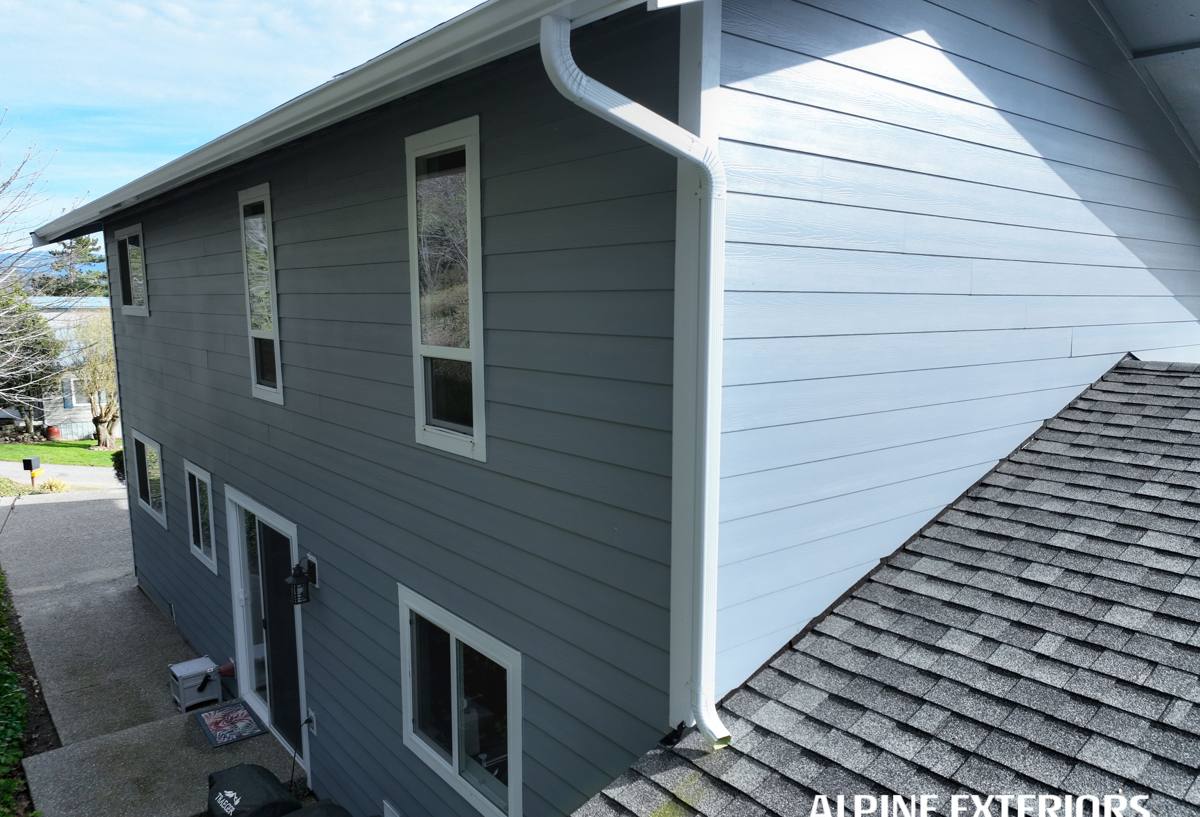
How Storm Damage Actually Shows Up on a Fairhaven Roof
Wind Damage
Sustained wind and gusts off Bellingham Bay can lift shingle tabs, crack ridge caps, and pull fasteners partway out without tearing anything off completely. From the ground, a wind-damaged roof often looks fine. Up close, you'll find shingles that no longer lie flat, seal strips that have separated, or tabs that flex when you press on them. That kind of damage doesn't always leak right away, but it removes the roof's ability to shed wind-driven rain the way it's designed to, which is usually how a small wind event turns into a bigger water problem a few storms later.
Wind-Driven Rain
Rain that falls straight down is rarely the problem. Rain that gets pushed sideways by wind off the water is a different story, because it finds its way under shingle edges, into exposed nail heads, and along valleys and flashing lines that a calmer climate's roofing details were never really stress-tested against. A roof that's held up fine for years can still take on water during one bad storm simply because of the angle the rain came in at.
Debris and Impact Damage
Fairhaven's mature tree canopy is part of what makes the neighborhood attractive, but it also means storms bring down limbs, branches, and in some cases whole trees onto roofs. Impact damage can crack or puncture shingles and, on rare occasions, damage the deck underneath. Even smaller debris, like twigs and needles that pile up in valleys, can dam water during heavy rain and force it under the shingle line instead of off the edge of the roof.
Moss and Trapped Moisture
Whatcom County's long, mild moss season doesn't cause storm damage directly, but it makes storm damage worse. Moss holds moisture against the shingle surface and roofing deck longer than a bare roof would, which means a shingle that's already stressed from wind or impact has less chance to dry out between storms. Roofs with heavy moss growth on the north-facing or shaded slopes are often the ones where a single storm event turns into a slow leak that isn't caught until there's water staining on a ceiling inside the house.
What a Correct Storm Damage Repair Actually Involves
Storm damage repair is easy to do poorly and not obvious to a homeowner when it's been done poorly, because the roof looks fine from the street either way. A correct repair starts with an honest assessment of what's actually damaged versus what's just cosmetic, followed by work that restores the roof's water-shedding system as a whole, not just the spot that's visibly broken.
Assessment Before Anything Else
We walk the roof, not just look at it from the ground, because wind and impact damage is frequently invisible from a distance. That includes checking individual shingles for lifted tabs and broken seals, inspecting flashing at valleys, chimneys, and roof-to-wall intersections, and checking the attic or accessible deck areas for signs that water has already started getting through. A storm can damage a roof in more than one place at once, and a repair that only addresses the obvious spot often leaves a second problem to surface later.
Matching Materials, Not Just Patching
Shingle color and profile change over time with sun exposure, so a repair section that doesn't reasonably match the surrounding roof stands out and, more importantly, can create a slightly different water-shedding profile at the seam between old and new material. On repairs where an exact match isn't realistic, we'll tell you that upfront rather than pretending a mismatched patch is invisible.
Flashing and Underlayment, Not Just Shingles
A lot of storm-related leaks in this area trace back to flashing, not the shingles themselves. Valley flashing, step flashing along walls and chimneys, and the underlayment beneath the shingle layer all have to function as one system. Replacing damaged shingles without checking the flashing and underlayment underneath them is one of the more common shortcuts that leads to a repeat leak the next time a storm rolls through.
Repair Versus Section Replacement Versus Full Roof
Not every storm call needs a full new roof. Isolated wind or impact damage on a roof that's otherwise in good condition can usually be repaired in place. But if the storm exposed damage that had already been building underneath, like rotted decking from a slow moss-related leak, or if the roof was already near the end of its service life, patching it is often a short-term fix that delays a bigger, more expensive project. We'll give you a straight read on which situation you're actually in before we recommend a scope of work.
Our Storm Damage Repair Process
- Initial contact and scheduling: We get out to look at storm damage promptly, since exposed decking or lifted shingles left uncovered invites more water intrusion with every additional rain event.
- Roof walk and documentation: We inspect the full roof, not just the area you noticed damage, and document what we find with photos you can use for your own records or an insurance claim.
- Temporary protection if needed: When a section is actively exposed, we can install temporary protection to stop water intrusion while a full repair is scheduled or while an insurance claim is being processed.
- Written scope and estimate: You get a clear explanation of what's damaged, what needs to happen to fix it correctly, and an honest estimate before any repair work starts.
- Repair work: We complete the repair, matching materials where practical and addressing flashing and underlayment, not just the visible shingle damage.
- Final check: We confirm the repaired area is sealed and performing correctly before we consider the job done.
Working With Insurance on a Storm Damage Claim
Many storm damage repairs in Fairhaven get covered, at least in part, by homeowners insurance, though coverage details depend entirely on your specific policy. We're not insurance adjusters and won't pretend to be, but we can document damage clearly with photos and a written description that you can hand to your insurer, and we can point out damage you might not have noticed on your own. If you're filing a claim, it's worth knowing that insurers sometimes distinguish between sudden storm damage and gradual wear, so having a clear record of the storm event and the resulting damage matters. We'd rather you go into that process with accurate documentation than have a claim get complicated by an unclear or incomplete description of what actually happened to the roof.
Repair Options Compared
| Option | Best For | What It Doesn't Solve |
|---|---|---|
| Temporary tarp or cover | Stopping active water intrusion right after a storm, until a full repair can be scheduled | Not a permanent fix; still needs a real repair behind it |
| Targeted repair | Isolated wind or impact damage on an otherwise sound roof | Doesn't address a roof that's already near the end of its service life |
| Section replacement | Damage concentrated in one slope or area, including hidden deck damage found during repair | Can leave a visible seam where old and new material meet |
| Full roof replacement | Roofs where storm damage exposed pre-existing wear, moss-related deck damage, or age-related failure across multiple areas | Higher upfront cost than a repair, though it resolves recurring issues instead of deferring them |
Which option makes sense depends on the roof's age, how much of it is affected, and what we find once we're actually up there looking at it, which is why we walk the roof in person before recommending a scope instead of quoting from a description over the phone.
Signs Your Fairhaven Roof May Have Storm Damage
- Shingle tabs that look lifted, curled, or out of alignment after a windy night
- Granules collecting in gutters or at downspout outlets, especially after a storm
- Water stains on ceilings or ceiling corners, even faint ones
- Visible daylight or gaps in the attic where the roof meets a chimney or wall
- Moss buildup that's thicker or wetter-looking than it was a season ago
- Debris, branches, or heavy needle buildup sitting in a roof valley
- Flashing that looks bent, separated, or rusted around chimneys and vents
What to Check Before Hiring Anyone for Storm Damage Repair
- Confirm an active Washington state contractor license and current insurance
- Be cautious of door-to-door "storm chasers" from out of the area pressuring you to sign same-day
- Ask for a written scope that names the specific repair, not just "roof repair" as a line item
- Ask whether they'll document damage in a way that's useful for an insurance claim
- Ask how they handle hidden deck damage discovered once shingles are pulled back
Why a Local Crew Matters for Storm Damage Calls
A crew that works Fairhaven and the surrounding Bellingham Bay shoreline regularly sees how wind, driven rain, and moss actually interact with roofs here over a full year, not just during one storm. That matters for storm damage repair specifically, because knowing which slopes take the worst of the wind, which valleys collect the most debris, and which flashing details tend to fail first in this climate means a faster, more accurate assessment and a repair that's built to hold up through the next storm, not just look fixed until then. Chuckanut Bay and Bellingham Bay share a lot of the same weather patterns, and we see the same storm damage signatures show up on roofs throughout this stretch of Whatcom County.
If a recent storm has you wondering whether your Fairhaven roof needs attention, or you just want an honest second opinion on damage you've noticed, we're glad to take a look. Reach out using the form below to schedule a free, no-pressure estimate.