 Chuckanut
 Fiber Cement Siding for Alger Homes
Alger sits in a stretch of Whatcom County where the weather doesn't do anything in half measures. Homes here get wind-driven rain off the water, salt-laden air, and long stretches of grey, damp months where nothing on the exterior of a house really gets a chance to dry out completely. That combination is hard on siding, and it's especially hard on siding that wasn't engineered with this kind of climate in mind. When we're asked to work on a home in Alger, the conversation almost always comes back to the same question: what's actually going to hold up out here, year after year, without turning into a maintenance project?
Our answer is James Hardie fiber cement siding, installed correctly, with the details that matter in a wet coastal climate handled the right way the first time. This page is about what that looks like specifically for a home in Alger — not a generic pitch for fiber cement siding, but what we actually pay attention to when we're planning and installing a job in this part of Whatcom County.
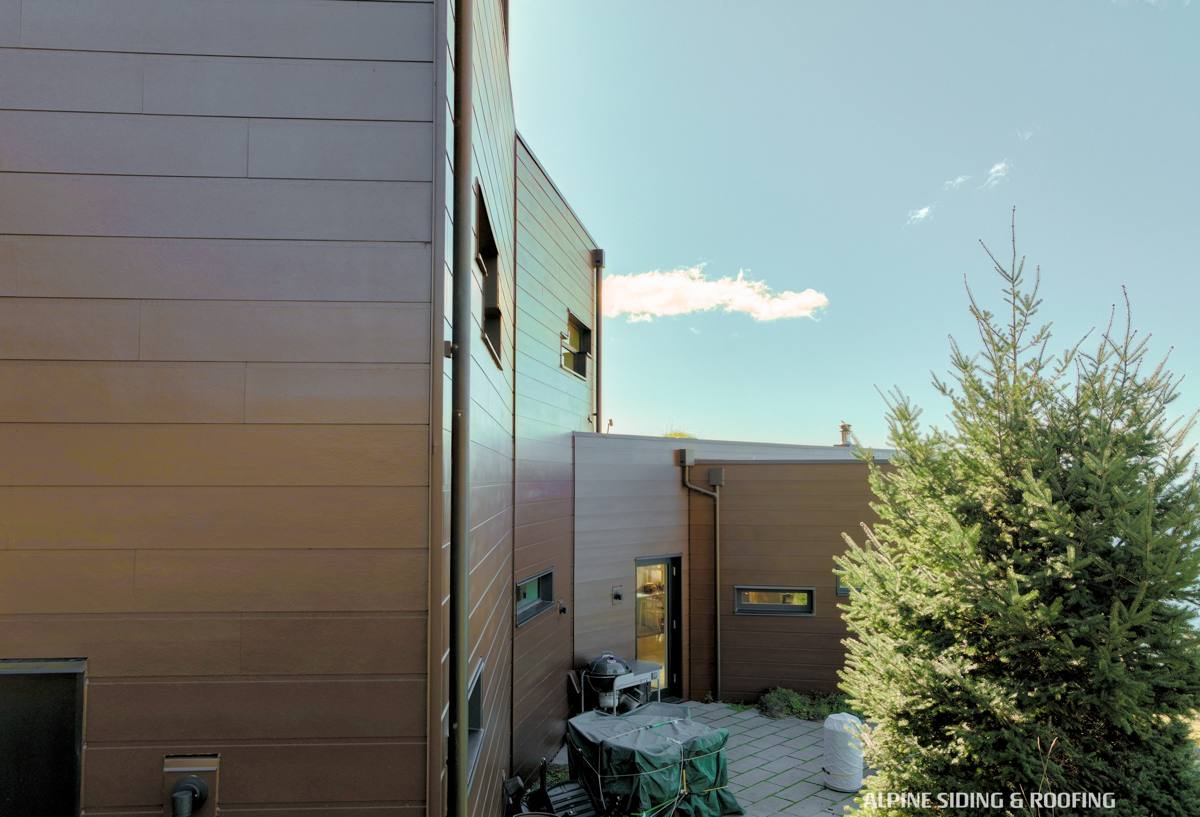
What Alger's Climate Does to Siding
Alger's exposure to salt air and driving rain off the water isn't just a seasonal inconvenience — it's a year-round load on every exterior surface of a house. A few specific things happen to siding out here that don't happen the same way twenty or thirty miles inland:
- Salt air accelerates corrosion. Any exposed metal fastener, flashing seam, or trim edge that isn't properly protected corrodes faster near the water than it would further inland.
- Driving rain finds gaps. Wind-driven rain doesn't just fall straight down — it gets pushed sideways into joints, laps, and penetrations. Siding systems that rely on face-sealed caulk joints instead of proper water-shedding laps tend to fail here sooner than they would in a calmer climate.
- Moss season is long. Whatcom County's damp, low-sun months give moss and algae a long runway to establish themselves on north-facing walls, under eaves, and anywhere airflow is limited. Porous or absorbent siding materials hold onto that moisture and give moss more to grip.
- Wood-based products swell and cycle. Any siding with real wood content — primed spruce, cedar, engineered wood — moves as it takes on and releases moisture through the wet season. That cycling is where paint failure, edge swelling, and eventual rot usually start.
None of this is unique to any one house in Alger — it's the baseline condition every exterior surface in this area has to deal with. The siding material and the installation both need to be chosen with that baseline in mind, not against a national average climate that doesn't apply here.
Why James Hardie Fiber Cement Fits This Climate
We install James Hardie fiber cement exclusively, and in a location like Alger the reasoning is straightforward. Fiber cement is made from cellulose fiber, sand, and cement — there's no wood content to swell, no organic material for moss to feed on the way it can with wood-based products, and it holds its shape through wet-dry cycling far better than anything with real wood in it.
James Hardie also builds region-specific product lines engineered for different climate zones. For the Pacific Northwest, that means HZ5 formulations designed around sustained moisture exposure rather than a one-size-fits-all national spec. That distinction matters more here than it would in a dry inland climate, because the siding is spending more of the year wet or damp than dry.
The factory-applied ColorPlus finish is another piece that matters specifically for salt air and long grey seasons — it's baked on under controlled conditions rather than field-applied, so it resists the fading and chalking that field-painted siding tends to show first on south and west exposures, and it holds up better against the salt film that settles on exterior surfaces near the water.
Where Fiber Cement Still Needs Good Installation
Fiber cement is not maintenance-free just because it's not wood. It still needs to be installed with correct clearances, proper flashing, and the right fastening pattern, or it will develop the same kinds of problems any siding develops when it's installed wrong. The material buys you a lot of resistance to moisture and pests — it doesn't buy you immunity from bad workmanship.
What a Correct Fiber Cement Job Looks Like Here
A siding job that's going to hold up in Alger's conditions has to get several things right that are easy to skip or rush. Here's what we treat as non-negotiable on every job in this area:
| Detail | Why It Matters in Alger |
|---|---|
| Weather-resistive barrier, properly lapped | Backs up the siding against wind-driven rain that gets past the face of the material |
| Rainscreen gap behind siding | Lets moisture that does get behind the panels drain and dry instead of sitting against the wall |
| Correct flashing at every penetration | Windows, doors, and any wall-mounted fixture are the most common places driving rain gets in |
| Proper ground and roofline clearance | Keeps siding out of standing moisture and splashback, which is where moss and staining start first |
| Fastener pattern and type per Hardie spec | Corrosion-resistant fasteners installed correctly prevent streaking and loosening from salt air exposure |
| Caulking only where Hardie's install guide calls for it | Over-reliance on caulk instead of proper laps is a common shortcut that fails within a few wet seasons |
Every one of these is a detail Hardie's own installation manual calls for — none of it is a specialty add-on. But it's also exactly the kind of thing that gets skipped by crews that don't work this climate regularly, because none of it shows up as a problem on day one. It shows up two, three, or five years later, usually as a callback nobody wants to make.
Our Process for an Alger Siding Job
We run every job the same way, whether it's a full re-side or a section replacement:
- On-site walkthrough. We look at the whole exterior — not just the siding, but the trim, flashing, window details, and anything that's already showing moisture or moss damage, since that tells us where water has been getting in.
- Honest scope and estimate. We tell you what we're seeing, what needs to happen, and what it's going to cost — no inflated scope, no surprise add-ons buried in fine print.
- Tear-off and substrate check. Once the old siding is off, we check the sheathing and framing underneath for any rot or damage that needs to be addressed before new siding goes on. Covering up a problem is worse than finding it.
- Weather barrier and rainscreen installation. This is the layer that does the real work of keeping Alger's driving rain out of the wall assembly, and it's installed before a single piece of Hardie siding goes up.
- Hardie siding installation to spec. Correct laps, correct fastening, correct clearances, correct flashing at every penetration — done to the manufacturer's installation guide, not shortcut for speed.
- Final walkthrough. We go over the finished job with you before we consider it done.
Why a Crew That Already Works Alger Matters
Whatcom County's coastal exposure isn't the same problem everywhere in the county — a home a few miles inland doesn't see the same salt exposure or wind-driven rain pattern as a home closer to the water in Alger. A crew that's worked this specific stretch knows which walls take the worst of the weather, where moss tends to establish first, and which installation details actually make a difference here versus in a milder part of the county.
That's not a small thing. A crew unfamiliar with this climate can install fiber cement siding perfectly well by a generic checklist and still miss the details that matter most in a place like Alger — rainscreen gaps, flashing at penetrations exposed to driving rain, clearances near ground level where splashback and moss are worst. Those are exactly the details that separate siding that looks fine on installation day from siding that's still performing well ten years later.
Questions Worth Asking Any Contractor Before You Hire
- Are you installing James Hardie fiber cement specifically, or a substitute product marketed as similar?
- Will you install a rainscreen gap behind the siding, or face-nail directly to the weather barrier?
- How do you handle flashing at windows, doors, and wall penetrations?
- What ground and roofline clearances will the siding have once it's installed?
- Do you follow James Hardie's published installation guide, and can you explain where your process differs?
If a contractor can't answer these plainly, that's worth noting before you sign anything.
Maintenance in a Salt Air, High-Moss Climate
Correctly installed James Hardie siding in Alger's conditions doesn't need much — that's a big part of the point. But a little seasonal attention keeps it looking and performing its best:
- Rinse salt film and general grime off the siding once or twice a year, especially on walls facing the water.
- Keep gutters clear so overflow isn't running down the face of the siding during heavy rain.
- Trim back vegetation and branches that shade walls and slow drying — shaded, damp walls are where moss establishes first.
- Have caulking and flashing points checked periodically, since even correctly installed sealant has a service life and needs occasional attention.
None of this compares to the paint touch-ups, caulk maintenance, and moisture-related repairs that wood-based or vinyl siding tend to need in this same climate over the same span of years.
Get a Straight Answer for Your Home
Every home in Alger sits a little differently — some are more exposed to wind and salt off the water, some have more tree cover and shade, some already have moisture or moss issues showing on the siding. We'd rather look at your specific house than talk in generalities. If you'd like a straightforward, no-pressure estimate for James Hardie fiber cement siding on your home, fill out the form below and we'll take it from there.