 Chuckanut
 Why Mount Vernon Siding Takes a Different Kind of Beating
Mount Vernon sits in the Skagit Valley, close enough to the Salish Sea and the Puget Sound marine air mass that homes here deal with the same core problem as much of northwest Washington: it stays wet for months at a time. Rain doesn't just fall here, it drives sideways on windy fall and winter days, gets pushed under poorly flashed trim, and settles into low-sun, shaded exterior walls where it never fully dries out between storms. Add a steady dose of salt-tinged coastal air moving up from the water, and you've got a climate that's genuinely tough on exterior building materials — not in a dramatic way, but in the slow, cumulative way that shows up as soft trim, peeling paint, and streaked siding five or ten years down the road.
We work this stretch of Washington, from our home base near Chuckanut down through the Skagit Valley into Mount Vernon, and the siding failures we get called out to look the same again and again: not one catastrophic event, but years of moisture doing its slow work on a product or installation that wasn't built for it.
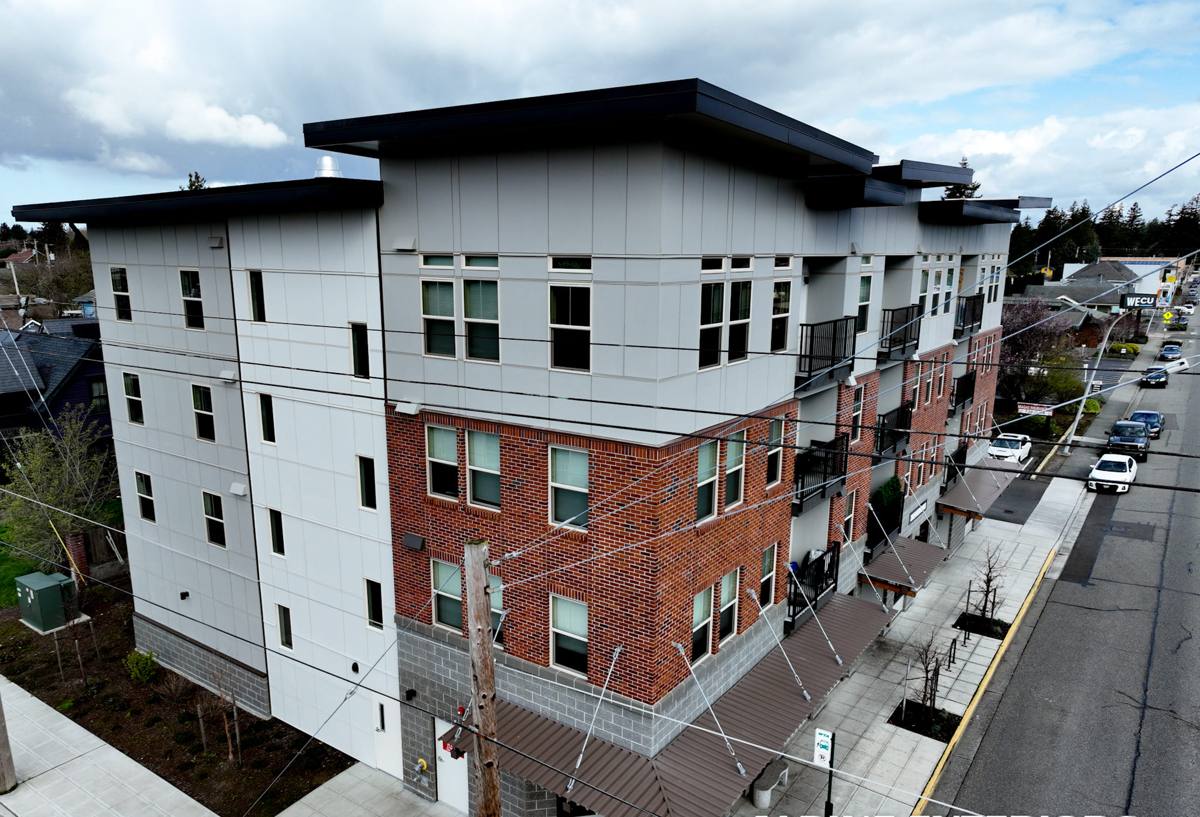
What Driving Rain, Salt Air, and Moss Actually Do to Siding
Moisture Intrusion
Wind-driven rain finds every gap in a siding system — unsealed butt joints, missing kick-out flashing, siding installed tight to a roofline or deck with no drainage gap behind it. Once water gets behind the cladding, it doesn't evaporate quickly in this climate. It sits against the sheathing, and over a few wet seasons that turns into rot, mold, and soft framing that nobody sees until a wall starts to feel spongy.
The Long Moss Season
North-facing walls, areas under tree cover, and anything shaded most of the day stay damp here for a good chunk of the year. That's exactly the environment moss and algae need to take hold. On some siding materials that's a cosmetic nuisance you can pressure-wash away. On others — especially wood-based and engineered wood products — sustained moss growth holds moisture directly against the material and accelerates decay from the surface in.
Salt Air and Coastal Exposure
Proximity to Puget Sound means a low but steady exposure to salt-laden air, which is harder on metal fasteners, flashing, and unprotected wood fiber than most homeowners realize. It won't wreck a house in one season, but over a couple of decades it's part of why some siding systems age faster here than the same product would in a dry inland climate.
Why We Standardized on James Hardie Fiber Cement
We install James Hardie fiber cement siding exclusively — not vinyl, not LP SmartSide or other engineered wood products, not competing fiber cement brands like Cemplank or Allura, and not primed cedar or spruce. That's a deliberate call, not a default. Fiber cement is cement, sand, and cellulose fiber pressed into a dense, stable board — it doesn't have the wood fiber that gives moss and rot something to feed on, and it doesn't soften, swell, or delaminate the way engineered wood products can when they take on repeated moisture. It's also non-combustible, which matters increasingly to insurers and homeowners in Washington.
Within fiber cement, we use Hardie specifically because of the ColorPlus factory finish (baked-on color that resists fading and chipping far better than field-applied paint) and because Hardie engineers its products by climate zone. Homes in our service area get the HZ5 product line, formulated for the wetter, more temperature-variable conditions of the Pacific Northwest rather than a one-size-fits-all national spec.
What a Correct Installation Actually Involves
Fiber cement is only as good as the installation behind it. Most of the siding failures we see on Hardie product weren't a materials problem — they were an installation shortcut that let water in behind a board that was otherwise doing its job fine.
Clearance and Drainage
Siding needs a minimum clearance above roofing, decks, and grade, and a proper drainage plane (typically a rainscreen or weather-resistive barrier with a ventilated gap) behind the boards. Skip this and you trap moisture directly against the sheathing — the exact failure mode this climate is built to cause.
Flashing First, Siding Second
Every window, door, deck ledger, and roofline intersection needs flashing installed and integrated with the water-resistive barrier before a single piece of siding goes up. This is the step that gets rushed on lower-bid jobs, and it's the step that determines whether a house stays dry for thirty years or starts showing water stains in five.
Fastening and Joints
Hardie specifies fastener type, spacing, and placement for a reason — under- or over-driven nails crack boards or leave gaps that widen with the freeze-thaw and wet-dry cycles typical of a Skagit Valley winter. Butt joints need to be sealed or flashed per manufacturer spec, not just butted together and caulked as an afterthought.
Caulking and Sealing
Caulk is a backup, not a water management strategy. Where we do use it — around penetrations, at trim joints — we use exterior-grade sealants rated for the temperature swings and constant moisture exposure this region delivers.
Fiber Cement vs. the Alternatives for a Mount Vernon Home
| Material | Moisture behavior here | Moss/algae resistance | Fire rating | Typical finish life |
|---|---|---|---|---|
| James Hardie fiber cement | Dimensionally stable, doesn't swell or rot from surface moisture | No wood fiber to feed decay; surface can be cleaned | Non-combustible | 15+ years before repaint needed with ColorPlus finish |
| Vinyl siding | Doesn't rot, but can warp or crack in temperature swings; seams can let water behind panels | Surface growth cleans off but can trap moisture at laps | Combustible, can melt/deform near heat sources | Color fades; can't be repainted easily |
| LP SmartSide / engineered wood | Wood-fiber core is vulnerable if the factory seal is compromised at cuts or edges | More susceptible to sustained moss/algae contact over time | Combustible | Shorter repaint cycle in wet climates |
| Primed cedar/spruce | Natural wood; needs consistent maintenance to resist this climate's moisture load | Most vulnerable of the group without regular treatment | Combustible | Repaint/reseal every few years |
This isn't a knock on every homeowner who has vinyl or engineered wood siding — those products get chosen for good reasons, usually upfront cost. It's why, as a company, we made the call to install one product system and install it right, rather than offer several products at different price points and quality levels.
How We Approach a Mount Vernon Project
- Walkthrough and assessment — we look at existing siding, trim, flashing, and any signs of past moisture intrusion before quoting anything.
- Tear-off and sheathing check — old siding comes off, and we inspect the sheathing underneath for rot or soft spots before anything new goes up.
- Weather barrier and drainage plane — a new water-resistive barrier and rainscreen gap are installed to current best practice, not just whatever was there before.
- Flashing integration — windows, doors, and penetrations are flashed and tied into the barrier system before siding installation begins.
- Hardie installation to spec — correct fastener placement, clearances, and joint treatment, following manufacturer installation requirements.
- Final inspection and cleanup — we walk the finished job with the homeowner before calling it done.
What Drives the Cost
| Factor | Why it matters |
|---|---|
| Tear-off scope | Removing and disposing of existing siding down to the sheathing adds labor versus siding over an existing layer (which we generally don't recommend) |
| Sheathing repair | Rot found underneath old siding needs to be replaced before new siding goes on — this varies a lot house to house |
| Home size and wall complexity | Cut-up facades with lots of corners, gables, and trim take more labor than simple rectangular walls |
| Product line and profile | Lap siding, panel siding, and shingle-style Hardie products carry different material and labor costs |
| Trim and accessory work | Fascia, soffit, and window trim replacement alongside siding affects total project scope |
We don't publish a flat per-square-foot number because the honest answer depends on what we find once tear-off starts — but we'll give you a clear, itemized estimate before any work begins.
Why It Matters That We Already Work Mount Vernon
A crew that works the Skagit Valley regularly knows how local building departments handle siding permits and flashing inspections, understands how wind-driven rain actually behaves against different wall orientations here, and has already seen how various products and installation shortcuts hold up (or don't) after a few Pacific Northwest winters. That's different from a crew learning the region's quirks on your house. Being based nearby also means we're not disappearing after the invoice is paid — if a warranty question or a minor punch-list item comes up, we're a short drive away, not a phone number in another state.
Maintenance Checklist for Fiber Cement Siding
- Rinse siding with a garden hose (not a pressure washer aimed directly at seams) once or twice a year to clear pollen, salt residue, and early moss growth
- Walk the exterior after major windstorms and check caulking at trim and penetrations for cracks or gaps
- Keep gutters clear so overflow doesn't run down the face of the siding
- Trim back vegetation and tree cover that keeps north-facing walls shaded and damp longer than necessary
- Watch for any soft spots, staining, or bubbling paint near ground level or below windows — early signs of moisture behind the siding
- Repaint or touch up trim on the manufacturer-recommended cycle rather than waiting until it visibly fails
If you're weighing a siding replacement or new construction project in Mount Vernon and want a straight answer on what your home actually needs, we're happy to take a look. Fill out the form below for a free, no-pressure estimate — no obligation, just an honest assessment of your siding and what it would take to get it right.