 Chuckanut
 If you own a deck in the Happy Valley area near Chuckanut, you already know it takes a different kind of beating than a deck fifty miles inland. Salt-laden air off the water, long stretches of driving rain, and a moss season that seems to start earlier every year all work on wood, metal, and framing at the same time. Deck repair out here isn't just about swapping a few boards — it's about understanding which parts of the structure are actually failing, why they're failing, and what will hold up through another wet Whatcom County winter instead of failing again in two years.
What Local Conditions Do to a Deck
Three things drive most of the deck damage we see in this part of the county, and they usually work together rather than alone.
Salt air is the one people underestimate. Even a deck that isn't right on the water still picks up airborne salt, and that salt speeds up corrosion on nails, screws, joist hangers, and bolts — including hardware that's rated for outdoor use. Once a fastener starts rusting, it loses grip strength long before it looks obviously bad, and it can also stain the wood or composite around it.
Driving rain is the second factor. Rain that comes in sideways off Samish Bay and Bellingham Bay gets pushed under railings, into end grain, and behind ledger boards in ways that vertical rain doesn't. Wood that would dry out fine after a normal shower can stay damp for days when the rain keeps coming at an angle and the sun doesn't get a chance to dry things out.
Moss and algae are the third, and they're really a symptom of the first two combined with shade. Trees and cloud cover keep decks damp longer, and once moss or algae takes hold on a board surface it holds moisture directly against the wood fibers, which accelerates rot underneath even when the top of the board still looks okay.
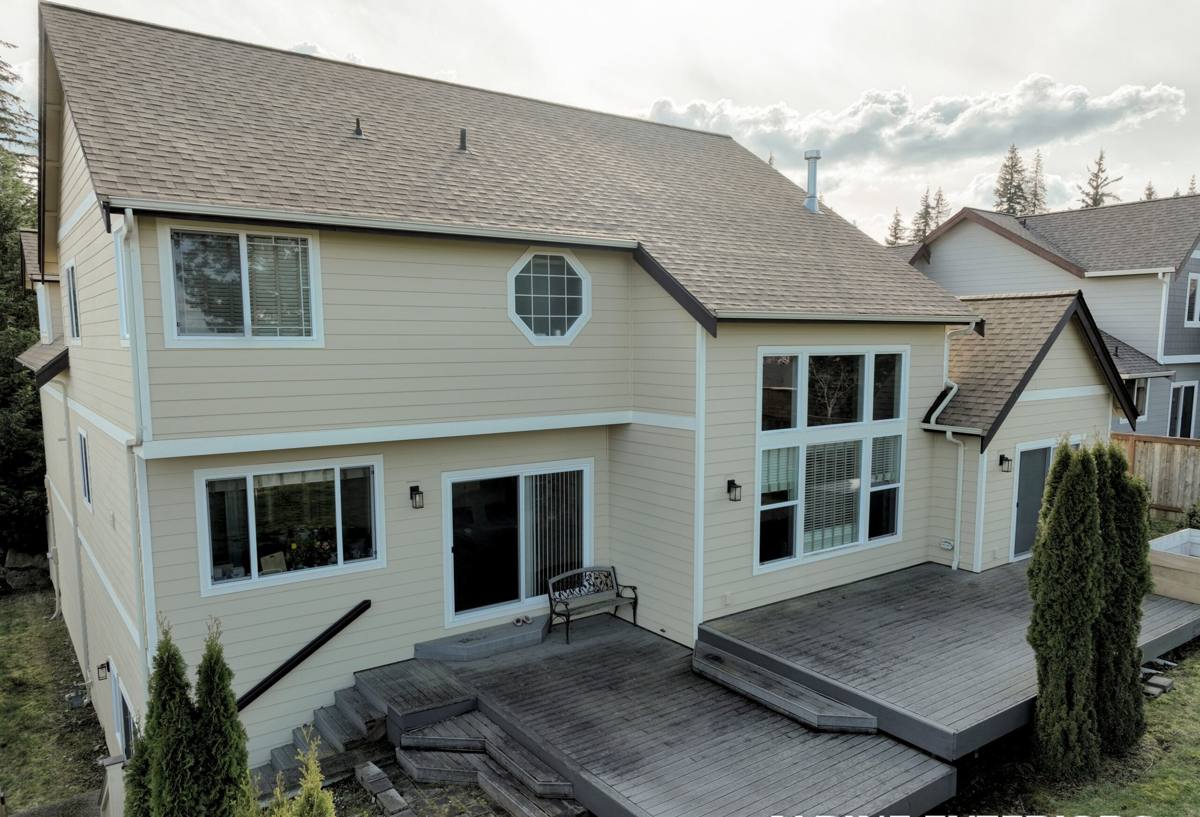
Signs Your Deck Needs Repair, Not Just a Cleaning
A lot of homeowners try pressure washing or a deck cleaner first, which is reasonable — but some problems look cosmetic and aren't. Here's what tells us a deck needs actual repair work:
- Boards that feel soft, spongy, or give slightly underfoot
- Spots that stay visibly damp for days after the rain stops
- Green or black staining that comes back within a few weeks of cleaning
- Rust streaks bleeding out from screw heads or bolt plates
- Railing posts that flex or wiggle when you push on them
- A visible gap opening up where the deck meets the house (the ledger board)
- Stair stringers that creak, sag, or show cracking at the cut points
- Fasteners that spin freely instead of tightening, meaning the wood around them has softened
Any one of these is worth a look. Several at once usually means moisture has been getting into the structure for a while, not just the surface.
Repair vs. Replace: How We Make the Call
Not every problem deck needs to be torn out. The decision usually comes down to whether the damage is limited to surface boards and hardware, or whether it's reached the framing, ledger, or posts that actually carry the structure's weight.
| Situation | Usually Repairable | Usually Needs Replacement |
|---|---|---|
| Deck boards | A handful of soft or cracked boards among otherwise solid decking | Widespread softness across most of the deck surface |
| Framing / joists | Isolated rot at one or two joist ends | Rot found at multiple joists, especially near the ledger |
| Railings | Loose or wobbly posts with sound wood underneath | Posts with rotted bases or split anchor points |
| Ledger board | Minor fastener corrosion, wood still solid | Soft or delaminated wood where the deck attaches to the house |
| Footings / posts | Surface weathering, footing still level and stable | Heaving, settling, or visible movement under load |
We'll always tell you honestly which column your deck falls into, including when a repair now is the right call even if a bigger project is likely down the road. There's no reason to replace a whole deck when the framing is sound.
What a Correct Repair Actually Involves
Structural Framing and the Ledger Board
The ledger board — where the deck bolts to the house — is the single most important connection on the whole structure, and it's also the piece most exposed to water running off the siding above it. A correct repair means checking the flashing behind and above the ledger, not just the board itself, because a solid-looking ledger with bad flashing behind it will fail again within a season or two.
Decking Boards and Fastening
Replacing boards is only half the job. We also look at what's holding them down. If the original fasteners were standard-coated screws or nails, we typically upgrade to hardware better suited to salt exposure so the new boards aren't undermined by the same corrosion that damaged the old ones.
Railings, Stairs, and Guardrails
Railings take constant hand pressure and lateral force, so a wobbly post isn't a minor cosmetic issue — it's a safety issue. We check post anchoring down to the framing, not just tightening what's visible above the deck surface, and we make sure guardrail height and baluster spacing meet current code if we're rebuilding a section.
Moisture Control and Flashing
Almost every deck repair in this climate should include some attention to how water sheds off the structure — flashing at the ledger, gaps between boards for drainage, and making sure nothing traps water against end grain. Fixing the visible damage without addressing why it happened just buys a few years before the same repair is needed again.
Our Repair Process
1. On-Site Inspection
We walk the full deck, not just the area you called about. That includes checking underneath where possible, testing suspect boards, and looking at fastener condition, since damage in one area often points to a related issue elsewhere.
2. A Written Scope Before Work Starts
You get a clear explanation of what's failing, why, and what we're proposing to do about it — in plain language, before any work begins. No surprise add-ons once the deck is opened up.
3. The Repair Itself
We remove and replace only what actually needs it, matching materials and fastener types to what the rest of the structure needs to hold up in this climate. Structural work is never covered over with a new surface board on top.
4. Walkthrough and Care Guidance
Before we leave, we walk the finished repair with you and point out anything worth keeping an eye on, along with simple maintenance that extends the life of the work.
Choosing Materials for This Climate
Wood and composite decking each have real trade-offs here, and the right choice depends on your deck's exposure and how much upkeep you want to do.
| Factor | Wood Decking | Composite Decking |
|---|---|---|
| Upfront cost | Generally lower | Generally higher |
| Moisture behavior | Can absorb and release moisture; needs sealing to manage this | Doesn't absorb water the way wood does, but can trap surface moisture against fasteners if drainage gaps are wrong |
| Moss and algae resistance | Depends on species and finish; needs periodic cleaning | Varies by product; some composites still grow surface algae in shaded, damp spots |
| Maintenance | Periodic cleaning and sealing/staining | Lower routine maintenance, but repairs to damaged boards can be more involved |
| Repair approach | Individual boards are straightforward to replace | Board profiles and fastening systems vary by manufacturer, so repairs need matching parts |
Neither option is a fix-all in this climate — both need correct fastening, drainage, and airflow underneath to actually hold up. We'll talk through what makes sense for your deck's sun exposure, tree cover, and how it's used before recommending one over the other.
Maintaining Your Deck Between Repairs
A little upkeep goes a long way toward stretching the time between repair calls. A few habits that matter most in this climate:
- Sweep off fallen leaves and needles regularly — they hold moisture and feed moss growth
- Clean visible moss or algae promptly rather than letting it establish
- Check railings and stair posts for movement once or twice a year
- Keep gutters and downspouts near the deck clear so runoff isn't draining onto it
- Look underneath the deck occasionally for standing water or soft framing
- Re-seal or re-stain wood decking on the schedule the product calls for, not just when it looks faded
Why Hiring a Crew That Already Works Happy Valley Matters
A repair crew that regularly works decks in the Happy Valley and Chuckanut area already knows what to check first, because they've seen the same salt-air corrosion, the same moss patterns, and the same rain exposure on job after job nearby. That familiarity means less time spent diagnosing and more time spent fixing the actual problem, with materials and fastener choices that are already proven to hold up to this specific stretch of Whatcom County weather rather than generic recommendations that work fine somewhere drier.
If your deck is showing any of the signs above, we're happy to take a look and give you a straightforward, no-pressure estimate — just fill out the form below and we'll get in touch.