 Chuckanut
 Why Lake Samish Roofs Age Differently Than Roofs in Town
Homes around Lake Samish sit in a different microclimate than a roof a few miles away in downtown Bellingham or out along the flats. Much of the shoreline and the hillsides above it are ringed by fir, cedar, and maple, which means a lot of roof surfaces here get partial or full shade for most of the day. Add in humidity coming off the lake itself, moisture-laden marine air that pushes in from Samish Bay and the greater Salish Sea, and the driving, wind-angled rain that Whatcom County storms are known for, and you get a roof that simply never fully dries out the way a sun-exposed roof in a more open subdivision would.
That combination is exactly what feeds moss, moss is exactly what traps moisture against shingles and decking, and trapped moisture is what eventually rots sheathing, lifts shingle edges, and shortens the life of a roof that might otherwise have lasted two decades. None of this means a roof at Lake Samish is doomed to fail early. It means the installation has to account for shade, moisture, and salt-tinged air from day one, not as an afterthought.
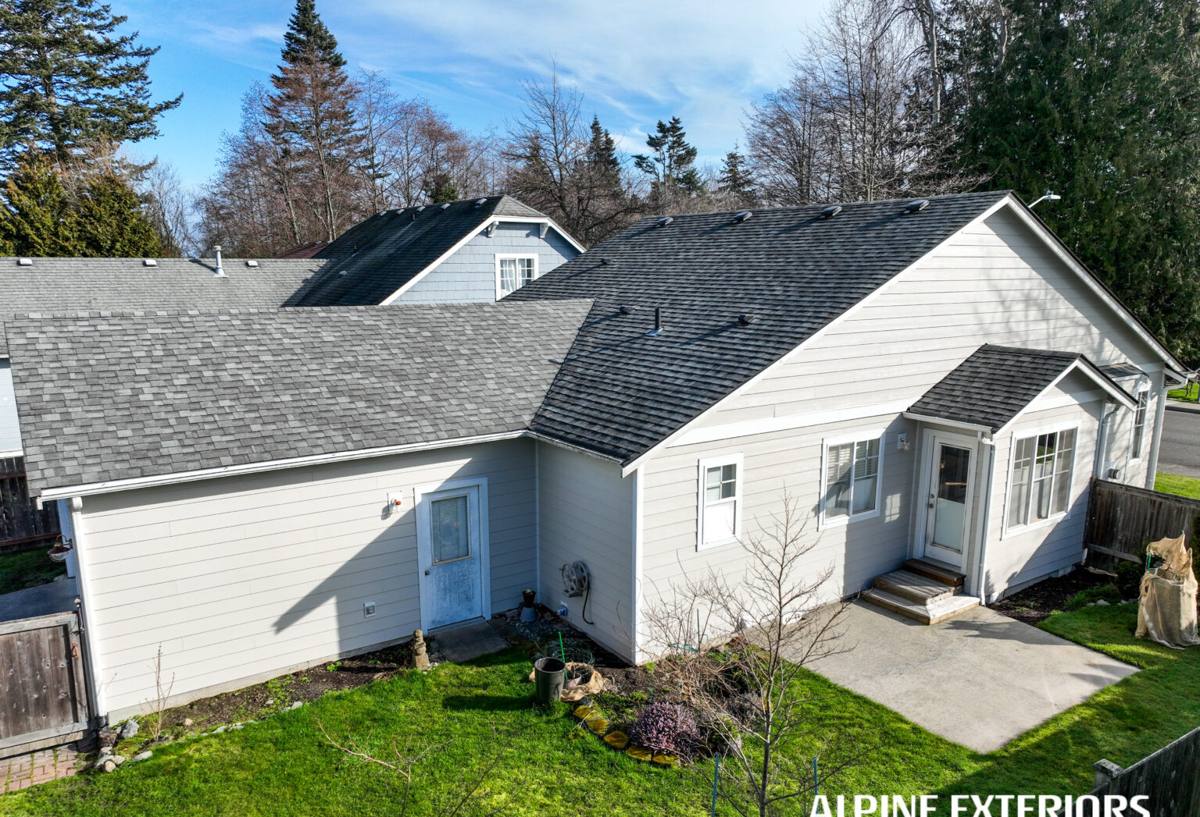
Signs a Lake Samish Roof Is Due for Replacement, Not Another Repair
Roof repairs make sense for isolated damage. A full new roof installation makes sense when the underlying materials are worn out everywhere, not just in one spot. On shaded, lake-adjacent homes, the wear pattern tends to show up in specific, recognizable ways:
- Moss growing in mats along north-facing slopes, valleys, or anywhere shade lingers longest
- Granules collecting in gutters and downspouts, leaving shingles looking bald or blotchy
- Shingle edges curling, cupping, or lifting, especially on slopes that stay damp longer after rain
- Dark streaking (algae) that pressure washing keeps coming back after
- Soft or spongy spots underfoot on the roof deck, or sagging along the ridge or eaves
- Daylight visible through the attic sheathing, or damp insulation and musty smell in the attic
- A roof that's already had multiple patch repairs in the last few years
If you're seeing two or three of these at once, it's usually more cost-effective long-term to replace than to keep chasing leaks one repair at a time.
What a Correct New Roof Installation Involves Here
Tear-Off and Deck Inspection
We don't install new roofing over old, failing material, and we don't recommend it on any home near Lake Samish. A full tear-off lets us actually see the roof deck, which is the part that matters most. Damp, shaded conditions are notorious for hiding rot under a layer of shingles that still looks intact from above. Any soft or delaminated plywood gets replaced before anything new goes down, because a new roof over a compromised deck fails from the inside out regardless of how good the shingles are.
Underlayment and Water Barrier
Given the amount of driving rain this area sees, we don't treat underlayment as an afterthought. Self-adhering ice-and-water barrier goes in at eaves, valleys, and around every roof penetration, which is where wind-driven rain most often finds its way underneath shingles. The rest of the deck gets a synthetic underlayment that holds up to the extended damp periods common here far better than older felt paper products.
Ventilation
A shaded roof that also has poor attic ventilation is a slow-motion moisture problem. Warm, moist air from inside the house needs somewhere to go, and if it's trapped against a cool, shaded roof deck, it condenses and feeds rot and mold from underneath, even if the shingles above are brand new. We check and correct intake (soffit) and exhaust (ridge) ventilation as part of every installation, not as an upsell after the fact.
Flashing, Valleys, and Penetrations
Chimneys, skylights, plumbing vents, and valleys are where the overwhelming majority of roof leaks start, not out in the open field of shingles. New step flashing, counterflashing, and valley metal go in with every installation, sized and lapped correctly for the pitch and the amount of water this area sees in a heavy storm.
Choosing the Right Roofing Material for Lake Samish Conditions
There's no single "best" roofing material for every home, but shade, moss pressure, and salt-tinged marine air do change the calculus compared to a roof out in an open, sunny lot. Here's how the common options generally compare for a lake-adjacent, tree-covered property:
| Material | Moss & algae resistance | Typical lifespan | Maintenance needs | Best fit |
|---|---|---|---|---|
| Standard architectural asphalt shingle | Moderate (better with algae-resistant granules) | 20–30 years | Periodic moss removal and gutter cleaning | Most homes, balances cost and performance |
| Algae-resistant (copper-granule) asphalt shingle | Good | 25–30 years | Lower moss/algae upkeep than standard shingle | Heavily shaded slopes or north sides |
| Standing seam metal | Very good — sheds moss and needles, doesn't hold moisture | 40–60+ years | Minimal; occasional debris clearing | Steep, shaded, tree-covered lots; long-term owners |
| Synthetic/composite shake | Good | 30–50 years | Low; some products need periodic cleaning | Homes wanting a shake look without wood's moisture issues |
We steer most heavily shaded Lake Samish homes toward algae-resistant shingles or metal, not because standard shingles are a bad product, but because the maintenance burden of moss removal on a hard-to-access, tree-shaded roof adds up in both cost and risk over the years. We'll walk through the real trade-offs for your specific roof, exposure, and budget rather than defaulting to one answer.
What Actually Drives the Cost of a New Roof Here
Homeowners around the lake often ask why one neighbor's roof cost noticeably more or less than another's. The biggest factors are usually roof size and pitch, the number of layers being torn off, how many valleys, dormers, and penetrations there are, and the material chosen. As a broad range, a typical single-family roof replacement in this area runs somewhere in the low-to-mid five figures, with steeper pitches, multiple stories, difficult access, or metal roofing pushing toward the higher end. We give exact numbers only after a real measurement and inspection, not a phone-estimate guess.
How Our Installation Process Works
- On-site inspection: We walk the roof and attic in person, checking deck condition, ventilation, and the specific moss/shade pattern on your property.
- Written estimate: A clear scope of work and price, spelling out material, underlayment, flashing, and ventilation plans, no vague line items.
- Permitting: We handle the Whatcom County permit and inspection requirements for the project.
- Tear-off and deck repair: Old roofing comes off, the deck is inspected, and any damaged sheathing is replaced.
- Installation: Ice-and-water barrier, underlayment, flashing, and the chosen roofing material go on in the correct sequence for this climate.
- Ventilation check: Intake and exhaust airflow is verified before we call the job finished.
- Final walkthrough and cleanup: We review the finished roof with you and make sure the property, including gutters and landscaping, is left clean.
Why Hiring a Crew That Already Works Lake Samish Matters
A roofing crew that mostly works flat, open subdivisions will approach a Lake Samish roof the same way they approach any other roof, and that's how you end up with a technically fine installation that still grows moss again in three years because ventilation or material choice didn't account for the shade and moisture this area actually has. Working regularly in Chuckanut and around the lake means we already know which slopes stay wet longest through a wet Whatcom County winter, where moss tends to establish first, and how much driving rain a valley or chimney flashing detail actually needs to hold up to. That local pattern recognition shows up in fewer callbacks, not in a fancier sales pitch.
Protecting Your New Roof After Installation
A correctly installed roof still benefits from basic upkeep, especially in a shaded, moss-prone setting like this one. A little attention each year goes a lot further here than it would on a sun-exposed roof across town.
- Clear overhanging branches back from the roofline to reduce shade and debris buildup
- Clean gutters and valleys at least twice a year, more often if surrounded by conifers
- Have moss treated or gently removed before it forms thick mats, not after
- Check attic ventilation isn't blocked by insulation or storage
- Schedule a roof check after any major windstorm to catch lifted flashing or shingles early
Get a Straightforward Estimate
If your roof around Lake Samish is showing moss, granule loss, curling shingles, or you just want an honest read on how much life it has left, we're glad to take a look. The form below gets you a free, no-pressure estimate from a crew that already understands what this lake, this shade, and this climate do to a roof over time.