 Chuckanut
 Lake Samish Is a Different Kind of Window Job
Homes around Lake Samish sit in their own microclimate compared to a lot of Chuckanut and greater Whatcom County. Tree cover is heavier here, lots stay shaded for long stretches of the day, and the humidity coming off the water lingers on siding, trim, and glass long after a storm has passed. Add in the driving rain that comes through this part of Washington off the Salish Sea and the salt air that reaches inland from Samish Bay and the wider Puget Sound corridor, and you've got a set of conditions that's tougher on windows than a typical open, sun-exposed lot.
That's true whether your place is an older lake cabin that's been added onto over the decades or a newer year-round home. The window installation itself isn't fundamentally different in terms of tools or technique, but the decisions around product selection, flashing, and detailing matter more here, because the margin for error is smaller. A window that gets away with a sloppy install in a dry, sunny neighborhood will show problems a lot sooner on a shaded lot at Lake Samish.
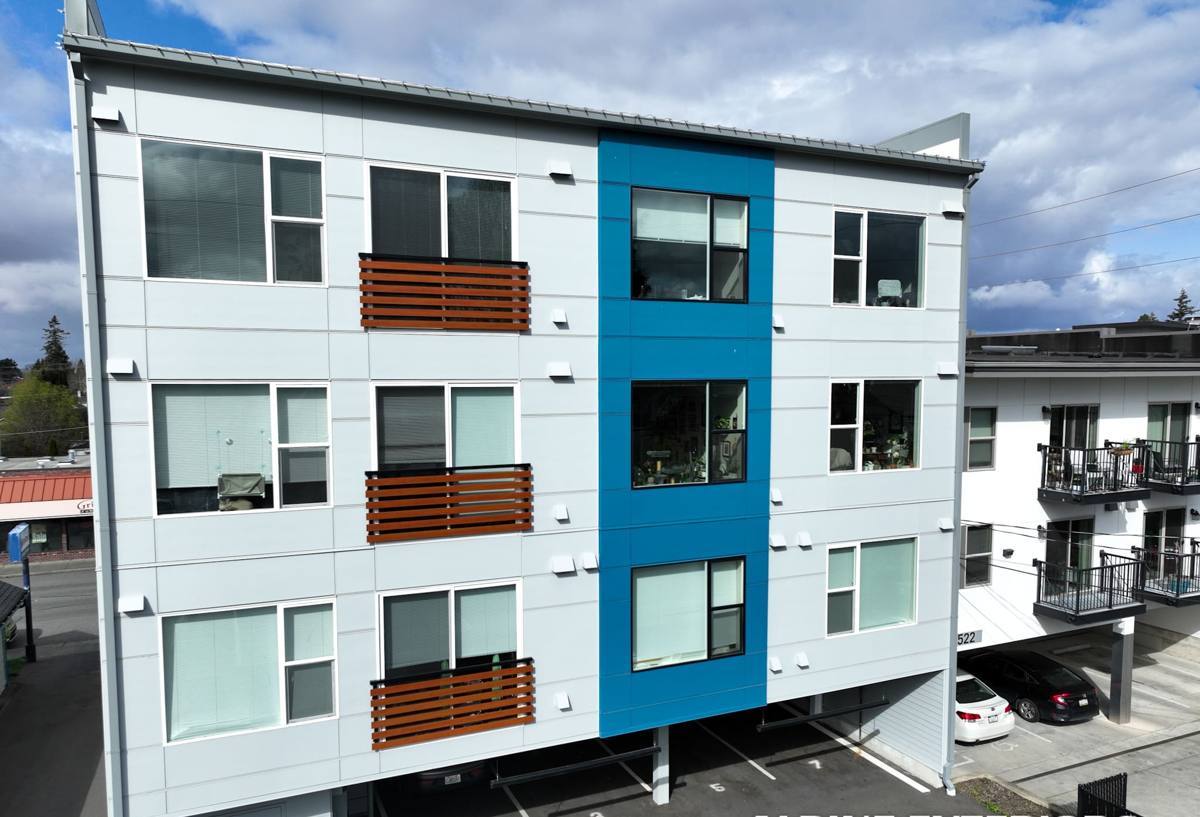
What the Local Climate Does to Windows Over Time
Shade, Humidity, and Slow-Drying Wood
Wood and wood-adjacent materials need to dry out between wet periods to stay healthy. On a shaded, tree-lined lot near the lake, that drying window is shorter than it is on an open site just a few miles away. Sills, trim, and any exposed wood framing stay damp longer, which is exactly the environment moss, algae, and mildew look for. Over a few seasons that moisture cycle works its way into caulk joints and paint film, and eventually into the wood itself if the window wasn't sealed and flashed correctly to begin with.
Wind-Driven Rain and Failed Seals
Whatcom County gets its share of driving rain, and lake-facing or west-facing walls tend to catch more of it. Wind-driven rain doesn't just fall on a window, it gets pushed sideways and upward into any gap it can find. Factory seals between panes fail eventually on any window, but a poor installation accelerates the process by letting water sit against the frame instead of shedding away from it. Once water gets behind trim or siding around a window opening, it can travel a surprising distance before it ever shows up as a visible stain inside.
Signs a Lake Samish Home Needs New Windows
Some of these show up gradually, others all at once after a hard winter. Worth checking for during the next dry stretch:
- Fogging or a hazy film between the panes of a double-pane window — the seal has failed and the insulating gas is gone
- Soft, spongy, or discolored wood at the sill or lower frame corners
- Moss, algae, or dark streaking creeping from the roofline or siding onto window trim
- Windows that stick, won't stay propped open, or won't latch tightly anymore
- Noticeable draft or a visible gap of daylight around the frame edge
- Heating bills that feel high for the size of the home, especially in rooms with more glass
- Original single-pane or older aluminum-frame windows still in place on an older cabin
What a Correct Installation Actually Involves
Flashing and the Sill Pan
The single most important part of any window installation, especially on a shaded, high-rainfall lot, is how water is managed at the rough opening before the window ever goes in. A properly installed sill pan and flashing tape create a path for any water that does get past the window to drain back out, rather than pooling against the framing. This needs to tie in correctly with the house wrap and siding around it — an installer who skips this step or does it out of order is setting up a slow leak that won't show itself for a year or two.
Fit, Shim, and Insulate
A window needs to be shimmed level, plumb, and square before it's fastened, then insulated around the perimeter without overfilling the gap. Too much expanding foam can bow the frame and keep the window from opening and closing properly; too little leaves an air gap that shows up as a draft and a cold spot on the wall. This is a place where experience shows — it's a feel as much as a measurement.
Interior and Exterior Finish
Trim, caulking, and paint or sealant on the exterior aren't cosmetic afterthoughts — they're the last line of defense against exactly the kind of moss and moisture buildup that's common on shaded Lake Samish properties. Gaps or thin caulk lines here are where algae gets a foothold first.
Choosing a Frame Material for a Wooded Lake Property
There's no single "best" window material — it depends on how much sun and moisture a particular wall sees, and how much upkeep you want to take on. Here's how the common options compare for a shaded, humid lot like most around the lake:
| Frame Material | Moisture Tolerance | Maintenance | Notes for a Lake Samish Lot |
|---|---|---|---|
| Vinyl | Very good — won't rot or corrode | Low — occasional cleaning | A solid, low-maintenance default for shaded, moisture-heavy walls |
| Fiberglass | Excellent — very stable in wet, shifting temperatures | Low | Holds paint well if you want a custom color; higher upfront cost |
| Wood-clad | Good on the exterior clad side, but the interior wood face still needs care | Moderate to high | We're selective about where we recommend solid wood exteriors on shaded, damp elevations — the cladding protects it, but any nick or gap in that cladding becomes a slow moisture entry point that's easy to miss under tree cover |
| Aluminum | Poor thermal performance, prone to condensation | Low, but doesn't solve the underlying issue | Common in older cabins; almost always worth upgrading for comfort and to stop condensation drip |
Our Process, Start to Finish
We keep this straightforward:
- On-site walkthrough. We look at each window opening, check for existing water damage or rot, and talk through what you actually want out of the project — comfort, appearance, resale, or all three.
- Measurements and product selection. We measure precisely and go over frame material, glass options, and grille styles based on that specific wall's sun and moisture exposure, not a one-size answer for the whole house.
- Scheduling around your property. Lake properties sometimes have tighter access — narrow driveways, gates, or seasonal use — and we plan the work window around that.
- Install day. Old windows come out, openings get inspected and repaired if there's hidden rot, new flashing and sill pans go in, and windows are set, shimmed, insulated, and sealed.
- Finish and cleanup. Interior and exterior trim is finished, the site is cleaned up, and we walk the job with you before we call it done.
What Affects the Cost of a Window Project Here
Every home is different, but these are the main variables that move the price up or down on a Lake Samish job:
| Factor | Why It Matters |
|---|---|
| Number and size of windows | The most direct driver of total project cost |
| Frame material | Vinyl is typically the most affordable; fiberglass and wood-clad cost more |
| Retrofit vs. full-frame replacement | Full-frame work costs more but is often necessary where there's hidden rot or the opening needs to change size |
| Site access | Steep or narrow lake-access driveways, stairs, or tight lots can add labor time |
| Existing damage | Rot repair at the sill or framing found once old windows come out adds to the scope |
| Trim and siding tie-in | Matching or repairing surrounding trim and siding affects both material and labor |
We'll always give you honest, broad numbers up front and flag anything that could change the scope — like hidden rot — before we move forward, not after.
Why a Crew That Already Works Lake Samish Matters
A contractor who's done work on this lake before isn't guessing about how a shaded, tree-heavy lot behaves. We know to look closely at north- and west-facing walls for moss and slow-drying wood, we know how driving rain moves across a lakefront elevation, and we know which frame materials actually hold up under that kind of exposure versus which ones just look good on a showroom floor. We're also used to the logistics — tighter driveways, septic and well locations that need to be worked around, and scheduling that respects a property that might be a full-time home or a seasonal one.
That local familiarity saves you from paying for someone else's learning curve on your house.
If your windows are fogging, drafty, sticking, or just starting to show their age under all that tree cover, we're happy to take a look. Fill out the form below for a free, no-pressure estimate on your Lake Samish window project — we'll walk the property, answer your questions, and give you straight numbers with no obligation.