 Chuckanut
 Roofing for the Larrabee Stretch of Chuckanut
Homes in the Larrabee area sit in one of the more demanding microclimates in Whatcom County. You're close enough to Samish Bay and Puget Sound to catch salt-laden air off the water, tucked under enough fir and cedar canopy to grow moss on almost any north-facing slope, and exposed to the kind of sideways, driving rain that comes with storms funneling through the Chuckanut corridor. An asphalt shingle roof built for a subdivision in flat, open terrain does not automatically hold up here. The materials, the underlayment details, and the maintenance schedule all need to account for what this particular stretch of Whatcom County throws at a roof year after year.
This page covers what a correctly built and maintained asphalt shingle roof looks like for a Larrabee home, why the details matter more here than they do a few miles inland, and how we approach the work as a crew that's spent real time on roofs in this exact area.
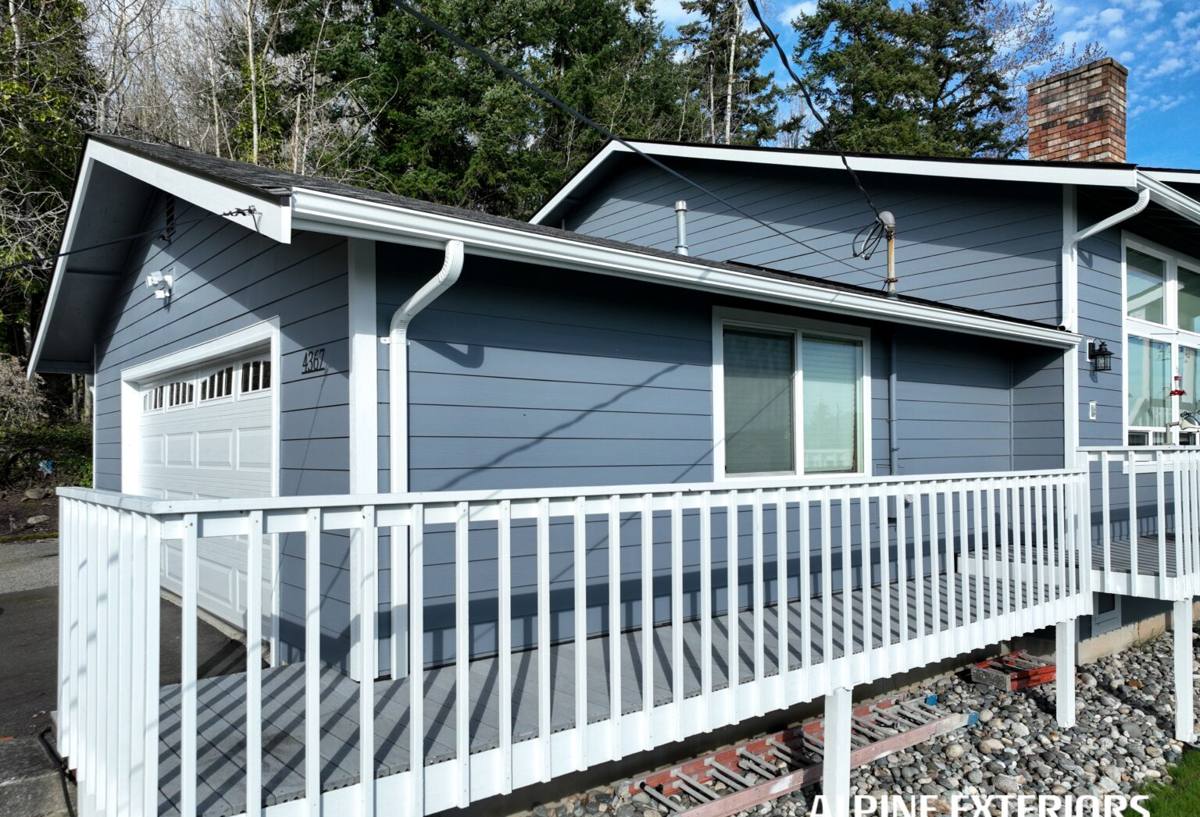
What Makes Larrabee Roofing Different
Salt Air and Metal Fatigue
Proximity to Samish Bay means airborne salt settles on every exterior surface, including your roof. Salt accelerates corrosion on exposed metal — flashing, fasteners, drip edge, and any exposed nail heads. On a standard shingle roof, most of that metal is hidden under the shingle courses, but valleys, chimney flashing, and vent boots are still exposed to the weather and to salt deposition. Over time, unprotected or lower-grade metal in those spots corrodes faster near the water than it would inland, which is why we don't treat flashing as an afterthought on Larrabee jobs.
Driving, Wind-Driven Rain
Storms coming off the water tend to push rain sideways rather than straight down, especially on homes with any elevation or exposure along the Chuckanut Drive corridor. Wind-driven rain finds gaps that vertical rain never would — under-tabbed shingles, poorly lapped underlayment, and shallow nail penetration are all places where sideways rain gets a foothold. A roof spec that assumes calm, vertical rainfall will eventually leak here, even if it would perform fine somewhere more sheltered.
Shade, Moisture, and a Long Moss Season
The dense tree cover that makes Larrabee attractive to live in also means a lot of roofs sit in partial or full shade for large parts of the day. Shaded, damp roof surfaces don't dry out between rain events the way a sun-exposed roof does, and that extended damp period is exactly what moss and lichen need to establish. Once moss takes hold, it holds moisture against the shingle surface, works into the granule layer, and can lift tabs enough to let water underneath. In this area, moss isn't a cosmetic nuisance — it's a moisture-management problem that shortens roof life if it's ignored.
What a Correctly Built Roof Looks Like Here
Given those three conditions — salt air, wind-driven rain, and a long moss season — a properly installed asphalt shingle roof for a Larrabee home should include the following as standard practice, not upgrades:
- Ice-and-water shield at eaves, valleys, and roof penetrations, not just the code minimum, given how often those areas stay damp
- Corrosion-resistant flashing at valleys, chimneys, and sidewalls — this is where salt air does the most damage over time
- Proper nailing pattern and depth so shingles hold tight against wind-driven, sideways rain instead of lifting at the tabs
- Balanced attic ventilation so moisture from inside the house isn't adding to what's already landing on the roof from outside
- Shingles rated for algae and moss resistance where the roof plane sits under heavy shade
- Clean valley and flashing transitions that shed water fast instead of letting it pool or sheet across granule surfaces
None of this is exotic. It's standard trade knowledge applied consistently, instead of skipped to save time or material cost. The failures we see most often on older Larrabee roofs trace back to one of these details being shorted during the original install.
Choosing the Right Shingle for This Climate
Not every asphalt shingle product performs the same way under shade, salt air, and heavy rain. The table below is a general guide to how the common categories compare for a Larrabee home — actual product lines and warranties vary by manufacturer, so we'll walk through specific options once we've seen your roof.
| Shingle Type | Typical Lifespan | Moss & Moisture Behavior | Best Fit For |
|---|---|---|---|
| 3-tab (standard) | 15–20 years | Lower profile sheds moss less effectively; fewer algae-resistant options | Budget projects, low-shade roof planes |
| Architectural / laminate | 25–30 years | Thicker profile and better granule coverage; widely available with algae-resistant granules | Most Larrabee homes, especially shaded roof planes |
| Impact-rated architectural | 25–30+ years | Same moisture behavior as standard architectural, with added resistance to debris impact from falling limbs | Homes under heavy fir or cedar canopy |
| Premium / designer laminate | 30+ years | Best granule density and algae resistance; steepest upfront cost | Owners prioritizing longevity and appearance over lowest bid |
For most Larrabee properties, we steer homeowners toward architectural shingles with algae-resistant (copper- or zinc-infused) granules as the baseline, simply because the extended shade and moisture exposure here makes the moss resistance worth the modest price difference over 3-tab. We'll always lay out the honest trade-offs rather than push the most expensive option — sometimes a standard architectural shingle is the right call, and we'll tell you that.
Our Process on a Larrabee Roofing Job
1. On-Site Inspection
We walk the roof (or inspect from ladder and drone where pitch or access doesn't allow foot traffic safely), checking shingle condition, flashing, ventilation, and any moss or moisture staining in the attic. Steep driveways, limited turnaround space, and tree cover common in this area factor into how we plan access and staging before a crew shows up.
2. Honest Scope and Materials Discussion
We tell you what the roof actually needs — full replacement, partial repair, or a maintenance and moss-treatment plan — and explain why, including the specific climate factors driving that recommendation for your roof plane and exposure.
3. Tear-Off and Deck Inspection
On a replacement, we remove existing roofing down to the deck and check for rot or soft spots, which show up more often on shaded, moss-affected roofs than on sun-exposed ones. Any deck repair is priced and explained before we cover it back up.
4. Installation to Local Conditions
Underlayment, ice-and-water shield, flashing, and shingle installation follow the standards outlined above — not a generic minimum spec. Fastener type and flashing material are chosen with salt air exposure in mind.
5. Cleanup and Walkthrough
We clear debris and old material, magnet-sweep for stray nails, and walk the finished roof with you so you know what was done and what to watch for going forward.
Living With a Shingle Roof in Larrabee
A correctly built roof still needs periodic attention in this climate. The maintenance habits below make the biggest difference in extending roof life here:
- Have moss and lichen removed using proper low-pressure methods before it works into the granule layer — pressure washing shingles directly can strip granules and shorten roof life
- Keep gutters and valleys clear of needles and debris, especially under fir and cedar cover, so water isn't backing up during heavy rain
- Trim overhanging branches where practical to reduce shade duration and limit debris and impact risk on the roof surface
- Have flashing and exposed fasteners checked periodically for early salt-air corrosion, particularly on chimneys and valleys
- Schedule a roof inspection after major windstorms, which are common along this stretch, to catch lifted tabs or displaced flashing early
Why a Local Crew Matters Here
A contractor who mostly works flatter, drier, sun-exposed neighborhoods elsewhere in Whatcom County can still do competent work — but they may not default to the moss-resistant shingle, the upgraded flashing, or the extended ice-and-water coverage that a Larrabee roof actually needs, because those aren't things their usual jobs require. A crew that's worked this specific stretch of Chuckanut knows the terrain, the access challenges, the tree cover, and the way salt air and driving rain wear on a roof here, and builds the job around that from the first estimate rather than treating this climate as an edge case.
That familiarity also shows up in smaller ways: knowing which roof planes on a typical Larrabee lot see the most shade and need extra attention, staging equipment appropriately on narrow or sloped driveways, and setting realistic timelines around the wetter stretches of the year when roofing work has to pause for weather.
Signs Your Larrabee Roof Needs a Closer Look
A few warning signs are worth acting on before they turn into interior damage:
- Visible moss or dark streaking concentrated on shaded roof planes
- Granules collecting in gutters or at downspout outlets
- Curling, cupping, or lifted shingle tabs, especially after a windstorm
- Rust staining around flashing, vent boots, or fasteners
- Water stains or musty odor in the attic, particularly after a wind-driven rain event
Any one of these on its own isn't necessarily an emergency, but they're worth a proper inspection rather than a wait-and-see approach, since this climate doesn't give a struggling roof much of a break to dry out and recover on its own.
Get a Straight Answer on Your Roof
If you're weighing repair against replacement, or just want an honest read on how much moss season and salt air have taken out of your current roof, we're glad to take a look. Use the form below to request a free, no-pressure estimate for your Larrabee home — we'll tell you what we actually see, not just what's easiest to sell.