 Chuckanut
 Metal Roofing Built for South Hill's Specific Conditions
South Hill sits close enough to the water that salt air is a daily fact of life for anything on a roofline, and far enough into the trees that shade, moisture, and moss are a constant background pressure on any roofing material. Add Whatcom County's long wet season and the wind-driven rain that comes with storms off the Sound, and you have a set of conditions that reward a roof that resists corrosion, sheds water fast, and doesn't give moss anywhere to grab hold. Metal roofing, installed correctly, checks all three boxes better than most other options available to homeowners in this neighborhood.
This page is about metal roofing specifically for South Hill homes — not a general overview of metal roofing everywhere. The details that matter here (panel choice, fastener material, flashing at valleys and walls, and how you deal with moss and shade) are shaped by this specific stretch of Chuckanut and the broader Whatcom County climate.
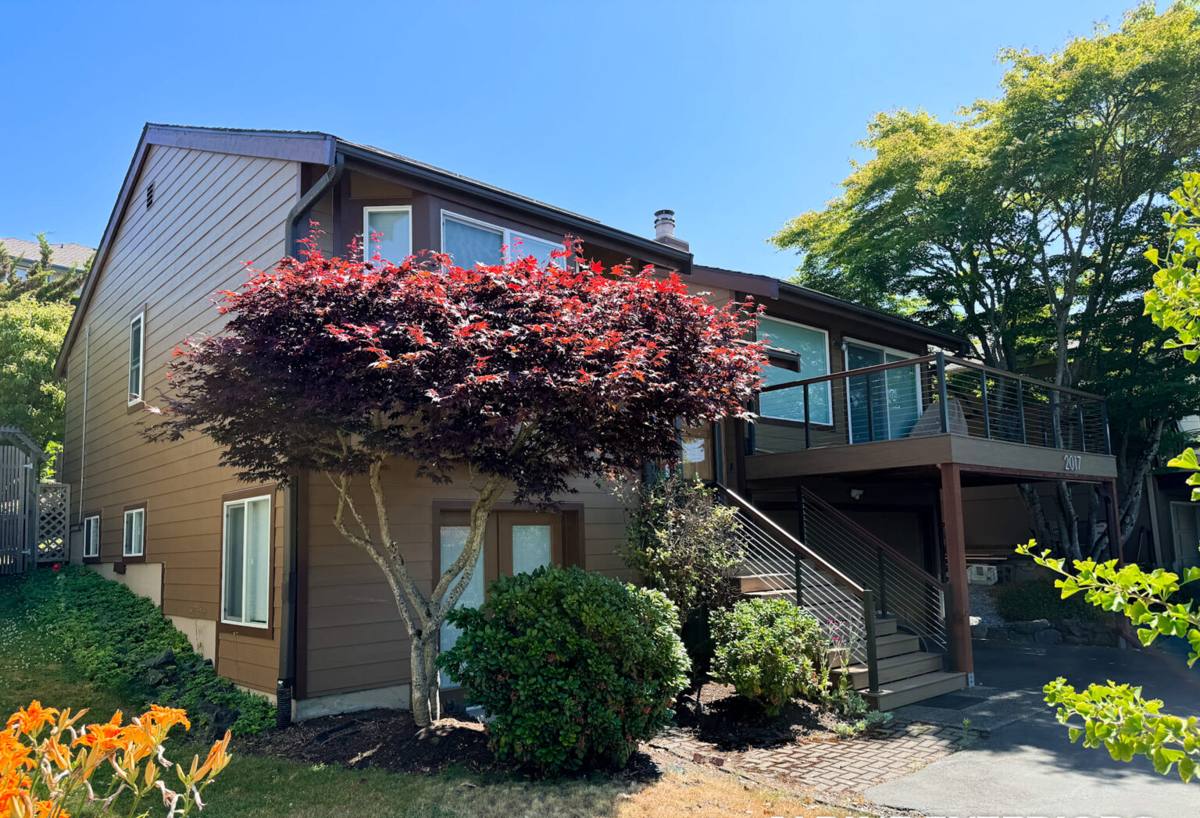
What This Climate Does to a Roof Over Time
Salt Air and Corrosion
Proximity to saltwater means airborne salt settles on every exterior surface, including the roof. Over years, that salt accelerates corrosion on unprotected or poorly coated metal, on exposed fasteners, and on any flashing that isn't matched to the roofing material. This is one of the most common reasons a metal roof underperforms — not because metal roofing is a bad choice, but because the wrong metal, coating, or fastener was used for a coastal-influenced environment.
Driving Rain and Wind-Driven Water
Storms here don't always drop rain straight down. Wind pushes it sideways and up under laps, seams, and flashing that would be fine in a calmer climate. A roof system that relies on gravity alone to shed water — rather than mechanically locked seams, properly lapped underlayment, and sealed penetrations — is more likely to develop leaks at exactly the spots you'd expect: valleys, chimney flashing, and wall-to-roof transitions.
Moss, Shade, and Debris
Tree cover and the region's long damp season give moss and algae everything they need to establish themselves on a roof surface. Moss holds moisture against the roofing material, works into seams, and lifts edges over time. On some materials that's a slow structural problem. On a correctly installed metal roof, moss has far less to hold onto, but shaded valleys and north-facing slopes still need attention.
Why Metal Roofing Fits This Neighborhood
Metal roofing isn't automatically the right answer for every home, but for South Hill's specific combination of salt exposure, rain, wind, and shade, it has real advantages worth weighing:
- Moss resistance: a smooth, hard metal surface gives moss and algae far less to grip compared to porous or textured roofing materials.
- Water shedding: steep-pitch metal panels with locked or properly lapped seams move wind-driven rain off the roof quickly instead of letting it sit and work its way under laps.
- Longevity when specified correctly: a metal roof matched to a coastal-influenced climate, with the right coating and fasteners, is built to outlast several cycles of a traditional shingle roof.
- Wind performance: mechanically fastened or seamed metal panels handle gusty storm conditions better than materials that rely on adhesive strips or overlap alone.
- Lower fire risk: metal is noncombustible, which matters more each year as dry-season wildfire smoke and ember risk becomes a regional concern even on the wet side of the state.
The trade-off is upfront cost and the fact that metal roofing rewards a contractor who does the details right. A poorly installed metal roof will underperform a well-installed asphalt roof. That's true of any material, but the margin for error is smaller with metal because the failure points (fasteners, seams, flashing) are more concentrated.
Choosing the Right Metal Roofing System
Not all metal roofing is the same, and the right choice for a South Hill home depends on budget, roof pitch, and how much of the home is under tree cover.
| System | How It Sheds Water | Fastener Exposure | Best Fit |
|---|---|---|---|
| Standing seam | Raised, mechanically locked seams — no exposed penetrations on the panel face | Concealed clips, no exposed screws | Homes with heavy wind-driven rain exposure or long-term, low-maintenance priorities |
| Exposed-fastener panels | Overlapping ribbed panels sealed at laps | Screws through the panel face, with washers | Budget-conscious projects, outbuildings, simpler rooflines |
| Metal shingles/shakes | Interlocking individual panels styled like traditional roofing | Concealed or minimal exposure depending on product | Homes wanting a traditional look with metal's durability |
Steel vs. Aluminum
Both steel and aluminum can perform well here when properly coated, but they behave differently near salt air. Aluminum doesn't rust, which removes one variable entirely, though it dents more easily and costs more per square. Coated steel is more common and cost-effective, but the coating and any cut edges or fasteners need to be handled correctly or corrosion will find the weak point first. We'll walk through which makes sense for your roof, your budget, and how close your specific lot is to salt exposure.
Coatings and Finish
A quality factory finish (the paint or coating baked onto the metal) is what actually resists fading, chalking, and corrosion over time — it matters more than the base metal in most residential applications. Cheaper finishes look fine on day one and start showing wear within a few years in this climate; a better finish costs more up front and holds up through the wet seasons without chalking or streaking.
What a Correct Metal Roof Installation Actually Involves
Metal roofing looks simple from the ground, but the parts you can't see are what determine whether it lasts twenty years or fifty. On a South Hill re-roof, here's what we treat as non-negotiable:
- Full synthetic underlayment across the deck, not just felt paper, for a real secondary water barrier
- Ice-and-water shield membrane at eaves, valleys, and any low-slope transitions where wind-driven rain collects
- Fasteners and flashing matched in metal type to the panel, to prevent galvanic corrosion where dissimilar metals touch
- Properly lapped and sealed panel seams sized for the actual roof pitch and exposure
- Correct attic and roof ventilation so trapped moisture isn't condensing against the underside of the panels
- Custom-formed flashing at every wall intersection, chimney, and skylight rather than generic stock pieces
- Fastener torque and spacing that meets the manufacturer's wind-load specification for this region
Skipping any one of these doesn't usually cause an immediate problem — it causes a problem in year three or year eight, after the roof has already been paid for and the original crew is long gone.
Our Process, Start to Finish
Inspection and Estimate
We start by getting on the roof, not just looking at it from the ground. We check the deck condition, existing ventilation, valley and flashing points, and how much moss or moisture damage is already present before recommending a system or giving a number.
Tear-Off and Deck Assessment
Once the old roofing is off, we inspect the decking itself. Any soft or water-damaged sheathing gets replaced before anything new goes down — installing a new roof over a compromised deck just moves the problem underneath the new material.
Underlayment, Flashing, and Panel Installation
This is where the details from the section above get executed: underlayment, membrane at vulnerable points, correctly matched fasteners, and custom flashing at every transition. We follow manufacturer fastening specs for wind exposure rather than a generic install pattern.
Final Walkthrough and Cleanup
We walk the finished roof with you, check ventilation and seams, and make sure the property is cleared of old materials, nails, and debris before we consider the job done.
Maintenance in a Moss-Prone, Salt-Air Environment
A metal roof needs less maintenance than most alternatives, but "less" isn't "none," especially under tree cover on this side of Chuckanut. A short seasonal routine goes a long way:
- Clear debris (needles, leaves, branches) from valleys and gutters before the wet season sets in
- Rinse visible moss or algae growth on shaded slopes rather than letting it establish and spread
- Check exposed-fastener systems periodically for any loosened or backed-out screws
- Watch for any streaking or dulling of the finish near coastal-facing slopes, which can signal coating wear
- Keep overhanging branches trimmed back to reduce shade, debris, and physical contact with the roof surface
None of this requires specialized equipment or an annual service contract — it's the kind of upkeep most homeowners can do themselves or have checked during a broader gutter or exterior maintenance visit.
Cost Factors for a South Hill Metal Roof
Metal roofing costs more upfront than asphalt shingles, and the final number depends on more than just square footage. Broadly, expect a range that reflects panel type, roof complexity, and current condition rather than a flat per-square price.
| Factor | Why It Moves the Price |
|---|---|
| Panel system | Standing seam costs more than exposed-fastener panels due to material and labor for concealed fastening |
| Roof complexity | Valleys, dormers, and multiple roof planes require more flashing and cutting labor |
| Deck condition | Any rotten or damaged sheathing found at tear-off adds material and labor to replace it |
| Coating quality | Higher-grade factory finishes cost more but resist salt-air corrosion and fading significantly longer |
| Tear-off scope | Removing multiple existing layers of old roofing adds disposal and labor time |
We give a written estimate that breaks these factors out so you can see exactly what's driving the number, not just a single lump-sum figure.
Why Local Experience on South Hill Matters
A roofing crew that mainly works drier, inland parts of the state will often under-spec flashing and underlayment for what this side of Whatcom County actually throws at a roof. Knowing how wind-driven rain moves across a South Hill roofline, how much moss pressure a shaded slope will see, and how fast unprotected fasteners corrode this close to salt air isn't something you learn from a manufacturer's install manual — it comes from doing this work in this specific area, year after year, and seeing which details hold up and which ones fail first.
That local knowledge shows up in small decisions: which valleys get extra membrane, which fasteners get upgraded, and where we add ventilation that a generic spec sheet wouldn't call for. It's also why we're straightforward about what a job actually needs versus what would just pad the invoice.
If you're weighing a metal roof for a South Hill home, we're happy to take a look and walk you through what your specific roof needs — no pressure, no obligation. Use the form below to request a free estimate.