 Chuckanut
 Why Roofs in Bow Take a Different Kind of Beating
Bow sits close enough to the water and low enough under tree cover that its roofs deal with three problems at once, all year, every year. There's salt-laden air drifting off the Sound that slowly works on exposed metal — nail heads, flashing, vent stacks, gutter hardware. There's driving rain that doesn't fall straight down but gets pushed sideways under eaves and around penetrations during winter storms. And there's shade from the fir and cedar canopy that keeps roof surfaces damp and cool long after a sunny afternoon in town has dried everything else out, which is exactly the condition moss needs to take hold.
None of these three things is dramatic on its own. A little surface corrosion, a little wind-driven rain, a little moss at the north-facing valley — none of it looks urgent from the ground. But roofs in this part of Whatcom County don't fail from one big event. They fail from years of these small, constant conditions working on details that were installed a little too casually the first time around. A new roof installation done right for a Bow property isn't a different product than what you'd install anywhere else — it's the same materials installed with more attention to the details that this specific climate exploits.
Signs a Bow Home Needs a New Roof, Not Another Patch
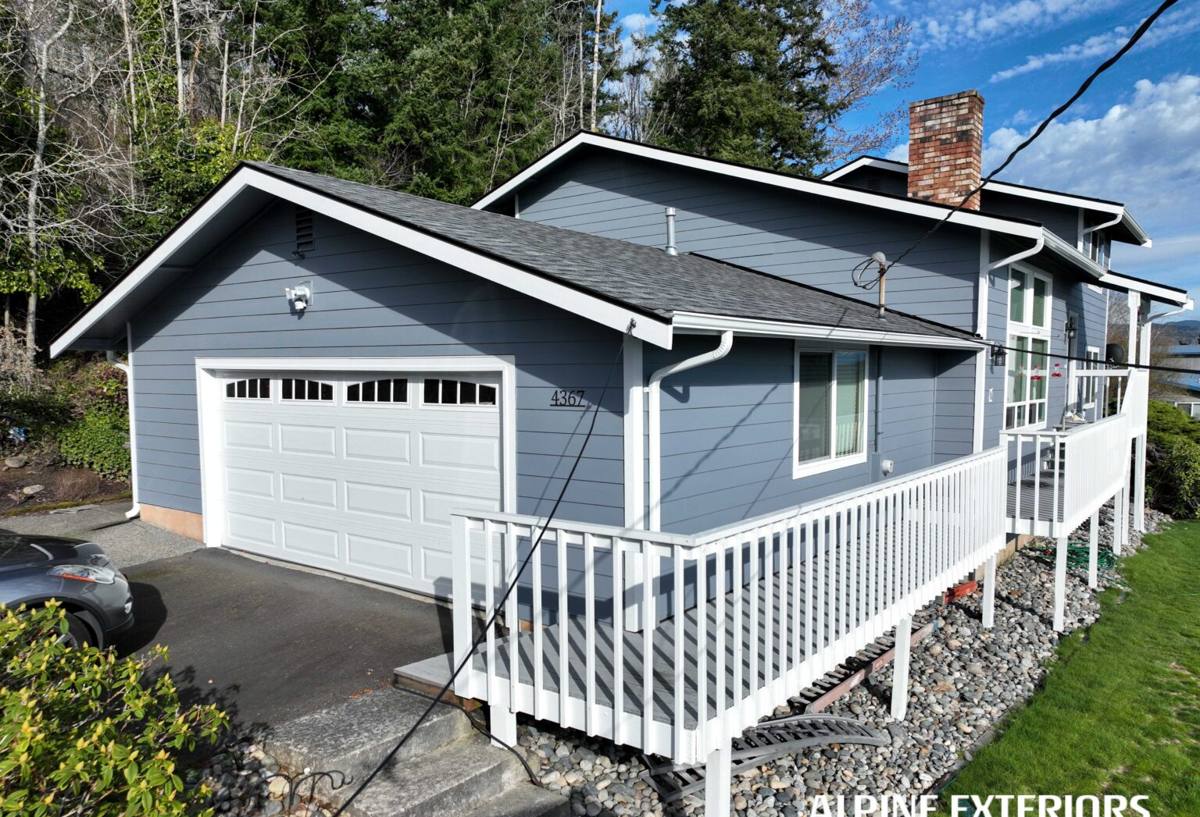
We get called for a lot of "just fix this one spot" jobs that turn into a conversation about full replacement once we're actually up there. A patch is the right call when a roof is otherwise sound and the damage is isolated — a torn shingle after a windstorm, a cracked boot around a plumbing vent. Replacement becomes the honest answer when the problems are spread across the whole roof rather than concentrated in one place, because that tells you the underlying materials, not just one shingle, have reached the end of their service life.
- Granule loss heavy enough that you can see bare, shiny patches on multiple slopes, not just one spot
- Moss established in more than one valley or shaded slope, with staining that persists after cleaning
- Shingles that are cupping, curling, or cracking across large sections rather than isolated pieces
- Soft or spongy decking felt underfoot in the attic, especially near valleys and eaves
- Daylight visible through the roof deck from inside the attic
- Repeated leaks in different locations after a wet winter, even if each one gets patched
If you're only seeing one or two of these, a repair is often still the right, cheaper answer, and we'll tell you that. A roof that's showing several of them at once is usually past the point where patching makes financial sense.
What a Correct New Roof Installation Actually Involves
Tear-off and Deck Inspection
Everything comes off down to the deck — old shingles, old underlayment, old flashing. This is the point where problems that were hidden get found: soft plywood, delaminated sheathing, undersized rafters, or venting that was never adequate in the first place. Any deck section that's compromised gets replaced before anything new goes down. Installing new roofing over a weak deck just hides the problem for a few more years and shortens the life of the new roof.
Underlayment and Flashing — Where Most Failures Actually Start
Given how much wind-driven rain this area sees, underlayment choice and flashing detail matter more here than the shingle brand printed on the wrapper. Synthetic underlayment, properly lapped and sealed at every penetration, is what keeps water out when rain is being pushed sideways under the shingle line rather than falling straight through it. Flashing at valleys, chimneys, skylights, and sidewalls is where the vast majority of roof leaks actually originate — not in the field of the roof itself. We treat these as the parts of the job that determine whether the roof lasts, not as afterthoughts once the shingles are down.
Ventilation
A roof that can't breathe traps moisture in the attic, and trapped moisture is what accelerates deck rot and feeds moss growth from underneath as well as above. Balanced intake and exhaust ventilation — soffit vents working with ridge or roof-mounted exhaust — keeps the underside of the deck dry and keeps attic temperatures from swinging as hard between seasons.
Final Details
Drip edge, starter strips, proper nailing patterns, gutter apron alignment, and ridge cap installation are the parts of a roof that don't show up in a sales pitch but determine whether water sheds cleanly off the edges or finds its way back under the first course. We don't treat any of these as optional.
Roofing Materials for the Chuckanut Climate
Asphalt Composition Shingles
Still the most common choice, and for good reason — solid performance for the cost, wide range of colors and profiles, and straightforward repairs down the road if something does get damaged. For this area, we lean toward algae-resistant (AR-rated) shingles, which use copper-infused granules to slow the black streaking and moss encouragement that comes from constant shade and moisture. Standard shingles will work, but they'll show algae and moss staining noticeably sooner under a tree canopy like Bow's.
Standing Seam Metal
Metal sheds moss better than any shingle because there's no granule surface for spores to grip, and it handles driving rain well due to its long, uninterrupted panel runs with fewer seams. The trade-off is cost and the fact that, this close to the water, fastener and trim material quality matters a lot — cheaper hardware corrodes faster in salt air. Done with proper coated fasteners and flashing, it's a strong long-term option for a Bow property, particularly on steeper roofs where moss and water both move faster off the surface anyway.
Cedar Shake and Wood Alternatives
Cedar has real local character and fits the aesthetic of this region, but it's also the material most sensitive to the exact conditions Bow throws at it — sustained moisture and shade are what wood roofing struggles with most. It requires closer, more frequent maintenance to stay ahead of moss and rot in a shaded, damp setting than either asphalt or metal. We'll install it if that's what a homeowner wants for the look, but we're upfront that it's a higher-maintenance choice here specifically, not a knock on the material itself.
Our Installation Process
- On-site inspection and honest assessment — repair, partial replacement, or full replacement, explained in plain terms
- Written scope and estimate covering materials, ventilation plan, and any deck repair allowances
- Material selection walkthrough, including trade-offs specific to your roof's exposure and shade
- Scheduling built around weather windows, since a dry install is a better install
- Tear-off, deck inspection, and any necessary sheathing repair before anything new goes on
- Underlayment, flashing, ventilation components, and roofing material installed to manufacturer and code specification
- Final walkthrough with you before we consider the job done, plus cleanup of the site and disposal of old materials
Moss, Ventilation, and the Long Game
A new roof isn't the end of the moss conversation — it's the start of a much easier one. Proper attic ventilation and a moss-resistant material get you most of the way there, but the biggest single factor in how fast moss comes back is how much shade and moisture a particular slope sits under, which no roofing material fully overcomes on its own. For roofs under heavy canopy, we'll usually recommend copper or zinc strips near the ridge on the shadiest slopes — rain washing over them releases trace metal ions that discourage regrowth over time, without chemical treatment. It's a low-maintenance way to extend the gap between cleanings on the sections of roof that need it most.
What Drives the Cost of a New Roof in Bow
We're not going to throw out a number that doesn't mean anything without seeing your roof — pitch, size, layer count, and access all move the price more than most homeowners expect. What we can do is walk through what actually drives cost up or down, so an estimate makes sense when you get one instead of feeling arbitrary.
| Factor | Why It Matters | Effect on Cost |
|---|---|---|
| Roof pitch and complexity | Steep or multi-valley roofs take longer, need more safety setup, and use more flashing detail | Increases |
| Number of existing layers | Multiple old layers must come off before new roofing goes on, adding tear-off labor | Increases |
| Deck condition | Rotted or soft sheathing found during tear-off needs replacement before installation continues | Increases |
| Material choice | Asphalt, metal, and cedar carry different material and labor costs | Varies by material |
| Ventilation upgrades | Adding proper intake/exhaust venting where none existed adds materials and labor now, saves problems later | Moderate increase |
| Access and site conditions | Tree cover, steep driveways, and tight setbacks common in Bow can slow staging and disposal | Increases |
The honest reality is that a full tear-off and replacement is a meaningful investment, but it's also one that protects everything underneath it — framing, insulation, interior finishes. Deferring a roof that's genuinely at end of life almost always costs more in the long run through water damage than the roof itself would have cost.
Why a Crew That Already Works Bow Matters
Roofing crews that mostly work drier, more open areas inland don't always default to the underlayment coverage, flashing details, and ventilation planning that a shaded, salt-exposed, high-rainfall property actually needs — because they're not solving for those conditions every day. A crew that regularly works Bow and the surrounding Chuckanut area already knows which slopes hold moisture longest, which fastener and flashing materials hold up against salt air over years rather than months, and how local wind and rain patterns tend to find the weak points in a roof. That's not a marketing point — it's the difference between a roof that's technically installed to code and one that's actually built for where it sits.
What to Ask Before You Hire a Roofer for This Job
- Are you licensed and insured to work in Washington, and can you provide proof?
- Will you inspect and address deck condition before installing new roofing, not just over the existing surface?
- What underlayment and ventilation approach do you recommend for a shaded, wet-climate roof, and why?
- Is the estimate written, itemized, and clear about what happens if deck repair is needed once tear-off starts?
- Do you have experience with algae-resistant or moss-mitigation options appropriate for this area?
- What's the manufacturer's warranty on materials, and what does your own workmanship warranty cover?
A contractor who answers these clearly and specifically, without vague reassurances, is one worth trusting with a roof over your head for the next few decades.
Get a Straight Answer on Your Roof
If your roof is showing moss, wear, or age and you're not sure whether it needs a patch or a full new roof installation, we're happy to take a look and give you an honest read — no pressure, no upsell. Use the form below to request a free estimate for your Bow property.