 Chuckanut
 Samish Sits in a Tough Spot for Exterior Siding
Samish homes catch weather from two directions at once. Off the water, you get salt-laden air that settles on every exterior surface within reach of the breeze. Inland and uphill, tree cover and shade hold moisture against north- and west-facing walls long after a storm has passed. Add Whatcom County's long, wet shoulder seasons, and you have a siding environment that punishes anything not built for sustained moisture exposure. This isn't a page about siding in general — it's about what fiber cement specifically needs to do on a Samish home, and what a correctly installed job looks like here.
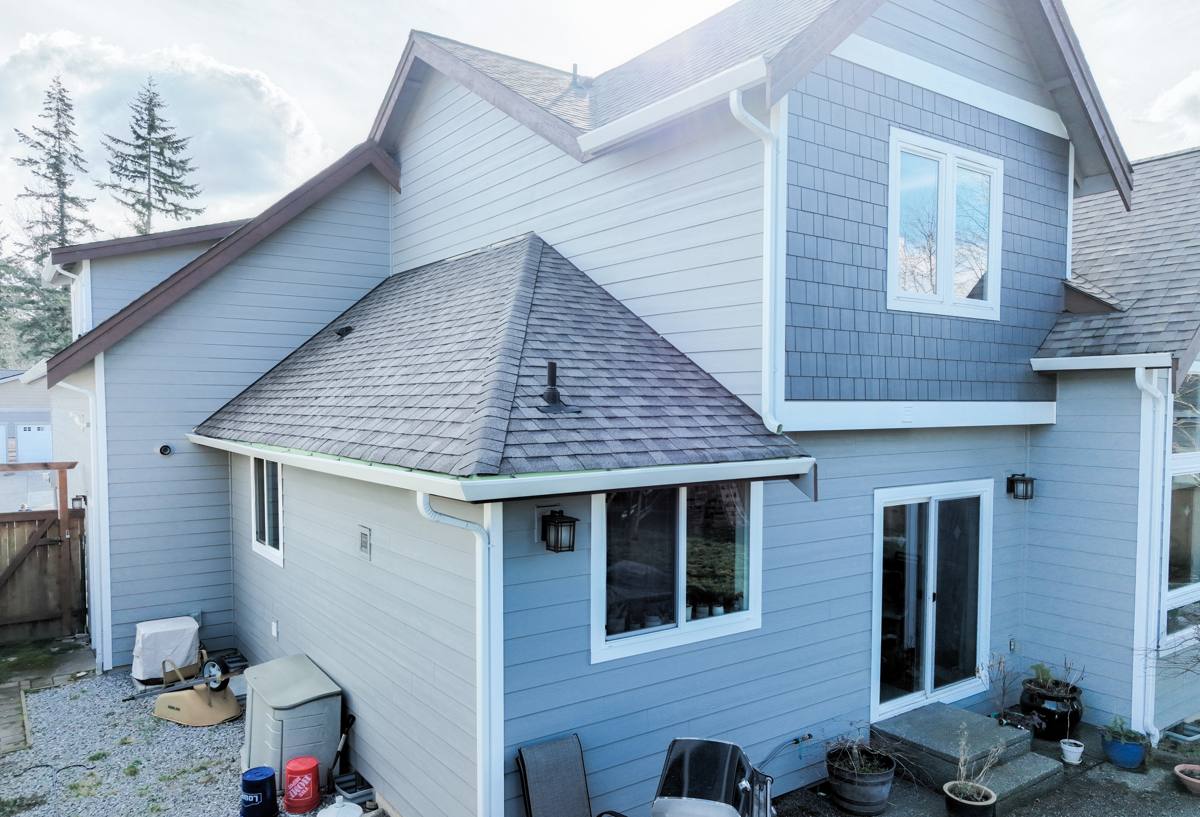
What the Local Climate Actually Does to Siding
Salt Air and Slow Corrosion
Salt air doesn't just affect metal fasteners and flashing — it accelerates the breakdown of paint films and caulk joints on almost any siding material. Products that rely on a surface coating to keep water out start failing at the seams first, usually years before the field of the material shows visible wear. Fiber cement's core doesn't rot or corrode from salt exposure the way wood substrates can, but the fasteners, flashing, and trim details around it still need to be corrosion-resistant or the same failure shows up at every penetration point.
Driving Rain, Not Just Rain
Samish doesn't just get rain — it gets wind-driven rain that hits siding at an angle instead of running straight down the face of the wall. That matters because it pushes water sideways and upward into laps, seams, and trim joints that a purely vertical rain event would never reach. Siding systems here need real overlap, correctly pitched flashing, and a drainage plane behind the cladding — not just a water-resistant surface.
Moss Season Runs Long
Shaded, north-facing walls and anything under tree cover stay damp far longer after a storm than a south-facing wall in full sun. That extended damp window is exactly what moss and algae need to establish. On siding that absorbs moisture into its substrate, a moss colony sitting against the surface for months at a time becomes a moisture problem, not just a cosmetic one.
Why Fiber Cement Fits This Climate
Fiber cement is cement, sand, and cellulose fiber, cured into a dense, stable board. It doesn't have an organic substrate for moss to feed on, it won't swell or delaminate from repeated wetting, and it holds a factory-applied finish far longer than field-applied paint holds on wood or engineered wood products. That combination — a stable core plus a factory finish — is why it performs well in a climate that alternates between salt exposure, driving rain, and prolonged shade dampness.
We install James Hardie fiber cement exclusively. That's a deliberate standard, not a brand preference we picked out of a catalog. We don't install vinyl, LP SmartSide, primed wood, or other fiber cement brands, because we've made a professional judgment that Hardie's combination of factory-cured ColorPlus finish, climate-specific product engineering, and warranty structure is what holds up correctly in Whatcom County conditions when installed to spec. If you want the fuller comparison against those other products, that's a separate conversation — this page is about what correct fiber cement work looks like once you've decided to go that route.
James Hardie's HZ5 Engineering for the Pacific Northwest
James Hardie manufactures its siding in two climate formulations: HZ10 for hot, humid regions like the Gulf Coast, and HZ5 for cooler, wetter climates that see more freeze-thaw cycling and sustained damp weather — which is the formulation specified for Whatcom County. The HZ5 line is engineered around moisture management rather than heat resistance, which lines up with what Samish homes actually need: a product built to shed and resist water over decades of exposure, not one optimized for sun and humidity.
Product Lines Commonly Used on Samish Homes
| Product | Typical Use | Why It Fits Here |
|---|---|---|
| HardiePlank lap siding | Primary wall cladding | Traditional lap profile sheds driving rain efficiently with correct overlap |
| HardiePanel vertical siding | Accent walls, gables, modern facades | Fewer horizontal laps means fewer potential water-entry seams on exposed elevations |
| HardieShingle siding | Gable accents, transitional details | Staggered or straight-edge shingle look without the moisture uptake of wood shingles |
| HardieTrim boards | Corners, window and door trim, fascia | Stable dimensions prevent the gapping that lets water track behind trim |
What a Correct Installation Involves
Fiber cement's durability depends almost entirely on installation quality. The material itself resists moisture and impact well, but a poorly installed job can trap water behind the cladding regardless of what the boards are made of. On a Samish home, we pay particular attention to:
Water Management Behind the Siding
A drainage plane and weather-resistive barrier go on before any siding, with flashing integrated at every window, door, and horizontal transition so water that gets behind the cladding has a path back out instead of pooling against the sheathing. Given how much wind-driven rain this area sees, we don't treat flashing as an afterthought detail — it's specified before the first board goes up.
Clearances and Fastening
Hardie's installation specifications call for minimum clearances from grade, roof lines, and decks, plus specific fastener types and spacing. Skipping these clearances is one of the most common ways fiber cement jobs fail early — trapped moisture at grade level or at a deck ledger doesn't care that the material itself is rot-resistant if water has nowhere to go.
Caulking and Joint Treatment
Butt joints, trim transitions, and penetrations all need the correct sealant, applied to manufacturer spec — not just caulked over as a finishing step. In a driving-rain climate, a poorly sealed butt joint is a direct water path into the wall assembly.
Our Process on a Samish Job
- Walk-through and assessment — we look at existing siding condition, moisture staining, moss patterns, and which elevations take the most weather exposure.
- Measurement and product selection — plank width, panel orientation, and trim details are chosen for the specific home, not a one-size template.
- Written estimate — scope, product lines, and pricing laid out before any work starts.
- Tear-off and inspection of sheathing — we don't cover up rot or compromised sheathing; anything found gets flagged and addressed before new siding goes on.
- Weather barrier and flashing installation — the drainage plane goes in correctly the first time, since it's the part nobody sees again once siding is up.
- Siding installation to Hardie spec — correct fastening, clearances, and joint treatment throughout.
- Final walkthrough — we review the finished work with you before calling the job done.
Cost Factors Specific to Samish Projects
Every home is different, but a few local factors tend to move the price on Samish jobs more than they would in a milder, drier climate:
| Factor | Why It Matters Here |
|---|---|
| Existing moisture damage at tear-off | Shaded, damp-prone walls sometimes reveal sheathing repair needs once old siding comes off |
| Number of elevations facing prevailing wind/rain | More flashing and joint detailing is needed on the exposed sides |
| Trim and accent complexity | Gables, dormers, and mixed panel/shingle accents add labor beyond flat wall runs |
| Site access and shade/tree cover | Affects scheduling around wet conditions and site prep |
Living With Fiber Cement in a Moss-Prone, Salt-Air Area
Fiber cement is low-maintenance compared to wood or engineered wood siding, but "low-maintenance" doesn't mean "no maintenance" — especially here. A simple seasonal routine keeps a Hardie installation performing the way it's designed to:
- Rinse salt residue and organic buildup off the siding surface once or twice a year, especially on walls facing open water or prevailing wind
- Keep gutters clear so overflow doesn't run down the face of the siding and feed moss growth at the top courses
- Trim back vegetation and tree limbs that shade a wall for most of the day, since reduced airflow is what lets moss take hold in the first place
- Check caulking at trim joints and penetrations every year or two and have any cracked or shrunken sealant redone before it becomes a water path
- Address any impact damage (branches, debris) promptly rather than letting a chipped area sit exposed
Why Local Installation Experience Matters
A crew that already works Samish and the surrounding Chuckanut area knows which elevations on this stretch of coastline take the worst of the wind-driven rain, how long moss season actually runs here, and where salt exposure tends to concentrate. That's not something a general installer picks up from a spec sheet — it comes from having done the flashing details, clearance work, and joint treatment on homes facing the same weather this one does. Fiber cement's long-term performance depends on those details being right the first time, since redoing them means pulling siding back off.
If you're considering fiber cement siding for a home in Samish, we're happy to walk the property, look at how your specific elevations are exposed to wind, rain, and shade, and put together a straightforward written estimate. There's no pressure and no obligation — just a clear look at what your home needs and what it would take to do the job right. The form below gets you started.