 Chuckanut
 Why Roofs in Samish Wear Differently Than Roofs Inland
Samish sits close enough to Chuckanut Bay and the open water of Samish Bay that homes here deal with a combination of weather stresses that inland Whatcom County properties simply don't see as often. Salt-laden air moves in off the water and settles on roofing metal, fasteners, and flashing. Driving rain, pushed sideways by wind coming off the bay, finds its way into laps and seams that would stay dry in a calmer setting. And the deep shade from mature evergreens along the hillsides keeps roof surfaces damp long after a storm has passed, which is exactly the environment moss needs to take hold.
None of this means a Samish roof is doomed to fail early. It means the roof has to be built and repaired with those specific stresses in mind — the right fastener metal, the right flashing detail, and a repair schedule that doesn't wait until there's a stain on the ceiling.
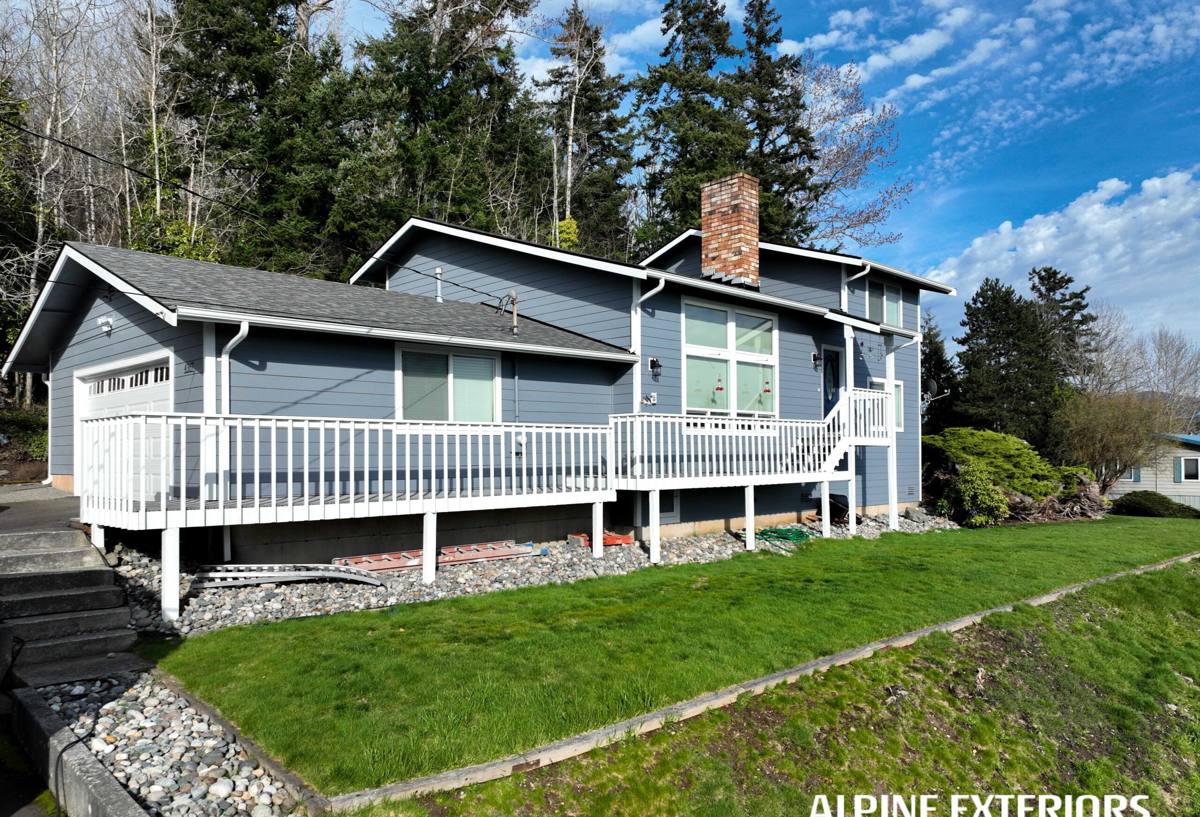
The Three Things Local Roofs Are Actually Fighting
Salt Air and Corrosion
Airborne salt accelerates corrosion on exposed metal — nail heads, flashing, gutter fasteners, and any galvanized components that aren't rated for coastal exposure. Corrosion usually starts small: a rust streak below a nail, a flashing edge that's gone from silver to orange-brown. Left alone, corroded fasteners lose their grip on shingles and corroded flashing develops pinholes that let water through long before the metal looks obviously "bad" from the ground.
Driving Rain and Wind-Driven Water
Standard roofing assumes rain falls mostly straight down. Near the bay, wind regularly pushes rain sideways and even slightly upward under eaves and at ridge lines. That means water can find its way past shingle laps, around vent boots, and under flashing that would be perfectly adequate on a more sheltered inland lot. Repairs in Samish need to account for wind-driven water, not just gravity.
Moss and Sustained Moisture
Whatcom County's long wet season is bad enough for moss on its own; add tree shade common on Samish lots and a roof can stay damp for days after rain stops. Moss holds moisture against the roofing material, works its way under shingle tabs as it grows, and physically lifts edges — creating entry points for water that weren't there when the roof was installed.
Signs a Samish Roof Needs Repair, Not Just a Look
Most roof failures we see didn't start as failures — they started as small, ignorable-looking issues that had months or years to get worse under wet, shaded conditions. Watch for:
- Moss concentrated on the north- or shade-facing slopes, especially where it's thick enough to hold a sponge-like layer of water
- Rust streaking below nail heads, flashing edges, or metal vent stacks
- Lifted, curled, or missing shingle tabs, particularly near ridges and edges exposed to wind
- Granule buildup in gutters or at downspout outlets — a sign the shingle surface is wearing thin
- Dark staining or streaking on interior ceilings, especially after a windy rainstorm rather than a calm one
- Soft or spongy spots when walking the roof (decking rot starting underneath)
- Gaps or separation where flashing meets a chimney, skylight, or sidewall
- Daylight visible through the attic roof deck at seams or nail penetrations
Any one of these on its own might be minor. Two or three together, especially on a roof that's ten-plus years old, usually means it's time for a proper inspection before the next atmospheric river event.
What a Correct Roof Repair Actually Involves
Diagnosis Before Patching
A repair that only addresses the visible symptom — say, a stained ceiling — without tracing the water back to its actual entry point tends to fail again within a season or two. We look at flashing details, vent boots, valleys, and the surrounding shingle field, not just the spot directly above the stain, because wind-driven water in this area often travels sideways under the roofing before it drips down.
Flashing and Fastener Work
Given the corrosion risk here, we replace compromised metal with fasteners and flashing suited to coastal exposure rather than reusing hardware that's already showing rust. A repair that reuses corroding nails or thin galvanized flashing is a repair that will need to be redone sooner than it should.
Moss and Debris Removal Done Correctly
Moss removal matters, but how it's done matters more. Aggressive scraping or pressure washing can strip protective granules and shorten the life of the remaining shingle field. We remove moss and debris in a way that clears the growth without damaging the roofing surface underneath, then address the moisture and shade conditions that let the moss take hold in the first place where that's practical.
Decking Repair When Needed
If water has been getting in long enough to soften or rot the plywood or board decking underneath, patching the shingles over that spot doesn't fix anything — it just hides it. We open up the area, replace any compromised decking, and rebuild the roofing layer over solid material.
Ventilation Check
Poor attic ventilation traps moisture and heat, which accelerates shingle aging from underneath and can worsen moss growth by keeping the roof deck cooler and damper than it should be. Part of a thorough repair visit is checking that intake and exhaust venting are actually working, not just present.
Repair or Replace? What Actually Drives That Decision
Not every damaged roof needs full replacement, and not every roof that "just needs a patch" is actually a good repair candidate. Here's how we think through it:
| Factor | Leans Toward Repair | Leans Toward Replacement |
|---|---|---|
| Roof age | Under roughly 12-15 years | Approaching or past manufacturer service life |
| Extent of damage | Isolated to one section, slope, or penetration | Spread across multiple slopes or the whole roof |
| Decking condition | Solid, no soft spots | Widespread soft or rotted decking |
| Moss/algae staining | Surface-level, shingles intact underneath | Shingles brittle or granule loss is heavy |
| Prior repair history | First real issue on this roof | Repeated leaks or repairs in different spots |
| Matching materials | Discontinued shingle still patchable | Material no longer available, patch would visibly mismatch |
We'll tell you honestly which category your roof falls into. If a repair is the right call, that's what we'll recommend — we don't push replacement on a roof that has good years left in it.
How Our Repair Process Works
- On-site inspection — we walk the roof (weather permitting) and check the attic from inside, looking for the actual water path rather than just the visible symptom
- Honest assessment — you get a clear explanation of what's wrong, what's causing it, and what your realistic options are, including cost ranges before any work starts
- Repair scope confirmed with you — no surprise add-ons once we're on the roof
- Repair work — flashing, decking, shingles, moss treatment, and ventilation addressed as needed, using fasteners and flashing suited to salt-air exposure
- Cleanup and walkthrough — debris cleared, work explained, and photos or notes provided so you know exactly what was done
Materials We Use and Why
For coastal-exposed repairs, we favor corrosion-resistant fasteners and flashing metal over standard galvanized hardware — the small upcarrying cost up front avoids a repeat repair a few years down the line when standard hardware starts rusting through. When shingles need matching or replacement, we use products rated for the wind and moisture conditions common near the water, and we're upfront if an exact match to older, weathered shingles isn't realistic — a slight color difference on a patched section is normal and expected, not a sign of a bad repair.
We don't install products we can't stand behind for this climate. If a lower-cost material has known moisture or maintenance trade-offs that make it a poor fit for a shaded, salt-exposed Samish roof, we'll say so and explain why, rather than installing something that looks fine at handoff and causes problems in two winters.
Moss Prevention Between Repairs
A repair fixes the current damage; keeping moss from coming back the same way is a separate, ongoing job. Zinc or copper control strips near the ridge can help suppress regrowth on shaded slopes, and keeping overhanging branches trimmed back reduces both shade and the steady drop of debris that feeds moss and clogs valleys. Gutters should be checked at least twice a year — more often if there's heavy tree cover — since a clogged gutter backs water up under the roof edge exactly where rot tends to start.
Why Hire a Crew That Already Works in Samish
A roofer who mostly works dry, sun-exposed inland roofs isn't necessarily thinking about salt-air corrosion or wind-driven rain when they price and perform a repair. Working regularly in Samish and along Chuckanut means we're used to diagnosing leaks that come from sideways rain, we know which fastener and flashing choices actually hold up here, and we're not guessing at how bad the moss situation typically gets on a shaded, water-adjacent lot in Whatcom County. That familiarity shows up in fewer callbacks and repairs that actually last through the next wet season.
Getting a Straight Answer on Your Roof
If you're seeing moss buildup, rust streaks, a stain on a ceiling, or you just haven't had the roof looked at in a few years, it's worth getting eyes on it before the next storm off the bay finds the weak spot for you. We're happy to come out, take an honest look, and tell you plainly whether you're looking at a straightforward repair, something more involved, or nothing urgent at all. Use the form below to request a free, no-pressure estimate.