 Chuckanut
 Fiber Cement Siding, Installed for How Sedro-Woolley Actually Weathers
Sedro-Woolley sits in a part of Western Washington where the weather doesn't do a home any favors. Homes here deal with a long wet season, wind-driven rain that finds every gap in a building envelope, damp air carrying salt off the Sound, and months at a stretch where surfaces barely get a chance to fully dry out before the next system rolls through. That combination is hard on wood siding, hard on cheap composite panels, and even hard on siding that's installed correctly but with the wrong materials for the climate. Fiber cement siding, specifically James Hardie fiber cement, is built to handle exactly this kind of exposure — but only when it's installed by a crew that understands what this area does to a house.
This page is about one thing: installing Hardie fiber cement siding on homes in and around Sedro-Woolley, done right for the conditions this area actually sees. We're not going to give you a generic rundown of what fiber cement is. We're going to talk about what it needs to do here, what a correct installation looks like, and why the crew doing the work matters as much as the product itself.
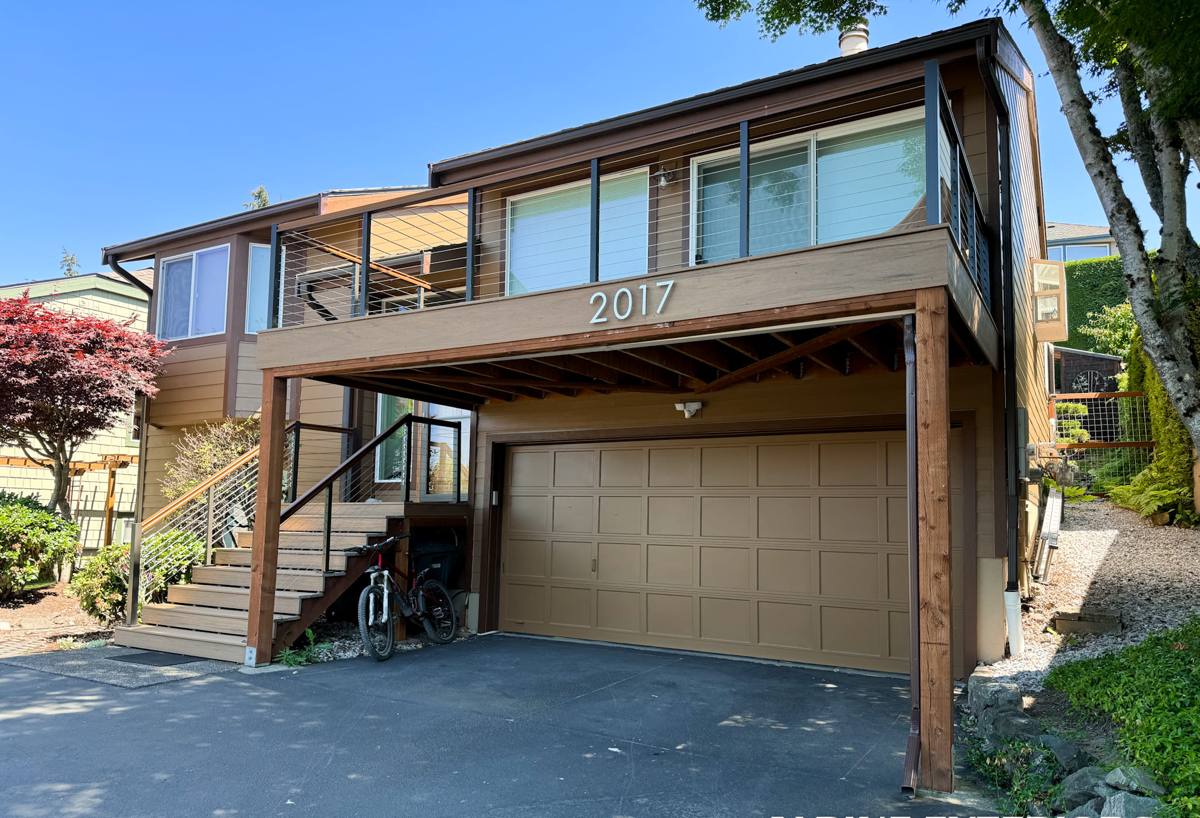
What Sedro-Woolley's Climate Demands From Siding
Moisture That Doesn't Let Up
The defining challenge for exterior cladding in this region isn't any single storm — it's duration. Long stretches of overcast, damp weather mean siding, house wrap, and flashing details stay wet longer than they would in a drier climate. Any weakness in the water management system — a poorly lapped joint, a missed kick-out flashing, caulk used where a proper flashing detail belongs — has more time to do damage before things dry out again.
Driving Rain and Wind Exposure
Rain in this area rarely falls straight down. Wind pushes it sideways into wall assemblies, which means siding has to shed water outward rather than just cover the wall. Lap spacing, panel overlap, and correct fastening all affect whether wind-driven rain gets turned away or worked behind the siding over time.
Moss, Algae, and a Long Growing Season
Shaded exterior walls, north-facing elevations, and anything near tree cover in this area are prone to moss and algae growth for a good chunk of the year. That growth holds moisture against a surface and accelerates wear on materials that aren't dimensionally stable or that absorb water. It also affects paint life on anything that isn't factory-finished.
Salt-Influenced Air
Proximity to Puget Sound and the Salish Sea means homes in this broader region get some exposure to salt-laden air, which is harder on fasteners, raw wood, and lower-grade coatings than most homeowners realize until they see it firsthand years later.
Why Fiber Cement Fits This Climate
James Hardie fiber cement is engineered specifically to resist the failure modes that show up most in wet, temperate climates like this one:
- It's non-combustible and dimensionally stable — it doesn't swell, cup, or warp the way wood-based products can when they take on repeated moisture cycles.
- ColorPlus factory-applied finish is baked on under controlled conditions and backed by its own finish warranty, rather than relying on field-applied paint that has to cure correctly in exactly the kind of damp weather this area gets.
- Hardie's HZ5 product line is engineered for climates with more moisture and freeze-thaw cycling, which fits the Pacific Northwest better than a one-size-fits-all siding spec.
- It holds up to moss and algae exposure better than porous wood substitutes, and it doesn't feed fungal growth the way untreated or under-primed wood can.
None of that matters, though, if the installation doesn't account for the same conditions. Fiber cement installed with the wrong clearances, wrong fastening pattern, or without proper flashing will still fail early in a climate like this — the product isn't a substitute for correct workmanship.
What a Correct Installation Involves Here
Water Management Comes First
Before any siding goes up, the wall needs a water-resistive barrier installed correctly, with flashing at every window, door, deck ledger, and penetration. In a climate that stays wet for months, these details are what actually keep water out of the wall — the siding is the second line of defense, not the first.
Clearances and Gaps
Fiber cement siding needs proper clearance from grade, roof lines, decks, and patios — typically several inches minimum — so water doesn't wick up into the bottom edge of the siding or sit against it. This is one of the most common corners cut on rushed jobs, and it's one of the first things that causes problems in a wet climate.
Fastening and Fit
Hardie siding has specific fastener spacing, embedment depth, and butt-joint treatment requirements. Overdriven or underdriven fasteners, joints that aren't properly flashed or caulked with the right product, and panels installed too tight against each other all create points where water gets trapped instead of shed.
Caulking and Sealant Choices
Not every gap should be caulked, and not every caulk is appropriate for long-term exterior exposure in a wet climate. Manufacturer-approved sealants at the right joints, and flashing (not caulk) at transitions that move or see standing water, is the difference between a detail that lasts and one that needs recaulking every couple of years.
Quick Reference: Common Installation Shortcuts and What They Cost You
| Shortcut | Why It's Tempting | What It Leads To Here |
|---|---|---|
| Skipping proper flashing at deck ledgers/windows | Faster, fewer materials | Hidden water intrusion behind siding, rot in framing over a few wet seasons |
| Installing siding too close to grade or a deck surface | Cleaner sightline | Constant wicking moisture, early edge deterioration, moss growth |
| Using generic caulk instead of manufacturer-specified sealant | Cheaper, on-hand product | Sealant failure within a few years in a climate this damp |
| Overdriving fasteners | Faster installation | Cracked panels, compromised fastening, water entry points |
| Skipping back-priming or capping cut edges | Saves a step | Cut edges absorb moisture and deteriorate faster than field surfaces |
Our Process for Sedro-Woolley Jobs
We approach every fiber cement installation in this area the same disciplined way:
- Assessment — we look at the existing wall assembly, drainage around the foundation, roof and deck intersections, and any existing moisture damage before quoting anything.
- Water management plan — house wrap, flashing details, and clearances get planned out for this specific house, not applied as a generic template.
- Correct product selection — HZ5 panels and the appropriate profile (lap, panel, or shingle-style) for the home's design and exposure.
- Installation to manufacturer spec — fastening, clearances, joint treatment, and sealant all done to Hardie's published requirements, not shortcuts.
- Final inspection — checking every clearance, joint, and flashing detail before we consider the job finished.
Why a Crew That Already Works This Area Matters
Fiber cement installation instructions read the same everywhere in the country, but the judgment calls on a real job — how much clearance to leave given a specific roofline, how to detail a tricky deck ledger, which elevations need extra attention because they stay damp and shaded most of the year — come from having actually installed and later inspected siding on homes in this kind of climate. A crew that's used to installing in a drier region can follow the same instructions and still miss the details that matter most where the weather doesn't let up for months at a time.
We install James Hardie fiber cement exclusively. We don't install vinyl, LP SmartSide, or other composite and fiber cement alternatives, because we've made correct, warrantied, non-combustible siding installed to spec our standard — not a menu of options with different trade-offs we'd have to explain away later. That focus lets us know one system thoroughly instead of several systems adequately.
What to Expect From a Quote
A straightforward Sedro-Woolley siding estimate covers wall square footage, current condition of the sheathing and water-resistive barrier, any rot or moisture damage that needs addressing first, trim and accessory work, and the Hardie product line and profile that fits the home. Costs vary by home size, condition of what's underneath the existing siding, and design complexity — there's no honest flat number without seeing the house.
Homeowners considering fiber cement siding for a home in the Sedro-Woolley area should ask any contractor:
- Are you installing to the manufacturer's published spec, including clearances and fastening pattern?
- What's your plan for flashing at windows, doors, and deck ledgers before siding goes on?
- What warranty applies to the product finish versus the installation labor, and who backs each one?
- How will you handle cut edges and exposed fastener holes to prevent moisture entry?
- Have you installed and later serviced homes in this specific area, in this climate?
If you're thinking about fiber cement siding for a home in Sedro-Woolley, we're happy to come take a look, walk the exterior with you, and give you a straightforward, no-pressure estimate — no invented urgency, just an honest read on what your home needs.