 Chuckanut
 Building Decks for the Way Sehome Actually Weathers
Sehome sits close enough to the water that salt air is a daily fact of life, not an occasional nuisance. Combine that with the driving rain that rolls through Whatcom County most of the year and the long moss season that follows, and you have three separate forces working against an outdoor structure at the same time. A deck built here isn't just furniture for your backyard — it's an exterior structure that has to shed water, resist corrosion, and stay walkable through a wet, shaded shoulder season that can stretch from October well into spring.
Most deck problems we get called out to fix in this area didn't start as big failures. They started small: a fastener that wasn't rated for coastal exposure, a ledger board that trapped water against the house, decking laid tight enough that it couldn't dry between rains. None of that shows up on day one. It shows up two or three wet seasons later, after moss has had time to hold moisture against the wood and the framing underneath has quietly started to soften.
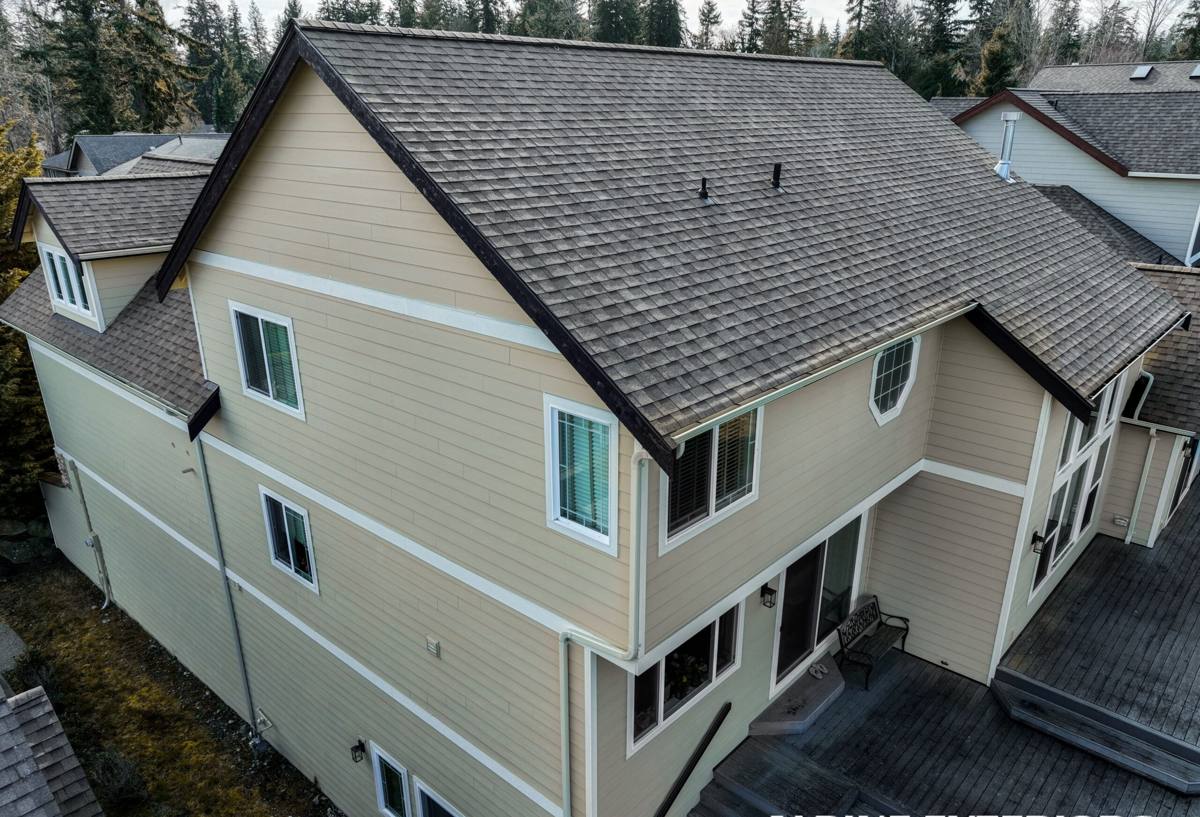
What Sehome's Climate Actually Demands From a Deck
Salt Air and Metal Corrosion
Even a few miles inland from Bellingham Bay, airborne salt accelerates corrosion on anything metal — fasteners, joist hangers, post bases, railing brackets. Standard galvanized hardware can start showing rust within a couple of seasons in this environment. We spec stainless steel or high-grade coated fasteners and connectors rated for coastal exposure on every deck we build in this area, because replacing a rusted joist hanger buried under decking is a much bigger job than paying a little more for the right hardware up front.
Driving Rain and Water Management
Rain here doesn't fall straight down — wind-driven rain gets pushed sideways and up under railings, against ledger boards, and into any gap that isn't properly flashed. A deck that isn't detailed for that reality will develop rot at the point where it meets the house long before the visible decking shows any wear. Proper ledger flashing, correct board spacing for drainage, and slope built into the framing all matter more here than they would in a drier climate.
Moss and Extended Dampness
Whatcom County's moss season is long, and moss doesn't just look bad — it holds moisture against wood and decking surfaces for weeks at a time, which is exactly the condition rot and mildew need to take hold. Decking with good drainage between boards, adequate airflow underneath the structure, and a surface texture that doesn't trap organic debris all reduce how aggressively moss can establish itself.
Framing and Footings: The Part You Won't See Later
Everything above the framing gets attention because it's visible. The framing itself is what determines whether a deck is still solid in fifteen years, and it's the part that's cheapest to get right the first time and most expensive to fix later.
- Footings sized and set below frost depth, on soil that's been checked for drainage — Sehome's mix of clay and glacial till doesn't drain the same way everywhere on a single lot
- Post bases that hold the post above standing water rather than embedding wood directly in concrete
- Joist hangers and structural connectors rated for exterior, coastal-adjacent exposure
- Ledger board attachment with proper flashing and a water-resistant barrier between the ledger and the house sheathing
- Beam and joist spacing engineered for the actual decking material and expected loads, not just minimum code spacing
Choosing a Decking Material That Holds Up Here
There's no single "best" decking material — there's a best material for your budget, your maintenance appetite, and how much shade and moss exposure your particular lot gets. Here's how the common options actually compare under Whatcom County conditions.
| Material | How It Handles Rain & Moss | Maintenance | Typical Lifespan Here |
|---|---|---|---|
| Pressure-treated wood | Needs sealing to resist moisture; moss and mildew show quickly if neglected | Annual cleaning and periodic sealing/staining | 10-15 years with upkeep |
| Cedar | Naturally rot-resistant but still needs finish maintenance in this much rain | Regular cleaning and refinishing | 15-20 years with upkeep |
| Composite decking | Resists moisture absorption well; still needs cleaning to prevent surface moss/algae | Occasional washing, no sealing or staining | 25-30+ years, manufacturer warranty-backed |
| PVC decking | Fully moisture-resistant surface; best resistance to moss taking hold | Lowest maintenance of the group | 25-30+ years, manufacturer warranty-backed |
We install all four categories. Our honest recommendation depends on your lot's exposure — a deck under mature tree cover with heavy shade is a different maintenance conversation than one that gets full sun and wind most of the day. We'll walk your specific site with you before recommending a material rather than defaulting to whatever's easiest to sell.
A Note on Fasteners and Hardware
Whatever decking material you choose, the hardware underneath it matters just as much. We don't downgrade to standard galvanized fasteners to save cost on coastal-exposed builds — it's a corrosion problem waiting to surface, and it's not something you can inspect without pulling up boards. This is a standard we hold on every deck we build in Sehome, not an upsell.
Designing for Sehome's Lots
Homes in this part of Chuckanut sit on a mix of sloped and level lots, often with mature tree cover nearby. A few design factors come up repeatedly:
Slope and Grade
Sloped lots often call for a raised deck with proper railing and stair engineering rather than a simple ground-level platform. That means more attention to post height, bracing, and footing depth — and it's an area where cutting corners on framing shows up as a safety issue, not just a cosmetic one.
Shade and Airflow
Tree-shaded yards look great but dry out slower after rain, which is exactly the condition moss favors. On heavily shaded lots we often recommend gapped composite or PVC boards and a framing layout that maximizes airflow underneath the deck, rather than wood that will need aggressive, frequent maintenance to stay ahead of moisture.
Connecting to the Home
A deck that ties into an existing entry, patio door, or grade change needs to be planned around your home's actual water management — gutters, downspouts, and existing drainage patterns all affect where water ends up once the deck is in place. We look at how water currently moves across your property before finalizing a layout.
Our Process, Start to Finish
- On-site assessment — we walk your yard, check drainage, sun/shade exposure, and how the deck will tie into your home
- Design and material consultation — honest tradeoffs on wood versus composite versus PVC based on your specific site and budget
- Permitting — we handle the permit application and inspection scheduling required for your jurisdiction
- Footings and framing — the structural work that determines the deck's real lifespan, built to coastal-exposure hardware standards
- Decking, railing, and finish work — installed with proper spacing and flashing details for drainage
- Final walkthrough — we go over maintenance expectations specific to your material choice before we consider the job done
Permits and Local Requirements
Deck construction in Whatcom County generally requires a building permit once you're above a certain height or attached to the home's structure, along with inspections at the framing and final stages. Requirements can vary by exact location and lot, and we handle the permit process as part of the job rather than leaving it for the homeowner to sort out. If your property has specific setback or slope considerations, we'll flag those during the initial site visit rather than after materials are ordered.
Living With Your Deck Through Moss Season
No decking material is entirely maintenance-free in this climate, but the right build makes upkeep manageable instead of a constant fight. A simple seasonal routine keeps most decks looking good and structurally sound year-round:
- Sweep debris off the deck surface regularly through fall, when falling leaves and needles trap moisture against the boards
- Rinse the deck surface periodically during the wet months to discourage moss and algae from establishing
- Check that gaps between boards stay clear so water can drain instead of pooling
- Inspect railings and stair connections annually for any looseness, which can indicate a hardware issue worth catching early
- For wood decking, plan on resealing or restaining on the schedule your finish product recommends — skipping a cycle in this climate shows up fast
- Trim back nearby vegetation that's shading the deck heavily or dropping debris directly onto it
Why Local Experience Matters for This Job
A deck contractor who mostly works drier inland areas will make different default choices than one who works Whatcom County's coastline regularly — different hardware, different flashing details, different decking recommendations. We build decks throughout the Chuckanut area, including Sehome, and the specs we use reflect what actually holds up here, not a generic national standard. That's the difference between a deck that needs real attention every couple of years and one that just needs a wash.
If you're planning a new deck or replacing one that's showing its age, we're happy to come take a look and give you a straightforward, no-pressure estimate — just fill out the form below.