 Chuckanut
 Siding Installation Built for Mount Vernon's Weather
Homes in and around Mount Vernon deal with a specific combination of punishment: salt-laden air moving in off the water, driving rain that comes in sideways more often than straight down, and a moss season that seems to stretch longer every year. Any one of those on its own is manageable. Together, they're exactly the conditions that expose weak siding installations within a few years instead of a few decades. If you're planning a siding replacement or a new install in this area, the material and the workmanship both need to be chosen with that combination in mind — not with a generic "any siding will do" mindset.
We install James Hardie fiber cement siding exclusively. That's not a marketing angle — it's a standard we hold to because we've seen what this climate does to siding that wasn't built or installed for it, and we'd rather turn down a job than put something on a house that we know won't hold up here.
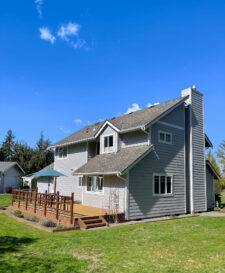
What Mount Vernon's Climate Actually Does to Siding
Salt Air
Even homes set back from open water still get some level of salt exposure carried on the wind. Salt is corrosive to fasteners, hardware, and metal trim, and it accelerates the breakdown of finishes that weren't engineered to resist it. Over time, salt-laden moisture works into seams and edges, and any siding product with a weak factory finish starts to chalk, fade, or lift at the edges well ahead of schedule.
Driving Rain
Wind-driven rain doesn't just wet the face of a wall — it pushes water sideways and upward, testing every seam, joint, and piece of flashing on a house. Siding that relies on caulk and paint alone to stay sealed will eventually let water behind it. Once moisture gets behind siding and can't dry out, you're not looking at a cosmetic problem anymore; you're looking at sheathing rot and framing damage that costs far more than the siding itself.
Moss Season
Shaded, damp conditions for a large part of the year mean moss and algae have plenty of time to take hold on north-facing walls, under eaves, and anywhere airflow is limited. Porous or absorbent siding materials hold onto that moisture, which feeds the growth and keeps the surface damp longer after every rain. Siding that resists water absorption dries faster and gives moss and algae less to grab onto.
Why We Only Install James Hardie
We get asked fairly often why we don't offer vinyl, LP SmartSide, or one of the other fiber cement brands. The honest answer is that we standardized on James Hardie after weighing how each category of product actually performs in this climate over the long haul, not just how it looks on installation day.
- Non-combustible material — fiber cement doesn't feed a fire the way some engineered wood products can, which matters more every year in Washington.
- Moisture resistance — Hardie's fiber cement formulation is engineered to resist swelling, cracking, and moisture intrusion far better than wood-based composite siding.
- ColorPlus factory finish — a baked-on finish applied under controlled conditions holds color and resists fading and chalking better than field-applied paint, which matters in a climate with heavy sun-to-rain cycling.
- Climate-engineered HZ product lines — Hardie makes region-specific formulations (HZ5 for our climate zone) built to perform in exactly the wet, temperate conditions found here.
- A strong, transferable warranty — backed by a company with decades in the fiber cement business, and one that transfers to the next owner if you sell.
Vinyl siding is inexpensive and low-maintenance in mild climates, but it can become brittle in cold snaps, expands and contracts more than fiber cement, and doesn't offer the same fire performance. LP SmartSide and other engineered wood products are wood-based at their core — even with resin treatments, they're more vulnerable to moisture intrusion at cut edges and seams than fiber cement, and that's a real liability in a region that sees this much driving rain. We're not saying those products have no place anywhere — we're saying we've made a professional judgment that they're not the right call for homes taking on Mount Vernon's weather, and we'd rather be straightforward about that than sell you something we don't believe in.
What a Correct Installation Actually Involves
Fiber cement siding is only as good as the installation behind it. A rushed or corner-cutting install can undermine even the best material. Here's what we consider non-negotiable on every job:
Water Management Comes First
Before a single piece of siding goes up, the wall needs a proper water-resistive barrier, correctly lapped and taped, with flashing integrated at every window, door, and penetration. In a climate that gets sideways rain, this layer is what actually keeps water out — the siding is the second line of defense, not the first.
Rainscreen or Proper Ventilation Gap
Fiber cement performs best when it's allowed to dry out on both sides. A ventilated gap between the siding and the water-resistive barrier lets moisture that does get through evaporate instead of sitting against the wall assembly — this matters directly for reducing the moss and mildew growth this area is prone to.
Fastening and Clearances to Manufacturer Spec
James Hardie publishes specific fastener patterns, nailing zones, and minimum clearances (from grade, roofing, decks, and other surfaces) for a reason — deviating from them is one of the most common causes of premature siding failure and can also void the manufacturer warranty. We follow those specs exactly, every time.
Sealed and Caulked Correctly — Not Over-Caulked
Every joint, seam, and penetration needs the right sealant applied correctly, but over-reliance on caulk to compensate for poor flashing or fitting is a shortcut that fails within a few years. Caulk should be a backup, not the primary water barrier.
Our Process for Mount Vernon Homes
| Step | What Happens |
|---|---|
| 1. On-site assessment | We walk the exterior, check current siding and sheathing condition, note trouble spots (north-facing walls, low-airflow areas, existing moisture damage). |
| 2. Product and color selection | We go over the James Hardie lines and ColorPlus finishes that fit the home and the climate zone. |
| 3. Written estimate | A clear scope of work and pricing — no vague allowances. |
| 4. Prep and water management | Remove old siding as needed, repair or replace any compromised sheathing, install water-resistive barrier and flashing correctly. |
| 5. Installation to spec | Siding installed per James Hardie fastening and clearance requirements, with proper ventilation behind it. |
| 6. Final walkthrough | We review the finished work with you before calling the job done. |
Cost Factors Homeowners Should Understand
Every home is different, but the same variables tend to drive cost up or down on siding installation jobs in this area:
| Factor | Why It Matters |
|---|---|
| Existing wall condition | Rot or moisture damage found once old siding comes off adds sheathing/framing repair costs. |
| Home size and complexity | More corners, gables, and trim details mean more labor and material cuts. |
| Siding profile chosen | Lap siding, shingle-style panels, and board-and-batten each have different material and labor costs. |
| Trim and accessory scope | Fascia, soffit, and trim replacement alongside siding adds cost but improves the finished water management. |
| Access and site conditions | Tight lots, multi-story walls, or landscaping obstacles affect labor time. |
We don't quote off a square-footage rule of thumb alone — an accurate number requires seeing the home in person.
Why Hiring a Crew That Already Works This Area Matters
A crew that regularly works Mount Vernon and the surrounding area already understands which wall orientations tend to hold moisture, where moss takes hold fastest, and how local wind and rain patterns actually behave — not in the abstract, but on real houses. That local knowledge shapes decisions during the job: where extra flashing attention is warranted, which details need to be tightened up beyond the bare minimum spec. A crew installing siding here for the first time is learning those lessons on your house. A crew that's already learned them is applying that experience to it.
Signs Your Current Siding Is Falling Behind
- Soft spots, bubbling, or visible warping anywhere on the siding face
- Persistent moss or algae growth that returns shortly after cleaning
- Paint or finish that's chalking, peeling, or fading unevenly
- Visible gaps or separation at seams and corners
- Rising energy bills that may point to compromised insulation behind failing siding
- Cracking or splitting, especially near fastener points
Any of these on their own might just mean it's time for maintenance. Several at once, especially combined with soft sheathing underneath, usually means it's time to talk about replacement before the damage spreads further into the structure.
Get a Straightforward Estimate
If your Mount Vernon home's siding is showing its age, or you're planning ahead before the next wet season sets in, we're happy to take a look and give you an honest assessment — no pressure, no inflated scope. Fill out the form below to schedule a free estimate.