 Chuckanut
 Why Sehome Siding Wears Differently Than You'd Expect
Sehome homes sit close enough to Bellingham Bay and the broader Whatcom County coastline that siding here takes on a specific combination of stresses most inland homes never deal with. Salt-laden air drifts in off the water and settles into every seam, joint, and fastener on the exterior. Combine that with the driving, wind-pushed rain that comes through this part of Washington for much of the year, and you have a recipe for siding that fails from the inside out — long before it looks obviously bad from the curb.
Then there's moss. Whatcom County's long, damp shoulder seasons give moss and algae months at a time to establish themselves on north-facing walls, under eaves, and anywhere siding stays shaded and slow to dry. Moss isn't just cosmetic. It holds moisture against the siding surface, and moisture held against the wrong material for long enough is how rot, delamination, and paint failure start.
None of this means Sehome homes need exotic materials or unusual construction. It means the siding material and the installation details both have to be chosen for a genuinely wet, salty, slow-drying climate — not a generic one.
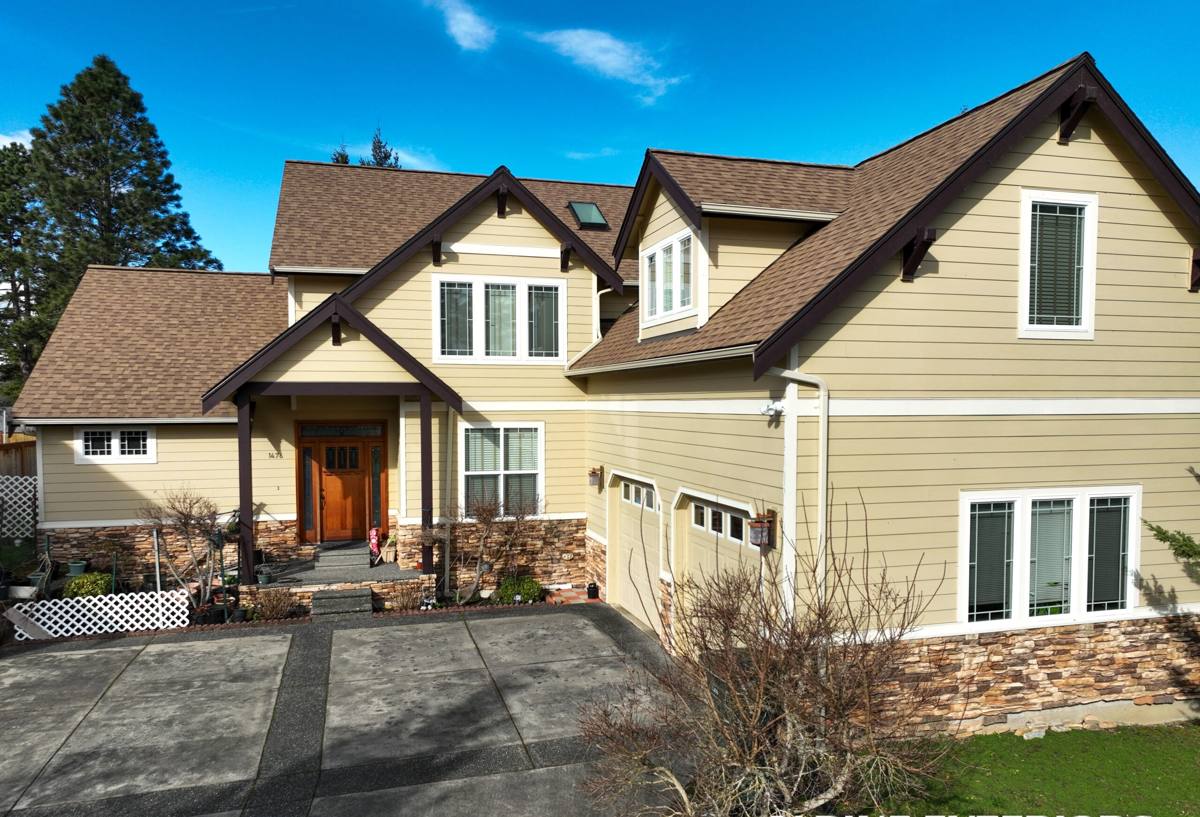
Signs Your Sehome Home Is Due for Siding Replacement
Siding failure in this climate is usually gradual, and homeowners often notice the symptoms before they connect them to the cause. Common signs we see on Sehome homes include:
- Soft or spongy spots when you press on the siding, especially near the bottom courses and around window trim
- Paint that's bubbling, peeling, or needing repainting far more often than it used to
- Visible warping, cupping, or gaps opening up between boards or panels
- Persistent moss or dark streaking that comes back within a season or two of cleaning
- Musty smells or soft drywall on interior walls that back up to exterior siding
- Cracking at butt joints or corners where caulk has failed and not been replaced
Any one of these on its own might just call for a repair. Several at once, especially on a home more than 15-20 years old, usually means the siding system itself has reached the end of its useful life and repair would just be a stopgap.
Why We Only Install James Hardie Fiber Cement
We made a decision early on to install exactly one siding product on the homes we work on: James Hardie fiber cement. We don't install vinyl, LP SmartSide, cedar, primed spruce, or other fiber cement brands, and that's a deliberate standard rather than a lack of options.
In a climate defined by salt air, driving rain, and extended damp periods, the material matters as much as the installation. Fiber cement is non-combustible and doesn't absorb moisture the way wood-based products can, which matters when a wall assembly stays wet for days at a stretch instead of hours. James Hardie's ColorPlus factory finish is baked on under controlled conditions, which holds up better against the repaint cycle that salt air and UV exposure force on painted wood and some engineered wood products. Hardie also engineers regional product lines (their HZ5 line, for example) specifically for climates like ours, and backs the product with a strong, transferable warranty — something worth real money if you ever sell the home.
We're not going to tell you every other product is worthless; each has situations where it makes sense. But for what Sehome's climate actually does to an exterior wall year after year, fiber cement engineered for this region is the material we're willing to put our name behind.
What "Correct Installation" Actually Means
Even the right material fails early if it's installed wrong, and this is where a lot of siding jobs quietly go sideways. A correct James Hardie installation on a Sehome home involves:
- Full tear-off of failing siding so the sheathing and framing underneath can actually be inspected, not covered over
- Repair of any rot or water damage found during tear-off before new siding goes on
- A continuous weather-resistant barrier installed per manufacturer spec, lapped correctly so water sheds outward, not inward
- Proper flashing at every window, door, and roof-to-wall intersection — the majority of siding leaks start at these transitions, not in the field of the wall
- Correct fastener type, spacing, and depth per Hardie's installation guide, since over-driven or wrong-gauge fasteners void the warranty and create failure points
- Manufacturer-specified clearances between siding and grade, decks, roof lines, and other penetrations so water has somewhere to go
- Caulking and sealing only where Hardie's install guide calls for it — over-caulking traps moisture just as badly as under-caulking lets it in
Skipping any one of these doesn't usually cause an immediate problem. It shows up two, five, or ten years later as exactly the kind of hidden rot and paint failure we described above — which is why it's worth asking a contractor to walk through their process before you hire them, not after.
How Our Process Works
1. Inspection and Estimate
We start with a walk-around of the home, checking siding condition, trim, flashing, and any soft or suspect areas. We'll be honest about what's repairable versus what genuinely needs full replacement — we don't upsell a full tear-off when a repair will hold.
2. Tear-Off and Assessment
Once old siding comes off, we inspect the sheathing and framing underneath. This is the point where hidden water damage from a Sehome winter or two shows up, and we'll flag it and get your sign-off before any repair work happens.
3. Weather Barrier and Flashing
We install the water-resistive barrier and flashing system to manufacturer spec at every penetration, corner, and transition — the details that determine whether the wall stays dry for the next 30-plus years.
4. Hardie Installation
New James Hardie siding goes on per the manufacturer's fastening schedule and clearance requirements, in the profile and ColorPlus finish you've chosen.
5. Final Walkthrough
We walk the finished exterior with you, check trim and caulk lines, and make sure everything matches what was scoped before we call the job done.
Cost Factors for Sehome Siding Replacement
Every home is different, but the factors that move the price on a Sehome siding job are fairly consistent. Rather than quote a number that won't mean much without seeing your home, here's what actually drives cost:
| Factor | Why It Matters |
|---|---|
| Extent of hidden water damage | Rot found under old siding needs to be repaired before new siding goes on — this is the single biggest source of price variation |
| Home size and wall complexity | More corners, dormers, and roof-to-wall transitions mean more flashing detail and labor time |
| Siding profile and finish choice | Lap, shingle, and panel profiles, plus custom ColorPlus colors, carry different material costs |
| Access and site conditions | Steep lots, tight setbacks, or limited staging area affect equipment and labor time |
| Trim and detail work | Window and door trim, fascia, and corner detailing add scope beyond the flat wall area |
We break all of this out in writing during the estimate so you know exactly what you're paying for and why, rather than a single lump number.
Why Hiring a Crew That Already Works Sehome Matters
Siding installation isn't just about following a manufacturer's install guide in general — it's about applying it correctly to the specific conditions a home actually faces. A crew that regularly works Sehome and the surrounding Chuckanut area already knows which wall orientations take the worst of the wind-driven rain, where moss tends to establish first, and how much clearance and drainage detail actually holds up through a full Whatcom County winter rather than just looking right on installation day.
That local experience shows up in small decisions: where to add extra flashing attention, how aggressively to detail a north-facing wall that never gets direct sun to dry it out, and which trim details actually survive salt air over a decade instead of just the first couple of years. It's the difference between a crew that installs to code and one that installs for this specific climate.
Maintaining Your New Siding
James Hardie siding is low-maintenance, not no-maintenance. A little attention keeps it performing the way it's designed to in this climate:
- Rinse the exterior annually to clear salt residue and early moss growth before it establishes
- Check caulk lines at trim and joints every couple of years and have any cracked sections resealed
- Trim back vegetation and tree cover that keeps shaded walls from drying out after rain
- Keep gutters clear so overflow doesn't run down the siding face repeatedly
- Address any impact damage or chips promptly so the water-resistive barrier underneath stays protected
None of this is heavy lifting, but skipping it for years at a stretch is how moss and moisture problems creep back even on good siding.
If your Sehome home is showing any of the signs above, or you'd just like an honest read on where your siding stands, we're happy to walk the exterior with you and give you a straightforward, no-pressure estimate using the form below.