 Chuckanut
 Building Decks for Silver Beach's Particular Climate
Silver Beach homes sit in one of the more demanding pockets of Whatcom County when it comes to outdoor structures. You've got salt-laden air moving in off the water, driving rain that comes in sideways more often than straight down, and a moss season that can stretch for the better part of the year in shaded, north-facing yards. A deck built without those three factors in mind will look fine for a season or two and then start showing problems — soft spots, corroding hardware, slick surfaces, and boards that cup or split. A deck built for this specific environment holds up.
We build decks in the Chuckanut area regularly, and Silver Beach's mix of coastal exposure and tree cover is something we plan for from the first conversation, not something we patch after the fact.
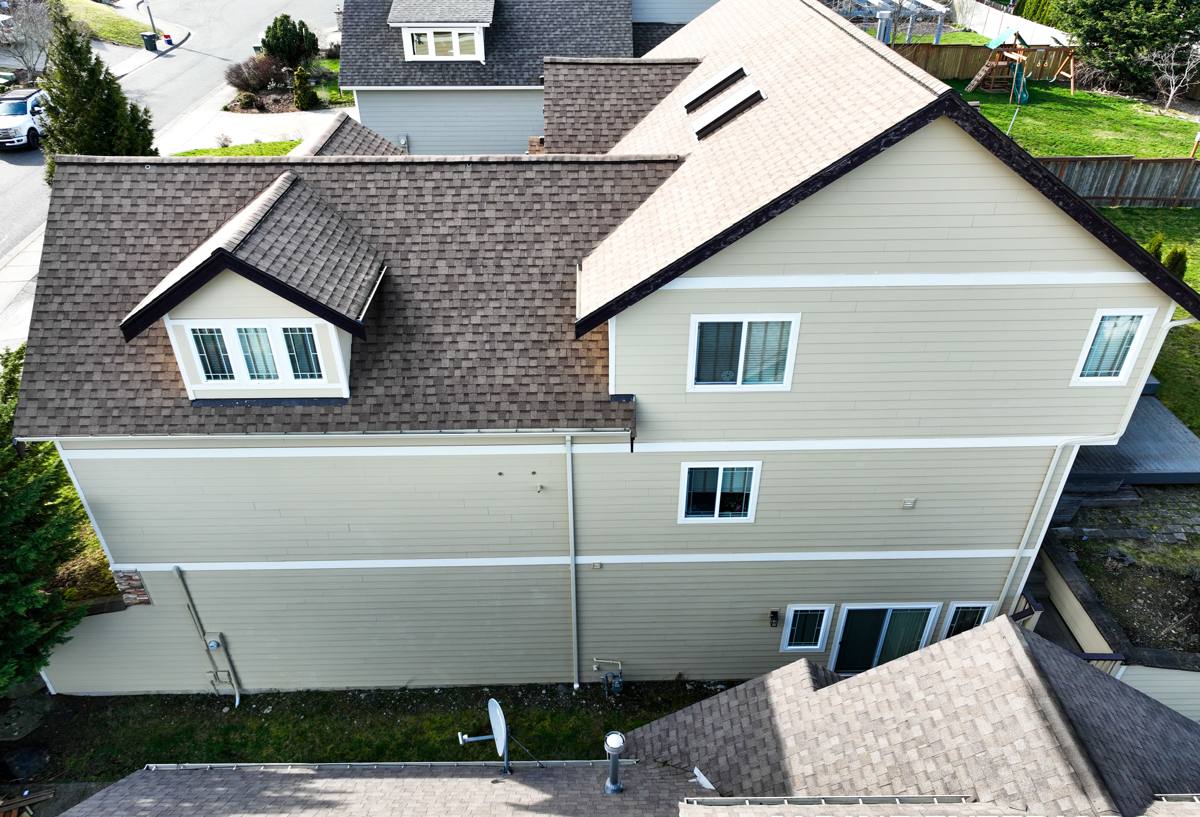
What Salt Air Does to a Deck Over Time
Salt air is corrosive to anything metal, and a deck has more metal in it than most homeowners realize — joist hangers, structural screws, post bases, railing brackets, and fasteners running through every board. Standard construction-grade hardware isn't rated for coastal exposure. Over a few winters, corrosion can weaken connections in places you can't see without pulling boards, which is exactly where you don't want a surprise.
Where Corrosion Shows Up First
- Joist hangers and structural screws hidden beneath the decking surface
- Post bases and anchor bolts at ground level, where moisture sits longest
- Railing hardware and any exposed fasteners on the deck surface itself
- Metal flashing at the ledger board where the deck meets the house
We spec stainless steel or heavy-duty coated fasteners rated for coastal and treated-lumber exposure on every deck we build near the water, not just the visible ones. It costs more up front than standard hardware. It's also the single biggest factor in whether a deck's frame is still sound in fifteen years.
Driving Rain and the Details That Actually Matter
Whatcom County gets its share of steady rain, but the wind-driven storms that come through Chuckanut and the Silver Beach area push water where it wouldn't normally go — up under boards, behind ledger flashing, and into end grain that isn't sealed. Most deck failures we're called out to inspect trace back to water intrusion at one of a few predictable points, not general wear.
The Ledger Board Connection
This is where the deck attaches to your house, and it's the single most important waterproofing detail on the entire structure. Done correctly, it includes proper flashing that directs water away from the house framing, a gap or membrane between the ledger and the siding, and fasteners sized and spaced to code. Done poorly — or skipped, which happens more than you'd think on older or DIY decks — it becomes a slow leak path directly into your house's rim joist and framing.
Board Spacing and Drainage
Boards need consistent gapping so water sheds through rather than pooling on the surface or wicking sideways into the wood. Underneath, the ground and substructure need a clear path for water to drain away rather than collecting under the deck where it stays damp between rains.
End Grain and Cut Edges
Any cut end of a board is the most absorbent part of that piece of wood. Sealing cut ends during construction — not just the face of the boards — is a step that's easy to skip and expensive to ignore.
Moss Season: Why Surface Choice and Layout Matter
Shaded yards, tree cover, and the region's damp stretches mean moss and algae are a fact of life on north- and east-facing decks in Silver Beach. Moss itself isn't just cosmetic — it holds moisture against the deck surface, which accelerates rot in wood decking and can make composite and even coated surfaces genuinely slippery underfoot.
We factor moss exposure into the layout and material conversation up front:
- Sun and shade patterns across your specific lot, not just general orientation
- Whether nearby trees will keep sections of the deck damp for days after a rain
- Surface texture — some composite and wood finishes shed moss more easily than others
- Airflow underneath and around the deck, which matters more than most homeowners expect
No deck surface is maintenance-free in a moss-prone yard, but layout and material choice can mean the difference between an annual once-over and a slippery, green surface by midsummer every year.
Choosing the Right Decking Material for This Environment
There's no single "best" decking material — it depends on your budget, how much upkeep you want to do, and how exposed your particular lot is to sun, shade, and moisture. Here's how the common options actually compare for a Silver Beach setting.
| Material | Salt Air / Moisture Behavior | Moss & Algae Resistance | Maintenance |
|---|---|---|---|
| Pressure-treated lumber | Good if hardware and end grain are properly protected | Moderate — needs regular cleaning and re-sealing | Higher — annual cleaning, periodic sealing |
| Cedar | Naturally rot-resistant, but still needs sealing near salt exposure | Moderate — natural oils help but fade over time | Higher — sealing every 1-2 years to hold color and protection |
| Composite decking | Excellent — doesn't absorb moisture like wood | Good, though textured surfaces can still hold moss film | Lower — periodic washing, no sealing or staining |
| PVC decking | Excellent — fully moisture resistant | Good — smooth surfaces resist moss buildup best | Lowest — occasional washing only |
We're honest with clients about the trade-offs. Wood costs less up front and has a warmer, natural look, but it demands real maintenance discipline in this climate — skip a season of sealing and you're playing catch-up. Composite and PVC cost more initially but shift the long-term maintenance burden way down, which matters if your deck sits in a shaded, moss-prone corner of the yard.
Structural Considerations Specific to Silver Beach Lots
Beyond materials and hardware, a handful of structural details matter more here than in a drier, inland setting.
Footings and Ground Contact
Whatcom County's soil moisture and freeze-thaw cycles mean footings need to be set to proper frost depth and code-required bearing, not just "deep enough." Ground contact posts and hardware need moisture-rated treatment regardless of species.
Ventilation Beneath the Deck
A low deck built tight to damp ground traps moisture underneath, which speeds up rot in the joists and posts even if the decking surface itself is fine. Where lot grading allows, we build in enough clearance and, where needed, address drainage under the structure — not just on top of it.
Permitting
Deck projects in Whatcom County typically require a building permit once you're above a certain height or attached to the structure of your home — the exact thresholds depend on your specific project. We handle the permitting process as part of the job rather than leaving it to the homeowner to sort out.
Our Process for a Silver Beach Deck Build
We keep the process straightforward, and every step accounts for the site conditions specific to your lot.
- On-site assessment — we walk the lot, check sun/shade exposure, existing grading and drainage, and how the new or replacement deck ties into your home
- Material and layout conversation — a straight discussion of options and trade-offs based on your budget and how much upkeep you want to take on
- Permitting — we pull the required permits and coordinate inspections through Whatcom County
- Structural build — footings, framing, ledger flashing, and hardware specified for coastal and wet-climate exposure
- Decking and railing installation — proper spacing, sealed cut ends where applicable, and finish details
- Final walkthrough — we go over care and maintenance specific to the material you chose and your lot's exposure
Why a Crew That Already Works Silver Beach Matters
A deck built by someone unfamiliar with this stretch of Whatcom County will often meet code and still underperform — because code sets a minimum, not a standard for salt air and moss exposure. A crew that's worked this area knows which hardware grade actually holds up here, which layouts drain well on lots with heavy tree cover, and which ledger and flashing details matter most given the direction storms tend to come from. That local knowledge shows up ten years later as a deck that's still solid, not one that needed early hardware repairs or board replacement.
Maintenance Checklist for Silver Beach Decks
- Sweep or wash off debris and moss growth at least twice a year, more often in heavily shaded areas
- Check railing and structural hardware annually for early signs of corrosion, especially in the first few years
- Reseal or restain wood decking on the schedule appropriate to the product — don't wait until it visibly needs it
- Keep gutters and downspouts near the deck clear so runoff isn't draining directly onto or under the structure
- Trim back overhanging branches where practical to reduce shade and speed up drying time after rain
- Address any soft, discolored, or spongy boards right away rather than waiting for a full replacement to become necessary
If you're planning a new deck or replacing one that hasn't held up to Silver Beach's climate, we're happy to walk your property and give you a straightforward, no-pressure estimate. Use the form below to get started.