 Chuckanut
 Why Silver Beach Roofs Take a Beating
Homes in and around Silver Beach deal with a specific combination of weather that's harder on a roof than most homeowners realize. Whatcom County's marine climate means moist, salt-tinged air moves through the area on a regular basis, and that air doesn't just sit still — it rides in on wind, especially during the fall and winter storm cycle. Add in months of driving rain and a moss season that can stretch from late fall well into spring, and you've got a roof that's under near-constant low-grade stress even in years without a major windstorm.
Individually, none of these factors are dramatic. Together, they compound. Wind loosens what rain then gets into, and moisture that lingers because of moss or poor drainage gives rot and granule loss time to set in before anyone notices a problem from the ground. That's the pattern we see over and over on Silver Beach roofs: small, weather-driven damage that goes unnoticed until it's a leak inside the house.
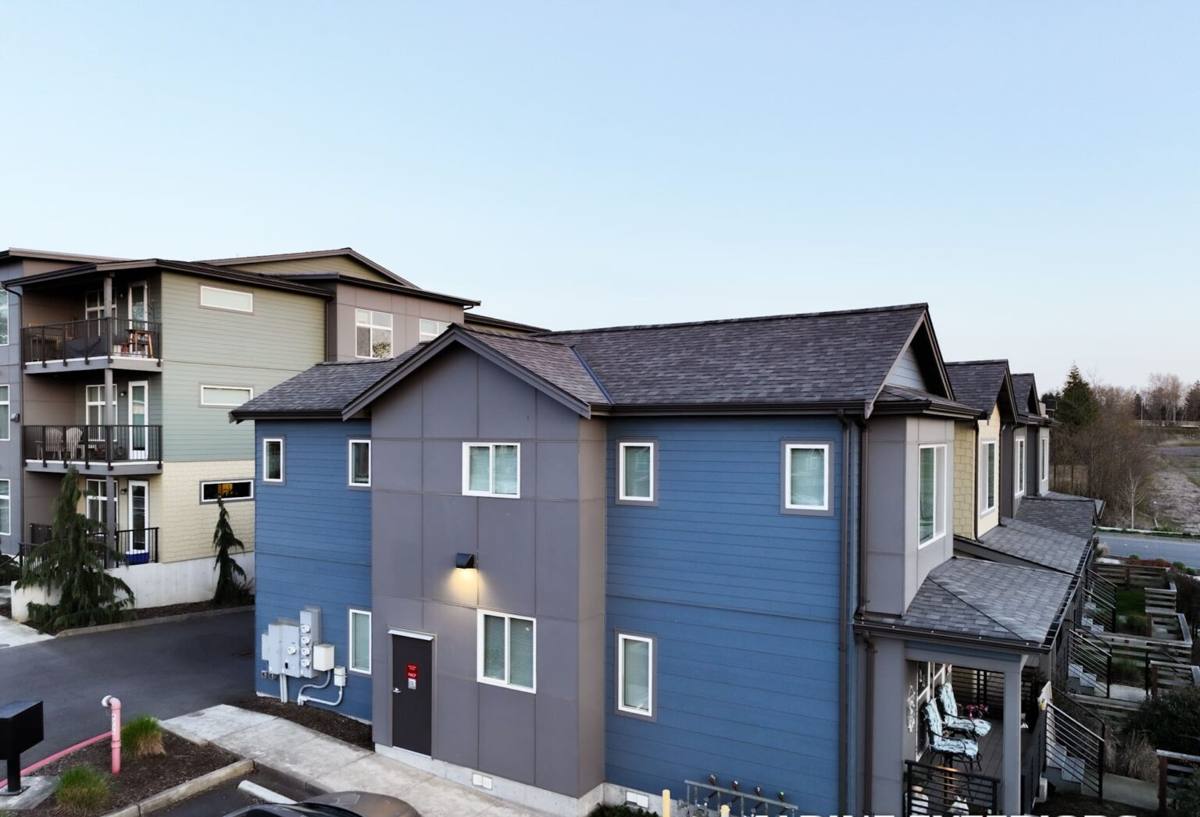
What Storm Damage Actually Looks Like Here
"Storm damage" covers more than the obvious stuff like a tree limb through the roof deck. In this part of Whatcom County, the more common damage is subtler and shows up in a handful of predictable places.
Wind-Related Damage
Gusts off a passing front can lift the tab edge of asphalt shingles without tearing them off entirely. The shingle looks intact from the ground but the seal strip is broken, which means the next rain gets a straight path underneath it. Ridge cap shingles and the shingles nearest roof edges and hips take the brunt of this because they see the highest wind uplift.
Moss and Moisture Damage
A long moss season doesn't just look bad — moss holds water against the shingle surface and roof deck far longer than open air would, which accelerates granule loss and, in bad cases, contributes to soft spots in the decking underneath. Moss also tends to build up fastest on north-facing slopes and shaded areas, which are common on wooded lots typical of this area.
Flashing and Penetration Failures
Flashing around chimneys, skylights, and vent pipes is sealant and metal, not shingle, and it fails differently — usually through sealant cracking, metal corrosion from prolonged wet exposure, or fasteners backing out as the roof deck expands and contracts with temperature swings. This is one of the most common sources of a "mystery leak" that shows up nowhere near where the water actually entered the roof.
Gutter and Drainage Overload
Driving rain in short, heavy bursts can overwhelm gutters that are otherwise fine, especially if they're already partially clogged with moss debris or fir needles. Water that backs up under the roof edge instead of draining away is a direct cause of fascia rot and edge shingle damage.
Real Storm-Damage Warning Signs
- Granules collecting in gutters or at downspout outlets after a storm
- Shingles that look slightly lifted or curled at the edges, especially near ridges and hips
- Dark streaking or green-black growth on north-facing roof slopes
- Soft or spongy feel when walking a section of roof (a sign of deck moisture, not just surface damage)
- Water stains on interior ceilings that appear or grow after a windy, wet stretch
- Visible daylight or gaps around flashing when viewed from the attic
- Sagging or pooling water near valleys or low-slope sections
What a Correct Storm Damage Repair Involves
A repair that actually holds up through the next storm season starts with an inspection that goes past the obvious damage. We check the full roof plane, not just the spot the homeowner points to, because wind and moss damage rarely stay contained to one area.
Step 1: Full-Roof Inspection
This means walking the roof when it's safe to do so, checking every slope, valley, and penetration — not just photographing from the ground. We're looking for the damage the homeowner can see and the damage that's starting but not yet visible from below.
Step 2: Deck Assessment
Before any new shingle goes down, the roof deck underneath has to be sound. If moss or a slow leak has softened the plywood or OSB decking, patching over it just buries the problem. Any soft or delaminated decking gets cut out and replaced before repair work continues.
Step 3: Underlayment and Flashing Repair
Underlayment is the actual waterproofing layer — the shingles are the wear surface on top of it. Torn or worn underlayment gets replaced in the repair area, and flashing gets either resealed or replaced depending on its condition, not just caulked over.
Step 4: Shingle Replacement and Matching
We replace damaged shingles with a matching product where possible. Exact color matches aren't always available if the original shingles have weathered or the product line has changed, and we'll tell you honestly if that's the case rather than promise a seamless blend we can't deliver.
Step 5: Drainage Check
Since drainage problems are a major contributor to storm damage in this area, we check gutters and downspouts near the repair area as part of the job, not as an upsell afterthought.
Our Process, Start to Finish
Homeowners generally want to know three things: how fast can this get looked at, what will it cost, and will the crew actually show up on the day they say. Here's how we handle it.
- Call or request an estimate. We ask what happened and when, since recent storm timing matters for both repair urgency and any insurance claim.
- On-site inspection. We assess the damage in person and document it with photos, both for your records and for any insurance claim you may file.
- Written estimate. You get a clear scope of work and price range before anything is scheduled — no verbal-only estimates.
- Scheduled repair. We work around Whatcom County's weather windows; storm repair sometimes means a tarp-and-secure visit first if conditions aren't safe for full repair yet, followed by the permanent fix once weather allows.
- Cleanup and walkthrough. We clear debris, walk the repair with you, and answer any questions about what was done and why.
Repair vs. Replacement: How We Help You Decide
Not every storm-damaged roof needs to be replaced, and not every roof can be safely patched. The honest answer depends on the roof's age, how widespread the damage is, and what condition the decking is in underneath.
| Factor | Leans Toward Repair | Leans Toward Replacement |
|---|---|---|
| Roof age | Under 12–15 years, otherwise sound | Nearing or past expected service life |
| Damage extent | Localized to one slope or area | Spread across multiple slopes |
| Decking condition | Solid, dry to the touch | Soft, spongy, or showing rot in more than one spot |
| Shingle match availability | Close match available | Discontinued product, no reasonable match |
| Storm frequency going forward | Isolated event | Roof already showing wear from repeated seasons |
When a roof is borderline, we'll walk you through both options with real numbers rather than defaulting to the bigger job. A repair that's done correctly can add years of service life to an otherwise sound roof.
Materials We Use and Why
For most storm repairs in this area, we use asphalt shingle products rated for high wind exposure, matched to your existing roof's class where possible. We pair them with quality synthetic underlayment rather than older felt products, since synthetic underlayment holds up better through the repeated wet-dry cycles typical of a Whatcom County winter and gives the roof deck extra protection during the gap between damage and repair.
In moss-prone areas of a roof, we'll talk with you about zinc or copper strips as a preventive measure. They're not a magic fix — moss can still establish on parts of a roof shielded from runoff — but they reduce regrowth in the areas water actually washes over, which cuts down on how often moss removal is needed. We're upfront that this is a maintenance-reduction tool, not a one-time solution.
We don't install every product on the market, and that's a deliberate standard, not an oversight. Some lower-cost shingle lines have thinner tab profiles that are more prone to wind lift in exposed, storm-exposed settings like this one, and some flashing materials corrode faster under prolonged marine moisture exposure. We'd rather spec a product that holds up to the actual conditions here than the cheapest option on a spec sheet.
Insurance and Storm Claims
Many storm repairs are at least partially covered by homeowner's insurance, though every policy is different and we're not the ones who make that determination. What we can do is document the damage thoroughly — photos, a written scope, and a clear description of cause — so you have what an adjuster needs. If you're filing a claim, it generally helps to have that documentation done before any temporary repairs disturb the damage, and to keep records of when the storm occurred relative to when the damage was found.
We're glad to work alongside your insurance process, but we'd encourage you to review your specific policy and talk to your adjuster directly about coverage, deductibles, and timelines — that's outside what a roofing crew can advise on.
Why a Crew That Already Works Silver Beach Matters
Storm damage repair isn't a one-size-fits-all trade. A crew that regularly works Silver Beach and the surrounding Chuckanut area has already seen how the local combination of wind exposure, moss buildup, and driving rain plays out on real roofs — which slopes tend to hold moisture, which flashing details tend to fail first, and how quickly moss regrows in shaded lots typical of the area. That's the kind of pattern recognition that comes from repeat local work, not from a general estimate.
It also matters for response time. Storm damage doesn't wait for a convenient week, and a crew based in the area can get eyes on a damaged roof and a tarp up faster than one traveling in from further out — which matters most in the first 24 to 48 hours after a storm, when a small leak can turn into interior damage.
Questions Worth Asking Any Roofing Contractor Before You Hire
- Are you licensed and insured to work in Washington, and can you provide proof?
- Will I get a written estimate before work starts, not just a verbal number?
- Do you inspect the full roof deck, or just replace the visible shingles?
- What's your typical timeline from inspection to completed repair?
- Will you document the damage in a way that supports an insurance claim if I need one?
- What warranty applies to the repair work itself, separate from the shingle manufacturer's warranty?
Get an Honest Look at Your Roof
If your roof has been through a recent storm, or you've noticed lifted shingles, moss buildup, or a stain on a ceiling that wasn't there before, it's worth having someone look at it before the next round of Whatcom County weather makes it worse. We offer free, no-pressure estimates for Silver Beach homeowners — use the form below to tell us what you're seeing and we'll get back to you with next steps.