 Chuckanut
 Why South Hill Decks Take a Different Kind of Beating
A deck in South Hill doesn't age the way a deck in a drier inland climate does. Between the salt air rolling in off the water, the driving rain that comes sideways during a real Whatcom County storm, and a moss season that can stretch from fall through spring, outdoor structures here are under near-constant pressure. None of that means a deck can't last decades — it means it has to be built with those specific conditions in mind from the framing up, not just finished to look nice on day one.
We see a lot of decks that were built correctly for a generic "Pacific Northwest" climate but not for the particular combination South Hill deals with. That distinction matters more than most homeowners realize until a few years in, when fasteners start bleeding rust, boards stay slick well into spring, or a ledger board starts showing rot from the inside out.
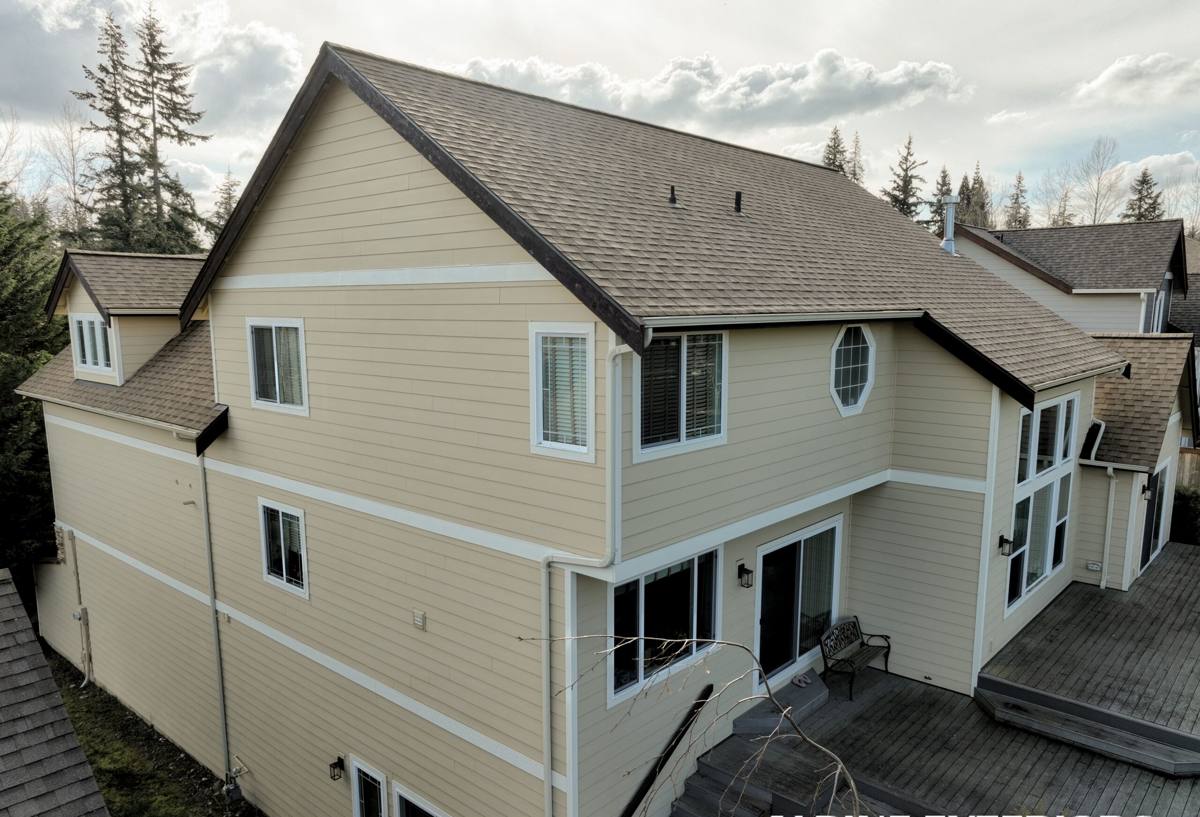
What Salt Air, Rain, and Moss Actually Do to a Deck
Salt Air and Metal Fasteners
Airborne salt doesn't need to be right on the waterfront to cause problems — it travels, and it accelerates corrosion on anything metal. Standard galvanized screws, nails, and joist hangers can start breaking down faster than homeowners expect in a coastal-influenced climate like this one. Once a fastener corrodes, it loses holding strength long before it looks obviously bad, which is part of why we don't treat hardware selection as an afterthought.
Driving Rain at the Ledger Board
The single most common point of failure we find on older decks is the ledger board — the piece that attaches the deck to the house. When rain is driven sideways by wind, as it regularly is here, water gets forced into gaps that would stay dry in a calmer climate. Without the right flashing and water management detail at that connection, moisture works its way behind the siding and into the rim joist, and by the time it's visible, real structural repair is usually needed.
Moss, Algae, and Slip Risk
A long moss season means more months where a deck surface can stay damp and shaded long enough for moss and algae to take hold, especially on north-facing decks or ones tucked under trees. Beyond the cosmetic issue, that buildup makes boards genuinely slippery, and it holds moisture against the wood or composite surface longer than it should sit there.
Choosing the Right Decking Material for This Climate
There's no single "best" decking material for every South Hill home — it depends on budget, how much upkeep you want to do, and how the deck is oriented relative to sun and shade. Here's how the common options actually perform under local conditions:
| Material | How It Handles Salt Air & Rain | Moss/Algae Resistance | Maintenance Needed |
|---|---|---|---|
| Pressure-treated wood | Good if fasteners and flashing are corrosion-resistant; wood itself handles moisture reasonably well when sealed | Needs regular cleaning and sealing to resist buildup | Annual to biennial cleaning/sealing |
| Cedar | Naturally moisture- and rot-resistant, but softer surface can hold moss if not maintained | Moderate — benefits from periodic cleaning | Regular sealing to preserve color and resistance |
| Composite decking | Excellent — doesn't absorb moisture or corrode | Better than wood, but still needs occasional cleaning in shaded, damp spots | Low — mostly seasonal washing |
| PVC/capped polymer | Excellent — fully moisture-resistant surface | Best resistance of the common options | Lowest — occasional rinsing |
Composite and PVC decking tend to cost more upfront than wood, but for a lot of South Hill homeowners the tradeoff is fewer weekends spent sealing and scrubbing. Wood and cedar remain solid, honest choices too — they just ask for more consistent maintenance to keep performing well in this climate, which is a fair tradeoff for homeowners who like the natural look and are willing to stay on top of it.
What's Under the Boards Matters Most
The decking surface is what you see, but the framing underneath is what determines whether the deck is still safe and solid in fifteen years. In a climate like ours, a few details separate a deck that holds up from one that quietly deteriorates:
- Stainless steel or coated, corrosion-resistant fasteners throughout — not just at the visible surface
- Proper flashing at the ledger board connection, integrated with the home's existing water management, not just caulked over
- Joist tape or comparable protection on framing lumber to keep water from sitting on top of joists
- Footings set below frost depth and sized correctly for the deck's load, including any hot tub or heavy furniture plans
- Adequate gaps between boards for drainage and airflow, which also helps limit moss buildup
None of this is visible once the deck is finished, which is exactly why it's worth asking a contractor about before construction starts rather than after a problem shows up.
Designing for a South Hill Lot
South Hill's terrain includes plenty of sloped and view-oriented lots, which shapes how a deck should be designed as much as the climate does. Grading and drainage around the deck's footprint need to move water away from the house and away from the deck's substructure — on a slope, that's not automatic, it has to be planned. Sun exposure varies a lot from one yard to the next depending on tree cover and which direction the lot faces, which affects both moss risk and material choice.
Railing height, guard spacing, and stair requirements are governed by building code regardless of style preference, and elevated decks on sloped lots often need more engineering attention at the footings and posts than a low deck on flat ground. We factor all of this into the design conversation up front rather than treating it as a construction-phase surprise.
How We Build a Custom Deck in South Hill
Our process is built around getting the parts nobody sees right, not just the parts that show up in a design sketch:
- Site visit and assessment — we look at grade, sun/shade exposure, existing siding and ledger connection points, and how water currently moves through the yard.
- Design and material selection — we talk through decking materials, railing style, and layout based on how you'll actually use the space and how much maintenance you want long-term.
- Permitting — decks typically require a building permit; we handle the paperwork and make sure the design meets current code before any work starts.
- Framing and flashing — this is where climate-specific detailing happens: fastener selection, ledger flashing, footing depth, and joist protection.
- Decking, railing, and finish work — surface installation, railing, stairs, and any finishing or sealing the material calls for.
- Final walkthrough — we go over the finished deck and what maintenance it needs so there are no surprises down the road.
Keeping a South Hill Deck Looking Good Year After Year
A well-built deck still needs some seasonal attention in this climate. A simple, honest checklist covers most of it:
- Sweep debris out of board gaps regularly, especially during fall leaf drop
- Check for early moss growth in shaded or north-facing areas before it spreads
- Inspect visible fasteners and hardware for rust or corrosion once a year
- Keep nearby gutters and downspouts clear so runoff isn't draining onto the deck
- Reseal or stain wood and cedar decking on the schedule the product calls for — don't stretch it out
- Look at the ledger board flashing and caulking for cracks or gaps
- Trim back overhanging vegetation to improve airflow and sun exposure
- Check underneath the deck occasionally for soft spots, staining, or signs of moisture
Why Hiring a Crew That Already Works in South Hill Matters
A lot of the decisions that make a deck last here — fastener grade, flashing detail, how much moss resistance to prioritize in a material choice — come from having actually dealt with what South Hill's climate does to a deck over time, not just from a general knowledge of decking. A crew that works this area regularly has already seen where ledger boards tend to fail, which spots on a given lot stay shaded and damp longer, and how the local permitting process works, which keeps the project moving instead of stalling on avoidable paperwork issues.
That local familiarity doesn't replace good craftsmanship, but it does mean fewer guesses and fewer callbacks down the line. For a project that's meant to hold up through years of salt air, driving rain, and moss season, that experience is worth having on your side from the first site visit.
If you're planning a new deck or replacing one that's showing its age, we're happy to take a look and put together a free, no-pressure estimate — just fill out the form below to get started.