 Chuckanut
 Why Deck Replacement Looks Different in South Hill
South Hill is one of the older, more established neighborhoods in the greater Chuckanut and Bellingham area — elevated lots, mature tree canopy, and a lot of homes with decks that were originally built decades ago, under very different assumptions than the climate actually calls for. That combination of age and site conditions is exactly why a deck replacement here isn't a one-size-fits-all job. A deck that's failing in South Hill usually isn't failing because whoever built it did sloppy work; it's failing because salt air, driving rain, and a moss season that runs most of the year have had thirty or forty years to work on a structure that was never built with coastal-grade hardware or real drainage detailing in mind.
This page is specifically about deck replacement for South Hill properties — not deck repair, and not a generic deck-building page. It covers what pushes a deck from "needs some work" to "needs to come out," what a correct replacement actually involves on a site like this, and why hiring a crew that already works this neighborhood changes the outcome you get.
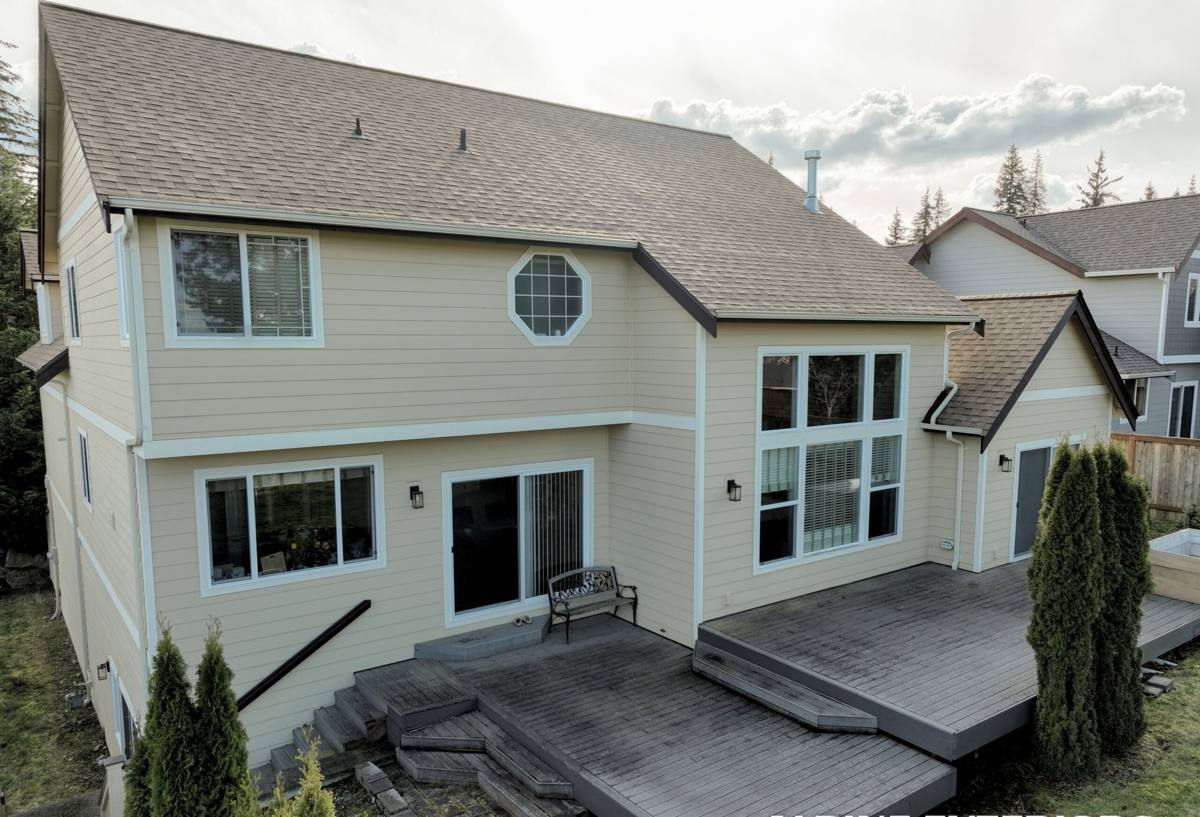
What This Climate Does to an Older Deck
Salt air off the water doesn't stay near the shoreline — it travels, and elevated South Hill lots get their share of it carried on the wind along with everything else this stretch of Whatcom County's coastal climate throws at an exposed outdoor structure. Combine that with driving rain that doesn't fall straight down so much as get pushed sideways into railings, ledger connections, and any horizontal surface that isn't gapped and sloped correctly, and you've got two forces working against a deck at once, season after season, year after year.
Then there's the shade. Mature trees are part of what makes South Hill's lots desirable, but tree cover also means a lot of deck surfaces stay damp longer after a storm than they would on a more open lot, and that's exactly the environment moss needs to establish itself and keep coming back no matter how often it gets washed off. On an older deck, moss doesn't just make the surface slick — it holds moisture against the boards and the framing underneath, and over years that trapped moisture does real damage that isn't obvious from a quick look at the walking surface.
None of that is unique to South Hill specifically, but it's a concentrated version of what most of Chuckanut and the surrounding Whatcom County area deals with, and it's the reason a deck built with generic, inland-standard materials and hardware tends to show its age here faster than most homeowners expect going in.
Signs Your South Hill Deck Needs Replacing, Not Just Repair
An aging deck usually gives warning signs well before it becomes unsafe, but those signs are easy to write off as cosmetic if you don't know what you're looking at. Worth checking for:
- Soft or spongy decking boards, especially near the house or in shaded corners that stay damp the longest
- Rust staining bleeding out from fastener heads, joist hangers, or post hardware
- A ledger board connection that shows gaps, dark staining, or soft wood where the deck meets the house
- Moss or algae that returns within days of a thorough cleaning
- Railing posts that wobble or flex under normal weight, not just heavy leaning
- Visible sagging between joists, or a deck surface that no longer feels level underfoot
- Framing you can see is checked, split, or soft when probed with a screwdriver or awl
When Repair Still Makes Sense
Not every aging deck needs a full teardown. If the problems are isolated — a handful of boards, one section of railing, a ledger flashing detail that needs correcting — targeted repair can be the right call, and we'll tell you that plainly if that's what we find on your property. Replacement becomes the right answer once the framing itself is compromised in more than one spot, or once enough individual repairs have piled up that a full rebuild is genuinely more cost-effective than chasing problems one at a time for another few years.
What a Correct Deck Replacement Involves
Tear-Off and Structural Inspection
Removing the old decking is the only way to actually see the condition of the framing, ledger connection, and posts underneath — a lot of the damage that matters most is invisible from the surface. We build room into the process for what we find once the old boards come off, because on a deck this age, there's almost always something under the surface that a walk-through inspection alone can't catch.
Ledger Board and Flashing
The ledger — where the deck attaches to the house — is the single most common failure point on an older deck, and it's also the connection where a mistake does the most damage, since water tracking past a bad ledger flashing detail doesn't just rot the deck, it can work its way into the house's wall framing. A correct replacement means proper flashing at that connection, not just fresh lag bolts driven into the same holes the old ledger used.
Framing, Joists, and Fasteners
Framing gets rebuilt with pressure-treated lumber sized correctly for the span and load, using joist hangers and fasteners rated for sustained moisture and salt-air exposure rather than standard hardware that starts corroding within a few wet seasons. Joist spacing gets matched to the actual decking product's span rating, not a generic layout carried over from the old deck.
Decking Material
The material you choose for the walking surface matters, and it's worth its own comparison — see the table below. What matters here is that the framing underneath is built to outlast whatever decking sits on top of it, since a premium decking surface on undersized or poorly fastened framing is still a short-lived deck.
Railings and Guardrail Code
Railings and guardrails get sized to current adopted building code and to the actual wind and load exposure the site sees — an elevated, tree-sheltered South Hill lot doesn't necessarily see the same wind loading as an open bayfront lot, but posts and connections still need to be sized for real use, not just code minimums on paper.
Decking Material Comparison for South Hill's Climate
Shade and moisture matter more here than they would on a dry, open lot, because the gap in performance between a well-suited material and a poorly-suited one shows up faster under a tree canopy that keeps surfaces damp longer between storms.
| Material | Handling Moisture, Salt Air & Shade | Moss Resistance | Upkeep |
|---|---|---|---|
| Cellular PVC | Excellent — no wood fiber to absorb moisture | Strong, smooth non-porous surface | Occasional washing |
| Capped composite | Strong — cap layer resists moisture and staining | Good on most product lines | Occasional washing |
| Uncapped composite | Moderate — some moisture absorption at exposed fiber | Fair; more prone to buildup in shaded spots | Periodic cleaning |
| Cedar | Moderate — natural resistance, but needs sealing | Fair when sealed and maintained on schedule | Regular oiling or sealing |
| Pressure-treated wood | Weak against sustained shade and moisture over time | Poor without regular treatment | Regular sealing or staining |
Designing the New Deck Against Moss, Shade, and Driving Rain
A deck replacement is a real opportunity to correct drainage and moisture problems the original build never addressed, not just swap old boards for new ones in the same configuration. That starts with board gapping sized correctly for drainage and material movement, so water can actually move through and air can dry the surface between rain events instead of sitting trapped against the boards. It also means proper slope away from the house, ventilation underneath the deck rather than tight solid skirting that traps humid air against the framing, and fastener hardware coated or rated for the moisture and salt exposure the site actually sees rather than whatever was standard when the original deck went up decades ago. On shaded sections specifically, we'll talk through decking colors and finishes that show moss and algae buildup less readily, since a north-facing or heavily-shaded run of decking has different priorities than a section that gets sun most of the day.
Our Deck Replacement Process
- Site visit to assess the existing deck, framing condition where visible, drainage, shade exposure, and how the space gets used
- Tear-off of the old decking and railing, followed by a full structural inspection of framing, posts, and the ledger connection
- Correction of ledger flashing and any structural issues found once the old surface is off
- Framing rebuilt or reinforced with correctly sized, properly fastened lumber and hardware
- Installation of the new decking surface in the material you've chosen
- Railings, guardrails, and stairs built to code and sized for the site's actual conditions
- Final walkthrough covering what your specific decking material needs going forward, and a straight answer if it's not much
Permits and Local Code Considerations
Deck replacements that are attached to the house or built above a certain height typically require a permit, and the guardrail height, footing depth, and setback requirements are set by the currently adopted building code rather than by habit or what the old deck happened to have. We handle the permitting process as part of the job rather than leaving a homeowner to sort it out separately, and we won't build to a lesser standard than code calls for just because the deck being replaced was original to the house and grandfathered in.
What Drives the Cost of a Deck Replacement in South Hill
| Cost Factor | Why It Matters |
|---|---|
| Condition of the existing structure | A ledger, posts, or footings that need full rebuilding add scope a straightforward resurfacing wouldn't |
| Deck size and footprint | Larger decks mean more framing, fasteners, and decking material, scaling cost fairly directly |
| Decking material choice | Material cost per square foot varies significantly between wood, composite, and PVC options |
| Height, stairs, and multiple levels | Elevated or multi-level decks add framing complexity, railing length, and stair construction |
| Railing style | Cable, glass, and custom railing systems cost more than standard baluster railing |
| Site access and slope | Hillside South Hill lots with limited equipment access or mature trees close to the work area can add labor time |
We'll walk your specific site and give you a real number based on what we actually find, not a phone estimate based on square footage alone. Broad ranges are useful for planning, but the condition of what's underneath an old deck is the single biggest variable, and that only gets confirmed once we're looking at it in person.
Why Hire a Crew That Already Works South Hill
A crew that mostly builds decks in drier, more open parts of the county can still put one together competently, but a South Hill replacement has variables that don't come up as often elsewhere — shaded, moisture-retentive lots that push moss resistance higher on the priority list, salt-air-driven fastener corrosion that isn't always obvious until a deck is decades old, and hillside access and grading that affects how a rebuild gets staged. Working this neighborhood regularly means we're not guessing at those requirements on your project. We've seen which decking lines actually hold up against South Hill's specific combination of shade, salt air, and driving rain, and which framing and fastener details are worth the extra time rather than an unnecessary upsell.
That familiarity also shows up in the smaller judgment calls — how to grade and vent a rebuilt deck for a lot's actual drainage pattern, or being straightforward about what your deck realistically needs to last another twenty years versus what's just an extra line item on a quote.
Get a Straight Answer About Your Deck
If your deck is showing soft spots, recurring moss, rusting hardware, or just feels like it's on borrowed time, we're happy to walk the site with you and give you an honest read on repair versus replacement before anything gets torn out. Reach out below for a free, no-pressure estimate on your South Hill deck replacement.