 Chuckanut
 Why South Hill Siding Wears Differently
South Hill sits close enough to open water that homes here take a different kind of weather beating than siding fifteen or twenty miles inland. Salt-laden air corrodes fasteners and trim faster, wind-driven rain gets pushed sideways into laps and seams that would stay dry on a calmer site, and the tree cover that gives South Hill its character also means shade, damp ground, and a moss season that runs longer than most homeowners expect. None of this is unusual for Whatcom County, but South Hill gets a concentrated version of it, and siding that isn't installed with that in mind fails early — usually years before a homeowner budgeted for replacement.
We work on South Hill homes regularly enough to know which failure patterns show up here specifically: fastener bleed and corrosion on the weather-exposed elevations, soft trim at the bottom courses where splash-back and moss retention keep wood damp for weeks at a stretch, and paint or coating breakdown on siding that was never rated for this kind of sustained moisture exposure. A replacement done right accounts for all of it — not just swapping old boards for new ones in the same pattern.
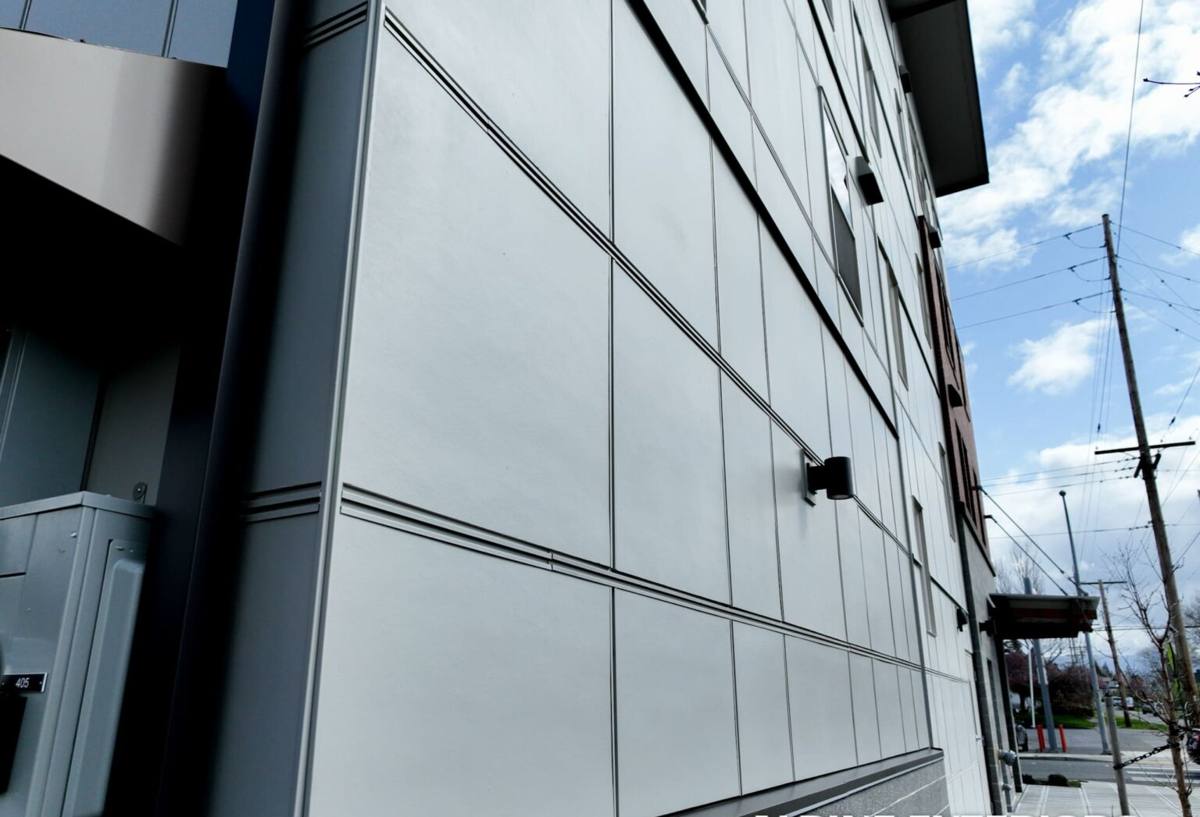
Signs It's Replacement, Not Repair
Repair makes sense when the damage is isolated — a cracked board from an impact, a section behind a downspout that failed because of a gutter problem, a few pieces near grade. Replacement is the right call when the damage is systemic, meaning it traces back to the material or the original installation rather than a one-off event.
What we look for
- Soft, spongy, or delaminating siding across multiple elevations, not just one damp corner
- Persistent moss or algae growth that comes back within a season of cleaning
- Paint that's peeling or bubbling in sheets rather than fading evenly
- Visible gaps, warping, or buckling where boards have expanded and contracted with moisture cycles
- Rot at butt joints, corners, or anywhere siding meets trim, windows, or the foundation line
If two or three of these show up together, patching individual boards usually buys a homeowner a year or two at best. The underlying moisture problem is still there, and it keeps working on whatever's left.
What a Correct Replacement Actually Involves
Pulling old siding off and nailing new siding on is the easy part. The work that determines whether the new siding lasts fifteen years or fifty happens underneath it.
Tear-off and inspection
Once the old siding is off, we inspect the sheathing and framing underneath. In a coastal-influenced climate like South Hill's, this step matters more than it does inland — we're looking for rot, soft spots, and signs of long-term moisture intrusion that the old siding was hiding. Any damaged sheathing gets replaced before anything new goes up. Skipping this step is the single most common shortcut that leads to a siding job failing early.
Water-resistive barrier and flashing
A correctly detailed weather-resistive barrier, properly lapped and taped, is what actually keeps a wall dry — the siding is the second line of defense, not the first. Flashing at windows, doors, and anywhere horizontal trim meets a wall needs to shed water outward, not trap it. On a site like South Hill, where driving rain is a real and recurring load on the exterior, sloppy flashing detail is where most premature failures start.
Fastening and clearances
Corrosion-resistant fasteners, correct nailing patterns, and proper clearances from grade, roofing, and decks all matter more here than they would in a drier inland setting. Salt air accelerates fastener corrosion, and siding installed too close to grade or roof lines stays wet longer after every rain event — which, in this climate, is often.
Why We Install James Hardie and Nothing Else
We standardized on James Hardie fiber cement siding for every home we replace, including South Hill, and we don't install vinyl, LP SmartSide, or other engineered wood products. That's not a marketing position — it's a decision based on how those materials perform under the specific conditions South Hill homes deal with.
Fiber cement doesn't absorb water the way engineered wood products can, which matters directly in a moss-and-moisture-heavy environment where siding stays damp longer between dry spells. It's non-combustible, which is a genuine safety advantage regardless of climate. And James Hardie's ColorPlus factory finish is baked on and warranted against fading and peeling — which matters on a site where UV exposure is inconsistent (deep shade in places, open exposure in others) and where a coating that fails unevenly looks worse than one that fails all at once.
James Hardie also engineers specific product lines (HZ5, for the Pacific Northwest zone) for regions with this exposure profile, which means the material itself, not just the finish, is built for sustained damp conditions rather than an average national climate. We use the HZ5 line on South Hill jobs for that reason.
Cost Factors for South Hill Replacements
Every home is different, so we won't quote a number without seeing the site, but these are the variables that move the price up or down on a typical South Hill project.
| Factor | Why It Matters Here | Typical Impact |
|---|---|---|
| Sheathing condition | Coastal moisture exposure raises the odds of hidden rot found during tear-off | Can add material and labor if replacement sheathing is needed |
| Home size and stories | More wall area and access complexity (ladders, lifts) on multi-story homes | Scales cost directly with square footage and height |
| Trim and flashing scope | Correct flashing detail is non-negotiable in a driving-rain climate | Moderate addition, but the part most worth not cutting |
| Siding profile and accessories | Lap width, trim style, and corner details affect material and labor time | Varies by design choice |
| Tree cover and site access | Shaded, moss-prone lots often need extra site prep and cleanup | Small to moderate addition |
Our Process on South Hill Jobs
Assessment first
We start with a walk of the exterior, checking for the moisture and moss patterns specific to shaded, water-adjacent sites, and we're honest about what's repair versus what's full replacement. We don't sell a full re-side when a targeted repair will genuinely hold.
Sequencing around the weather
Whatcom County weather doesn't cooperate on anyone's schedule, and South Hill's exposure to wind-driven rain means we plan tear-off and dry-in stages carefully so a wall isn't left open and exposed longer than necessary. Getting the water-resistive barrier on and sealed quickly is a priority, not an afterthought.
Cleanup and final inspection
Once siding, trim, and caulking are complete, we walk the job with the homeowner, checking clearances, flashing lines, and finish quality before we call it done.
What a Correct South Hill Installation Includes
- Full tear-off with sheathing inspection, not siding installed over unseen damage
- Properly lapped, taped water-resistive barrier as the primary moisture defense
- Correct flashing at every window, door, and horizontal trim intersection
- Corrosion-resistant fasteners suited to a salt-air environment
- Manufacturer-specified clearances from grade, roofing, and decking
- James Hardie HZ5 fiber cement with factory ColorPlus finish
- A final walk-through before the job is considered complete
Living With Fiber Cement Siding in a Moss-Prone Climate
Even the right siding needs a little seasonal attention on a shaded, moisture-heavy lot like South Hill's. A yearly rinse to knock down moss and organic buildup, keeping gutters clear so water doesn't sheet down the wall face, and trimming back vegetation that keeps siding shaded and damp will all extend the life of the job well past what siding on a drier, more open lot needs. None of this is heavy maintenance — it's the difference between siding that looks new at year fifteen and siding that starts showing its age at year seven.
Why Local Experience on This Site Matters
A crew that hasn't worked South Hill before will often underestimate how much the water proximity and tree cover change the moisture load on a wall. We've seen what happens when flashing details that work fine on a dry inland lot get used on a site like this — the siding looks fine for a season or two, then the moisture problems that were never addressed start showing up as soft trim, moss regrowth, and premature coating failure. Getting it right the first time, with detailing sized to this specific site, is cheaper than fixing it twice.
If you're weighing repair versus replacement, or just want a straight answer on what your South Hill home's siding actually needs, we're happy to take a look. The estimate is free, there's no pressure, and you'll get a clear explanation of what we find and why.