 Chuckanut
 Storm Damage Roof Repair for Lake Samish Homes
Lake Samish sits in a pocket of Whatcom County where the roofs work harder than most. The lake basin is ringed by tall fir and cedar, the terrain funnels wind up and over the Chuckanut ridgeline, and the whole area sits close enough to the Salish Sea that damp, salt-tinged air is part of daily life even miles inland. When a windstorm or heavy rain event moves through, the damage it leaves on a Lake Samish roof often looks different from what you'd find on a roof in town — and it needs to be diagnosed and repaired differently too.
This page covers what storm damage repair actually involves for homes around Lake Samish: what to look for, how a correct repair is done, and why a crew that already knows this specific stretch of Chuckanut makes a real difference in the outcome.
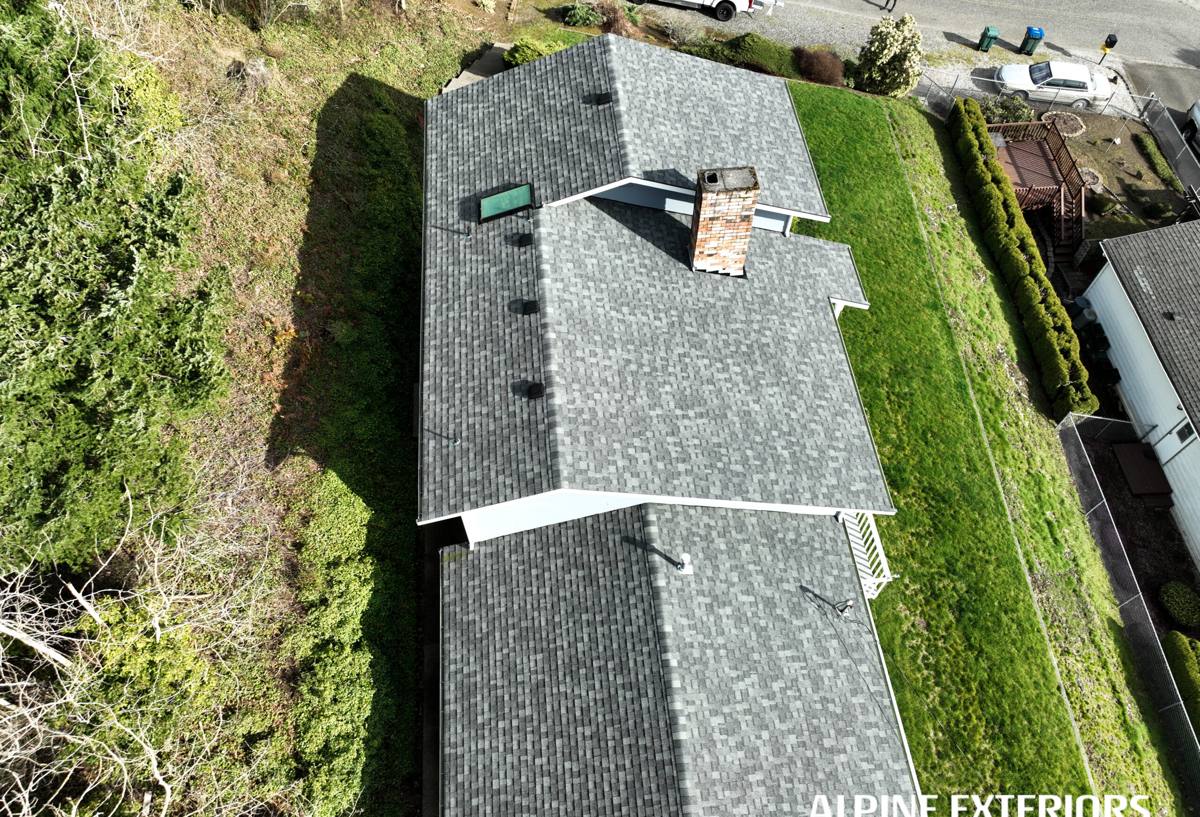
Why Lake Samish Roofs Take a Different Kind of Beating
Tree Canopy and Wind-Driven Debris
Most homes around the lake sit under or near mature conifers. That canopy is a mixed blessing. It breaks up direct sun exposure, which helps shingles last longer in some ways, but it also means every windstorm brings the risk of falling limbs, cones, and needles landing on the roof. Branch strikes can crack or puncture shingles and underlayment in a spot that isn't always obvious from the ground. Smaller debris — needles and cone litter — packs into valleys and behind chimneys, holding moisture against the roofing material long after the storm has passed.
Moss, Moisture, and the Shade Problem
Shaded, north-facing slopes around Lake Samish stay damp for much of the year. That's exactly the environment moss needs to take hold. Moss growth isn't just cosmetic — it lifts shingle edges, holds water against the roof deck, and accelerates granule loss. A storm that would leave a dry, well-maintained roof mostly unscathed can do real damage to a roof that already has moss working its way under the shingle tabs, because the moss has weakened the seal wind and rain need to get past.
Marine-Influenced Weather Off the Chuckanut Corridor
Storms coming off the water tend to bring driving, sideways rain rather than straight-down rain. That matters for roofing because wind-driven rain finds its way past flashing, nail penetrations, and shingle laps that would never leak in a calmer downpour. The damp, marine-influenced air also means metal components — flashing, fasteners, vent boots — corrode faster here than in a drier inland climate, which is a factor we account for when we're repairing rather than just patching.
What Counts as Storm Damage (and What Gets Missed)
Not all storm damage is a hole you can see from the driveway. Some of the most costly damage is the kind that goes unnoticed for months until it shows up as a stain on a ceiling. Signs worth checking after any significant wind or rain event around the lake include:
- Shingles that are cracked, curled, torn, or missing entirely, especially on the side of the roof facing prevailing storm winds
- Granules collecting in gutters or at downspout outlets — a sign of impact or accelerated wear
- Bent, lifted, or separated flashing around chimneys, skylights, and roof-to-wall junctions
- Dented or damaged vent caps, ridge vents, or exposed nail heads
- Soft or discolored spots on interior ceilings, especially near exterior walls or below valleys
- Moss or debris buildup that's thicker or wetter than usual after the storm
- Gutters pulled loose from fascia, or downspouts disconnected from the roof drainage path
- Any branch or limb strike, even one that looks minor from the ground
If you see any of these, it's worth having the roof looked at before the next storm rolls through — a small gap that lets water in once will let more water in the next time, and the damage compounds.
What a Correct Storm Repair Actually Involves
Assessment Before Repair
A real storm damage assessment starts on the roof, not from photos taken with a zoom lens. We check the obvious impact points first, then work outward to the areas that are easy to miss: valleys, flashing details, the underside of ridge caps, and any spot where moss or debris has been sitting against the shingles. We also check the attic side when it's accessible, because water intrusion often shows up on the decking or insulation before it ever reaches a ceiling.
Matching Materials Properly
A patch repair only holds up long-term if the materials and installation method match what's already on the roof. Mismatched shingle profiles, incompatible flashing metals, or a rushed tie-in at the edge of the repair area are the most common reasons a "fixed" roof leaks again in the next storm. On older roofs where exact shingle matches aren't available, we talk through the honest trade-offs with you rather than forcing a mismatch and hoping it holds.
| Repair Scope | When It's the Right Call | What Drives the Cost |
|---|---|---|
| Spot patch (single area) | Isolated damage from a branch strike or a few blown-off shingles, roof otherwise sound | Access difficulty, shingle match availability, flashing involved |
| Full slope repair | Damage spread across one roof face, or moss/wear already compromising that slope | Slope size, decking condition underneath, tear-off required or not |
| Full roof replacement | Storm damage on a roof already near the end of its service life, or damage in multiple areas | Total roof size, layers to remove, decking repair, material choice |
Our Process From Call to Completion
- We schedule a roof inspection and walk the whole roof, not just the area you're worried about — storm damage is rarely limited to one spot
- We document what we find with clear photos and a written explanation of what's damaged and why
- We give you a straightforward repair plan and a real cost range, including whether a patch or a larger repair is the honest recommendation
- If you're filing an insurance claim, we provide documentation that supports your adjuster's review
- We complete the repair using materials matched to your existing roof wherever possible
- We do a final walk-through so you know exactly what was fixed and what to watch for going forward
Insurance Claims and Storm Damage
A lot of storm damage repair around Whatcom County goes through homeowners insurance, and the process goes more smoothly when the damage is documented clearly and promptly. We can meet an adjuster on-site if that's helpful, and we'll always give you a straight answer about whether damage looks storm-related or is closer to ordinary wear — insurance covers the former, not the latter, and we'd rather tell you that up front than let a claim get denied on-site.
Why Local Experience in Lake Samish Matters
Every roof around the lake deals with the same core combination: heavy tree cover, shaded slopes that hold moisture, and storms that come in sideways off the water rather than straight down. A crew that hasn't worked this area before is guessing at how much of what they're looking at is storm damage versus long-term moss and moisture wear that was already present. We've repaired enough roofs in this part of Chuckanut to know the difference on sight, which means a more accurate assessment and a repair that's sized to the actual problem — not over-scoped, not under-scoped.
Repair or Replace? Weighing It Honestly
Not every storm-damaged roof needs to come off. But a repair on a roof that's already near the end of its life, or one that's had chronic moss and moisture issues, is often just delaying a bigger job. We'll give you our honest read on which category your roof falls into.
| Factor | Leans Toward Repair | Leans Toward Replacement |
|---|---|---|
| Roof age | Under roughly 12-15 years | Approaching or past typical service life for the material |
| Damage extent | Isolated to one area or slope | Spread across multiple slopes or recurring in the same spots |
| Moss/moisture history | Minimal prior moss, deck sound | Chronic moss, soft or stained decking found during inspection |
| Material availability | Close shingle match still available | Discontinued product, mismatch would be visible |
Maintenance After the Repair
A good repair holds up longer with a little seasonal attention, especially with moss season being a near year-round concern under the tree cover around the lake. Keeping valleys and gutters clear of needles and debris, having moss treated before it re-establishes on shaded slopes, and doing a quick visual check after any major windstorm will catch small problems before they turn into repeat repairs.
If your Lake Samish roof has taken a hit from wind, rain, or falling debris, we're glad to take a look and give you a clear, honest assessment. Reach out for a free, no-pressure estimate using the form below.