 Chuckanut
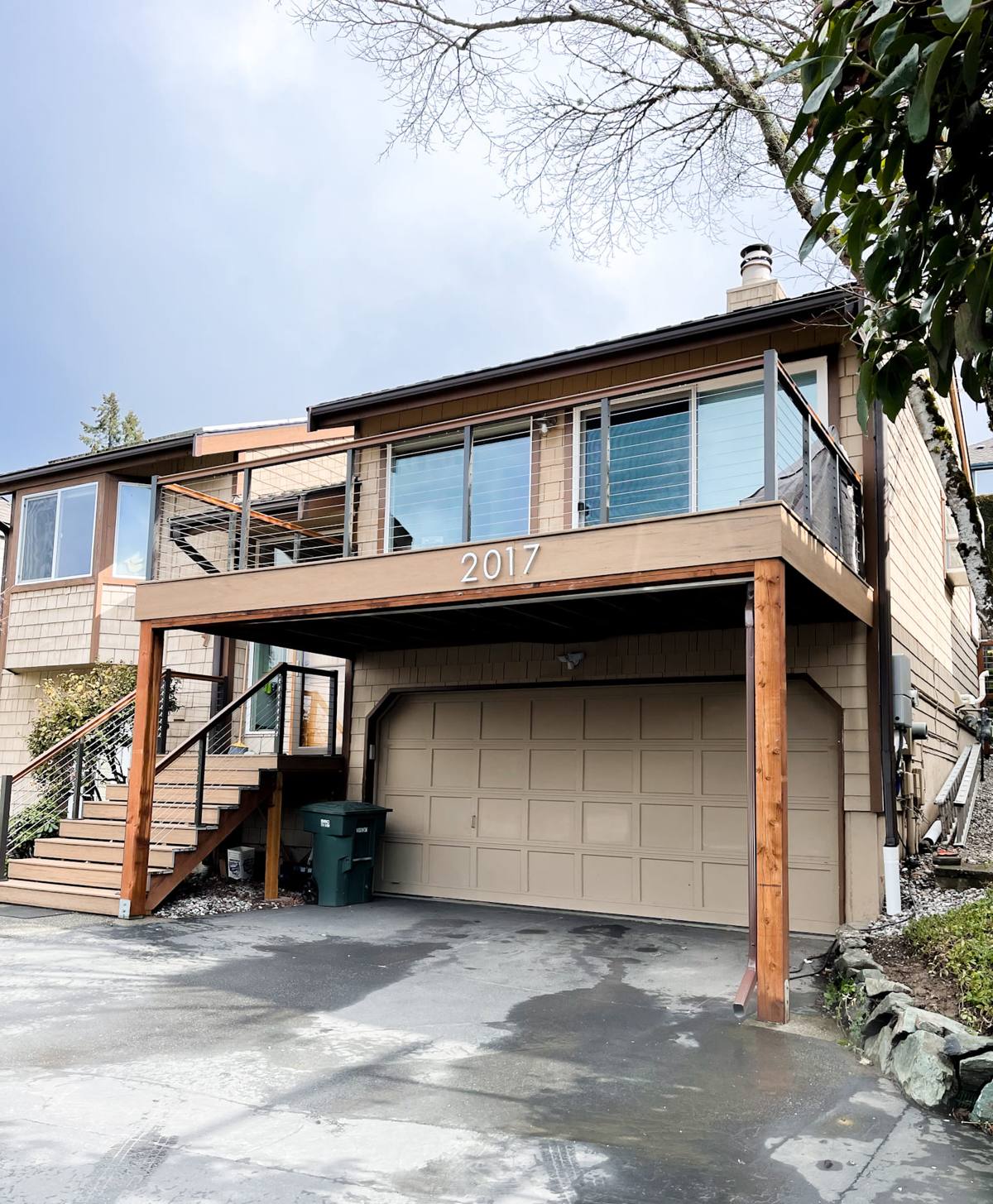
 Decks in York Take a Different Kind of Beating
If you live in the York area near Chuckanut, you already know your deck doesn't age the way a deck in a drier inland town does. Whatcom County sits close enough to Puget Sound and Bellingham Bay that salt-laden air reaches yards that are nowhere near the waterfront, and it settles into wood fibers, fastener heads, and metal connectors over years of exposure. Add driving rain that comes in sideways during fall and winter storms, plus a moss season that can stretch from October through May in shaded, north-facing yards, and you get a combination that ages decking, framing, and hardware faster than most manufacturers' warranty literature assumes.
None of that means a deck in York is doomed — it means the materials, fasteners, and drainage details have to be chosen for this specific climate, not for a national average. That's the lens we use on every deck replacement we do in this neighborhood.
Signs a Deck Needs Replacement, Not Another Repair
A lot of homeowners call us after already replacing a few boards themselves. That's a reasonable first step, but board-by-board patching only buys time if the framing underneath is still sound. Here's how we tell the difference between a deck that needs repair and one that needs full replacement.
- Soft, spongy, or springy spots when you walk across the deck — usually a sign of rot in the joists or beam, not just the surface boards
- Rust streaks or dark staining around fasteners and connector hardware, which points to moisture getting trapped rather than shedding
- A ledger board (where the deck attaches to the house) that's soft, gapped, or shows water staining on the siding above or below it
- Posts or footings that have shifted, settled unevenly, or show cracking at grade level
- Persistent moss or algae growth that returns within weeks of cleaning, especially on the underside of boards or in shaded corners
- A deck more than 20-25 years old that has never had its structural connections upgraded to current hardware standards
If most of what you're seeing is surface graying or minor board cupping, repair or refinishing may still make sense. If you're seeing structural symptoms — softness, movement, or hardware failure — replacement is usually the more honest recommendation, even if it's the less convenient answer.
What a Correct Deck Replacement Actually Involves
A deck replacement is only as good as what's hidden underneath the decking boards. In a climate like ours, the details that don't show are the ones that determine whether the new deck lasts 10 years or 30.
Ledger and Flashing
The ledger board attachment is the single most common failure point on decks in wet climates like Whatcom County. We flash it properly against the house — with a drip edge and water-resistant barrier behind the ledger — so rain running down the siding can't work its way behind the deck and into the wall framing. This is also the detail most likely to be shortcut on a low-bid job, because it's invisible once the deck is finished.
Framing and Fasteners
We use structural screws or through-bolts rated for exterior and coastal-influenced exposure, not the general-purpose deck screws sold at big box stores for interior trim. Given the salt air that reaches York even at a distance from the water, we favor stainless or heavy-coated hardware at connection points that see the most moisture cycling.
Footings and Post Bases
Post bases get set above grade with a standoff bracket so the post end never sits in standing water, and footings are sized and set to current code depth for our frost and soil conditions. A deck that looks solid but was built on undersized or shallow footings is one of the more expensive mistakes to discover later, because fixing it means tearing the whole structure back down to the ground.
Drainage and Airflow
Boards are spaced and the substructure is built to let air move underneath the deck. Decks built tight to grade, or in shaded yards with poor airflow, are exactly where we see moss and rot return fastest — spacing and ventilation are cheap to get right during construction and expensive to retrofit later.
Choosing Decking Material for a Whatcom County Yard
There's no single "best" decking material — there's a best material for your yard's sun exposure, your maintenance appetite, and your budget. Here's how the common options actually perform under our rain and moss conditions.
| Material | How It Handles Our Climate | Maintenance | Typical Lifespan |
|---|---|---|---|
| Pressure-treated wood | Affordable, but end grain and fastener holes absorb moisture; needs a quality sealant to resist moss and checking | Annual cleaning and re-sealing recommended | 10-15 years with upkeep |
| Cedar | Naturally more rot-resistant than most softwoods, but still needs finish maintenance to keep moss from taking hold in shaded areas | Cleaning and refinishing every 1-2 years | 15-20 years with upkeep |
| Capped composite | Sheds moisture well and resists moss growth better than any wood option; performs consistently in shade and full sun | Periodic washing, no sealing or staining | 25-30+ years |
| Uncapped composite | Better than wood for rot, but the exposed core can absorb some moisture over time in constantly damp, shaded spots | Occasional cleaning | 15-25 years |
For yards in York with significant tree cover or north-facing shade — where moss season really shows up — we generally steer homeowners toward capped composite or a well-detailed cedar deck with a real maintenance plan. For sunnier, more open lots, pressure-treated wood with good sealant discipline can still be a sound, budget-conscious choice. We'll walk your specific site with you before recommending one over another; there's no reason to pay for premium moisture resistance if your yard doesn't need it, and no reason to skimp on it if it does.
Our Deck Replacement Process
- On-site assessment. We look at the existing deck's framing, ledger connection, footings, and site drainage — not just the surface boards — to confirm replacement is the right call.
- Design and material selection. We talk through decking material, railing style, and any layout changes, with honest trade-offs for your specific yard and sun/shade exposure.
- Permit handling. We pull the required permits and coordinate inspections so the work is documented and code-compliant, not something you have to sort out if you sell the home later.
- Demolition and disposal. The old deck comes down and is hauled off; we protect the surrounding yard and landscaping during removal.
- Structural rebuild. New footings, framing, ledger flashing, and hardware go in to current code and to the moisture-management standards described above.
- Decking, railing, and finish work. Boards and railings are installed, fasteners are set correctly, and the site is cleaned up before we walk it with you.
- Final walkthrough. We go over care and maintenance for whatever material you chose, so you know what upkeep — if any — is expected going forward.
Permits and Code Considerations
Most deck replacements in Whatcom County require a building permit, particularly when the deck is attached to the house, elevated above a certain height, or when footings and framing are being replaced rather than just the decking surface. Guardrail height, baluster spacing, and stair requirements are all governed by code and get checked at inspection. We handle the permit application and schedule inspections as part of the job — it's not an upsell, it's part of doing the work correctly and leaving you with a deck that won't cause problems during a future home sale or insurance review.
Living With Your New Deck: Moss Season and Beyond
Even the best-built deck benefits from a little seasonal attention in this part of Washington. A short annual routine keeps moss and moisture from gaining a foothold before they become a bigger problem.
- Sweep leaves and debris off the deck surface regularly through fall, especially in shaded corners where moisture lingers
- Rinse or gently wash the deck at least once a year to remove early moss and algae growth before it spreads
- Check that gaps between boards stay clear so water can drain through rather than pooling
- Inspect the ledger flashing and any visible fasteners once a year for early signs of rust or gaps
- For wood decks, reapply sealant or stain on the schedule recommended for your specific product — don't wait until it's visibly failing
- Trim back overhanging branches and vegetation that keep the deck surface shaded and damp longer than necessary
Why Hiring a Crew That Already Works in York Matters
Deck replacement done right depends on details that are specific to this climate — flashing choices, fastener grade, footing depth, and material selection for shade versus sun exposure. A crew that regularly works in the Chuckanut and greater Whatcom County area has already seen how different decking materials and construction details hold up here over years, not just in a showroom or a manufacturer's spec sheet. That local track record shows up in fewer callbacks for moss, fewer soft ledger boards, and a deck that's still solid well past the point where a poorly detailed one would need attention again.
It also means someone who understands the local permitting process, can speak to your home's specific exposure to salt air and rain patterns, and stands behind the work because they're still going to be working in your neighborhood next year.
Get a Free, No-Pressure Estimate
If your deck in the York area is showing soft spots, persistent moss, or you're just ready to replace it with something built to hold up to our rain and salt air, we're happy to take a look. Fill out the form below for a free estimate — no pressure, no obligation, just an honest assessment of what your deck needs.