 Chuckanut
 Windows Built for the Alger Climate
Homes around Alger sit close enough to the water and the tree line that they take a different kind of weather beating than houses twenty minutes inland. Salt-laden air off the bay corrodes exposed hardware faster than most homeowners expect. Driving rain, pushed sideways by wind off the water, tests every seal and sill in a window assembly. And the long moss season that defines this part of Whatcom County doesn't stop at your roofline — it creeps into window tracks, frame corners, and anywhere moisture sits without enough sun or airflow to dry it out. A window that works fine in a dry inland climate can fail early here if it wasn't chosen and installed with these conditions in mind.
Energy-efficient windows are marketed everywhere, but "efficient" on a spec sheet from a big-box store doesn't automatically mean "right for Alger." The frame material, the glass package, and — more than either of those — the installation itself all have to account for salt exposure, sustained wet weather, and the slow, patient way moisture works its way into a poorly sealed opening over a few winters.
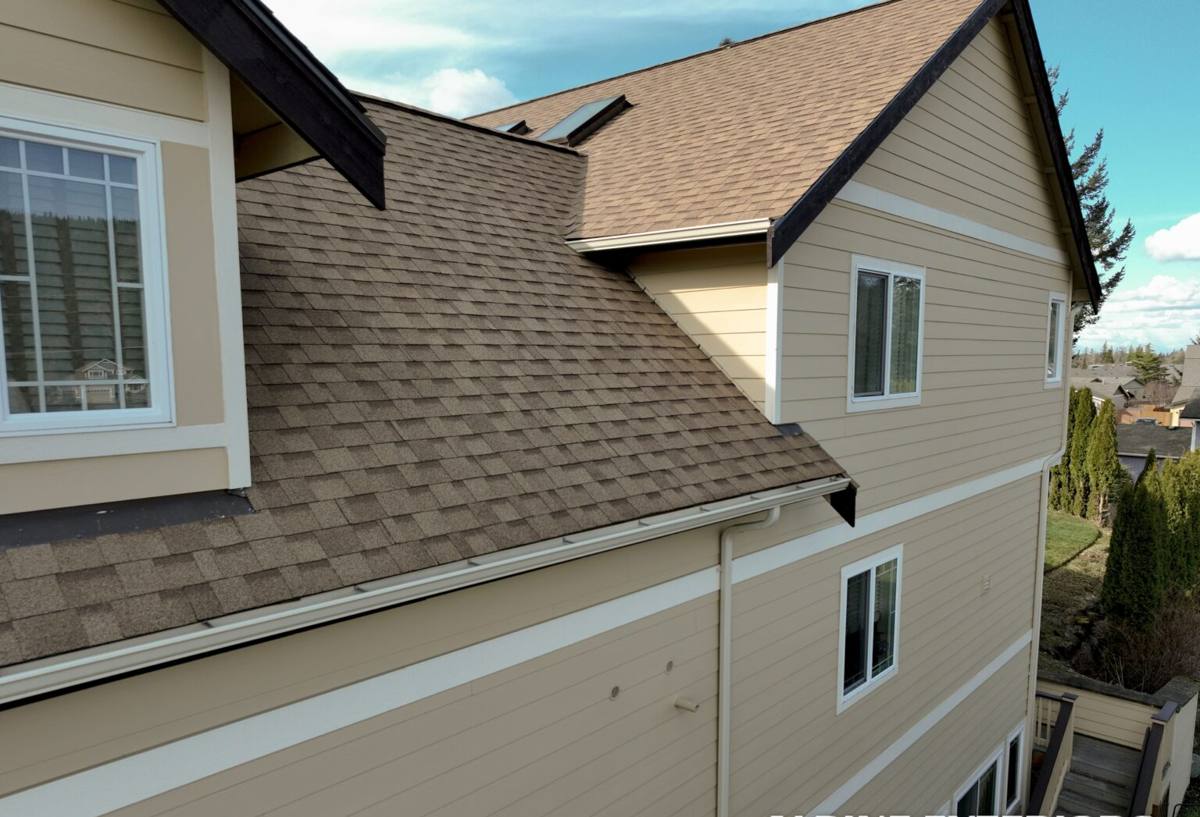
What Energy-Efficient Actually Means Here
Efficiency isn't one number. It's a combination of factors that all matter more in a wet, coastal-influenced climate than they would somewhere dry and mild.
U-Factor and Solar Heat Gain
U-factor measures how much heat a window lets escape — lower is better for our heating-dominated climate. Solar heat gain coefficient (SHGC) matters less here than in sunnier regions, since Alger doesn't get the kind of intense summer sun load that homes in the high desert deal with. We weight our recommendations toward low U-factor first, because keeping heat in during our long wet season saves more energy over a year than blocking summer sun.
Low-E Coatings and Gas Fills
A quality low-E coating reflects heat back into the home in winter without noticeably darkening the glass. Argon or krypton gas fill between panes adds another layer of insulation. Both are worth paying for. Neither is worth paying for if the frame around them is a weak point — which is why glass package and installation quality have to be considered together, not separately.
Frame Material Trade-Offs
Vinyl, fiberglass, wood, and wood-clad frames all perform differently in sustained damp conditions. We'll talk through the real trade-offs for your home rather than push one product line — see the comparison below.
Signs Your Current Windows Are Costing You Money
Most homeowners don't replace windows because of one obvious failure — they replace them because a handful of smaller problems add up. Walk your home and check for these:
- Visible fogging or a permanent haze between panes (failed seal, lost insulating gas)
- Cold drafts you can feel with a hand near the frame on a windy day
- Soft or discolored wood at the sill or lower corners — an early moisture sign
- Black or green growth in the track or on the frame that returns after cleaning
- Difficulty opening, closing, or latching — frames swelling or warping
- Condensation on the inside of the glass most mornings
- Noticeably higher heating bills compared to similarly sized homes nearby
- Hardware (locks, hinges, cranks) that's pitted, stiff, or corroded
Any one of these on its own isn't an emergency. Several together, especially on the sides of the house that face prevailing wind and rain, usually mean the windows are past the point where caulk and weatherstripping will fix the problem.
What a Correct Installation Actually Involves
The window unit itself is maybe half the job. The other half — the part you can't see once it's finished — is what determines whether that window performs for fifteen years or starts leaking behind the trim in three.
Flashing and Water Management
Every opening needs a flashing sequence that sheds water down and out, never letting it pool behind the siding or wick into the framing. This matters more here than in a dry climate because Alger homes see sustained rain events, not just occasional showers — a marginal flashing detail that would go unnoticed for years elsewhere gets tested repeatedly in a normal wet season here.
Sealing Without Trapping Moisture
It's tempting to seal a window opening completely airtight, but the wrong sealant in the wrong place can trap moisture inside the wall cavity instead of letting it escape. We use sealing methods that keep air and bulk water out while still letting any incidental moisture dry outward. This balance is where a lot of lower-cost installs go wrong.
Shimming and Square
A window that isn't shimmed level and square will bind, won't seal evenly against its own weatherstripping, and will stress the frame over time — accelerating exactly the kind of wear that salt air and damp weather already cause. Getting this right the first time avoids callbacks and early failures.
Frame and Glass Comparison
| Material | Coastal/Salt-Air Durability | Maintenance | Typical Cost Range |
|---|---|---|---|
| Vinyl | Good — won't corrode or rot, some UV fading over decades | Low — occasional cleaning | Lower |
| Fiberglass | Very good — dimensionally stable, resists moisture well | Low | Mid to upper |
| Wood | Fair — needs protection from sustained moisture exposure | High — periodic refinishing | Upper |
| Wood-clad (exterior) | Good exterior protection, interior still needs care | Moderate | Upper |
| Aluminum | Poor without thermal break — conducts cold, can corrode near salt air | Low | Lower to mid |
We steer most Alger homeowners toward vinyl or fiberglass for exterior-exposed elevations, not because wood windows are a bad product, but because our professional standard for coastal-influenced, high-moisture areas favors materials that don't need periodic refinishing to keep performing. If you want the look of wood on the interior, wood-clad or interior-wood-with-clad-exterior options split the difference — we'll walk through what fits your home and budget honestly.
Our Process, Start to Finish
- Free on-site assessment. We look at every window opening, not just the ones you're worried about, and check for hidden moisture or framing issues before quoting anything.
- Straightforward estimate. You get a clear breakdown of materials and labor, with options at different price points explained honestly — no pressure toward the most expensive line.
- Scheduling around weather. Openings are only exposed for as short a window as possible, and we plan installs to avoid leaving a house vulnerable during a heavy rain stretch.
- Removal and inspection. Old windows come out carefully so we can check the framing underneath for rot or prior water damage before anything new goes in.
- Installation with proper flashing and sealing. Every unit is shimmed, squared, flashed, and sealed to the standard described above — not just set in place and caulked around the edges.
- Interior and exterior finish work. Trim, caulking, and touch-up are completed so the job looks finished, not just functional.
- Final walkthrough. We check operation on every window with you before we consider the job done.
Why a Crew That Already Works Alger Matters
A contractor who works this specific stretch of Whatcom County regularly has already seen how salt air pits hardware over a few seasons, how a north-facing wall holds moisture longer after a storm, and how moss establishes itself in shaded window tracks that never quite dry out. That's not something you learn from a manufacturer's install manual — it's learned by doing dozens of jobs in this exact set of conditions and paying attention to what holds up and what doesn't.
It also means we're not guessing at material choices. We know which frame finishes hold their color and function longest with regular salt exposure, and we're not recommending something we haven't watched perform locally over time. If something does need a warranty call or an adjustment down the road, we're not driving in from across the region to handle it — we're already working in the area.
Maintenance in a Salt-Air, Moss-Heavy Climate
Energy-efficient windows still need a small amount of upkeep to perform at their best here, and it's minor compared to the alternative of dealing with early failure:
- Rinse hardware and tracks periodically to clear salt residue before it starts pitting metal
- Clear tracks and weep holes of debris and moss buildup, especially on shaded elevations
- Check exterior caulking annually and touch up any cracked or separated sections
- Wipe down interior sills if condensation collects during cold snaps, to prevent mold
- Operate every window a few times a season so mechanisms don't seize up from disuse
None of this takes more than an afternoon a year, and it goes a long way toward getting the full expected lifespan out of a window investment in this climate.
Get a Straight Answer for Your Home
Every house near Alger faces a slightly different mix of wind exposure, shade, and moisture — what's right for a south-facing wall in full sun isn't necessarily right for a shaded north side that stays damp longer. If you'd like a straightforward, no-pressure look at your windows and an honest estimate for what replacing or upgrading them would actually cost, we're glad to come take a look. Use the form below to request a free estimate.