 Chuckanut
 Why Happy Valley Roofs Take a Different Kind of Beating
Happy Valley sits close enough to the water and the tree line that its roofs deal with a mix most inland Whatcom County homes don't. Salt-laden air moves through on the wind, driving rain comes in sideways during winter storms rather than falling straight down, and the tree cover that makes the neighborhood pleasant to live in also means roofs stay shaded and damp longer after every rain. None of that is unusual for this part of Washington, but it adds up over the life of a roof faster than homeowners expect.
An asphalt shingle roof that's installed correctly for this climate will hold up fine for its full service life. One that's installed to a generic spec — the kind used in drier, calmer parts of the country — tends to show problems years before it should. The difference is almost always in the details you can't see from the ground: underlayment choice, ventilation, and how the flashing and edges were handled.
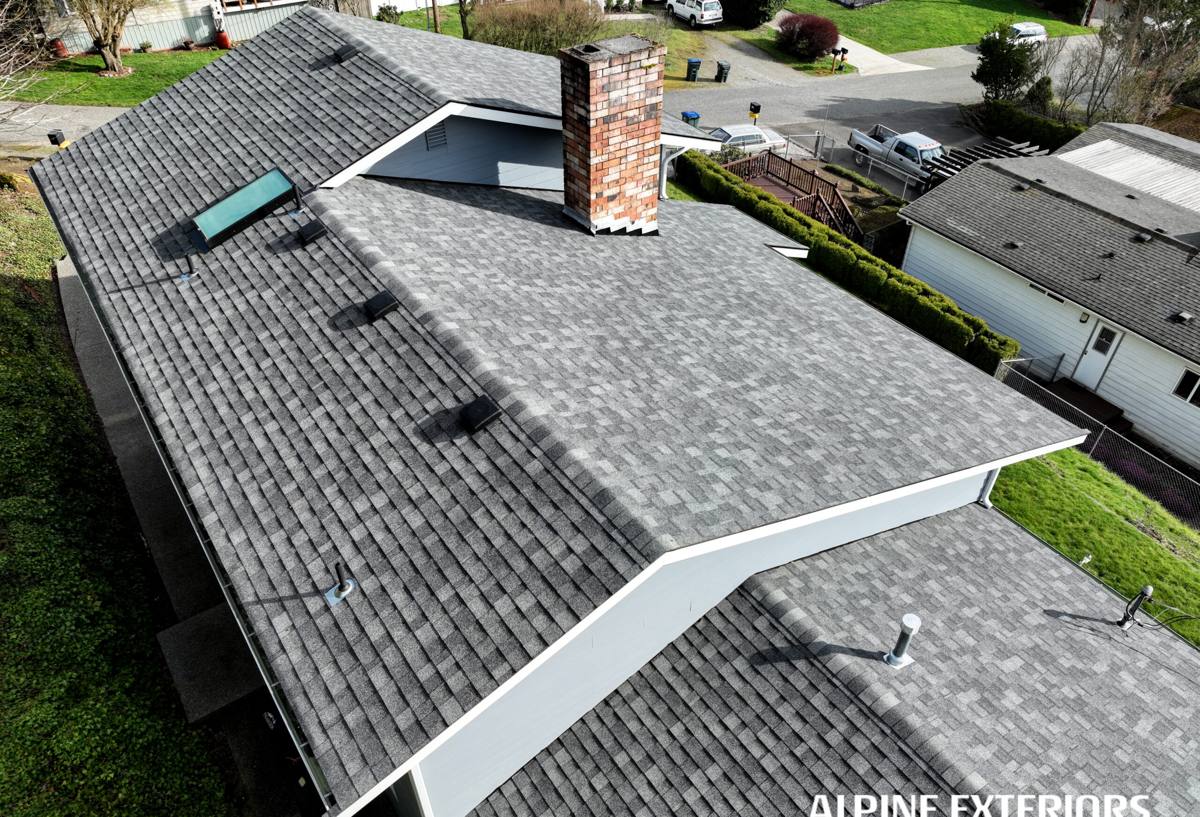
What Asphalt Shingle Roofs Are Up Against Here
Salt Air and Metal Components
Every asphalt shingle roof has metal in it somewhere — flashing, drip edge, vent caps, nail heads. Salt air speeds up corrosion on lower-grade or unprotected metal, and once a flashing detail starts to rust, it stops shedding water the way it's supposed to. This is a bigger factor for homes in Happy Valley than it is a few miles further inland, and it's one of the reasons material choice at the edges and valleys matters as much as the shingle itself.
Moss, Algae, and Standing Moisture
Whatcom County's long wet season keeps roof surfaces damp for stretches at a time, especially on north-facing slopes or sections shaded by trees. That's exactly what moss and algae need to get established. Once moss takes hold, it holds moisture against the shingle mat, works its way under tab edges, and can lift shingles enough for wind and rain to get underneath. Left alone for a few seasons, a moss problem turns into a leak problem.
Wind-Driven Rain at the Details
Straight-down rain is easy for any roof to handle. Driving rain — the kind that comes in at an angle off the water — tests every seam, valley, and penetration on the roof. Chimneys, plumbing vents, skylights, and the transitions where a roof meets a wall are where wind-driven rain finds its way in if those details weren't built with a margin of safety, not just to code minimums.
Signs Your Happy Valley Roof Needs a Look
Most roof problems in this area develop slowly, which is exactly why they get missed until there's water inside the house. Worth checking for, or having us check for:
- Dark streaking or a greenish tint on north-facing or shaded slopes — early algae or moss growth
- Moss visibly bridging shingle tabs, especially near valleys or the eave edge
- Granules collecting in gutters or at the base of downspouts
- Shingle edges that look lifted, curled, or cupped rather than lying flat
- Rust staining below flashing at chimneys, vents, or wall transitions
- Soft spots, sagging, or discoloration on the ceiling below the attic
- Daylight visible through the roof deck from inside the attic
- A roof that's 18-20+ years old and has never had a professional inspection
Any one of these on its own isn't necessarily an emergency, but it's worth a real inspection rather than guessing from the ground.
What a Correct Asphalt Shingle Installation Includes
Underlayment and Water Protection
The shingles are the visible layer, but the underlayment underneath them is what actually keeps a roof watertight when wind lifts a tab or ice forms at the eave. In a climate like this one, we treat synthetic underlayment and self-adhered ice-and-water barrier at eaves, valleys, and penetrations as standard practice, not an upgrade — it's the layer doing the real work during a driving rainstorm.
Ventilation
A roof with poor attic ventilation traps moisture underneath the deck, which shortens shingle life from the bottom up and can lead to rot you won't see until it's serious. Balanced intake and exhaust ventilation matters just as much in a damp climate as it does in a hot one — arguably more, since the moisture here doesn't dry out quickly on its own.
Flashing and Edge Details
This is where most roof failures actually start. Step flashing at walls, counter-flashing at chimneys, properly lapped valley metal, and drip edge that actually directs water into the gutter instead of behind it — these details cost more in labor and material than skipping them, but they're the difference between a roof that sheds wind-driven rain and one that slowly lets it in.
Nailing and Shingle Placement
Manufacturer nailing patterns exist for a reason, and in a windier coastal-influenced spot like Happy Valley, they're not optional. Under-nailed or improperly placed shingles are one of the most common causes of wind damage and premature warranty claims, and it's a detail that's invisible once the roof is finished — which is exactly why it has to be done right the first time.
Choosing the Right Shingle Line for This Climate
Not every asphalt shingle product is built the same way, and for a roof that has to deal with moss pressure and salt air, the differences matter more than they would somewhere drier.
| Shingle Type | Best Fit For | Trade-Offs |
|---|---|---|
| Standard 3-tab | Budget-conscious projects, simple roof lines | Shorter lifespan, less wind resistance, no built-in algae resistance |
| Architectural / dimensional | Most Happy Valley homes — better durability and wind rating | Higher upfront cost than 3-tab, still needs algae-resistant option specified |
| Algae-resistant (copper/zinc-infused granules) | Shaded lots, north-facing slopes, homes with a history of moss or streaking | Small cost premium; doesn't eliminate the need for periodic moss removal, just slows regrowth |
| Impact-rated / high-wind rated | Exposed sites, homes closer to open water or ridgelines | Higher material cost; overkill for fully sheltered lots |
For most homes in Happy Valley, we steer people toward an architectural shingle with algae-resistant granules as the baseline, then adjust up or down based on how exposed the specific roof is to wind and shade. We'll walk through the honest trade-offs for your roof rather than defaulting to the most expensive option.
Repair, Recover, or Full Replacement?
Not every roof problem means a full tear-off. We look at three things before recommending anything: how much of the roof's service life is left, whether the deck underneath is sound, and whether the damage is isolated or spread across the whole surface.
A roof with a few years of life left and isolated flashing or moss damage is often a repair job. A roof that's aging out with widespread granule loss or curling shingles usually makes more sense as a full replacement — patching an old roof piecemeal ends up costing more over time than doing it once, correctly. We'll tell you which situation you're actually in before we quote anything.
Our Process, Start to Finish
- Inspection — we get on the roof (or use a camera where access is limited) and document the actual condition, not just what's visible from the driveway.
- Honest assessment — repair, partial recover, or full replacement, explained in plain terms with the reasoning behind it.
- Written estimate — clear scope, materials, and pricing before any work starts, no vague allowances.
- Protection and staging — landscaping, gutters, and the areas around the house are protected before tear-off begins.
- Tear-off and deck check — old material removed, deck inspected for rot or soft spots before new underlayment goes down.
- Installation — underlayment, flashing, ventilation, and shingles installed to manufacturer spec, built for this climate rather than a generic minimum.
- Cleanup and walkthrough — magnetic sweep for debris, site cleaned up, and a walkthrough so you know what was done and why.
Why It Matters to Hire a Crew That Already Works Happy Valley
A roofing crew that mostly works drier, inland areas isn't necessarily going to think about salt air corrosion at the flashing or specify algae-resistant shingles on a shaded slope — it's just not the problem they see every day. A crew that already works Happy Valley and the surrounding Chuckanut area knows which slopes tend to hold moss, which details take the worst of the wind-driven rain, and where corners can't be cut without it showing up as a callback two winters later.
That local pattern recognition doesn't replace a proper inspection of your specific roof, but it does mean fewer surprises and a roof that's built for the conditions it will actually face, not the conditions a generic spec assumes.
Keeping a New Roof Performing Through Moss Season
Even a correctly installed roof benefits from basic upkeep in this climate. Keeping gutters clear so water doesn't back up under the eave, trimming back branches that keep a slope shaded and damp, and having the roof looked at every few years rather than waiting for a leak all go a long way toward getting the full service life out of the materials. We're happy to point out what to watch for on your specific roof after the work is done — no maintenance contract required, just straight information.
If you're dealing with moss, a suspected leak, or a roof that's simply due, we'll come take an honest look and put together a free, no-pressure estimate — just fill out the form below.