 Chuckanut
 Bellingham Decks Face a Specific Kind of Wear
A deck in Bellingham doesn't fail the way one does in a dry inland climate. It's not one big storm that does the damage — it's the accumulation of a wet season that runs most of the year, salt-laden air off Bellingham Bay, and long stretches of shade where moss and algae get a foothold and never really let go. Wood decking in this environment needs constant attention: sanding, sealing, staining, and eventually replacing boards that have cupped, splintered, or gone soft at the fastener points. Composite decking was built to handle exactly this kind of exposure, but only when it's installed correctly for the conditions it's actually going to sit in.
This page is about composite decking specifically for Bellingham homes — what the local climate demands from the material and the installation, what a correct job looks like, and how we approach it as a crew that works this area regularly rather than passing through once.
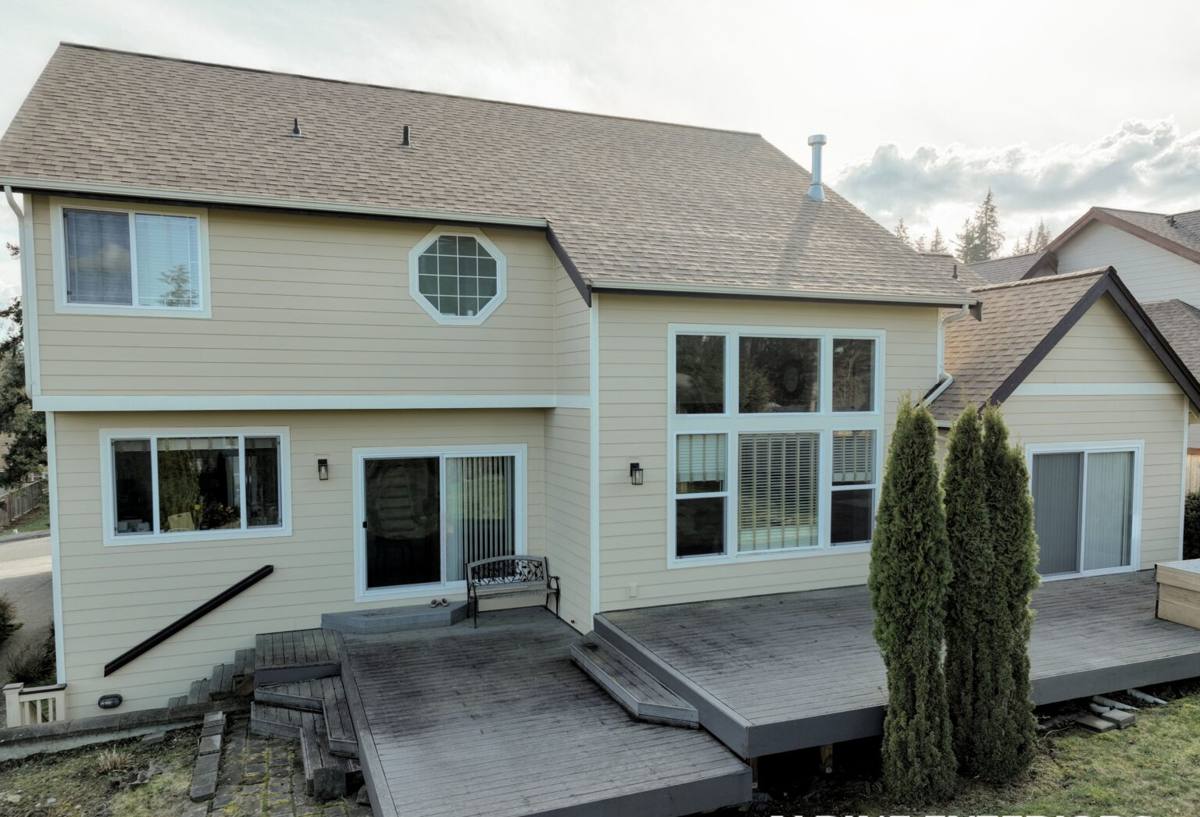
Why Composite Makes Sense for This Climate
Composite decking is a blend of wood fiber and recycled plastic (formulations vary by manufacturer), capped or coated to resist moisture absorption. In a climate with driving rain and persistent damp, that moisture resistance matters more than almost anywhere else in the country. A few practical points worth knowing before you decide:
- Composite boards don't absorb water the way solid wood does, which means far less swelling, cupping, and splitting over repeated wet-dry cycles.
- They don't need annual staining or sealing — a real advantage when the rainy season leaves a narrow window to do that kind of maintenance anyway.
- Modern capped composites resist mold and mildew staining better than wood, though nothing is immune to moss in shaded, low-airflow spots.
- They hold up to salt-tinged coastal air without the corrosion and graying that untreated or under-maintained wood shows within a few seasons.
None of that means composite is maintenance-free — we'll get into what upkeep actually looks like below — but it shifts the burden from constant refinishing to occasional cleaning, which is a much better fit for a Whatcom County wet season.
What a Correct Composite Deck Installation Involves
Composite boards are only as good as what's underneath them. Most of the composite deck problems we get called out to inspect in this area aren't material failures — they're framing, fastening, or drainage mistakes that would have caused trouble with any decking material.
Framing and Substructure
Composite is heavier than wood decking and behaves differently under load and temperature change, so joist spacing has to match the manufacturer's spec for the specific board profile — this is often tighter than traditional wood-deck framing, especially for diagonal layouts or boards installed at an angle. We use pressure-treated or naturally decay-resistant framing lumber, and in a climate this wet, we pay close attention to ledger board flashing where the deck ties into the house. A poorly flashed ledger is one of the most common sources of hidden water damage to the home itself, not just the deck.
Drainage and Ventilation Underneath
Standing water and trapped moisture under a deck are what drive moss, mildew, and structural rot, regardless of what decking material sits on top. We grade and gap for airflow and drainage underneath the deck structure, keep the substructure clear of vegetation and debris, and avoid designs that trap water against ledgers, posts, or stair stringers.
Fastening and Board Layout
Hidden fastener systems give a cleaner look and reduce the exposed fastener points where water and grime tend to collect, but they have to be installed with the correct gapping for composite's thermal expansion — composite moves more with temperature swings than wood does. Board ends, especially at picture-frame borders, need proper support and sealing per manufacturer requirements to prevent moisture wicking into cut ends, which is one of the few places composite boards can still take on water over time.
Railings, Fascia, and Trim
Matching composite fascia and trim boards give a finished look and protect the structural rim joist from direct weather exposure. Railing posts need solid blocking and correct through-bolting rather than surface-mounted brackets alone, particularly on elevated decks or anywhere exposed to wind off the water.
Composite Decking Options and Cost Factors
There isn't one "best" composite board — the right choice depends on budget, sun exposure, and how much upkeep you want to do. Here's a general comparison of the tiers homeowners typically choose between:
| Board Type | Typical Cost Range | Maintenance | Best Fit |
|---|---|---|---|
| Entry-level capped composite | Lower end of composite pricing | Occasional washing; less fade/stain resistance | Budget-conscious projects, smaller decks |
| Mid-grade capped composite | Moderate | Periodic washing; good stain and fade resistance | Most Bellingham homes — balance of cost and durability |
| Premium capped composite | Higher end | Minimal; best fade, stain, and scratch resistance | High-visibility decks, longer-term ownership plans |
| PVC (non-wood-fiber) decking | Comparable to premium composite | Very low; fully synthetic, no wood fiber to absorb moisture | Extra-wet or shaded sites, pool/hot tub decks |
Beyond the board itself, cost factors include square footage, framing condition (repair or replacement of an existing substructure adds cost), railing style, stairs, and any picture-framing or multi-tone board patterns. We'll walk through actual product samples and give you real numbers for your specific deck rather than a generic estimate — every project here has different sun exposure, slope, and access that affect the price.
Our Installation Process
- On-site assessment: We look at the existing structure (if there is one), sun and shade exposure, drainage, and how the deck ties into the house.
- Material selection: We go through board options, colors, and railing systems based on your budget and how much upkeep you want long-term.
- Framing and structural work: Repair or build the substructure to spec for the composite product chosen, with attention to ledger flashing and drainage.
- Decking installation: Boards, fascia, and trim installed per manufacturer fastening and gapping requirements.
- Railings and finish details: Railings, stairs, and any lighting or fascia trim installed and secured.
- Final walkthrough: We go over care and cleaning basics specific to your board choice before we consider the job done.
Moss, Mildew, and Salt Air — What Ongoing Care Actually Looks Like
Composite cuts down maintenance dramatically compared to wood, but "low-maintenance" isn't "no-maintenance," especially with a moss season that runs long in this part of Washington. Here's a realistic seasonal checklist for a Bellingham composite deck:
- Sweep debris (needles, leaves, seed pods) regularly, especially in shaded areas where moisture lingers longest.
- Wash the deck surface at least once or twice a year with a soft-bristle brush and a cleaner rated for composite — avoid harsh chemicals or pressure washing at close range, which can damage the cap layer.
- Keep gutters and downspouts clear so runoff isn't dumping directly onto or under the deck.
- Trim back overhanging vegetation to improve airflow and sun exposure on shaded sections prone to moss.
- Check railing posts and fasteners annually for movement, especially after a hard winter.
- Rinse off salt residue after storms if the deck faces open water or gets direct sea spray.
Skipping this kind of light upkeep is what lets moss and algae get established on any decking surface, composite included — the material resists staining far better than wood, but it isn't self-cleaning.
Common Issues We See on Older Bellingham Decks
When we're called out to look at an existing deck — composite or wood — before a repair or upgrade, the same handful of problems show up again and again in this climate:
- Ledger boards flashed poorly or not at all, letting water track back into the house framing.
- Joist spacing that wasn't tightened up for a composite board's specific span rating, leading to bounce or long-term sag.
- No airflow underneath the deck, creating a permanently damp environment that feeds moss and speeds up substructure decay.
- Railing posts attached with surface brackets instead of through-bolted blocking, which loosens over time with wind and use.
- Cut board ends left unsealed, allowing moisture to wick in at the one vulnerable point in an otherwise water-resistant board.
Most of these are avoidable with correct installation the first time, which is really the whole argument for hiring based on installation quality rather than material brand alone.
Permits and Local Considerations
Deck projects in and around Bellingham may require a permit depending on height, size, and whether it's attached to the home — requirements vary by jurisdiction within Whatcom County, so this is confirmed on a per-project basis rather than assumed. Elevated decks and those near property lines also need to account for local setback and railing height rules. We handle this as part of planning your project so there are no surprises mid-build.
Why Hire a Crew That Already Works Bellingham
Composite decking is a forgiving material in a lot of ways, but the installation details that matter most — framing spec, drainage, flashing, fastener gapping — are exactly the things that get overlooked by crews who don't regularly build for this climate. A contractor used to drier conditions may not think twice about ventilation under the deck or flashing detail at the ledger, because in a dry climate those shortcuts don't show up as problems for years. Here, they show up fast — as moss, soft spots, or water intrusion into the house itself.
We work on siding and exteriors throughout the Bellingham area and the wider Whatcom County region, which means we're already familiar with how this coastal, wet climate treats building materials over time. That's the same standard we bring to a composite deck: build it right for the weather it's actually going to see, not for a generic spec sheet.
If you're planning a new composite deck or replacing an aging wood deck in Bellingham, we're glad to come take a look and talk through honest options for your space, budget, and sun exposure. Fill out the form below for a free, no-pressure estimate.