 Chuckanut
 Asphalt Shingle Roofing Built for South Hill's Climate
South Hill sits close enough to the water and high enough on the slope that it catches a mix of weather most inland Whatcom County neighborhoods don't deal with in the same combination. Salt-laden air off the bay works on exposed metal and fasteners year-round. Driving rain, pushed sideways by wind off the water, finds any weak point in flashing or shingle laps. And the long, damp moss season that runs from fall through spring keeps roof surfaces wet and shaded far longer than a typical dry-climate roof ever experiences. An asphalt shingle roof that's installed correctly for this specific mix of conditions will outlast one installed to a generic spec by years. This page covers what that actually means for a South Hill home.
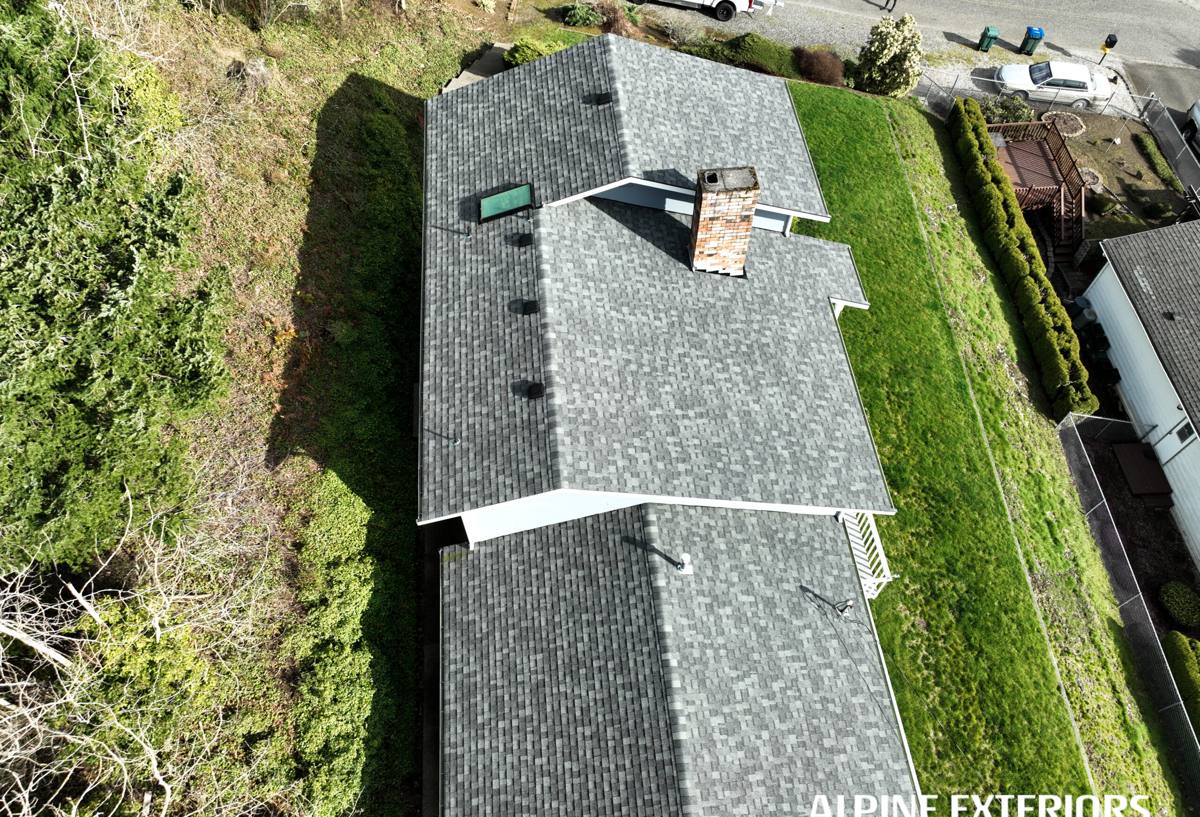
What Salt Air, Driving Rain, and Moss Actually Do to a Roof
Salt Air
Airborne salt accelerates corrosion on any exposed metal — nail heads, drip edge, flashing, vent stacks, and roof-mounted hardware. On a shingle roof, the fasteners holding the shingles down are usually the first thing affected if they're not rated for coastal exposure. Once a fastener starts to corrode, it loses holding power, and that's how shingles start lifting in wind long before the shingle material itself is worn out.
Driving Rain
Standard rainfall runs down a roof and off. Driving, wind-pushed rain moves sideways and can work its way up and under shingle edges, into valleys, and around penetrations like plumbing vents and chimneys. Roofs in exposed spots on South Hill need tighter attention to lap lines, valley construction, and flashing details than a roof in a sheltered, low-wind location would.
Moss Season
Whatcom County's wet season is long, and shaded, north-facing, or low-slope sections of roof stay damp for weeks at a stretch. That's exactly the environment moss and algae need to establish. Moss doesn't just look bad — its root structure holds moisture against the shingle surface and can lift shingle edges over time, and heavy moss growth adds real weight in a wet, saturated state.
What a Correctly Installed Shingle Roof Looks Like Here
A roof spec that works fine in a dry, low-wind climate isn't automatically the right spec for South Hill. The details that matter most for this location:
- Corrosion-resistant fasteners — galvanized or stainless roofing nails, not standard fasteners that pit and weaken in salt air.
- Ice-and-water shield at vulnerable areas — valleys, eaves, and around every penetration, to back up the shingles where wind-driven rain is most likely to intrude.
- Properly lapped and sealed flashing — at chimneys, skylights, sidewalls, and vent stacks, since flashing failure (not shingle failure) is the most common source of roof leaks.
- Balanced attic ventilation — intake at the eaves and exhaust at the ridge, so moisture from inside the house doesn't condense against the roof deck and add to the dampness already coming from outside.
- Algae-resistant shingle granules — most major manufacturers offer a copper- or zinc-infused granule option built specifically to slow algae and moss growth; on a roof with any shade exposure, this is worth the modest upcharge.
- Wind-rated shingle installation — correct nail placement (not staples, not overdriven or underdriven nails) and the right number of fasteners per shingle for the exposure the roof actually sees.
Repair, Recover, or Replace: How to Tell
Not every roofing problem on a South Hill home means a full tear-off. The right call depends on the shingle's age, how widespread the damage is, and what's happening underneath.
| Situation | What It Usually Means | Typical Approach |
|---|---|---|
| A few missing or cracked shingles, roof otherwise sound | Localized wind or age damage | Targeted repair, matched shingles |
| Moss buildup with lifted edges in shaded areas | Moisture trapped under growth | Careful moss removal, treatment, spot repair |
| Granule loss and shingles curling roof-wide | Shingles at or past their service life | Full replacement |
| Leaks tracing to flashing, not shingle field | Flashing failure, not shingle failure | Flashing repair/replacement, shingles may be fine |
| Soft or spongy decking underfoot | Water has reached the roof deck | Deck repair required as part of replacement |
A roof that's leaking doesn't always need to be replaced, and a roof that looks rough from the ground isn't always failing structurally. An honest inspection tells you which situation you're actually in before any work starts.
Our Process for South Hill Roofing Projects
1. On-Site Inspection
We walk the roof (not just look from the ground) and check the attic side too, since ventilation and moisture issues usually show up there first. We look at shingle condition, flashing, valleys, decking, and any moss or algae presence, and we're straightforward about what we find — including if the honest answer is "this doesn't need replacing yet."
2. Written Scope and Estimate
You get a clear, itemized scope before anything starts: what's being removed, what's being installed, what underlayment and flashing details are included, and what the timeline looks like. No vague line items.
3. Tear-Off and Deck Check
Old roofing comes off down to the deck so we can actually see what's underneath — this is the only way to catch soft spots, rot, or prior repair shortcuts before they're covered up again. Any deck repair needed gets flagged and priced before it's covered.
4. Installation to the Coastal Spec
Ice-and-water shield at the vulnerable areas, correct underlayment across the field, corrosion-resistant fasteners, properly lapped flashing, and balanced ventilation — the details outlined above, done in the order that actually keeps water out.
5. Cleanup and Walkthrough
Job site and yard cleared of debris, including a magnetic sweep for stray nails, and a final walkthrough so you know exactly what was done and what to watch for going forward.
Shingle Options: What Fits a South Hill Roof
| Shingle Type | Strengths | Trade-Offs for This Climate |
|---|---|---|
| 3-Tab (economy) | Lowest upfront cost | Shorter lifespan, less wind resistance, worth reconsidering given local wind exposure |
| Architectural / Laminate | Better wind rating, longer warranty, more common choice locally | Higher upfront cost than 3-tab, but far better value over the roof's life here |
| Impact-Resistant | Extra durability against debris impact | Premium cost; most useful on roofs with heavy tree exposure |
| Algae-Resistant Granules (add-on to above) | Slows moss/algae growth on shaded or low-slope sections | Modest upcharge; strongly worth it given the local moss season |
For most South Hill homes, an architectural shingle with algae-resistant granules is the practical middle ground — it costs more upfront than economy 3-tab shingles but holds up far better against the wind exposure and moss conditions this area sees, which usually means fewer repairs and a longer service life overall.
What Drives Cost on a South Hill Roofing Project
- Roof pitch and access — steeper or harder-to-access roofs take longer and require more safety setup.
- Number of existing layers — tear-off of multiple old layers adds labor and disposal cost.
- Decking condition — any rot or soft sheathing found during tear-off needs repair before new roofing goes on.
- Ventilation upgrades — adding or correcting intake/exhaust venting where the existing setup is inadequate.
- Flashing complexity — roofs with multiple valleys, chimneys, skylights, or sidewalls need more flashing work.
- Shingle grade selected — economy versus architectural versus impact-resistant, with or without algae-resistant granules.
We price these factors individually so you can see where the money is going rather than getting a single lump number with no breakdown.
Maintenance That Actually Extends Roof Life Here
A correctly installed roof still benefits from basic upkeep, especially given the local moss season. A simple homeowner checklist for South Hill:
- Have moss and debris cleared from shaded or north-facing sections before it accumulates for a full wet season.
- Keep gutters clear so water isn't backing up under the roof edge during heavy rain.
- Trim back tree limbs that keep sections of roof shaded and damp longer than necessary.
- Have flashing around chimneys, vents, and skylights checked periodically — these fail before the shingle field usually does.
- Get a roof looked at after any significant windstorm, even if nothing looks obviously wrong from the ground.
Why Hire a Crew That Already Works South Hill
A roofing crew that works this specific area regularly already knows which sections of a South Hill roof tend to hold moss longest, how much wind exposure a given elevation typically sees, and which flashing details tend to fail first in this kind of weather. That's not something a generalized, out-of-area crew brings to the job on day one. It also means warranty and follow-up service isn't a phone call to somewhere far away — we're already working in the neighborhood.
If you're weighing a repair against a full replacement, or just want an honest read on where your current roof stands, we're happy to take a look and walk you through it — no pressure, no obligation. Reach out using the form below to set up a free estimate for your South Hill home.