 Chuckanut
 Windows Built for the Blanchard Climate, Not a Catalog Average
Blanchard sits in that stretch of water-facing land along the Whatcom-Skagit county line, close enough to Samish Bay and the Chuckanut shoreline that salt air is just part of daily weather, not an occasional event. Add in driving rain that comes sideways off the water for months at a time, plus a moss season that can run from fall through spring under all that tree cover and shade, and you've got a set of conditions that will find every weak point in a window system. A window that performs fine in a dry inland climate can fail early here — not because it was a bad product everywhere, but because it wasn't matched to what Blanchard actually throws at a house.
Energy-efficient windows done right in this area aren't just about a lower heating bill, though that matters too. They're about keeping salt-laden moisture out of the frame cavity, shedding wind-driven rain before it ever reaches a seal, and resisting the constant damp that lets moss, mold, and rot take hold anywhere water is allowed to sit.
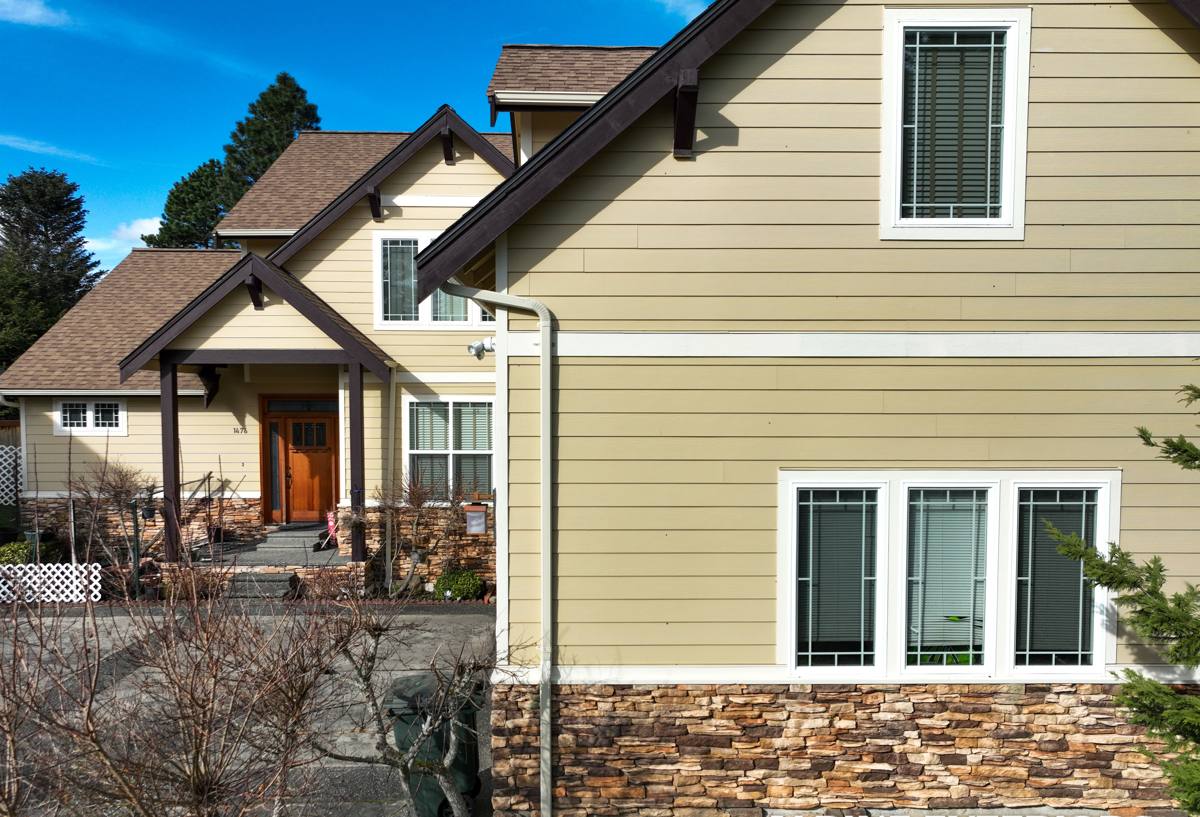
What Salt Air and Coastal Moisture Actually Do to Windows
Salt air is corrosive to metal hardware — hinges, cranks, balance systems, and screws — long before most homeowners notice a problem with the glass itself. Once hardware starts to bind or corrode, seals get stressed from repeated forcing, and that's often the real starting point of an air or water leak, not a defect in the window itself.
Combine that salt exposure with near-constant moisture and you get a second problem: wood components that aren't properly protected can start absorbing water at the joints, and once moisture gets behind exterior trim or cladding, it has nowhere good to go. In a climate with a long moss season, anything organic growing on or near a window opening holds water against the frame far longer than it would in a drier area, which accelerates rot in untreated wood and speeds up sealant breakdown around the perimeter.
Where We See the Most Damage Locally
- South and west-facing windows that take the brunt of driving rain and salt-laden wind
- Lower-floor windows near grade level, where splashback and standing moisture are more common
- Shaded elevations under trees, where moss and lichen hold dampness against frames and trim
- Older aluminum-frame windows, where corrosion and thermal conductivity are both working against you
- Original builder-grade windows that were never intended to be the home's final window system
What "Energy Efficient" Actually Means for This Area
Energy efficient isn't a single spec — it's a combination of a few numbers and features that matter differently depending on climate. For Blanchard, the priorities are keeping heat in during our long mild-but-damp winters, resisting condensation on cooler days, and doing both of those without trapping moisture inside the wall or frame.
| Factor | What It Controls | Why It Matters Here |
|---|---|---|
| U-Factor | Rate of heat loss through the window | Lower U-factor keeps homes warmer through our long wet, cool winters and reduces heating load |
| SHGC (Solar Heat Gain Coefficient) | How much solar heat passes through the glass | Moderate SHGC helps balance winter warmth against summer overheating on sun-exposed elevations |
| Low-E Coating | Reflects radiant heat while letting visible light through | Improves comfort near windows and helps reduce interior condensation on cold, damp days |
| Gas Fill (Argon/Krypton) | Insulates the space between glass panes | Adds real insulating value without adding bulk to the frame |
| Weatherstripping & Seal Quality | Air and water infiltration resistance | Directly resists driving rain and salt-laden wind — the single biggest local failure point |
Frame Material: What Holds Up Near the Water
Frame material matters as much as glass package in a coastal-influenced climate. Each option below has real trade-offs — none of them is wrong everywhere, but some make more sense than others given what Blanchard weather does over years, not just the first season.
| Frame Type | Coastal Performance | Maintenance |
|---|---|---|
| Vinyl | Good resistance to salt corrosion since there's no exposed metal to pit; performs well when properly installed and flashed | Low — occasional cleaning, no painting or sealing |
| Fiberglass | Very stable in temperature swings and moisture exposure; strong long-term option for driving-rain exposure | Low — durable finish, minimal upkeep |
| Wood or Wood-Clad | Attractive but requires disciplined maintenance; any lapse in sealing lets moisture and salt-driven rot start at joints | High — periodic painting/staining and sealant inspection required |
| Aluminum | Conducts heat and cold readily and is more prone to salt-related corrosion over time unless specifically treated | Moderate — hardware and finish need regular attention |
We don't install every product on this list for every home. Where a wood or aluminum window is the better architectural fit, we'll say so and explain the maintenance commitment it carries — that's a decision that belongs to the homeowner, made with the trade-offs on the table rather than glossed over.
What a Correct Installation Actually Involves
The window unit itself is only part of the performance equation. In a climate with driving rain and salt air, installation detailing is often the difference between a window that lasts and one that fails early — and it's usually invisible once the trim goes back on.
The Steps That Actually Matter
- Full removal of the old unit and inspection of the framing and sheathing underneath for hidden rot or moisture damage
- Proper flashing at the sill and head, lapped correctly so water sheds outward and down, never back into the wall
- A continuous, compatible sealant bead — not just at the exterior trim, but at every layer where water could otherwise find a path in
- Correct shimming and squaring so the sash operates smoothly and the weatherstripping seats evenly on all sides
- Insulation of the gap between the new frame and the rough opening, without over-packing it in a way that bows the frame
- Exterior trim and caulking finished to shed water rather than collect it, especially on window sills and horizontal surfaces
Skip or rush any one of those steps and even a top-tier energy-efficient window can leak, fog, or underperform — which is exactly why we treat installation quality as equal in importance to the product itself.
Signs Your Current Windows Are Costing You Money
Most homeowners don't notice window failure as a single event — it shows up gradually as higher bills, drafts, or condensation that seem to just be "how the house is." Here's what's worth checking before deciding whether repair or replacement makes sense.
- Visible condensation or fogging between panes, which usually means a failed seal and lost gas fill
- Cold drafts near the window frame even when it's fully closed and locked
- Difficulty opening, closing, or locking — often a sign of hardware corrosion or a warped frame
- Soft or discolored trim, sill, or wall material around the window opening
- Visible moss, black staining, or persistent dampness on or around the frame
- A noticeable temperature difference standing near the window compared to the rest of the room
- Higher heating bills than comparable homes nearby, with no other clear explanation
Our Process for Blanchard Homes
We keep the process straightforward because most homeowners just want to know what's actually wrong, what it'll take to fix it, and what it'll cost — without a sales pitch layered on top.
1. On-Site Assessment
We look at the actual windows in question — frame condition, hardware, evidence of past water intrusion, and how exposed each elevation is to wind, rain, and salt air given the home's specific site.
2. Honest Recommendation
Sometimes that's full replacement. Sometimes a window is still structurally sound and just needs new weatherstripping, resealing, or hardware service. We'll tell you which situation you're in and why.
3. Product Selection
We walk through frame material and glass package options against your budget, the window's exposure, and how much long-term maintenance you're willing to take on.
4. Installation
Full removal, framing inspection, proper flashing and sealing, and finish work done to shed water rather than trap it — the detailing covered above, applied consistently, every window.
5. Cleanup and Walkthrough
We clean up the job site and walk you through how the new windows operate, what maintenance (if any) they need, and what the manufacturer warranty covers.
Why It Matters to Hire a Crew That Already Works the Blanchard Area
Windows in this part of Whatcom and Skagit County face conditions that don't show up the same way inland — salt-influenced air near the water, wind-driven rain off the bay, and shaded, moss-prone microclimates depending on tree cover and exposure. A crew that installs windows here regularly already knows which elevations need extra flashing attention, which frame materials hold up against the salt air, and how long moss season actually runs in a given year. That local pattern recognition is hard to replace with a generic install checklist, and it's usually the difference between a window job that's still tight in ten years and one that starts leaking in three.
Get a Straightforward Estimate
If your windows in Blanchard are drafty, fogged, hard to operate, or just older than the rest of the house's exterior work, it's worth having someone take an honest look before you decide what to do. We offer free, no-pressure estimates — use the form below to get started.