 Chuckanut
 Building New in Blanchard? The Window Install Deserves as Much Attention as the Framing
If you're putting up a new home in Blanchard or along the Chuckanut corridor, the windows are one of the few components that have to perform on day one and keep performing for decades — through salt-laden wind off the water, driving rain that comes in sideways during winter storms, and a moss and algae season that never really ends this far northwest. New-construction window work is a different job than swapping out an old window in an existing wall. The rough openings are fresh, the water-resistive barrier and flashing sequence are being built from scratch, and there's no old caulk or rot to work around — which means there's also no excuse for getting it wrong. Done right, this is the easiest point in a home's life to get the window envelope correct. Done poorly, it's the hardest problem to fix later, because by the time siding and trim are on, every flashing mistake is buried behind finish work.
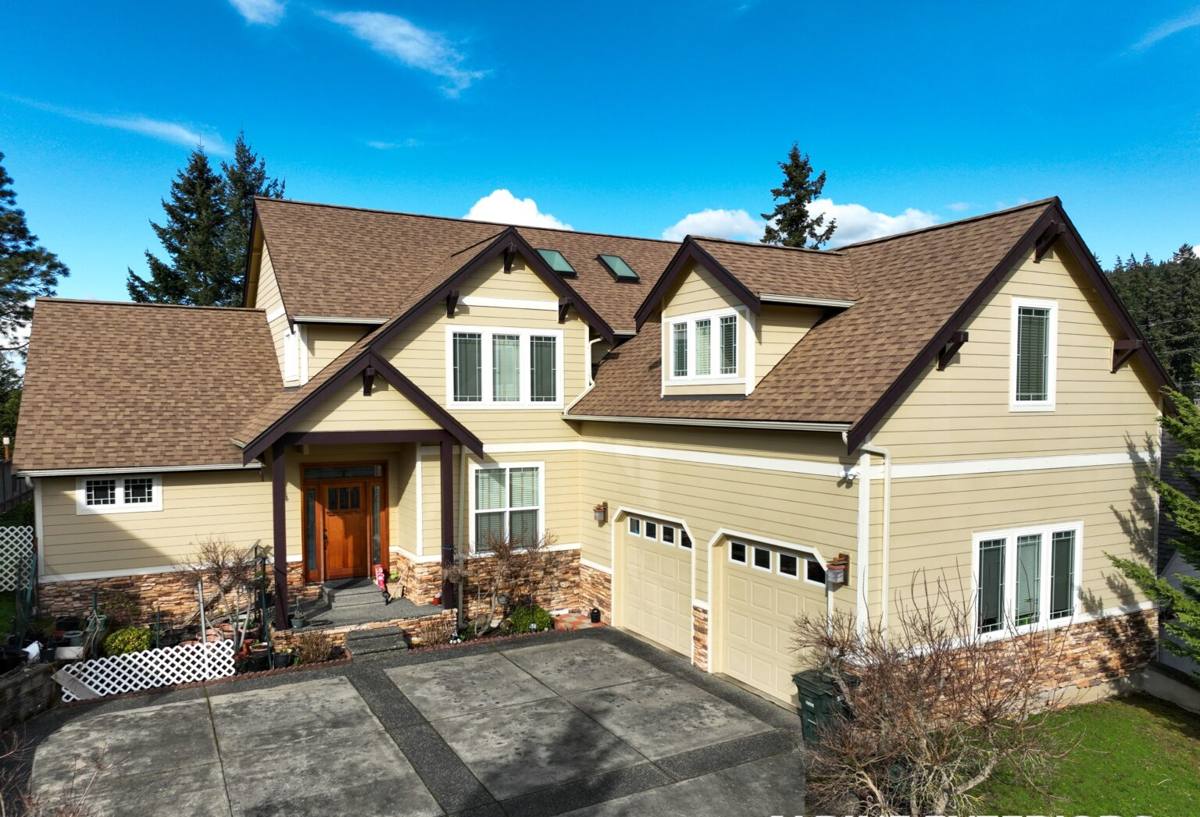
Why the Local Climate Changes the Plan
Whatcom County's marine climate isn't uniform, and homes near Chuckanut and Blanchard sit in a spot that gets a specific combination of stresses most inland builders never plan for.
Salt Air
Proximity to saltwater accelerates corrosion on fasteners, hardware, and unprotected metal flashing. Cheap or mismatched metals at window openings can start showing white corrosion or streaking within a few years, long before the window itself is due for any attention.
Driving Rain
Wind-driven rain doesn't just fall on a window — it gets pushed sideways and upward under sills and around trim. A window that's watertight in a still, gentle rain can still leak in a wind-driven storm if the flashing details weren't built to shed water uphill and out, not just down.
Moss and Algae Season
Extended damp shoulder seasons mean moss, algae, and mildew get a long runway on any surface that stays wet — sills, trim boards, and the transition between window and siding. That's less about the window unit itself and more about how the surrounding trim and drainage plane are detailed, but it's a factor we account for in material choice and sill design.
What a Correct New-Construction Window Install Actually Involves
A window "install" is really a sequence of small decisions, and skipping or rushing any one of them is what causes leaks — usually not right away, but two or three winters later.
Flashing and Water Management
Before a window ever goes in, the rough opening needs a sill pan to catch and direct any water that gets past the window back out to the exterior, not into the wall cavity. Housewrap or building paper has to be integrated with the window flanging in the correct shingle-lap order — head flashing over the wrap above, side and sill flashing tucked under it — so water is always directed down and out, never trapped behind a layer that traps it in.
Rough Opening, Shimming, and Level
The opening has to be square, plumb, and sized correctly for the window with proper clearance — too tight and the window can bind or bow; too loose and you're relying on foam or caulk to do a structural shim's job. Windows get shimmed at the right points (not just anywhere convenient) so the frame doesn't rack or bind when it's fastened, which affects both how the window operates for the next 20+ years and how well it seals.
Air Sealing and Insulation
The gap between the window frame and the rough framing needs to be sealed with a compatible low-expansion foam or backer rod and sealant — not stuffed with fiberglass batting, which does nothing for air infiltration. This step matters as much for energy performance and comfort as the glass package does.
Trim and Final Weatherproofing
Exterior trim and sill details need to shed water away from the window unit, not channel it toward the joints. This is also where drip caps, kickout flashing at siding transitions, and proper sealant joints (not just a bead of caulk everywhere) come into play.
Choosing Window Materials and Glass for This Climate
New construction gives you a real choice of frame material and glass package before anything is locked in — worth getting right the first time, since window replacement inside a finished wall is a much bigger job later.
| Frame Material | How It Handles This Climate | Trade-Offs |
|---|---|---|
| Vinyl | Good moisture and corrosion resistance, low maintenance | Can expand/contract with temperature swings; quality varies a lot between manufacturers |
| Fiberglass | Very stable in wet, temperature-variable climates; strong corrosion resistance | Higher upfront cost than vinyl |
| Wood-clad | Warm interior look with a protective exterior cladding | Cladding seams and sealant joints need to be detailed carefully near salt air and driving rain, or moisture can work in over time |
| Aluminum | Strong and slim sightlines | Poor thermal performance and more prone to condensation unless thermally broken — we're selective about where we use it here |
For glass, a dual-pane, low-E coated unit with argon fill is the practical baseline for this region's energy code and comfort expectations. Homes closer to open water or with more west/southwest wind exposure sometimes benefit from a slightly heavier glass package or laminated glass on the most exposed elevations — that's a conversation worth having during design, not after the windows are ordered.
How Our Process Works With Your Builder or GC
On new construction, we're one trade among several, and the window install has to fit the framing and siding schedule without becoming the bottleneck.
- We review the window schedule and rough opening sizes against the actual framing before ordering — catching a sizing mismatch on paper is a lot cheaper than catching it on site
- We coordinate directly with the builder or GC on sequencing, so windows go in once the wall is weather-ready but before siding closes in the flashing details
- We install sill pans, flashing, and air sealing to a consistent standard on every opening — not "whatever the framer had leftover"
- We document flashing and sealing before it's covered by trim or siding, so there's a record of what's behind the finish work
- We do a final walkthrough on operation, hardware, and weatherstripping before we call it done
Energy Code and Permitting Considerations
Washington's state energy code sets minimum performance requirements for new-construction windows, and code officials in this region are used to enforcing them carefully given the climate. Getting the U-factor and solar heat gain coefficient right for your specific design — not just picking "code minimum" off a spec sheet — avoids a permitting delay or a failed inspection partway through the build. We handle this coordination as part of the window plan rather than leaving it for the builder to sort out after the order is placed.
What New-Construction Windows Typically Cost
Pricing depends on window count, size, frame material, and glass package, but these are the factors that move the number most for a Blanchard build.
| Cost Factor | Why It Matters |
|---|---|
| Frame material (vinyl vs. fiberglass vs. wood-clad) | Biggest single swing in per-unit price |
| Glass package (standard low-E vs. upgraded/laminated) | Adds cost per unit but matters more on exposed elevations |
| Window size and configuration (single unit vs. large multi-panel) | Larger or custom-shaped openings cost more in both unit and labor |
| Number of openings | Straightforward volume driver |
| Site access and building height | Multi-story or difficult-access builds add labor time |
We don't publish a flat per-window number because the mix of those factors is different on every build — but we'll walk your plans and give you a real, itemized number, not a rough guess.
Why It Matters to Hire a Crew That Already Works This Area
A crew that's only worked drier inland builds tends to treat flashing and sill details as optional extras rather than the actual job. Out here, the difference between a window that's dry in year one and one that's still dry in year fifteen usually comes down to details that don't show up on a spec sheet — sill pan integration, the order of the flashing lap, sealant choice for salt-air exposure, and trim details that keep moss and standing water off the sill. We've built and flashed openings for enough Whatcom County new construction to know which shortcuts cause callbacks two winters later, and we don't take them.
A Few Things Worth Checking Before You Sign Off on Any Window Contractor
- Ask whether sill pan flashing is standard on every opening, not just an upgrade
- Confirm who's responsible for coordinating flashing sequence with the siding installer
- Ask what glass package is being specified and whether it meets current Washington energy code for your design
- Get the warranty terms in writing — both the manufacturer's window warranty and the installer's workmanship warranty
- Ask how they document flashing and air sealing before it's covered by trim or siding
If you're planning a new build in Blanchard or anywhere along the Chuckanut corridor, we're happy to look at your window schedule and plans and give you a straightforward, no-pressure estimate — just fill out the form below.