 Chuckanut
 Decking in Bow Has to Answer to the Weather, Not Just the Budget
Bow sits close enough to open water that salt-laden air is part of daily life, and it sits inside the same wet belt that soaks the whole Chuckanut Drive corridor for most of the year. That combination is tougher on an outdoor deck than most homeowners expect. Salt air corrodes fasteners and fittings faster than inland exposure. Driving rain — the kind that comes in sideways off the water during a fall or winter storm — gets pushed into board gaps, ledger connections, and end grain that a calm-weather rain never reaches. And the long stretch of overcast, damp months every year gives moss, algae, and lichen months of uninterrupted growing time on any surface that stays shaded and slow-drying.
None of that means composite decking is the wrong choice for a Bow property — it's usually the right one. But it does mean the material spec, the substructure underneath it, and the way it's installed all matter more here than they would in a drier climate. A deck built the same way you'd build one in eastern Washington will underperform here, sometimes within a few seasons.
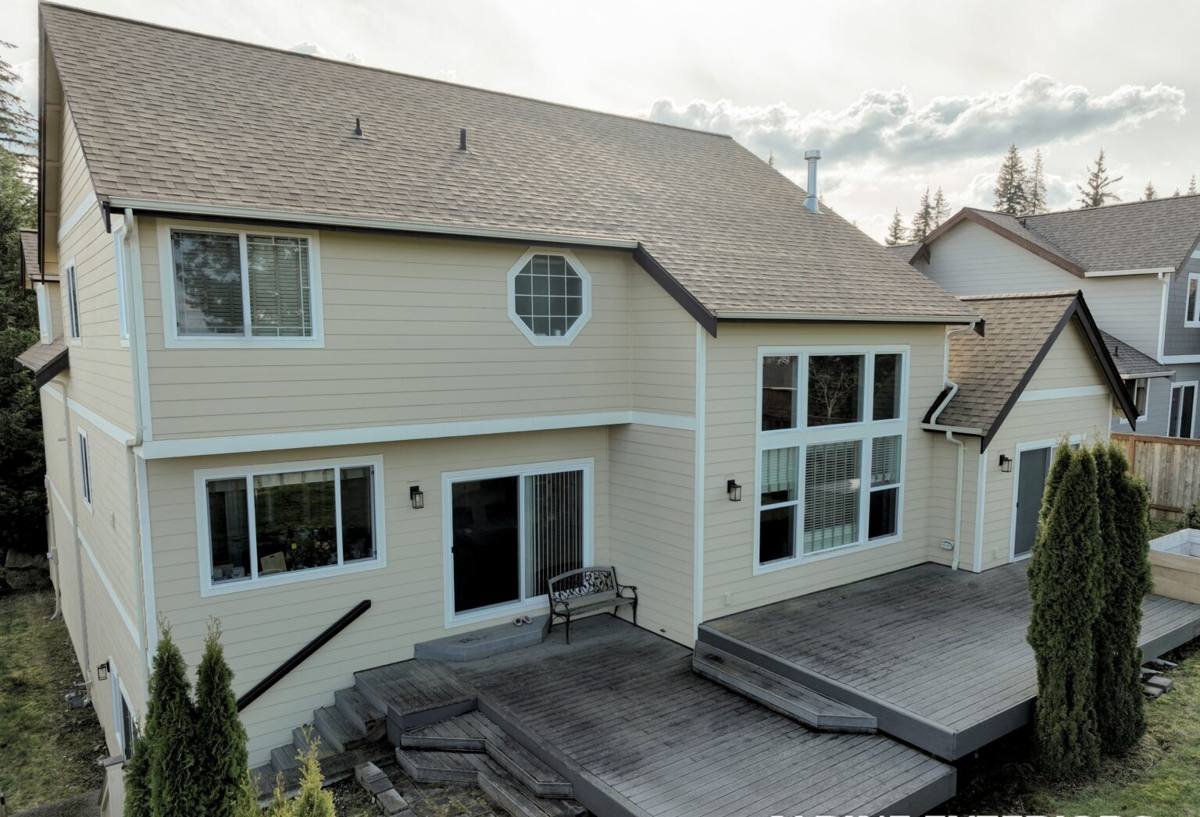
What Bow's Climate Actually Does to a Deck Over Time
Salt Air and Metal Fatigue
Salt in the air accelerates corrosion on anything metal — screws, joist hangers, structural brackets, railing hardware. Standard hot-dip galvanized fasteners can start showing rust streaks and pitting years before they would inland. Once a fastener corrodes, it loses holding strength long before it looks obviously bad, which is part of why fastener spec is one of the first things worth getting right.
Driving Rain and Hidden Moisture
Wind-driven rain doesn't just fall on a deck, it gets forced into every seam — under railing posts, around ledger boards, into unsealed end cuts. On a wood deck that means slow rot in places you can't see. On a composite deck the boards themselves resist moisture damage, but the framing underneath, the flashing at the house connection, and any exposed cut ends still need to be protected correctly, or you end up with a deck surface that looks fine sitting on a substructure that isn't.
Moss Season
Shaded, low-airflow decks in this region grow moss and algae almost every winter. It's not a sign of a bad product — it's what happens to any exterior surface here that doesn't get sun and airflow. The real issue is board surface texture and drainage design, which either make that growth easy to rinse off each spring or let it work into grain and joints where it's much harder to remove.
What a Correctly Built Composite Deck Includes Here
A composite deck that's going to hold up in Bow's climate isn't just "composite boards instead of wood boards." The whole system needs to account for constant moisture cycling and salt exposure.
- Corrosion-resistant fasteners and hardware rated for coastal or high-moisture exposure, not standard interior-grade hardware
- Properly flashed ledger board connection where the deck meets the house, so water is directed away from the rim joist rather than trapped against it
- Adequate joist spacing and blocking sized for the specific composite board being used — composite spans differently than wood and manufacturers publish exact spacing requirements
- Ventilation gaps left under and around the deck framing so air can actually move and dry the structure between rain events
- Hidden fastener or clip systems installed to the board manufacturer's exact spec, since improper clip spacing is one of the most common causes of board buckling in wet climates
- Sealed or capped cut ends on any board that gets trimmed on site, since a cut composite end left exposed can wick moisture over time
- Drainage consideration underneath the deck itself — grading, gaps, or a drainage system so water isn't pooling and sitting against framing for days at a time
Skipping any one of these doesn't ruin a deck immediately. It shows up two, three, or five years in — as soft spots near the house, streaking at fastener heads, boards that feel spongy underfoot, or a deck that never quite dries out between storms.
Composite vs. Wood vs. PVC — What Actually Fits a Bow Property
| Factor | Pressure-Treated Wood | Composite | PVC/Vinyl Decking |
|---|---|---|---|
| Upfront cost | Lowest | Mid-range | Highest |
| Maintenance in this climate | Annual sealing/staining, ongoing rot watch | Occasional cleaning, no sealing or staining | Minimal, but limited repair options if damaged |
| Moisture/salt air resistance | Vulnerable without diligent upkeep | Strong when properly capped and installed | Very strong |
| Moss/algae surface behavior | Grain traps growth, hard to fully clean | Textured cap sheds growth better, still needs seasonal rinse | Smooth surface sheds easily, can be slick |
| Typical realistic lifespan here | 10-15 years with consistent maintenance | 25-30+ years | 25-30+ years |
| Repair if damaged | Board-by-board replacement, easy to match | Board replacement, color matching gets harder over time | More specialized repair, fewer local installers |
For most homes in the Bow area, composite lands in the sweet spot: it handles the moisture and salt exposure meaningfully better than wood without the ongoing sealing and staining, and it costs less than PVC while still being a low-maintenance, long-lifespan product. Wood can still make sense on a tight budget or a smaller, easily maintained deck, but it asks a lot of the homeowner every year to hold up in this climate.
Board Selection Matters More Here Than the Marketing Suggests
Not all composite decking is built the same, and the differences matter more in a wet, salty, low-sun climate than they would somewhere drier. We look at a few things before recommending a specific board line for a Bow install:
Cap Type
Fully capped composite boards — where the protective shell wraps the board on all sides, not just the top — hold up better against constant moisture than boards capped only on the visible face. Given how much rain this area gets, we treat full capping as close to a requirement rather than an upgrade.
Surface Texture
A heavily wood-grained, deeply textured board can look great, but deep grain also gives moss and algae more surface area to grip. A moderate texture strikes a better balance between a natural look and a surface that actually rinses clean each spring.
Color
Darker boards absorb more heat on the rare sunny day, which helps them dry faster after rain — a real advantage in a climate where drying time matters more than heat resistance. Lighter colors show less of the fine surface debris and pollen that collects in a shaded, damp yard, but they can also show green staining from moss more visibly if the deck isn't cleaned on schedule.
How We Approach a Composite Deck Build in Bow
The process is straightforward, but each step is shaped by what this climate actually does to a deck over time.
- Site walk and assessment. We look at sun exposure, prevailing wind and rain direction, drainage around the footprint, and how close the deck sits to salt-influenced air, since all of that affects board and hardware selection.
- Plan and material selection. We walk through board options, cap type, and hardware spec based on that assessment — not a one-size-fits-all recommendation.
- Substructure build or repair. Framing, ledger flashing, joist spacing, and ventilation gaps are set to the manufacturer's spec and to what this climate demands, whether we're building new or replacing an existing structure.
- Board installation. Hidden fastener systems installed to spec, cut ends sealed, expansion gaps set correctly for temperature and moisture movement.
- Final walkthrough. We go over basic care — what to expect from the surface in year one, and a simple seasonal cleaning routine so moss and algae never get a foothold.
Maintenance That Actually Fits This Climate
Composite decking is low-maintenance, not no-maintenance, especially with a moss season this long. A realistic routine for a Bow property looks like:
- A soft-bristle brush and mild soap and water rinse once or twice a year, timed for spring after the wettest months
- Keeping nearby tree canopy trimmed back where practical, since shade and leaf litter are what let moss establish in the first place
- Checking that gutters and downspouts near the deck aren't dumping extra water onto or under it
- A quick look each fall at railing hardware and fastener heads for early rust staining, since catching it early is far easier than dealing with a corroded fastener years later
That's it. No annual sealing, no staining, no sanding — just a bit of seasonal attention so the deck stays looking like it did on day one.
Why a Crew That Already Works This Area Matters
A lot of composite deck problems we get called to fix started with a crew that builds decks everywhere but doesn't build them here specifically. Framing that would be fine in a dry climate rots in Bow. Fastener specs that work fine forty miles inland corrode here in a fraction of the time. Drainage details that don't matter in a dry summer climate matter every single week during a wet Pacific Northwest winter.
Working the Chuckanut Drive area regularly means we're not guessing at how this specific stretch of coastline treats a deck — we've seen what holds up and what doesn't, and we spec accordingly from the first conversation, not after a callback.
What to Ask Before You Hire a Decking Contractor Here
- Are the fasteners and hardware rated for coastal or high-moisture exposure, or is that an upgrade you have to ask for?
- Will the ledger board connection be flashed, and how?
- What joist spacing will be used, and does it match the board manufacturer's published spec?
- Is the board fully capped on all sides, or only on the visible face?
- What does the manufacturer's warranty actually cover, and does improper installation void it?
- Has this crew built decks in this specific area before, or mostly inland?
If a contractor can't answer these clearly and specifically, that's worth noticing before you sign anything.
If you're planning a new composite deck or replacing one that hasn't held up to Bow's weather, we're glad to take a look and give you an honest, no-pressure estimate. Use the form below to get started.