 Chuckanut
 Asphalt Shingle Roofing Built for Columbia's Weather
Columbia homes sit close enough to the water that salt air is part of daily life, and that changes what a roof has to survive. Add Whatcom County's long wet season, driving rain off the Sound, and months of shade-fed moss growth, and you've got a climate that's genuinely tougher on a roof than most manufacturers' warranty language accounts for. Asphalt shingle roofing remains one of the most practical choices for this area when it's specified and installed correctly for local conditions — the key phrase being "for local conditions," not the generic install you'd see in a drier inland climate.
This page covers what that means specifically for a Columbia roof: the shingle and underlayment choices that hold up here, the details that keep salt air and moss from shortening a roof's life, and what our process looks like from first look to final walk-through.
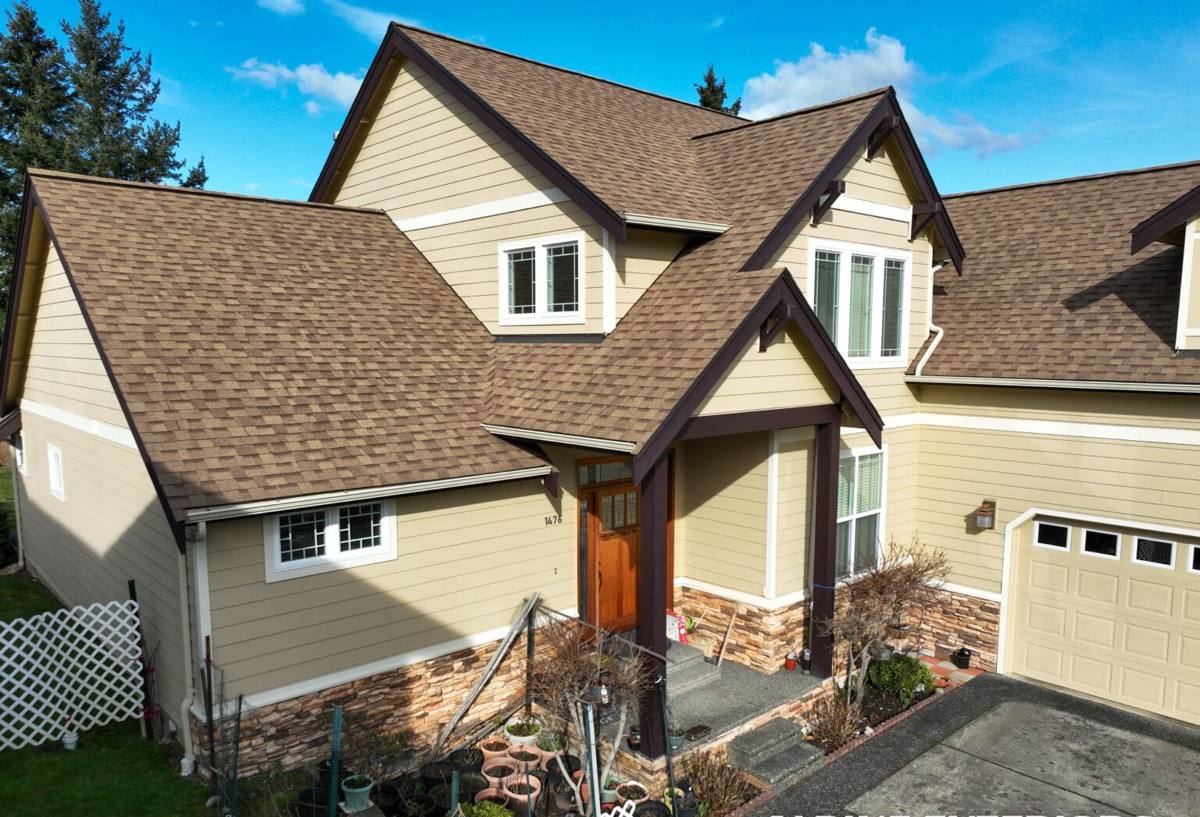
Why Columbia's Climate Is Harder on Roofs Than It Looks
Salt Air and Metal Components
Salt-laden air accelerates corrosion on any exposed metal — flashing, fasteners, vent caps, and drip edge. On a standard-grade install, that corrosion shows up years earlier near the water than it would a few miles inland. It's not usually the shingles themselves that fail first in this environment; it's the metal details around them.
Driving Rain and Wind-Driven Water
Rain here rarely falls straight down. Wind off the Sound pushes it sideways and under standard shingle laps if the underlayment and flashing details aren't built for that. Roofs that would perform fine in a calmer climate can develop leaks at valleys, eaves, and wall intersections when driving rain is a regular occurrence rather than an occasional storm.
Moss Season
Chuckanut's tree cover and long damp season are ideal for moss and moisture-loving growth. Moss doesn't just look bad — it holds water against the shingle surface, lifts shingle edges as it grows, and can work its way under tabs over time. North-facing slopes and shaded sections of a Columbia roof are almost always the first to show moss, and they're usually the first to wear out if the roof wasn't set up to resist it.
What a Correctly Built Shingle Roof Needs Here
A shingle roof that's going to hold up in Columbia isn't just "shingles nailed to a deck." It's a system, and every layer matters:
- Underlayment: A synthetic or self-adhered underlayment rated for wind-driven rain, not just the minimum builder's-grade felt.
- Ice and water shield at vulnerable points: Eaves, valleys, and roof-to-wall transitions get extra protection, since these are where driving rain and moss-related water backup cause the most damage.
- Corrosion-resistant metal: Flashing, drip edge, and fasteners suited to a coastal-influenced climate, not standard galvanized components that will pit and rust prematurely.
- Proper ventilation: Balanced intake and exhaust ventilation keeps the underside of the deck dry, which matters more in a climate where the roof rarely gets a long stretch to fully dry out.
- Shingle selection suited to shaded, damp conditions: Algae-resistant (AR) shingles with copper or zinc-infused granules help slow the growth that drives moss and streaking on shaded slopes.
Skip any one of these and the roof will likely still look fine for a few years — the failures in this climate tend to show up as slow leaks, granule loss, and moss damage rather than dramatic problems, which is exactly why cutting corners here is a bad trade.
Shingle Options for a Columbia Home
Not every shingle line is worth the premium, and not every budget option is a false economy. Here's how the main categories compare for this specific climate:
| Shingle Type | Typical Lifespan Here | Best For | Climate Notes |
|---|---|---|---|
| 3-Tab (standard) | 15–20 years | Budget-conscious re-roofs | Lower wind resistance; moss and salt exposure tend to shorten life toward the lower end of the range |
| Architectural / Dimensional | 25–30 years | Most Columbia homes | Heavier mat and better wind rating hold up well to driving rain; widely used here for good reason |
| Premium / Designer Architectural | 30+ years | Homes wanting max curb appeal and durability | Thicker profile sheds moss-holding debris better; higher upfront cost |
| Algae-Resistant (AR) upgrade | Adds years to any tier | Shaded lots, north-facing slopes | Copper/zinc granules slow moss and algae growth — worth it on most Columbia lots |
For most Columbia properties, an architectural shingle with an AR granule treatment is the practical middle ground — meaningfully better wind and moisture performance than 3-tab, without stepping all the way up to premium designer pricing.
Our Process on a Columbia Roofing Job
1. On-Site Assessment
We walk the roof and the attic, not just the ground. That means checking deck condition, existing ventilation, flashing condition around chimneys and walls, and how much moss and shading exposure the roof actually gets — north slopes and tree-covered sections get called out specifically.
2. A Written Scope
You get a clear breakdown of what's being replaced, what underlayment and flashing package is specified, and why — no vague "tear off and replace" line item standing in for the details that actually determine how long the roof lasts.
3. Tear-Off and Deck Inspection
Once the old roofing is off, we inspect the deck for soft spots or water damage before anything new goes down. In this climate, hidden deck damage from long-term moisture is common enough that it's not treated as a rare surprise — it's budgeted for as a possibility up front.
4. Installation to a Coastal-Climate Standard
Ice and water shield at the vulnerable points, corrosion-resistant metal, correct nailing patterns for wind exposure, and balanced ventilation — installed as a system, not a checklist rushed to get the crew off the roof.
5. Final Walk-Through
We go over the finished roof with you, explain what was done, and answer questions about maintenance — including moss prevention — before we consider the job complete.
Maintenance That Actually Matters in This Climate
A well-built roof still needs some upkeep in Columbia's conditions. This isn't a long list, but skipping it shortens the roof's life:
- Keep gutters clear — clogged gutters back water up under the eave edge, which is one of the more common causes of early leaks here.
- Have moss growth removed gently (not power-washed, which can strip granules) as soon as it appears on shaded slopes.
- Trim back overhanging branches where possible to reduce shade and debris buildup that feeds moss.
- Schedule a roof check after major windstorms, since wind-driven rain events are when marginal flashing details tend to fail first.
- Have flashing and fasteners inspected periodically for salt-air corrosion, especially on roofs closer to the water.
Why It Matters That We Already Work in Columbia
A crew that mostly works dry inland climates will often spec a roof the same way regardless of where it's going — and that roof may perform fine for a few years before the local conditions catch up to it. Working Columbia and the broader Chuckanut area regularly means we've seen which slopes hold moss, which details actually stop wind-driven rain, and which metal components hold up to salt exposure and which ones don't. That's not something you can fully substitute with a generic install spec, no matter how good the shingle is on paper.
We also know this area well enough to give you a straight answer about what your specific roof actually needs versus what's being upsold. If a premium shingle isn't necessary for your situation, we'll say so. If your roof's real risk is a shaded north slope that needs an AR shingle and better ventilation more than it needs a top-tier product line, that's what we'll recommend.
Signs a Columbia Roof May Need Attention
A few warning signs are worth a professional look before they turn into interior damage:
- Visible moss or dark streaking, especially on north-facing or shaded slopes
- Granules collecting in gutters or at downspouts
- Curling, cupping, or lifted shingle edges
- Rust staining around flashing, vents, or fasteners
- Any sign of water staining on interior ceilings or in the attic after a windy rainstorm
None of these mean the roof needs full replacement automatically — sometimes it's a repair, sometimes it's a maintenance issue. But in this climate, catching them early is what keeps a repair from becoming a replacement.
Get a Straight Answer for Your Columbia Roof
Whether you're dealing with visible moss, an aging roof approaching the end of its life, or you're just planning ahead, we're happy to take a look and give you an honest read on where things stand. Reach out for a free, no-pressure estimate using the form below.