 Chuckanut
 Building a Deck That Actually Holds Up in Columbia
Columbia sits close enough to the water that salt air is part of daily life, and close enough to the Cascades' rain shadow edge that driving rain off Bellingham Bay shows up on decks from almost every direction, not just straight down. Add in a moss season that can stretch from October through April in a wet year, and you have a set of conditions that punishes a deck built to a generic national spec. A deck that would hold up fine in a dry inland climate can start showing rot, corrosion, or slick moss growth within a few seasons here if it wasn't built with this specific stretch of Whatcom County in mind.
This page covers what a custom deck actually needs to survive and stay safe in Columbia, what our build process looks like, and why local experience matters more than it might seem for something that looks, on the surface, like a simple carpentry project.
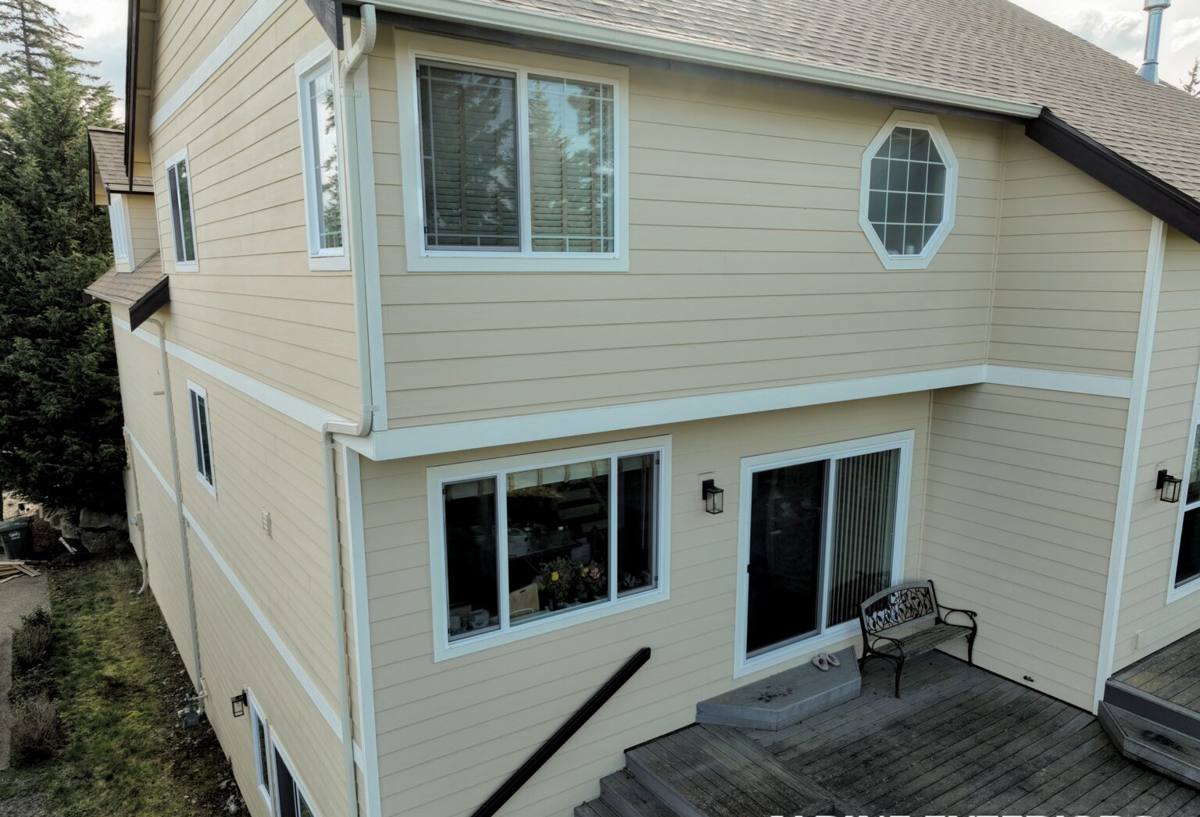
What Columbia's Climate Actually Does to a Deck
Salt Air and Metal Fatigue
Salt-laden air corrodes exposed fasteners, brackets, and hardware faster than most homeowners expect, especially on decks with any kind of water or wind exposure. Standard hardware can start showing rust streaks and pitting well before the wood around it fails. Once fasteners weaken, the structural connections they hold — joist hangers, ledger bolts, post bases — are compromised even if the decking boards on top still look fine.
Driving Rain and Water Intrusion
Rain here doesn't just fall on a deck's surface, it drives sideways into ledger connections, under railing posts, and into any gap where flashing was skipped or done wrong. The ledger board — where the deck attaches to the house — is the single most common failure point we see, because it's also the hardest place to get flashing right and the easiest place for a builder in a hurry to cut a corner.
Moss, Algae, and Surface Safety
A long, damp moss season means any deck surface that doesn't shed water well will grow moss and algae, and a mossy deck is a slippery, dangerous deck. This isn't just a cosmetic issue — it's a slip-and-fall risk for a walking surface people use in wet, low-light months. Board spacing, surface texture, and drainage underneath all affect how fast a deck grows moss and how hard it is to keep clean.
What a Correctly Built Deck Requires Here
Framing and Substructure
The framing underneath is where most of a deck's lifespan is decided, and it's the part homeowners never see once the decking goes down. In this climate, that means pressure-treated framing lumber rated for ground contact where it's close to grade, proper joist spacing for the decking material chosen, and enough airflow underneath to let the structure dry out between rain events instead of staying damp for weeks.
Ledger Board Attachment and Flashing
The ledger connection needs correct flashing — installed in the right order relative to the house's existing siding and building paper — plus structural bolts or screws rated for the load, not just nailed on. This is the connection that keeps a deck attached to the house during a heavy load or a wind event, and it's also the spot most exposed to wind-driven rain working its way behind the board over time.
Fasteners and Hardware
Given the salt air, hardware matters more here than it does further inland. Stainless steel or heavy hot-dip galvanized fasteners and connectors cost more up front but avoid the early corrosion that standard coated hardware shows within a few years near the water. Joist hangers, post bases, and structural screws are not a place to save money on a coastal-influenced build.
Drainage and Slope
Decking surfaces need a slight, consistent slope away from the house so water sheds instead of pooling, and any solid-surface or under-deck drainage system needs to be pitched and detailed correctly from day one — it's very difficult to correct after the fact without pulling the decking back up.
Choosing Decking Material for This Climate
There's no single "best" decking material — the right choice depends on budget, how much upkeep you're willing to do, and how much sun or shade the deck gets (shaded decks in Columbia hold moisture longer and grow moss faster). Here's how the common options compare for a climate like this one:
| Material | Upfront Cost | Moss/Algae Resistance | Maintenance | Typical Lifespan |
|---|---|---|---|---|
| Pressure-treated wood | Lowest | Low — needs regular cleaning/sealing | Annual cleaning, periodic re-staining or sealing | 10–15 years with upkeep |
| Cedar | Moderate | Moderate — naturally rot-resistant but still needs sealing | Sealing every 1–2 years | 15–20 years with upkeep |
| Composite decking | Higher | Good — resists moisture absorption | Periodic washing, no sealing/staining | 25–30 years |
| PVC/capped polymer | Highest | Best — fully sealed surface | Occasional washing | 25–30+ years |
We'll walk through these trade-offs honestly during your estimate — composite and PVC cost more up front but make sense for homeowners who want to spend less time maintaining a deck through a long wet season. Wood costs less initially but requires a real annual maintenance commitment to avoid moss buildup and premature graying or rot.
Our Deck-Building Process
- Site visit and assessment — we look at sun exposure, existing drainage, grade, and how the deck will tie into your home's siding and structure.
- Design and material selection — we talk through decking material, railing style, and layout based on how you'll actually use the space and how much maintenance you want to take on.
- Permitting — we handle the permit application and inspection scheduling with the local building department so you don't have to navigate that process yourself.
- Framing and structural work — proper footings, ledger flashing, joist layout, and corrosion-resistant hardware, built to pass inspection and hold up long term.
- Decking, railing, and finish work — installed with attention to drainage slope and board spacing for water shedding.
- Final walkthrough — we go over the finished deck with you, including what maintenance it needs and when.
Maintaining a Deck Through Whatcom County's Moss Season
Even a well-built deck needs some seasonal attention here. A basic annual rhythm looks like this:
- Clear leaves and debris from between boards and off the surface before the fall rains settle in
- Check and clear any under-deck or perimeter drainage before moss season starts
- Wash the surface with a deck-safe cleaner in early fall to slow moss and algae growth through winter
- Inspect railing posts and ledger flashing yearly for any sign of water staining or soft wood
- Re-seal or re-stain wood decking on the schedule appropriate to the product (typically every 1–2 years)
- Check exposed hardware for early rust or corrosion, especially on decks with more open exposure
Signs of a Deck Built to Cut Corners
We inspect a fair number of existing decks in the area — some we're asked to repair, others we're replacing outright. A few warning signs come up repeatedly on decks that weren't built with this climate in mind:
- Standard coated screws or nails instead of stainless or hot-dip galvanized hardware
- No visible flashing at the ledger board connection, or flashing installed behind the siding incorrectly
- Decking installed flat with no slope, so water pools instead of shedding
- Little to no gap between boards for drainage and airflow
- No ventilation or clearance underneath the deck, trapping moisture against framing
- Visible moss or dark staining concentrated at specific joints, which usually points to a water intrusion path underneath
If you're seeing any of these on a deck you already have, it's worth getting it looked at before a cosmetic issue becomes a structural one.
Permits and Local Requirements
Most new decks in Whatcom County, especially those attached to a house or built above a certain height, require a building permit and inspection. Requirements can vary depending on the specifics of your property and the deck's size and attachment method, so we handle the permit application and inspection scheduling as part of our process rather than leaving it for the homeowner to sort out. Building to code isn't just a formality here — the same structural details the permit process checks for (ledger attachment, footing depth, railing height) are exactly the details that determine whether a deck survives this climate long term.
Why Local Experience Matters for This Job
A deck built from a generic national plan set, with generic hardware, will often look fine on installation day and start showing problems within a few wet seasons. A crew that already works in Columbia and the surrounding Chuckanut area knows which fastener grades hold up near the salt air, how to detail a ledger connection for driving rain, and how to pitch a deck surface so it doesn't become a moss farm by the second winter. That kind of judgment doesn't come from a spec sheet — it comes from having built and repaired decks in this specific stretch of Whatcom County and having seen, firsthand, what fails and what doesn't.
We also know the local permitting process and inspection expectations, which keeps a project moving instead of stalling on paperwork or a failed inspection over a detail that a locally experienced crew would have gotten right the first time.
Get a Free, No-Pressure Estimate
If you're planning a new deck or replacing one that's showing its age, we're happy to take a look and walk you through your options honestly — materials, cost ranges, and what your specific site and sun exposure will mean for maintenance down the road. Use the form below to request a free estimate, no pressure and no obligation.