 Chuckanut
 Why Bellingham Roofs Take a Different Kind of Beating
Bellingham sits where the Salish Sea meets the foothills, and that location cuts both ways. It's a beautiful place to own a home, but the roof over your head is dealing with a combination of stresses that a lot of roofing crews from drier regions simply aren't set up to handle correctly. Salt-laden air off Bellingham Bay works on exposed fasteners and metal flashing year-round. Winter storms bring driving, wind-blown rain that doesn't fall straight down — it gets pushed sideways into laps, seams, and vent boots that were only ever designed to shed water moving downhill. And because Whatcom County stays cool and damp for so much of the year, moss and moisture have months at a time to work into anything a storm has already loosened.
None of that means Bellingham roofs are doomed to fail early. It means storm damage repair here has to account for the local climate, not just patch the visible hole and move on. A repair that would hold up fine in a dry inland climate can fail within a year or two on a roof exposed to this coastline's weather if it's done without that context.
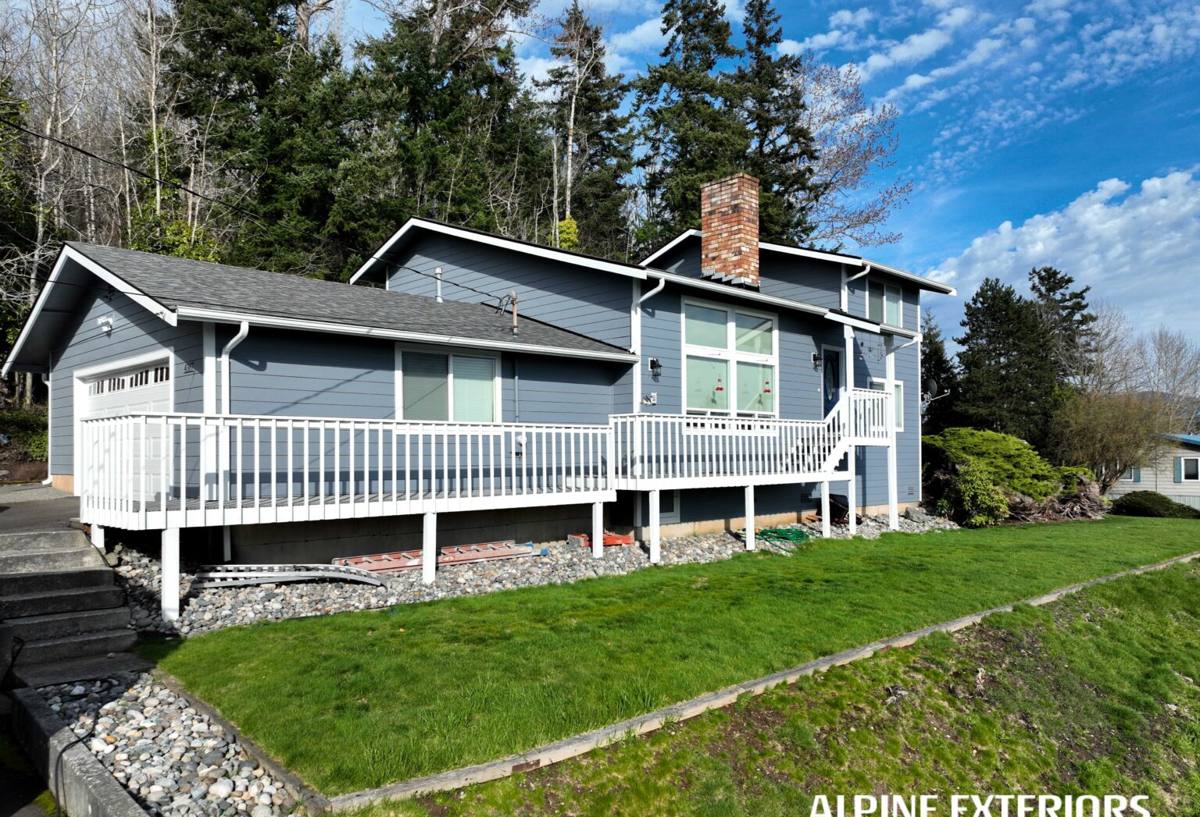
What Actually Counts as Storm Damage
Storm damage isn't always a dramatic hole where a tree limb came through. Most of what we get called out for after a windstorm or a heavy rain event is quieter than that:
- Shingles lifted, cracked, or torn loose by sustained wind gusts
- Flashing pulled away from chimneys, skylights, or roof-to-wall transitions
- Granule loss from shingles battered by wind-driven rain and debris
- Vent boots and pipe collars cracked or knocked out of position
- Gutters and fascia damaged by wind, ice, or falling branches
- Water intrusion at seams that only shows up as a stain days or weeks later
The tricky part is that several of these can sit unnoticed for a while, especially on roof planes you can't see from the ground. That's part of why a proper inspection after any significant storm matters more here than in a lot of other places — small entry points don't stay small once they've had a few weeks of Whatcom County drizzle to work with.
What a Correct Repair Actually Involves
A storm damage repair that's done right is more than swapping out the shingles that are obviously missing. We check the roof deck underneath for soft spots or rot before anything new goes down — covering damaged decking with new shingles just hides a problem that will resurface as a leak later. We also check the underlayment, since a torn or displaced underlayment layer is often the real reason water got into the house in the first place, even when the shingles above it look mostly fine.
Flashing gets particular attention. Chimney flashing, step flashing along walls, and valley flashing are the most common places where storm-loosened materials turn into ongoing leaks, and they're also the places most often rushed or skipped in a quick patch job. We reseat and reseal flashing to manufacturer specifications rather than just running a bead of sealant over the gap, which is a common shortcut that fails within a season or two in this climate.
Finally, we match materials as closely as possible to what's already on your roof — color, profile, and weight — so the repair blends in rather than leaving an obvious patchwork section that ages differently than the rest of the roof.
Materials We Consider for Repairs
For most Bellingham homes we're working with architectural asphalt shingles, since that's the majority roofing material in this region and it repairs cleanly when matched correctly. On homes with metal roofing or older wood shake, the repair approach changes — metal repairs require attention to fastener corrosion given the salt air, and shake repairs require sourcing material that weathers to a similar color rather than standing out as an obvious new patch.
Our Storm Damage Repair Process
We keep this process straightforward because homeowners dealing with storm damage are usually stressed enough already without a confusing back-and-forth.
- Inspection. We walk the full roof, not just the area you noticed damage in, since wind and rain damage is rarely confined to one spot.
- Documentation. We photograph damage clearly, which is useful whether or not you end up filing an insurance claim.
- Written scope and estimate. You get a clear explanation of what's damaged, what needs to be repaired versus what can wait, and an honest estimate before any work starts.
- Repair. We address the deck, underlayment, and flashing first, then the visible shingle or material layer.
- Cleanup and final check. Debris is cleared, gutters are checked for storm debris that can cause its own water problems, and we walk the roof again before calling the job done.
Repair, Partial Re-Roof, or Full Replacement?
Not every storm-damaged roof needs the same level of work, and part of doing this honestly is telling you when a smaller repair is the right call versus when it's time to talk about something bigger.
| Option | Best For | What to Consider |
|---|---|---|
| Spot Repair | Isolated damage — a few shingles, one flashing point, a single leak source | Most economical option; works well when the surrounding roof is otherwise sound and not near end of life |
| Partial Re-Roof | Damage concentrated on one roof plane or slope, or a roof with mixed-age sections | Can leave a visible seam between old and new material if colors have weathered differently |
| Full Replacement | Widespread damage, an older roof nearing the end of its service life, or repeated storm damage over several seasons | Higher upfront cost but resets the clock on materials, underlayment, and flashing all at once |
We'll always recommend the smallest scope that genuinely solves the problem. If a full replacement isn't necessary, we're not going to tell you it is.
Signs You Shouldn't Ignore
A lot of storm damage gets discovered by accident, months after the storm that caused it. These are the signs worth checking for after any significant wind or rain event:
- Granules collecting in gutters or at downspout outlets
- Shingles that look lifted, curled, or out of alignment from the ground
- Daylight visible through the attic roof boards
- Water stains or discoloration on ceilings, especially near chimneys or skylights
- Soft or spongy feeling decking if you're able to safely check the attic floor
- Missing or bent flashing around any roof penetration
- Sudden increase in moss growth in one concentrated area, which can indicate a spot where water is sitting
If you notice any of these, it's worth getting a look before the next round of Whatcom County rain has a chance to work its way further in.
Insurance Claims and Storm Damage
Most homeowner's insurance policies cover storm damage to roofs, but coverage details, deductibles, and documentation requirements vary by policy and insurer. We're not adjusters and we don't speak for your insurance company, but we can provide clear photo documentation and a written scope of damage that you can hand directly to your claims adjuster. Having that documentation from the start tends to make the claims process faster and reduces back-and-forth about what was actually damaged and when.
If you're not sure whether a repair is worth filing a claim over, we'll give you an honest read on the scope and cost so you can make that call yourself rather than us pushing you toward a claim you may not need.
Why a Local Bellingham Crew Matters
Roofing crews that don't work this area regularly tend to underestimate two things: how much moisture this climate holds onto, and how much salt air corrosion affects fasteners and flashing over time. A crew that works Bellingham and the surrounding Whatcom County area routinely sees the same failure patterns often enough to know what to check for before it becomes a bigger problem — where moss tends to build up first, which flashing details fail earliest in coastal wind, and how long a repair actually needs to cure or seal before the next rain moves in.
There's also a simple logistics advantage. Storm damage doesn't wait for a convenient week, and a crew based nearby can get eyes on your roof faster after a storm than one that has to travel in from out of the area.
Keeping Your Roof Ahead of the Next Storm
Once a storm repair is done, a little maintenance goes a long way toward not repeating the same repair next year. Keeping gutters clear so water actually drains instead of backing up under the roof edge matters more here than in drier climates, simply because there's so much more rain to move. Moss treatment and removal, done carefully so it doesn't damage the shingle surface, helps prevent moss from lifting shingle edges and holding moisture against the roof deck. And a periodic visual check after major windstorms — even just a look from the ground with binoculars — catches small issues while they're still small.
If you've noticed storm damage on your Bellingham home, or you just want an honest opinion on whether your roof came through the last storm season okay, we're happy to take a look. Fill out the form below for a free, no-pressure estimate.