 Chuckanut
 Decks in Columbia Take a Different Kind of Beating
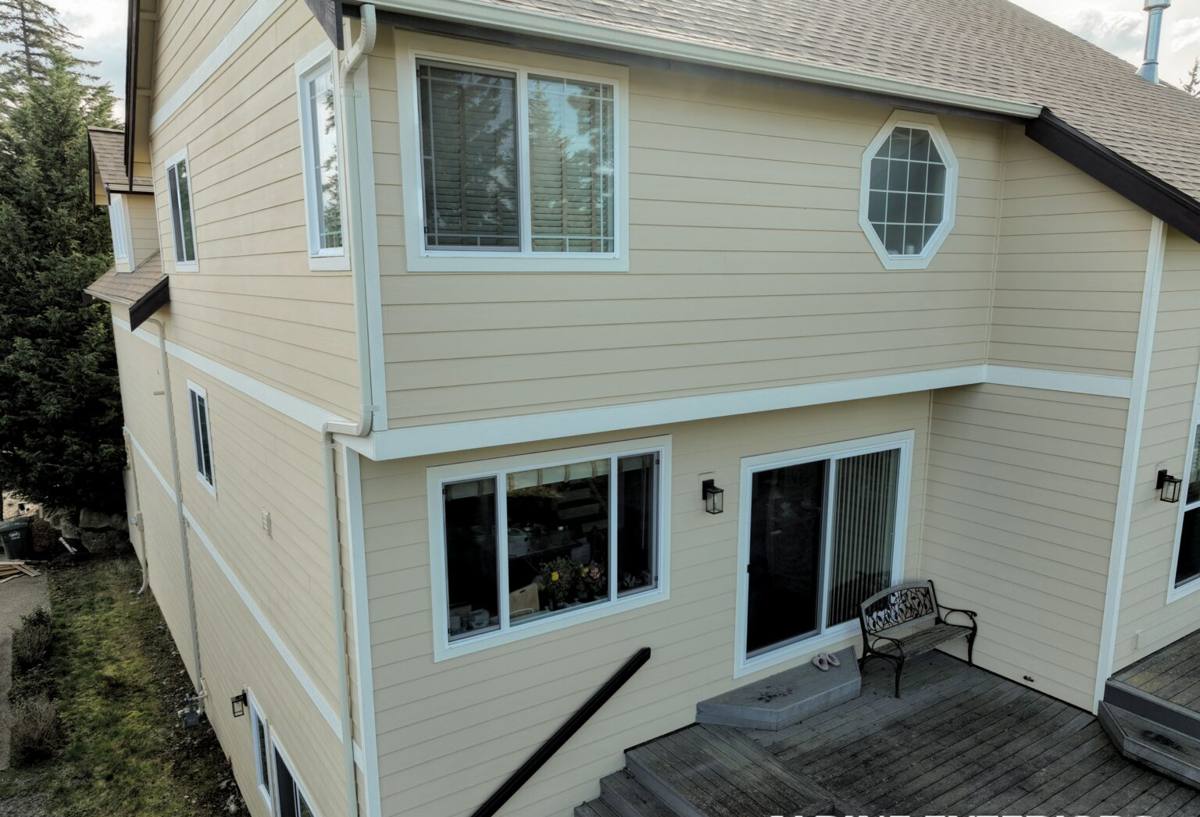
If you own a home in the Columbia area near Chuckanut, you already know your deck doesn't age the way a deck does further inland. Whatcom County's mix of salt-laden air off the water, long stretches of driving rain, and a moss season that can run most of the year works on wood and fasteners in ways that are easy to underestimate. A deck that looks fine from the kitchen window can be hiding soft joists, rusted hardware, or a ledger connection that's slowly failing underneath.
None of that means your deck is doomed — most of what we see is fixable. But it does mean deck repair here has to account for moisture and organic growth as the root cause, not just the visible symptom. Painting over stained boards or swapping a few planks without addressing what's underneath is a short-term fix that lets the real problem keep working.
What Local Conditions Actually Do to a Deck
Salt Air and Metal Fasteners
Proximity to salt air accelerates corrosion in nails, screws, joist hangers, and structural connectors — especially older or lower-grade hardware. Corroded fasteners lose holding strength quietly. You won't see it until a board flexes, squeaks, or a railing feels looser than it should.
Driving Rain and Water Intrusion
Wind-driven rain doesn't just fall on a deck, it gets pushed sideways into seams, ledger connections, and end grain. Any spot where water can enter but can't drain or dry out fast becomes the starting point for rot, whether that's a poorly flashed ledger board, a post base sitting in standing water, or deck boards installed tight with no gap for airflow.
Extended Moss and Algae Season
Shaded or north-facing decks in this region can stay damp for weeks at a time, which is exactly what moss and algae need to establish. Beyond looking bad, moss holds moisture against the wood surface and makes boards dangerously slick — and once it gets a foothold in seams and fastener heads, it accelerates the decay happening underneath.
Signs Your Deck Needs Repair — And What They Usually Mean
- Soft or spongy boards — usually localized rot; often repairable by replacing the affected boards and the framing beneath them.
- Railings that flex or wiggle — commonly loose or corroded fasteners at the post connections, sometimes a rotted post base.
- Dark staining or green film — active moss or algae growth; a signal to check what's happening under the surface, not just clean it off.
- Gaps or separation where the deck meets the house — a ledger board issue, which is one of the most safety-critical repairs on any deck.
- Rust streaks below fastener heads — hardware corrosion in progress, often worse than it looks from above.
- Popped or raised nails — a sign of wood movement from repeated wet-dry cycles.
- Uneven or bouncy footing — potential joist or beam damage that needs structural evaluation, not just a cosmetic fix.
What a Correct Repair Actually Involves
A deck repair done right starts underneath, not on the surface. That means pulling boards where there's any doubt, checking the framing for soft spots, and inspecting the ledger connection — the point where the deck attaches to the house — since that's the single most important structural connection on most decks and the one most often installed or flashed poorly to begin with.
Structural Checks We Don't Skip
- Ledger board attachment and flashing condition
- Joist and beam condition, especially near grade or under low-airflow areas
- Post base condition, particularly posts set in or near soil contact
- Fastener and connector corrosion, not just visible rust but pull-out strength
- Railing post connections, since these carry real load in a fall scenario
- Drainage and airflow underneath the deck structure
Once we know what's actually going on structurally, we scope the repair to match — replacing what's damaged, upgrading fasteners and flashing where the original installation was the real cause of the problem, and leaving sound material alone. We're not going to sell you a full rebuild when a targeted repair will hold up, and we're not going to patch over a structural issue to save a trip back out.
Repair Materials: What We Use and Why
Material choice for a repair should match the existing deck where possible, but it's also a chance to correct a weak point. Here's how the common options compare for repair work in this climate:
| Material | Best for | Maintenance in this climate |
|---|---|---|
| Pressure-treated lumber | Matching existing framing and decking on most homes in the area | Needs periodic sealing to resist moisture and moss; the most common and cost-effective repair material |
| Cedar | Homeowners matching an existing cedar deck's appearance | Naturally moisture-resistant but still needs regular sealing near salt air and shade |
| Composite decking | Surface-level replacement boards where low upkeep matters | Resists rot and moss growth well, but cost and appearance should match the existing deck before mixing materials |
| Stainless or coated structural hardware | Any ledger, post base, or connector replacement | The right call almost everywhere in this climate — standard hardware corrodes faster than the wood around it |
Our standard for structural hardware on repairs is coated or stainless connectors rated for exterior and coastal-influenced exposure, even when the original build used standard fasteners. It costs a little more up front, but replacing corroded hardware twice costs more than doing it right once.
How Our Deck Repair Process Works
- On-site inspection. We walk the full deck, check the ledger, get underneath where we can, and probe any boards or framing that look suspect.
- Honest scope and estimate. You get a clear breakdown of what's damaged, what's causing it, and what the repair involves — no pressure toward a bigger project than the deck needs.
- Demo of damaged material only. We remove what's compromised and confirm the condition of adjacent framing before closing anything up.
- Structural and moisture corrections. This is where we fix the actual cause — reflashing a ledger, upgrading fasteners, correcting drainage — not just replacing boards.
- Rebuild with matched or upgraded material. New boards, railings, or framing installed with proper spacing and airflow to reduce future moisture retention.
- Final walkthrough. We show you what was fixed and why, and flag anything worth watching going forward.
Repair or Replace? What Actually Drives That Decision
| Factor | Leans toward repair | Leans toward replacement |
|---|---|---|
| Extent of rot | Isolated to a few boards or one framing section | Widespread through multiple structural members |
| Ledger condition | Sound, properly flashed once corrected | Deteriorated beyond a clean repair |
| Age of structure | Newer deck with a localized issue | Original construction near or past its practical service life |
| Code compliance | Meets current railing and connection standards | Older railing heights or connections that don't meet current safety standards |
| Your plans for the home | Staying long-term, want to preserve the existing footprint | Wanting a different layout, size, or material overall |
Most of the decks we look at in the Columbia area are repair candidates, not replacement candidates — but we'll tell you honestly when a repair would just be delaying a bigger job.
Keeping a Repaired Deck in Good Shape
A repair only holds up if the maintenance habits that caused the original damage change too. A short seasonal checklist goes a long way in this climate:
- Clear leaves and debris from between boards and along the house-side ledger regularly, especially in fall
- Treat moss and algae early rather than letting it establish through a wet season
- Check fastener heads and railing connections once or twice a year for looseness or rust
- Reseal or restain wood surfaces on the manufacturer's recommended schedule, not just when it looks faded
- Keep gutters and downspouts near the deck clear so runoff isn't draining directly onto it
- Confirm underdeck drainage or skirting isn't trapping standing water against framing
Why It Matters to Hire a Crew That Already Works in Columbia
Deck repair isn't the same job in every climate. A crew used to working in dry conditions elsewhere doesn't automatically know how aggressively moss establishes here, how far driving rain gets pushed under eaves and ledgers near the water, or which hardware actually holds up against salt-influenced air over years, not months. Working regularly in Chuckanut and the surrounding Whatcom County area means we're not guessing at how local conditions affect a repair — we're building every fix around them from the start.
It also means a straightforward conversation about your specific deck, without upselling a repair into a replacement it doesn't need, or the reverse — patching over a structural issue that deserves a real fix.
If your deck has soft spots, loose railings, moss buildup, or you just want a second opinion before a summer of use, we're happy to take a look. Reach out for a free, no-pressure estimate using the form below.