 Chuckanut
 Roof Replacement for Columbia Homes Near Chuckanut
Homes in and around the Columbia area near Chuckanut sit in one of the tougher microclimates in Whatcom County for a roof to survive. You're close enough to the water to get salt-laden air working on your fasteners and flashing, exposed enough to catch driving rain off Chuckanut Bay and the Sound, and shaded enough in spots to grow moss on a roof deck for most of the year. None of that is unusual for this part of Washington. But it does mean a roof replacement here isn't a generic job — the material choices, the underlayment, and the detailing around flashing and ventilation all need to account for what this specific stretch of coastline throws at a house.
This page covers what a correct roof replacement looks like for a Columbia-area home, what tends to go wrong with roofs in this climate, and how we run the job from first look to final walkthrough.
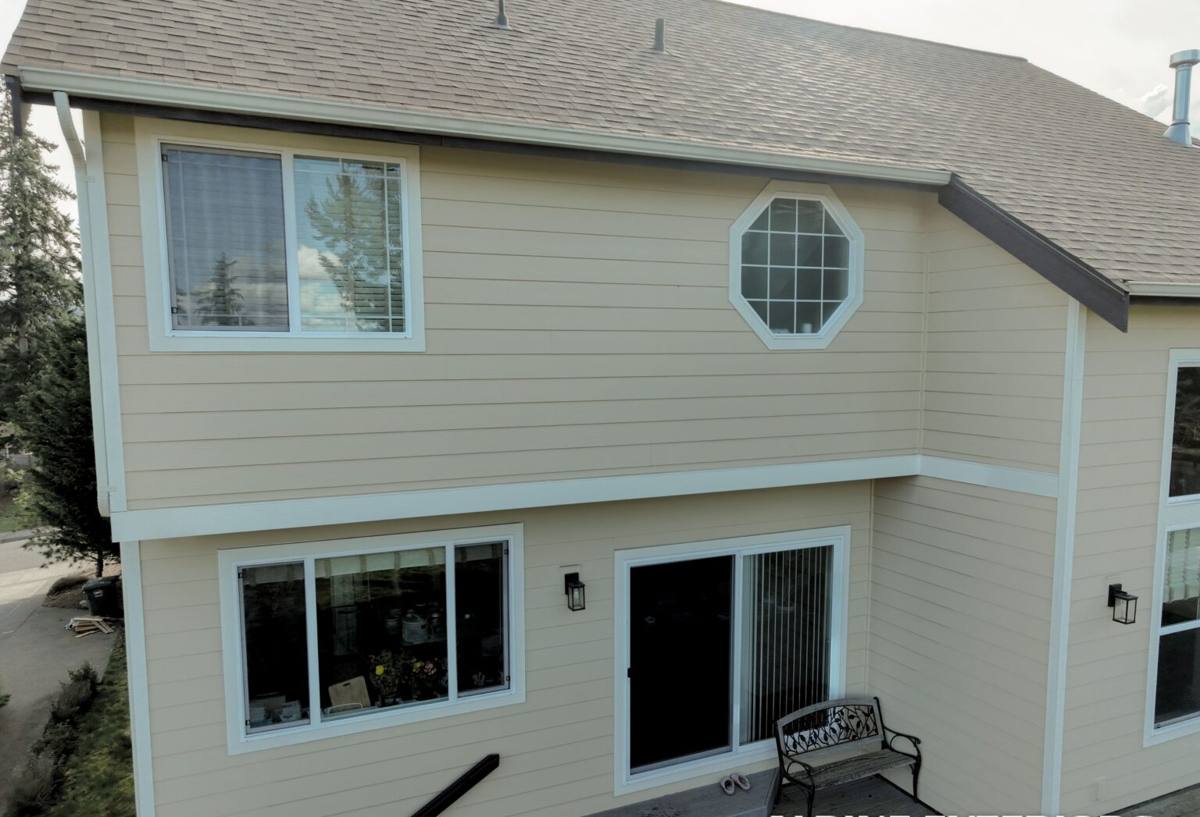
What This Climate Actually Does to a Roof
Salt Air and Metal Fatigue
Proximity to saltwater accelerates corrosion on anything metal — nails, flashing, drip edge, vent boots with metal collars, and gutter hardware. A roofing nail that would last decades inland can start weeping rust streaks in half that time near the bay. This is why fastener and flashing material selection matters more here than it does twenty miles inland.
Driving Rain and Wind-Driven Water
Whatcom County storms often come in sideways off the water, not straight down. That changes how water moves across a roof — it can get pushed uphill under shingle tabs, forced sideways at valleys, and driven under poorly lapped flashing. A roof that would shed water fine in a calm rain can leak in a wind-driven one if the laps and flashing details weren't built for it.
Moss, Shade, and Moisture Retention
Tree cover and the region's long wet season keep roof decks damp for much of the year in shaded sections. Moss holds moisture against the roofing material, works its way under shingle edges, and lifts tabs as it grows — which opens a path for water even before the moss looks like a real problem. North-facing slopes and anything under conifers are the areas we watch closest.
Signs a Columbia-Area Roof Needs Replacing, Not Patching
- Granule loss heavy enough that you're finding grit in gutters every season, not just after a new roof's first year
- Moss or algae staining that comes back within months of cleaning, on more than a small section
- Curling, cupping, or cracked shingles across multiple slopes rather than one isolated area
- Soft spots or sagging when walked, which usually means deck rot, not just surface wear
- Flashing that's rusted through, separated, or was never properly stepped at walls and chimneys
- Daylight visible through the attic deck, or consistent water staining on interior ceilings
- A roof approaching or past the expected service life of its material, especially if it's never been re-flashed
A few of these on their own can sometimes be repaired. Several together, especially combined with age, usually means repair costs start approaching replacement cost without buying you much extra life.
Material Choices That Make Sense for This Location
We don't push one product for every house — the right choice depends on the roof's exposure, slope, tree cover, and your budget. What we won't do is recommend something that looks good on day one but fights this climate every year after. Here's how the common options stack up for a Columbia-area home specifically.
| Material | How it handles salt air | How it handles moss/shade | General cost position |
|---|---|---|---|
| Architectural asphalt shingle | Good with stainless or coated fasteners; standard grade nails can rust faster near the water | Algae-resistant (AR) shingles help; still needs periodic cleaning under trees | Lower to mid |
| Standing seam metal | Excellent when properly coated; avoid dissimilar-metal contact at flashing | Sheds moss buildup much better than shingles due to smooth, steep-shed surface | Higher upfront, long service life |
| Composite/synthetic shingle | Very good — resists corrosion since the material itself isn't metal-dependent | Moisture-resistant core, but still needs debris kept off shaded slopes | Mid to higher |
| Cedar shake | Requires diligent maintenance near salt air; open to debate on longevity here | Highest moss risk of the group without regular treatment and cleaning | Higher, with ongoing upkeep cost |
For most Columbia-area homes we quote architectural shingle with algae-resistant granules and upgraded corrosion-resistant fasteners, or standing seam metal for clients who want to largely stop thinking about moss and salt corrosion for the life of the roof. Both are honest, defensible choices — it comes down to your budget and how much you want to trade upfront cost for long-term low maintenance.
What a Correct Replacement Involves Here
Tear-Off and Deck Inspection
We don't roof over old material. A full tear-off lets us actually see the deck — soft or delaminated sheathing gets replaced before anything new goes down, because covering rot with new shingles just hides a problem that keeps getting worse underneath.
Underlayment Built for Wind-Driven Rain
Given how often rain comes in at an angle here, we use a synthetic underlayment rated for this kind of exposure, with self-adhered ice-and-water membrane at eaves, valleys, and any low-slope transitions — the spots most likely to see water pushed backward under wind pressure.
Flashing Done Right, Not Reused
Flashing around chimneys, walls, skylights, and valleys gets replaced, not caulked over and reused. We step-flash at wall intersections rather than relying on sealant alone, since sealant is the first thing to fail in this salt-air, freeze-thaw combination.
Ventilation That Matches the Home
Attic ventilation gets checked and corrected as part of the job. Poor airflow traps moisture under the deck, which is exactly what accelerates rot and helps moss get a foothold from underneath as well as above.
Corrosion-Resistant Fasteners and Hardware
Given the salt air, we spec fasteners and drip edge material rated for coastal exposure rather than standard-grade hardware. It costs a little more upfront and saves you a rusted, streaking roof edge in five years.
Our Process, Start to Finish
- Free on-site inspection — we walk the roof (or use a lift/drone where a walk isn't safe), check the deck condition where accessible, and look at flashing, ventilation, and gutter tie-ins.
- Written estimate — a clear scope and price, material options explained honestly including trade-offs, no pressure to decide on the spot.
- Scheduling around the weather — we plan tear-off days around forecasts, since an open deck in a surprise squall is a problem we plan to avoid, not manage after the fact.
- Tear-off and deck repair — full removal, deck inspected and repaired as needed before anything new is installed.
- Underlayment, flashing, and roofing installation — installed to the manufacturer's spec, with the coastal-specific details above built in as standard, not upcharged extras.
- Cleanup and magnetic sweep — job site cleared of debris and nails before we consider the job done.
- Final walkthrough — we go over the finished roof with you, explain what was done, and answer questions before we call it complete.
Why a Local Crew Matters for This Job
A roofing crew that regularly works the Chuckanut and Whatcom County coastline already knows which slopes hold moss longest, which fastener grades actually hold up near the water, and how local wind patterns tend to drive rain into valleys and walls. That's not something you get from a crew that mostly works inland and treats every roof the same. It also means we're a known, reachable local business if a question comes up after the job — not a name that only shows up for the sale.
Maintenance That Extends the Life of a New Roof
- Have gutters cleared at least twice a year — more often under heavy tree cover — so water isn't backing up under the eave edge
- Get moss growth addressed early, before it lifts shingle tabs, rather than waiting until it's visibly thick
- Trim back overhanging branches to cut down on shade, debris, and physical abrasion on the roofing surface
- Have flashing and fastener points checked every couple of years given the accelerated corrosion risk this close to saltwater
- After any major windstorm, do a visual check for lifted or missing shingles rather than waiting for a leak to show up inside
Cost Factors to Expect
We won't quote a number without seeing the roof, but the main variables that move price on a Columbia-area replacement are roof size and pitch, how much deck repair is needed once the old material comes off, material choice (asphalt versus metal versus composite), the complexity of valleys, chimneys, and skylights, and access — steep sites or limited equipment access can add labor time. Any estimate we give breaks these out so you can see what you're actually paying for, not just a lump total.
If your roof is showing wear, or you just want an honest read on how much life it has left, we're happy to take a look. The estimate is free, there's no pressure to commit, and you'll get a straight answer about whether you need a full replacement or something less. Use the form below to get started.