 Chuckanut
 Composite Decking Built for Alger's Weather, Not Just Its View
Alger sits close enough to the water that salt air, wind-driven rain, and a long stretch of overcast, moss-friendly weather are just part of owning a home here. A deck in this pocket of Whatcom County works harder than a deck fifty miles inland. It gets rained on more months of the year than it doesn't, it dries slower under tree cover, and anything metal on it is exposed to a slow, steady dose of salt in the air coming off the water. Composite decking has become the default choice for homeowners here for good reason — it doesn't rot, it doesn't need refinishing, and it holds up to the freeze-thaw cycles and constant damp better than wood ever will. But "composite decking" covers a wide range of products and installation quality, and what works on a dry deck in a different climate can fail here if it's not built for these specific conditions.
This page is about composite decking installed correctly for an Alger property — what the climate demands, what a proper build looks like, and why local installation experience matters more than most homeowners expect going in.
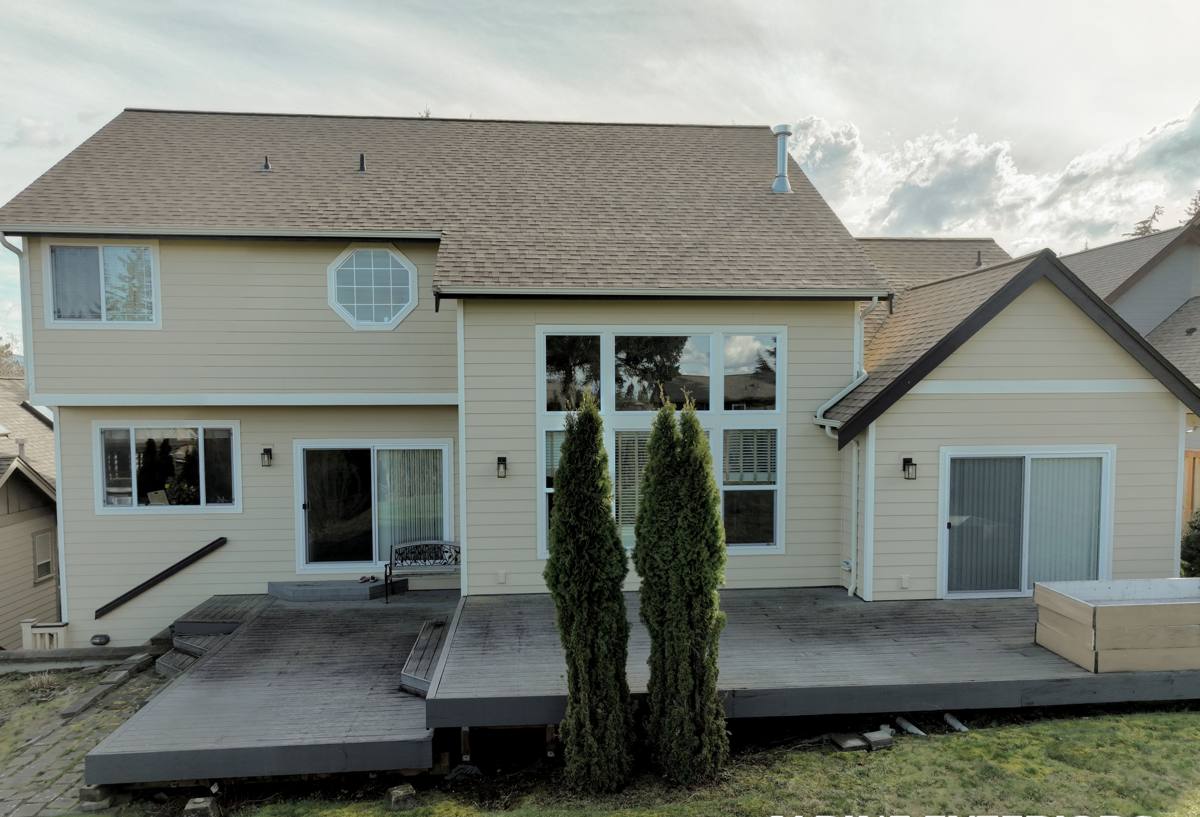
What Alger's Climate Actually Does to a Deck
Salt Air and Metal Fasteners
Alger's proximity to the water means airborne salt settles on everything outdoors, including deck hardware. Standard fasteners and connectors corrode faster here than they would in a dry inland town. Over a few years, corroding screws and joist hangers can telegraph rust stains through composite boards and weaken structural connections long before the decking itself shows any wear.
Driving Rain and Moisture Intrusion
Wind-driven rain doesn't just fall on a deck surface — it gets pushed sideways into board gaps, ledger connections, and anywhere the structure isn't properly flashed. Composite boards themselves resist water, but the framing underneath, the ledger board where the deck meets the house, and any fastener penetrations are still vulnerable if they're not detailed correctly.
Moss, Algae, and Shade
Whatcom County's long moss season is a fact of life, and Alger's tree cover and marine humidity make deck surfaces prime real estate for moss and algae growth, especially on the shaded side of a house or under overhangs. Moss isn't just cosmetic — it holds moisture against the board surface and creates a slick, slip-hazard film, and on the wrong product it can work into surface texture and become difficult to fully remove.
Why Composite Makes Sense Here — With the Right Product
Composite decking's core advantage in a climate like Alger's is simple: it doesn't absorb water the way wood does, it doesn't need annual staining or sealing, and it resists rot and insect damage that wet wood decks are prone to in this region. But not every composite product handles moss and moisture the same way. We favor capped composite boards with a fully wrapped polymer shell over the wood-plastic core, because the cap is what actually resists moisture absorption and staining — an uncapped or lightly capped board can still wick water at cut ends and develop the kind of surface texture that moss and algae grip onto.
We also pay attention to how a board's surface texture performs wet. A deeply grained or highly textured board can look great dry but hold water and grow slick with algae film faster in a shaded, damp yard. For decks with significant shade or tree cover — common in Alger — we'll often recommend a smoother-finish board specifically because it sheds water and cleans up easier than a heavily embossed one.
| Factor | What It Means for an Alger Deck |
|---|---|
| Board core type | Capped composite resists moisture wicking at cut ends; uncapped boards are more prone to swelling and staining in a wet climate |
| Surface texture | Smoother finishes shed water and resist moss/algae buildup better in shaded, humid spots |
| Fastener hardware | Stainless or coated marine-grade fasteners resist salt-air corrosion far longer than standard galvanized hardware |
| Substructure material | Pressure-treated framing needs proper flashing; composite or steel framing components add corrosion resistance at added cost |
| Board color | Darker boards show less water spotting but run hotter in direct sun; lighter boards hide dust/pollen better under tree cover |
| Ventilation under deck | Low clearance or enclosed skirting slows drying and increases moss/mildew risk in a damp climate like this one |
What a Correct Composite Deck Build Involves
Substructure First
The composite boards are the part everyone sees, but the framing underneath determines how long the deck actually lasts. In a climate with this much sustained moisture, we treat the substructure as seriously as the decking itself — proper joist spacing for the specific composite product being used (composite often requires tighter spacing than wood), correct ledger flashing where the deck attaches to the house, and drainage planning so water doesn't pool against framing members.
Fastening System
Hidden fastener clip systems are standard on most composite installs now, and they matter more here than in a dry climate — fewer surface penetrations means fewer points where water and salt can work into the board core over time. Where face fasteners are unavoidable, we use corrosion-resistant hardware rated for coastal exposure.
Gapping and Expansion
Composite boards expand and contract with temperature and moisture swings. Getting board gapping right for this specific climate — accounting for both summer heat and the sustained damp of a Whatcom County winter — prevents boards from buckling or leaving gaps too wide for comfort and appearance.
Edge and End Treatment
Cut ends on composite boards are the most vulnerable point for moisture intrusion if they're not capped or finished correctly. We treat every cut end deliberately rather than leaving raw edges exposed at stair treads, picture-frame borders, or against fascia.
Our Process for an Alger Composite Deck
- On-site assessment — we look at sun exposure, tree cover, existing drainage, and how close the deck is to salt air exposure to inform product and hardware recommendations.
- Product selection — we walk through board options with actual samples, focusing on which cap type and texture fit the specific shade/moisture conditions of the site.
- Substructure evaluation or rebuild — if replacing an existing deck, we inspect what's salvageable versus what needs to come out; deteriorated framing doesn't get decking installed over it.
- Installation — proper spacing, flashing, hidden fastening, and finished edge details built for this climate, not a generic install.
- Walkthrough — a final review of the finished deck and basic maintenance guidance specific to the site's shade and moisture conditions.
Maintenance Reality for a Damp, Shaded Property
Composite decking is low-maintenance compared to wood, but "low-maintenance" doesn't mean "no maintenance" in a climate like this one. A periodic rinse and soft-bristle brush, especially in shaded areas prone to moss, keeps most composite surfaces looking and performing as they should. What it doesn't need is annual staining, sealing, or sanding — the time savings compared to a wood deck are real, particularly for a homeowner who doesn't want a yearly outdoor project.
- Rinse the deck surface periodically, more often in shaded or tree-covered areas prone to moss
- Sweep away leaf litter and debris promptly — trapped organic material holds moisture against the board
- Check under-deck ventilation isn't blocked by dense landscaping or enclosed skirting
- Inspect visible fasteners and hardware periodically for early signs of corrosion
- Avoid pressure-washing at close range or high pressure, which can damage the board's protective cap
- Address slick, mossy spots promptly rather than letting buildup become a slip hazard
Why a Local Crew Matters for This Job
Composite decking installation isn't complicated in theory, but getting it right in a climate like Chuckanut's takes more than following a manufacturer's generic install sheet. A crew that already works Alger and the surrounding Chuckanut area knows which sides of a lot tend to hold moisture longest, how much clearance a deck actually needs for adequate airflow in this kind of humidity, and which hardware choices hold up honestly to years of salt air rather than just looking fine on day one. That's the difference between a deck that still looks and performs like new in ten years and one that needs early repairs because it was built to a spec written for a drier region.
We also know the practical side of building here — permitting expectations in Whatcom County, working around the region's wetter build season, and sequencing a project so it isn't stalled out by weather. That local familiarity shows up in fewer surprises during the project and a deck that's actually suited to the site it's built on.
Get a Straightforward Estimate
If you're weighing composite decking for a property in Alger or elsewhere around Chuckanut, we're happy to take a look at the site, talk through product options that fit your specific sun and moisture conditions, and give you an honest estimate — no pressure, no generic sales pitch. Use the form below to get started.