 Chuckanut
 Bellingham's Climate Is Harder on Siding Than It Looks
Bellingham sits close enough to the water that salt-laden air is a daily fact of life for a lot of homes, especially anything with a westerly exposure toward Bellingham Bay or the Chuckanut hillside. Add in Whatcom County's long wet season — months of driving rain pushed sideways by wind off the Sound — and you have a climate that quietly tests every seam, joint, and coating on a house's exterior. Then comes moss season, which in this part of Washington isn't really a season so much as a standing condition. North-facing walls, shaded lots under the fir and cedar canopy common around Chuckanut, and anything near mature landscaping stay damp for weeks at a stretch.
None of that is dramatic on its own. What it does is compound. Siding that's marginal on installation quality, or made from a material that's sensitive to moisture, doesn't fail all at once — it fails slowly, in the corners and edges you don't look at until there's a problem. A siding replacement in Bellingham has to be evaluated against that reality, not against how the product performs in a showroom or in a drier climate.
What "Correct" Looks Like for a Bellingham Siding Replacement
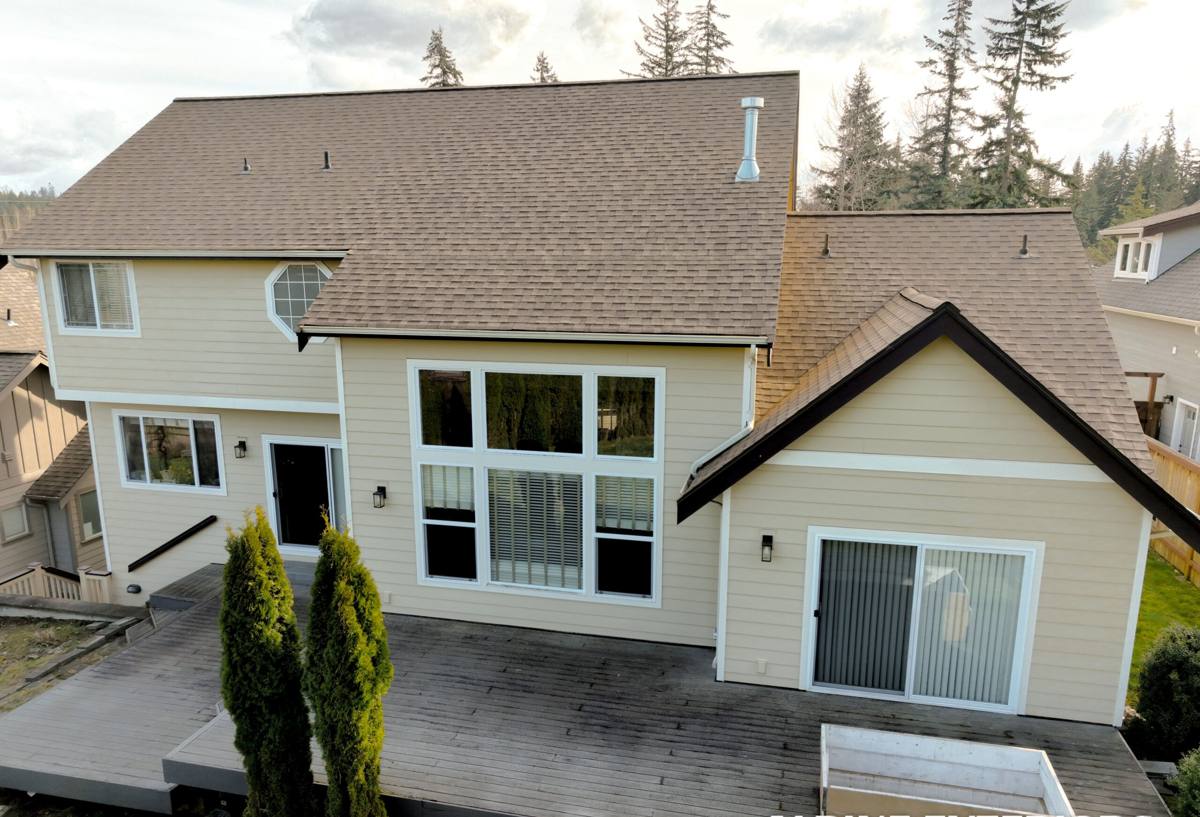
A siding replacement isn't just swapping old panels for new ones. Done right, it resets the entire water-management system on the exterior of the house. That matters more here than in most parts of the country, because Whatcom County's rain volume and duration give water more chances to find a way in.
The Parts Homeowners Don't See
- Removal down to the sheathing so the crew can actually inspect for rot, soft spots, or old moisture damage before covering it back up
- A correctly lapped weather-resistive barrier (house wrap) with all seams and penetrations sealed
- Rain-screen or drainage gap detailing where the wall assembly calls for it, so bulk water has somewhere to go
- Properly flashed windows, doors, and any horizontal trim or transitions, since these are the spots most likely to leak first
- Correct fastening pattern and clearances at the bottom of the wall, away from grade and hardscape, to reduce splash-back and prolonged dampness
Skip any one of these and the new siding can look perfect for years while the wall behind it is quietly taking on water. This is the part of a siding job that's easy to shortcut and hard for a homeowner to verify after the fact — which is why who you hire matters as much as what material you choose.
Why We Install James Hardie and Nothing Else
We standardized on James Hardie fiber cement for every siding replacement we do, including in Bellingham and the surrounding Chuckanut area, and we don't install vinyl, LP SmartSide, or other fiber cement brands. That's a deliberate call, not a sales position, and it's worth explaining honestly.
What Fiber Cement Gets Right for This Climate
James Hardie siding is non-combustible and dimensionally stable, meaning it doesn't expand, contract, warp, or absorb water the way wood-based or wood-fiber products can. In a climate with sustained wet weather and heavy moss growth, that stability matters. It also holds paint and factory finish far better over time than wood-based composites, which reduces the recoating and maintenance cycle homeowners here would otherwise be locked into.
Where Other Products Fall Short in Our Experience
| Product | Where it's reasonable | Why we don't install it here |
|---|---|---|
| Vinyl siding | Low upfront cost, low maintenance in dry climates | Can warp or distort with temperature swings and doesn't hold up as well to long-term UV and moisture cycling; seams and profile design also make it more visually generic |
| LP SmartSide / wood-composite | Good appearance, easier to install in some conditions | Wood-fiber core is more sensitive to sustained moisture exposure — a real concern given Whatcom County's rain totals and moss-prone shaded lots |
| Cedar / primed spruce | Natural look, long regional tradition | High ongoing maintenance burden — repainting, caulking, and moisture monitoring — that most homeowners underestimate until they're a few years in |
| Other fiber cement brands | Similar base material properties | We standardized on one system (installation training, flashing details, factory finish, warranty) rather than splitting our crews across multiple product lines |
This isn't a claim that these products are junk — plenty of houses around the region have them and get reasonable service life. It's that we'd rather stand behind one system we know inside and out, install to the same spec every time, and give homeowners a straight answer about what to expect, rather than juggling several products with different failure modes.
The James Hardie Line We Use for Marine-Influenced Climates
Hardie's HZ5 product line is engineered specifically for climates with more moisture cycling and freeze-thaw variation — which fits western Washington better than their standard formulation built for hotter, drier regions. Paired with the factory-applied ColorPlus finish, you get a coating that's cured and baked on before it ever reaches the jobsite, which holds color and resists the kind of premature fading and peeling that field-applied paint is prone to under Bellingham's UV and moisture conditions.
Salt Air, Rain, and Moss: What Each One Actually Does to Siding
It helps to separate out the three climate factors, because they attack a house differently.
Salt Air
Airborne salt accelerates corrosion on any exposed metal fasteners, flashing, or trim components, and it can degrade lower-quality coatings faster than inland exposure would. This is mostly a concern for homes with direct water exposure or consistent onshore wind, which describes a fair number of properties around Bellingham Bay and the lower Chuckanut area.
Driving Rain
Wind-driven rain doesn't just fall on a wall — it gets pushed sideways into every horizontal joint, window head, and butt seam. This is why flashing detail and rain-screen drainage matter more here than in calmer, drier climates. A siding product that's stable and a wall assembly that's properly drained work together; one without the other still leaves the house vulnerable.
Moss Season
Extended dampness on shaded, north-facing, or tree-covered walls creates ideal conditions for moss and algae growth. Beyond the cosmetic issue, sustained organic growth holds moisture against the siding surface for longer periods, which is exactly the condition that punishes moisture-sensitive materials. A stable, factory-finished fiber cement product handles this far better than a product that can absorb or wick water at the surface.
Our Process for a Bellingham Siding Replacement
- Walk-through and assessment — we look at exposure, existing siding condition, drainage around the foundation, and any signs of prior moisture intrusion before quoting anything
- Tear-off and sheathing inspection — old siding comes off and we check the wall assembly underneath for rot or damage before anything new goes up
- Water management reset — house wrap, flashing, and drainage detailing are installed or corrected to current best practice, not just patched over
- James Hardie installation to manufacturer spec — correct fastening, clearances, and joint treatment, using the HZ5 product line suited to this region
- Final inspection and cleanup — a walk-through with the homeowner before we consider the job done
Cost Factors for Bellingham Homes
Every house is different, but a few factors consistently move the price on a siding replacement in this area more than others do.
| Factor | Why it matters here |
|---|---|
| Existing wall condition | Rot or moisture damage found during tear-off adds sheathing repair before new siding can go on |
| Home size and complexity | More corners, gables, and trim transitions mean more flashing detail and labor time |
| Access and site conditions | Sloped Chuckanut-area lots, tree cover, and limited staging space can affect scaffolding and material handling |
| Trim and accent choices | Hardie trim boards, shakes, or accent panels add material and installation time beyond field siding |
| Story count | Two-story walls require more scaffolding or lift work than single-story sections |
We'll walk through these specifics on-site rather than guessing from a phone call, since a wall that looks fine from the ground can hide problems that only show up once the old siding comes off.
Why a Crew That Already Works Bellingham Matters
Installation quality is what actually determines how a siding job performs over ten or twenty years, more than the product itself. A crew that regularly works Bellingham and the Chuckanut area already knows which exposures need extra flashing attention, how local moss and moisture patterns behave on shaded lots, and what wind-driven rain actually does to a poorly detailed joint in this specific climate. That's the kind of judgment that doesn't come from a spec sheet — it comes from having done the work here before, seen what holds up, and adjusted accordingly.
It also means someone local is accountable after the job is done. If a question comes up two years down the road, you're not chasing a crew that worked the area once and moved on.
Signs Your Bellingham Home May Need Siding Replacement
- Persistent moss or algae staining that returns quickly after cleaning
- Soft spots, warping, or visible separation at seams and corners
- Paint that's peeling, bubbling, or chalking faster than expected
- Water stains or discoloration on interior walls near exterior corners
- Siding that's more than 20-25 years old, especially wood-based products in shaded or damp-exposure areas
If you're weighing a siding replacement for a home in Bellingham or the broader Chuckanut area, we're happy to take a look and give you a straight, no-pressure assessment of what your walls actually need. Use the form below to request a free estimate.