 Chuckanut
 Roofing in Larrabee Comes With Its Own Set of Problems
Homes along the Chuckanut Drive corridor and the Larrabee area sit in a spot where three things collide: salt-laden air off the water, some of the wettest, longest-lasting rain in Whatcom County, and tree cover dense enough to keep roofs shaded and damp for most of the year. Any one of those is manageable on its own. Together, they shorten the working life of a roof and speed up problems that a drier, more open site wouldn't see for years.
We don't treat Larrabee like a generic Whatcom County address. A roof repair here has to account for salt exposure on fasteners and flashing, moss and moisture buildup under heavy canopy, and the fact that a lot of homes in this area have steep, wooded lots where access and drainage both take extra planning. This page is about what that actually means for a repair job done right.
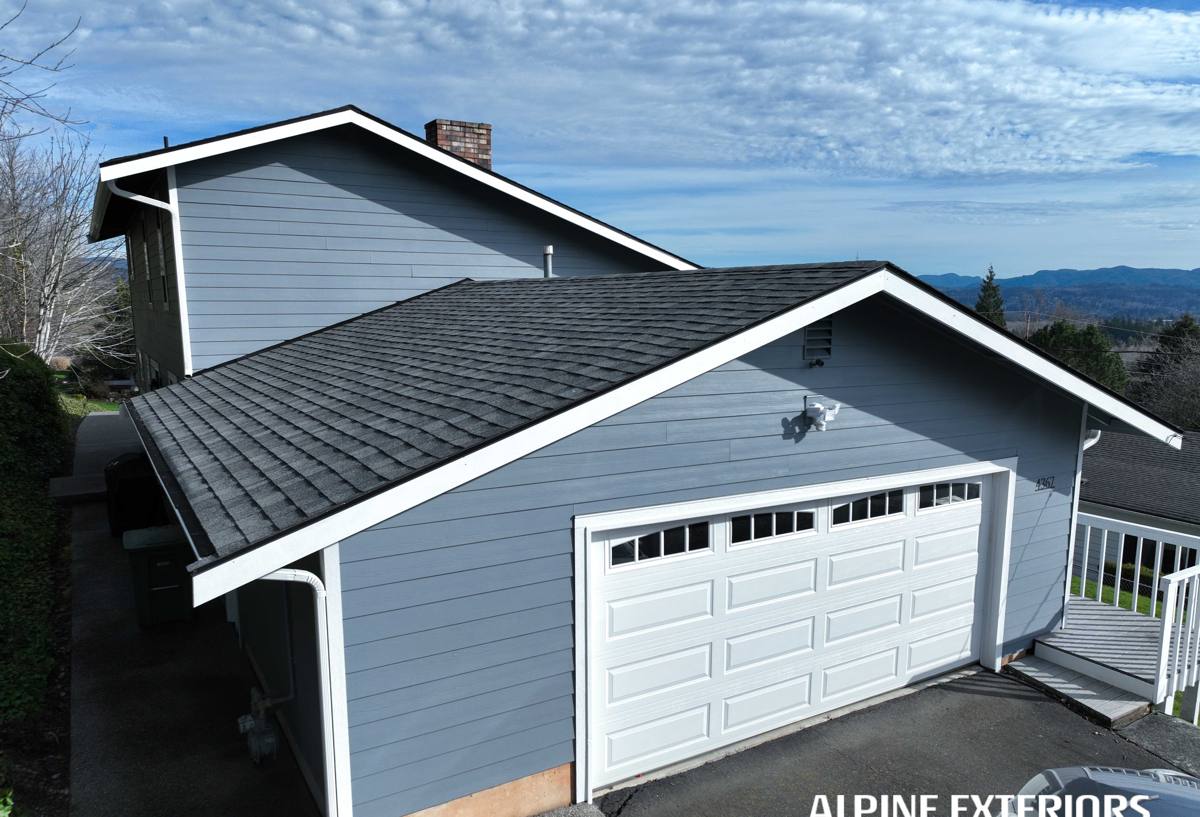
What the Local Climate Does to a Roof
Salt Air
Proximity to Chuckanut Bay and Samish Bay means airborne salt settles on roofing material year-round, not just during storms. Salt accelerates corrosion on exposed metal — nail heads, flashing edges, gutter fasteners, and any older galvanized components. Once corrosion starts at a fastener, it creates a small path for water to follow, which is how a pinhole leak often gets its start.
Driving Rain
Whatcom County gets a lot of rain, but it's the wind-driven rain off the water that causes the most repair calls in this area. Horizontal rain finds its way under lifted shingle tabs, around loose flashing, and into any gap that a calmer rain would never reach. It's also why proper flashing detail at valleys, chimneys, and wall intersections matters more here than in a drier climate — those are the spots that fail first under driving rain.
Moss Season
The moss season in this area runs long — shaded, tree-covered lots stay damp well after the rain stops, which is exactly what moss needs to take hold. Moss does more than look bad. It holds moisture against the roofing material, lifts shingle edges as it grows, and works its way into seams over time. Left unchecked for a season or two, moss growth turns a simple repair into a full section replacement.
Signs a Larrabee Roof Needs Repair, Not Just a Cleaning
- Granules collecting in gutters or at downspout outlets — a sign the shingle surface is wearing thin
- Dark streaking or thick moss mats concentrated on the shaded, north-facing slopes
- Soft spots or slight sagging in the decking when walked (only assessed by a roofer, never a homeowner on the roof)
- Rust staining below metal flashing or fasteners, especially near the water-facing side of the house
- Water stains on interior ceilings that appear or worsen during wind-driven storms specifically
- Lifted or curling shingle tabs along ridges and edges where wind pressure is highest
- Daylight visible through the roof deck from inside an attic space
Any one of these on its own might just need monitoring. Two or more together usually means active water intrusion, and that's a repair-now situation rather than a wait-and-see one.
What a Correct Repair Actually Involves
A roof repair that holds up in this environment isn't just patching the spot that's visibly leaking. Water rarely enters where it shows up inside — it travels along the deck or underlayment before it drips somewhere visible. A proper repair traces the path back to the actual entry point, not just the stain.
Our Process
- Inspection from the roof, not just the ground. We check the suspect area and everything around it — flashing, penetrations, valleys, and the general condition of the surrounding roofing — because an isolated leak often has a related issue nearby.
- Identify the real cause. Failed flashing, a cracked pipe boot, wind-lifted shingles, or moss holding water against the surface all look similar from inside the house but need different fixes.
- Address moisture already in the deck. If water has been getting in for a while, the decking underneath may be softened or delaminating. Patching over compromised decking doesn't hold — that section gets replaced.
- Repair with materials matched to the salt-air environment. That means corrosion-resistant fasteners and flashing detail built for a coastal-adjacent climate, not standard inland-grade hardware.
- Reseal and re-flash properly at transitions. Valleys, chimneys, and wall intersections are where driving rain causes the most repeat failures, so these get extra attention rather than a quick caulk-and-go fix.
- Clear moss and address drainage before we leave. A repair done next to an active moss mat or a clogged gutter run is a repair that fails again within a season or two.
Repair vs. Replacement: How We Help You Decide
Not every roof with a leak needs a full replacement, and not every roof that looks rough is actually failing. We walk homeowners through the honest version of this decision rather than defaulting to the bigger job.
| Factor | Leans Toward Repair | Leans Toward Replacement |
|---|---|---|
| Age of roofing material | Well within expected lifespan | At or past the end of its expected service life |
| Extent of the problem | Isolated to one section, flashing point, or penetration | Multiple failure points across different roof planes |
| Decking condition | Solid, dry decking under the affected area | Soft, delaminated, or repeatedly wet decking |
| Moss/algae history | Manageable with cleaning and minor repair | Long-term growth that's already lifted or degraded shingles |
| Salt/corrosion exposure | Fasteners and flashing still sound | Widespread rust or corrosion on metal components |
We'll always tell you honestly which side of that table your roof falls on. If a repair is the right call, we don't push a replacement — and if a repair would just be a short-term patch on a roof that's genuinely done, we say that too.
Materials and Detailing Choices for This Climate
Some material and detail choices matter more in Larrabee than they would somewhere drier and more open. We favor corrosion-resistant flashing and fastener hardware given the salt exposure off the bay, and we pay close attention to underlayment quality — a roof here spends more of the year wet than dry, so the underlayment is doing real work, not just serving as a backup.
We also think about ventilation and moisture management as part of a repair, not just the visible roofing surface. A roof deck that can't dry out between rain events, especially on shaded, tree-covered lots, holds onto moisture longer and creates the exact conditions moss and rot need. Improving airflow at the same time as a repair is often what keeps the fix from needing to be redone in a year or two.
Access and Site Considerations in Larrabee
A lot of properties in this area sit on steep, wooded lots with tree cover close to the roofline. That affects how a repair gets staged — equipment placement, fall protection setup, and debris cleanup all take more planning on a site like this than on a flat, open lot. It also means overhanging branches and needle or leaf debris in valleys and gutters are a recurring maintenance issue worth flagging during any repair visit, since debris buildup traps moisture the same way moss does.
Why Local Experience on This Specific Stretch Matters
A roofing crew that only occasionally works this side of Whatcom County will treat a Larrabee repair the same way they'd treat one twenty miles inland — same materials, same detailing, same assumptions about how fast moss comes back. That's how repairs end up getting redone sooner than they should.
Working this area regularly means knowing which slopes on a typical Larrabee roof take the worst of the driving rain, how aggressively moss returns on shaded lots near the water versus more open ones, and which hardware actually holds up against salt air instead of just meeting a general spec sheet. That's the difference between a repair that's still solid in five years and one that's back on the schedule next winter.
Maintenance Between Repairs
- Clear moss and debris from valleys and gutters at least once a year, more often under heavy tree cover
- Have flashing and fasteners checked periodically for early corrosion, especially on the side of the house facing the water
- Keep gutters and downspouts flowing freely — standing water backs up under shingle edges
- Trim back branches that overhang the roofline to reduce debris buildup and shade-driven moisture retention
- After any major windstorm, do a visual check (or have one done) for lifted or missing shingles before the next rain arrives
If you're noticing signs of a leak, heavy moss, or general wear on a roof in the Larrabee area, we're happy to come take a look and give you an honest read on what it actually needs. Reach out for a free, no-pressure estimate using the form below.