 Chuckanut
 Building a Deck That Actually Holds Up in Edison
Edison sits close to the water, wrapped in farmland and tree cover along the Chuckanut corridor, and that setting is exactly what makes a deck here different from a deck built forty miles inland. Salt-laden air off the bay, long stretches of driving rain, and a moss season that can run most of the year all work against wood, fasteners, and finishes at the same time. A deck that would hold up fine in a dry inland climate can show corrosion, soft spots, and slick green growth within a couple of seasons out here if it wasn't built with this environment in mind.
This page is about one thing: custom deck construction for Edison homes, and what it actually takes to get a deck that stays solid, safe, and good-looking for the long haul in this specific stretch of Whatcom County.
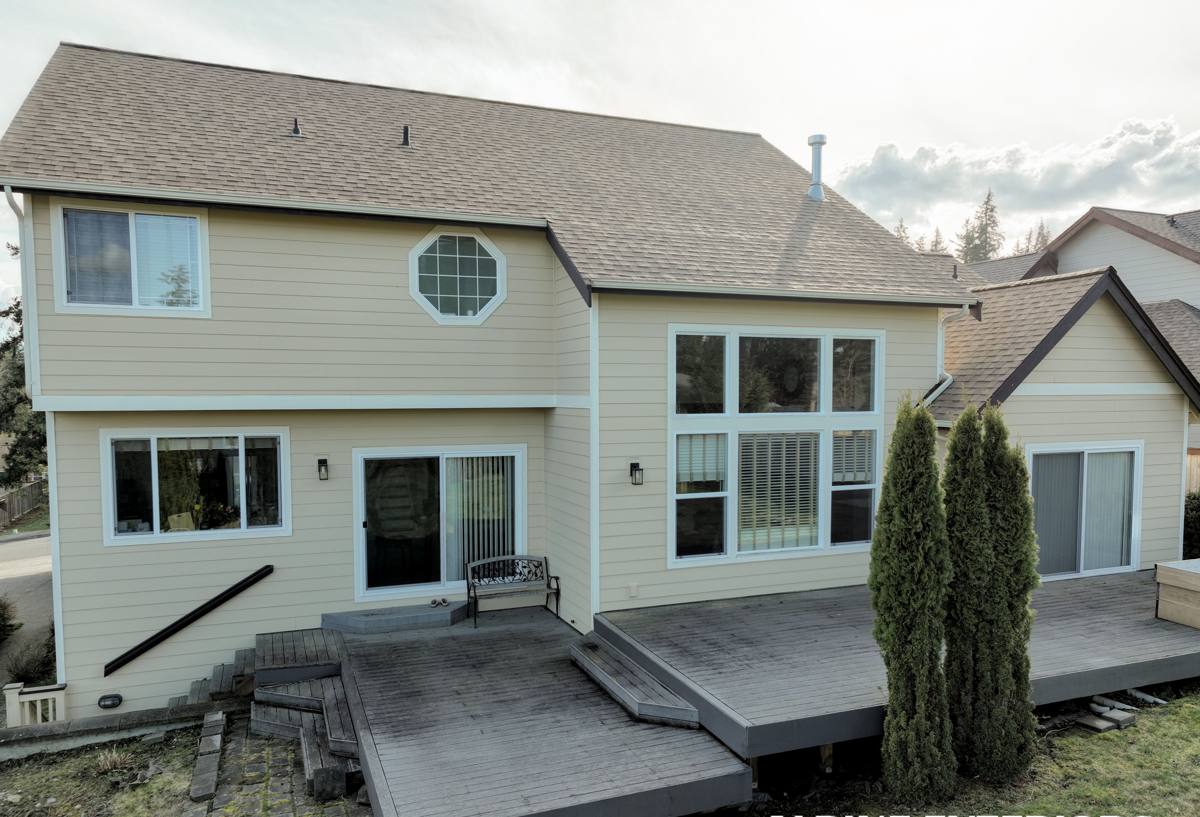
What Salt Air, Rain, and Moss Actually Do to a Deck
These three factors don't act alone — they compound each other, and understanding how helps explain why some deck-building shortcuts fail here faster than they would elsewhere.
Salt Air
Airborne salt accelerates corrosion on any exposed metal — screw heads, joist hangers, bolts, railing hardware. Once a fastener starts rusting, it weakens at exactly the point holding your deck together, and rust stains bleed into the surrounding wood or composite, leaving dark streaks that don't clean off.
Driving Rain
Rain that comes in sideways off the water doesn't just fall on a deck's surface — it drives into every horizontal-to-vertical joint: where the deck meets the house, where posts meet footings, where boards meet fascia. Water that gets behind flashing or trapped under a ledger board is the single biggest cause of hidden rot in decks throughout this region.
Moss and Algae
Shade, moisture, and mild temperatures are ideal growing conditions for moss and algae. Beyond looking bad, a mossy deck surface is genuinely dangerous — it holds water against the wood and turns into a slip hazard, especially on stairs and near entry points.
Choosing Decking Material for This Environment
There's no single "best" decking material for every Edison property — the right choice depends on how much shade the site gets, how close you are to open water, and how much upkeep you want to do. Here's how the common options stack up under local conditions.
| Material | Salt Air Behavior | Moss Resistance | Maintenance |
|---|---|---|---|
| Pressure-treated wood | Good if fasteners are correctly rated; wood itself resists rot when treated | Needs regular cleaning and periodic sealing to stay ahead of growth | Highest — annual cleaning, re-sealing every 2-3 years |
| Cedar | Naturally rot-resistant, but surface grays and softens faster in salt air without upkeep | Moderate — natural oils help some, still needs cleaning in shaded spots | Moderate to high — periodic oiling or staining |
| Composite decking | Excellent — doesn't corrode or absorb salt | Better than wood, but still needs washing where shaded; texture can trap grime | Low — occasional washing, no sealing or staining |
| PVC decking | Excellent — fully synthetic, no rot or corrosion risk to the board itself | Best of the group — smooth, non-porous surface | Lowest — soap and water as needed |
Fasteners and structural hardware matter as much as the decking surface itself — see the next section — regardless of which board material you choose.
The Fasteners and Framing Most People Never Think About
The decking surface is what you see; the framing underneath is what determines whether the deck is still safe in fifteen years. In a salt-air environment, this is where corners get cut most often and where it matters most.
- Stainless steel or high-grade coated fasteners rated for coastal/salt exposure, not generic exterior-grade screws
- Hot-dip galvanized or stainless joist hangers and structural connectors, not standard mill-galvanized hardware
- Properly rated ledger bolts, since the ledger connection carries a large share of the deck's load and sees constant water exposure
- Post bases that hold wood posts off the concrete footing, so water doesn't wick up into the post end grain
Mixing metal types — for example, standard hardware with stainless fasteners, or vice versa — can actually accelerate corrosion through galvanic reaction. Every metal component on the deck should be matched and rated for the exposure it's actually going to see.
Drainage and Flashing Details That Prevent Hidden Rot
Most deck failures we're called out to inspect started with water that had nowhere to go. Getting this right is less about the visible construction and more about a handful of details done correctly the first time.
Ledger Flashing
Where the deck attaches to the house, proper flashing — installed in the correct layered order with the house's existing weather barrier — keeps driving rain from working its way behind the siding and into the wall framing. This is one of the most common failure points on older decks in wet climates.
Board Spacing and Airflow
Decking boards need consistent gaps for water to drain through and air to circulate underneath. Tight or inconsistent spacing traps moisture against the board edges, which is exactly where rot and moss growth start first.
Footing Drainage
Footings and post bases need to shed water rather than sit in it. On low-lying or poorly draining lots — common in the farmland around Edison — this can mean adjusting footing depth or grading around the post locations.
Slope
The deck surface should have a very slight slope away from the house, just enough to move standing water off the boards instead of letting it pool.
Living With Moss Season: What a Well-Built Deck Still Needs
Even a correctly built deck in Edison will see moss and algae pressure, especially on the shaded or north-facing side of a house. Good construction reduces the problem; it doesn't eliminate the need for some seasonal upkeep.
- Sweep debris off the deck regularly — wet leaves and needles feed moss growth and hold moisture against the surface
- Clean the deck surface at least once a year with a deck-safe cleaner, more often in heavily shaded areas
- Keep gutters and downspouts clear so overflow isn't dumping extra water onto the deck
- Trim back overhanging branches where practical to let more light and air reach the surface
- Re-seal or re-stain wood decking on the schedule appropriate to the product — don't wait until it's visibly failing
Design Considerations for Edison Properties
Lots in and around Edison vary — some sit close to open water and get full salt-air exposure, others are tucked back among trees on farmland with heavier shade and more moss pressure, and drainage conditions differ from one property to the next. A deck design that ignores these differences ends up either over-built and expensive where it didn't need to be, or under-built where it needed more protection. Part of doing this right is walking the actual site, noting sun exposure, prevailing wind and rain direction, and drainage before recommending a material and structural approach — not applying the same template to every job.
Our Process, Start to Finish
- Site visit and assessment — we look at sun/shade exposure, drainage, proximity to water, and the condition of any existing structure
- Material and design recommendation — honest tradeoffs between wood, composite, and PVC based on your site and budget, not a one-size answer
- Structural plan — footings, framing, and hardware specified for coastal exposure, with permitting handled where required
- Construction — proper flashing, matched corrosion-resistant hardware, correct board spacing and slope
- Final walkthrough — we go over the finished deck and what maintenance it needs, so there are no surprises later
Why It Matters to Hire a Crew That Already Works in Edison
A deck built from a generic inland spec sheet — standard fasteners, standard hardware, no particular attention to flashing or drainage — can look identical to a properly built one on the day it's finished. The difference shows up two, five, ten years later, in rust stains, soft boards, or a ledger connection that's been slowly failing behind the siding. Crews who regularly build decks in Whatcom County's coastal microclimates already know which fasteners hold up here, which materials are worth the upfront cost, and which drainage details actually matter on lots like the ones around Edison and Chuckanut. That local pattern recognition is hard to get from a contractor who mostly builds inland.
Get an Honest Look at Your Project
If you're planning a new deck or need to know whether an existing one is holding up the way it should, we're happy to take a look. We'll give you a straightforward, no-pressure estimate and tell you honestly what your site actually needs — use the form below to get started.