 Chuckanut
 Building a Deck That Actually Holds Up in South Hill
A deck in South Hill sits under a different set of conditions than a deck built somewhere dry and inland. Between the salt-tinged air moving in off the water, the long stretches of driving rain that define a Whatcom County winter, and a moss season that seems to start earlier and last longer every year, this part of Chuckanut asks more of a deck than most product warranties assume. We've built and repaired decks around South Hill long enough to know which shortcuts show up as callbacks two winters later, and which details are worth the extra hour of labor the first time around.
This page is about deck building specifically for South Hill — not a general overview of decks everywhere. If you're planning a new deck, replacing an old one, or trying to figure out why your current deck feels soft, slick, or tired before its time, this is the local context that should shape the decisions you make.
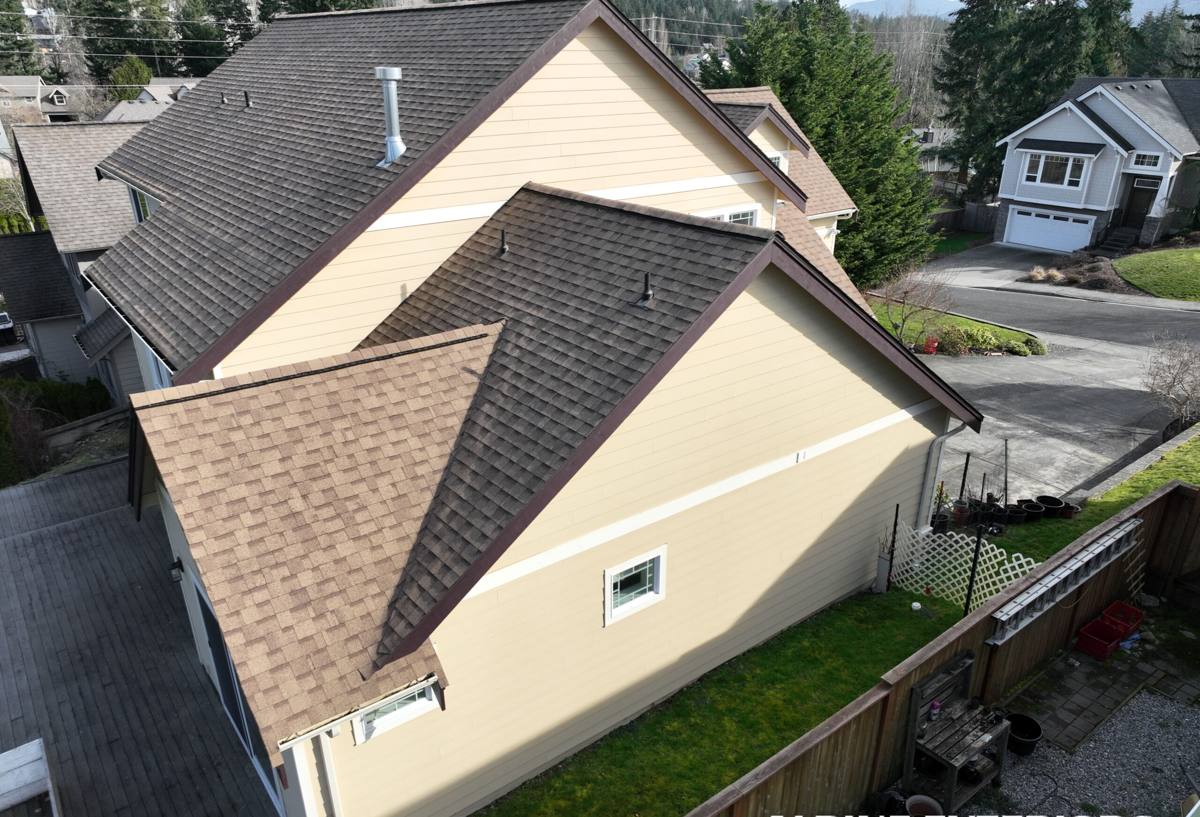
What South Hill's Climate Actually Does to a Deck
Salt Air and Slow Corrosion
Homes closer to the water pick up airborne salt that settles on exposed metal — fasteners, joist hangers, railing brackets, and post bases. It's a slow process, not a dramatic one, which is part of the problem: a deck built with standard hardware can look fine for a couple of years while corrosion is already working on the connections that hold it together underneath. By the time rust stains show up on the decking surface, the hardware itself is often further along than the stain suggests.
Driving Rain and Water That Doesn't Just Fall Straight Down
Whatcom County rain rarely falls straight down for long. Wind-driven rain gets pushed sideways into ledger connections, under railing caps, and into any gap that wasn't detailed to shed water. A deck built for a drier climate can get away with minimal flashing. A deck built here can't — the ledger board where the deck meets the house is the single most common point of failure we find on older decks, almost always because it was never properly flashed against wind-driven moisture in the first place.
Moss Season and Organic Growth
Moss and algae need shade, moisture, and time — South Hill offers all three for a good chunk of the year. On a deck, that growth doesn't just look bad. It holds moisture against the decking surface, turns walkways slippery, and on wood decking, accelerates rot in exactly the spots where boards already sit closest together. A deck designed with drainage and airflow in mind fights moss naturally. One that wasn't fights a losing battle every fall.
Choosing a Decking Material for This Climate
There's no single right answer here — it depends on your budget, how much upkeep you want to do, and how the deck will be used. What matters is picking with the local climate in mind rather than picking on looks alone.
| Material | Moisture Behavior | Moss/Mold Resistance | Maintenance | Typical Lifespan |
|---|---|---|---|---|
| Cedar | Naturally water-resistant, but needs sealing to stay that way | Moderate — needs regular cleaning | Annual cleaning, re-sealing every 2-3 years | 15-20 years with upkeep |
| Pressure-Treated Fir/Pine | Good if detailed and sealed correctly; prone to cupping if not | Moderate — needs regular cleaning | Sealing every 1-2 years, more frequent inspection | 15-20 years with upkeep |
| Composite | Doesn't absorb water like wood, but still needs drainage below it | High — resists organic growth on the surface | Occasional washing, no sealing or staining | 25-30 years |
Composite decking has become the default recommendation for a lot of South Hill homeowners simply because it removes the sealing-and-staining cycle that wood demands in a climate this wet. That said, we still install and repair a fair amount of wood decking for homeowners who prefer the look and are willing to keep up with maintenance — it's a legitimate choice as long as it's built and sealed correctly from the start. What we won't do is install any decking material without proper ventilation and drainage underneath it, because in this climate, that detail matters more than which material you choose.
What a Correctly Built Deck Actually Includes
A deck that lasts in this climate isn't about using fancier materials — it's about getting a handful of structural and moisture-management details right, every time, in every corner of the structure.
- Footings set below frost depth and sized for the actual load of the deck, not the minimum the framing lumber could technically support
- Ledger board flashing that directs water away from the house, not just a bead of caulk behind the board
- Stainless or hot-dip galvanized fasteners and hardware rated for ground contact and coastal exposure, not standard interior-grade coated screws
- Proper joist spacing for the decking material chosen — composite and wood often have different span requirements
- Consistent board gapping that allows water to drain through rather than pool on the surface
- Airflow beneath the deck so the substructure can dry out between rain events instead of staying damp for weeks
- Post bases set on proper footings, elevated off grade, not buried directly in soil or concrete
Skip any one of these and the deck will probably still stand for a few years. It just won't stand for the twenty-plus years it should, and the failures tend to show up in the structural connections you can't see from the top.
Railings, Stairs, and Code Requirements
Any deck built above a certain height needs a code-compliant guardrail, and stairs need proper rise, run, and handrail detailing. These aren't optional upgrades — they're safety requirements, and they're also where a lot of DIY and budget deck projects cut corners because railing and stair work is more time-consuming per linear foot than open decking. In a climate with regular rain and moss on walking surfaces, secure railings and stairs with consistent traction matter even more than they would somewhere dry. We build railings and stairs to meet current code requirements as a baseline, not as an upsell.
How We Approach a South Hill Deck Project
- Site visit and assessment. We look at grade, drainage, sun and shade exposure, and how the deck will tie into the house before talking materials.
- Design and material selection. We walk through the material comparison honestly — what fits your budget, your maintenance appetite, and how the space gets used.
- Permitting. New decks and significant rebuilds typically require a permit; we handle that process rather than leaving it to you to figure out.
- Framing and structural work. Footings, ledger flashing, and joist framing get built to hold up under this climate's rain and load, not just to pass a quick glance.
- Decking, railing, and stairs. Installed with the fastener and gapping details that matter for salt air and moisture, not generic installation.
- Final walkthrough. We go over maintenance expectations for whatever material you chose, so you know what upkeep actually looks like before winter arrives.
What a South Hill Deck Project Tends to Cost
Every deck is different, and we'd rather give you an honest range than a number that doesn't hold up once we're on-site. The factors below move the price more than anything else.
| Factor | Why It Matters |
|---|---|
| Size and footprint | Larger decks need more footings, framing, and decking material |
| Material choice | Composite typically costs more upfront than wood but less over time in maintenance |
| Height and stairs | Elevated decks need more substantial framing, railings, and stair structures |
| Site access and grade | Sloped or hard-to-access lots take longer to excavate and frame |
| Railing style | Cable, glass, and custom railing systems cost more than standard baluster railing |
| Existing structure removal | Tearing out and disposing of an old deck adds labor before rebuilding starts |
We'll walk your specific site and give you a real number based on these factors rather than a rough estimate over the phone.
Living With Moss Season: What Ongoing Maintenance Looks Like
Even a well-built deck needs some seasonal attention in this climate — the goal of good construction is to reduce that burden, not eliminate it entirely. A basic maintenance rhythm keeps most South Hill decks looking and performing well year-round:
- Sweep debris off the deck regularly in fall, before wet leaves and needles sit long enough to trap moisture
- Rinse or wash the surface at the start of moss season to knock back early growth before it takes hold
- Check railing connections and stair treads once a year for looseness — often the first sign of hardware corrosion
- Reseal wood decking on the manufacturer's recommended schedule, not just when it starts looking gray
- Keep gutters and downspouts near the deck clear so runoff isn't dumping extra water onto or under the structure
Why It Matters That We Already Work in South Hill
A crew that only occasionally works this far north tends to build decks the way they'd build them anywhere — standard hardware, standard flashing details, standard material assumptions. That approach isn't wrong everywhere. It's just not matched to what Whatcom County weather does to a deck over a decade of driving rain and salt air. Working South Hill regularly means we've seen which decks in this specific area are still solid after ten or fifteen years and which ones failed early, and we build accordingly — not based on a generic spec sheet, but based on what actually holds up here.
If you're planning a new deck or trying to figure out whether an existing one is worth repairing or replacing, we're happy to take a look and walk you through it honestly. Reach out for a free, no-pressure estimate using the form below.