 Chuckanut
 Window installation covers more ground than people expect — it's not just swapping a failing unit for a new one of the same size. In Columbia, we do straightforward replacements, but we also handle windows going into additions, openings changed during a remodel, and units replaced years before their expected lifespan because the local climate got to them early. Whatever the starting point, the job comes down to the same core question: does the new window get sealed into the wall correctly, or does it just look like a new window from the street while the same water paths that failed the old one are still open behind the trim. This page is about doing that correctly for a Columbia home specifically, not windows in general.
What Columbia Homes Need From a Window Installation
Columbia sits within Chuckanut's stretch of Whatcom County, where forested bluffs run down toward the water, and that setting shapes what a window installation here actually has to deal with. Homes range from older construction with original wood or early-generation vinyl windows to newer builds, and in both cases the windows are doing a harder job than the same units would be doing in a drier, more sheltered inland town. A window that's rated fine on paper can still underperform here if the installation around it — the flashing, the sealant, the sill detail — wasn't built for sustained coastal exposure.
That means a correct job in Columbia isn't just about picking a good window. It's about treating the opening itself as the part of the project most likely to determine whether the installation holds up. We see this play out constantly: a homeowner replaces windows expecting the upgrade to solve a draft or moisture problem, and it does for a while, but if the underlying flashing and sill work wasn't redone properly, the same failure shows up again in a few years, just hidden behind a newer frame.
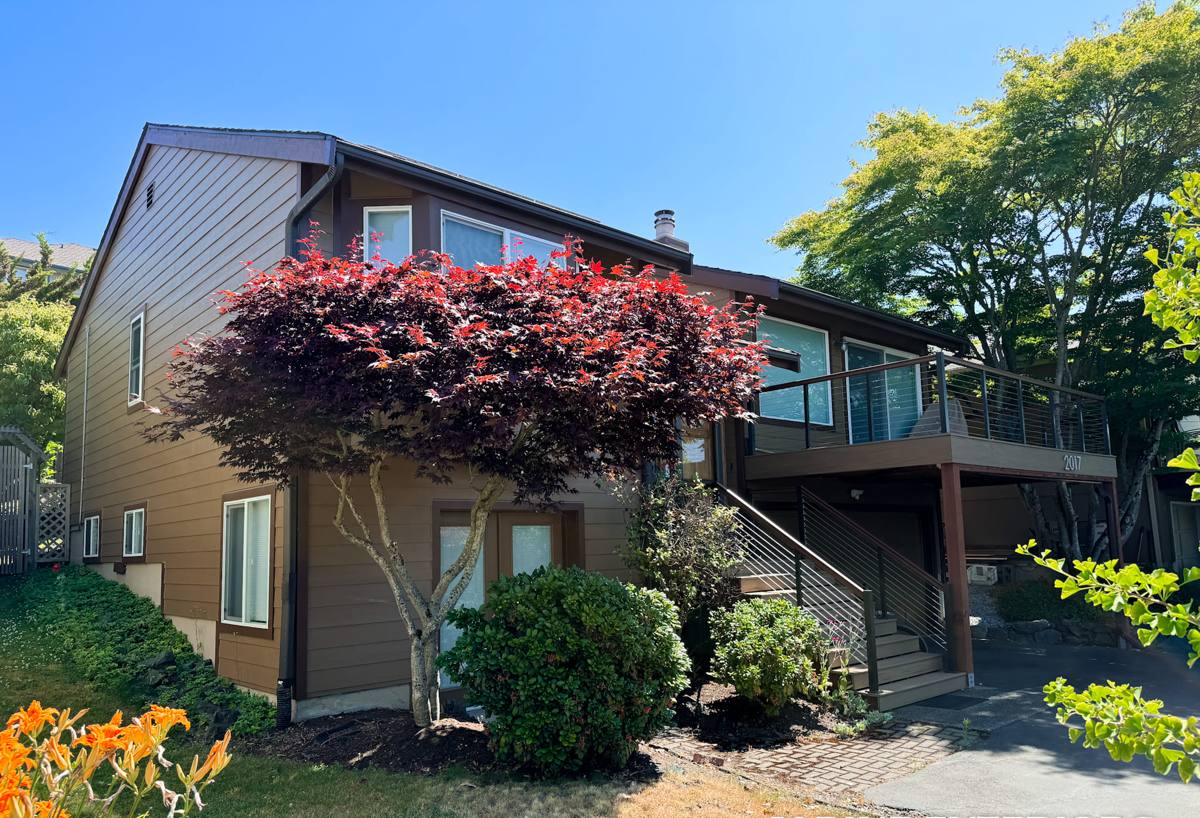
The Climate Toll: Salt Air, Driving Rain, and a Long Moss Season
Three things stack up against windows in this part of Whatcom County, and none of them are unique to Columbia, but together they hit harder here than in most inland markets. Salt-laden air off the water works on hardware, fasteners, and lower-grade frame components, speeding up corrosion in ways manufacturer literature written for a national market doesn't fully account for. Storms coming off the Pacific don't drop rain straight down — they drive it sideways into walls, which means water gets tested against seals and joints that would rarely see that kind of pressure in a calmer climate. And the forested, often-shaded lots common around here support a moss season that can run most of the year on north- and west-facing walls, holding moisture against sills and trim long after a storm has passed.
None of that means windows can't perform well in Columbia — plenty do, for decades. It means the installation has to be built with those three pressures in mind from the start, rather than following a generic install sequence and hoping the climate is forgiving. It usually isn't, for long.
Where the Damage Actually Shows Up First
When a window installation in this climate starts to fail, it's rarely the glass. It's the sill, where water collects if it's not sloped and flashed to shed outward. It's the corners, where flashing laps have to be sequenced correctly or wind-driven rain finds the seam. It's the hardware — hinges, locks, cranks — corroding faster than expected when salt air reaches components the manufacturer assumed would stay dry. And it's fogged glass between panes, a sign the seal in an insulated unit has broken down under sustained moisture and temperature swings. Catching these early, or better yet building the installation to avoid them, is most of what separates a window job that lasts from one that doesn't.
Full-Frame vs. Insert Replacement: Which Columbia Homes Need
Not every window replacement in Columbia calls for the same approach, and the choice matters more here than in a drier climate because it directly affects how much of the surrounding wall assembly gets rebuilt versus reused.
| Factor | Insert (Pocket) Replacement | Full-Frame Replacement |
|---|---|---|
| What it involves | New window fits inside the existing frame, which stays in place | Old frame is removed entirely down to the rough opening |
| Best fit | Existing frame is sound, square, and free of rot or water damage | Frame shows rot, water staining, or damage from long-term moisture exposure |
| Flashing access | Limited — existing flashing behind the old frame is largely reused | Full access to re-flash the opening from scratch, which matters most in wind-driven rain areas |
| Speed | Faster, less disruption to interior trim and exterior siding | Slower, more labor, but addresses hidden problems rather than covering them |
| Best for Columbia homes | Newer homes with sound original installation and no history of leaks | Older homes, or any window showing signs of past water intrusion at the sill or corners |
We won't default to whichever option is faster or cheaper without looking at the actual opening first. If there's any sign of past water intrusion — staining, soft wood, a musty smell near the window — we're going to recommend full-frame, because an insert replacement over a compromised opening just seals the problem back inside the wall.
What a Correct Window Installation Job Involves
Assessment and Opening Inspection
Before anything gets ordered, we look at the actual opening — not just the window being replaced. That means checking for soft or water-stained framing, confirming the opening is square and level, and looking at how the existing flashing was built, if any exists to evaluate. This step is what determines whether an insert replacement is appropriate or whether the job needs to go full-frame.
Flashing and Weatherproofing Sequence
This is the step that decides whether a window installation holds up in Columbia's climate. A correct sequence includes a sloped sill pan that sheds water outward instead of letting it sit against the frame, house wrap or flashing tape integrated in the right order — bottom, sides, then top, shingle-lapped so water always drains over the layer below it — and a head flashing detail that keeps wind-driven rain from working its way up and behind the window from above. Skipping or rushing this sequence is the single most common reason a newer window still leaks.
Setting, Shimming, and Insulating
The window gets set plumb, level, and square, shimmed at the manufacturer's specified points so the frame isn't stressed or bowed, then insulated around the perimeter with a product rated for window installation — not just packed with whatever's on hand. Over-compressing or under-filling that gap both cause problems, from air leaks to frame distortion, so this step gets checked, not assumed.
Trim and Finish Integration
Exterior trim and caulking are the last line of defense, not the first — they're a backup to correct flashing, not a substitute for it. We finish trim to match the surrounding siding and make sure the sealant used is rated for the movement and moisture this climate puts it through, since a bead of the wrong caulk is one of the fastest things to fail on a coastal wall.
A Quick Checklist Before You Hire
- Ask whether they're recommending insert or full-frame replacement, and why — not just quoting a price
- Confirm the flashing sequence they plan to use, especially the sill pan and head flashing details
- Ask what happens if they find rot or water damage once the old window comes out
- Get clarity on what's covered under warranty — the window unit and the installation labor are often separate
- Confirm they'll match trim and finish to the rest of your home's exterior
- Ask for a realistic timeline, especially if custom sizing is involved
Our Process, Start to Finish
- On-site assessment — we inspect the existing opening, check for water damage or rot, and evaluate whether insert or full-frame replacement is the right call
- Honest recommendation — we explain the reasoning behind the recommended approach, including trade-offs in cost and disruption
- Ordering — we confirm sizing and give a realistic timeline, longer for custom or oversized units
- Removal — the old window comes out carefully, and we address any hidden rot or flashing failure we find before moving forward
- Installation and flashing — the new unit is set, shimmed, insulated, and flashed in the correct sequence for this climate
- Trim and finish — exterior trim and sealant are completed to match the surrounding siding and hold up to the conditions here
What Drives the Cost
We won't quote a number without seeing the opening, but the factors that move price on a window installation in Columbia are consistent from job to job.
| Factor | Why It Matters |
|---|---|
| Insert vs. full-frame | Full-frame involves more labor and materials but addresses hidden damage insert replacement can't reach |
| Opening condition | Rot, past water intrusion, or out-of-square framing add repair work before the new window goes in |
| Frame material | Vinyl, fiberglass, and wood-clad units differ in upfront cost and long-term maintenance in this climate |
| Size and glass area | Larger units cost more to manufacture and take more labor to flash and set correctly |
| Number of units | A whole-house or multi-window project typically has better per-unit economics than a single replacement |
| Access and site conditions | Second-story windows or tight sightlines can add time and equipment costs |
On frame material specifically, this climate matters more than it does in a drier market. Vinyl and fiberglass frames generally hold up to sustained salt air and moisture with less ongoing upkeep than an all-wood exterior finish, which is why we lead with them on weather-facing walls. Wood-clad interiors with a durable exterior cladding can still be the right call when the interior look matters most and the exterior is properly protected — we'll walk through the honest trade-offs for your specific windows rather than defaulting to whatever's easiest to install.
Why Hiring a Crew That Already Works Columbia Matters
Manufacturer installation instructions are written for average, standard conditions — they're not written with Columbia's salt air, wind-driven rain, or moss season specifically in mind. A crew that regularly installs windows in this part of Whatcom County has already seen which shortcuts fail here that might hold up fine somewhere drier or more sheltered, and which details in the standard instructions are worth extra time even when they're technically optional.
That experience shows up in decisions that rarely get discussed upfront — how much a sill pan needs to slope given how this area's storms hit, how many courses of flashing tape a corner really needs, when a full-frame replacement is worth the extra cost versus an insert. Those are the calls that decide whether a window installation is still performing cleanly in fifteen years or showing drafts and staining in five.
Ready for a Free Estimate
If you're dealing with a window that's drafty, fogged, or showing water staining, or you're planning new windows for an addition or remodel in Columbia, it's worth having someone look at the actual opening before you start pricing units. We offer free, no-pressure estimates for window installation in Columbia and the surrounding Chuckanut area — use the form below to get a time on the schedule.