 Chuckanut
 Why Lake Samish Decks Wear Differently Than Decks in Town
A deck on Lake Samish lives a harder life than a deck three miles up the hill in town, even though the weather report says the same thing for both. The lake sits in a bowl of second-growth fir and cedar, which means most homes here get long stretches of shade, still air, and morning fog that burns off slowly. Add in the driving rain that rolls through Whatcom County off Puget Sound and the salt-tinged marine air that reaches inland along the Chuckanut corridor, and you get a deck that almost never gets a chance to fully dry out between storms.
That combination — shade, standing moisture, and a long moss season that can run from October well into May — is what separates a Lake Samish repair job from a generic deck fix. We're not just replacing a few gray boards. We're dealing with wood and hardware that have been sitting damp for months at a time, often in spots that don't see direct sun until well past noon, if at all.
Shade, Moisture, and Moss
Moss doesn't just make a deck slippery and ugly. It holds water against the decking surface and fastener heads, which is exactly the condition that starts rot and corrosion. On a sunnier, more exposed deck, moss gets knocked back by UV and airflow. On a shaded Lake Samish lot ringed by trees, it can get a foothold and never really leave unless someone deals with it on purpose.
Freeze-Thaw and Driving Rain
Whatcom County doesn't get brutal winters, but it does get repeated freeze-thaw cycles through the colder months, plus wind-driven rain that gets pushed sideways into ledger connections and stair stringers. Water that's already trapped by moss and shade freezes, expands wood fibers and fastener holes, thaws, and repeats. Over several seasons that's what turns a tight structure into a spongy one.
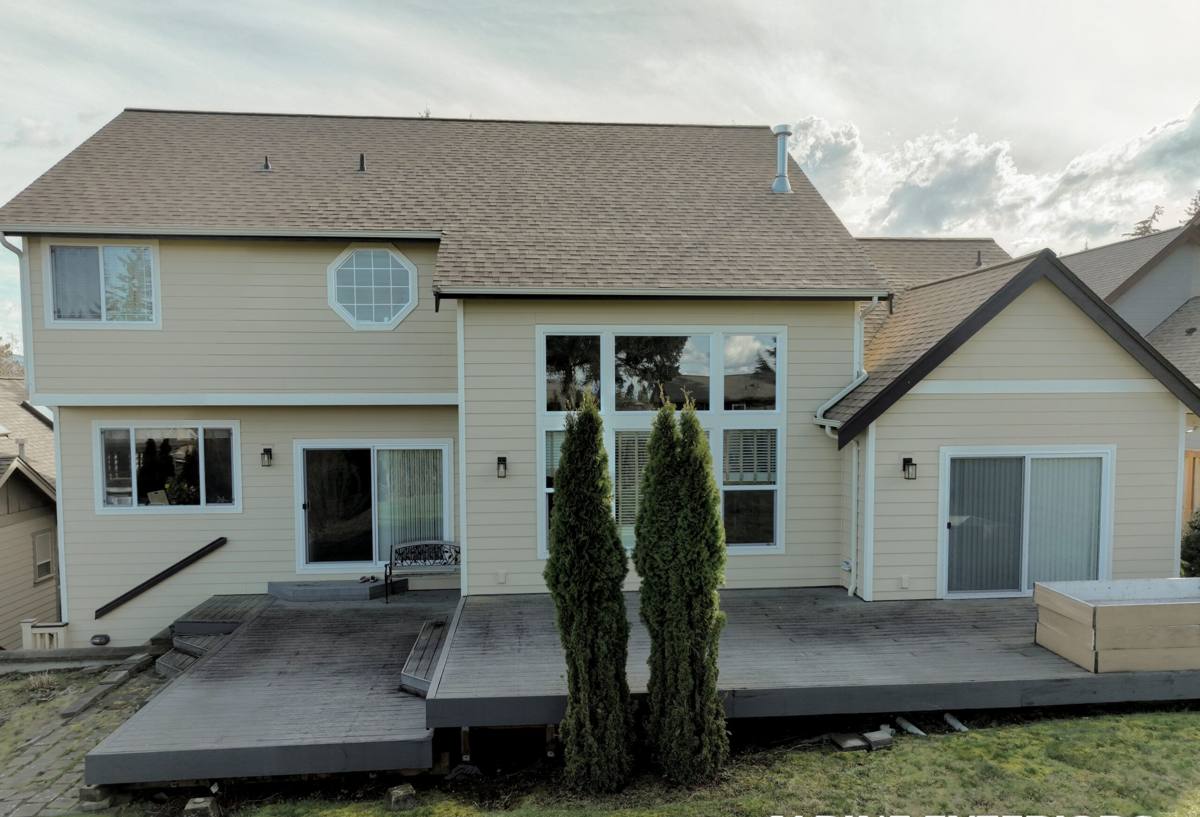
Signs Your Deck Needs Repair, Not Just a Wash
Homeowners around the lake often assume a deck problem is cosmetic — gray wood, some algae, a squeak here or there. Sometimes that's true. Sometimes it's the first visible sign of something underneath that's already failed. Part of an honest repair visit is telling you which one you're actually looking at.
- Deck boards that feel spongy, springy, or noticeably softer underfoot in one area than the rest
- A screwdriver or awl that sinks into a joist, post, or ledger board without much resistance
- Railings or stair rails that wobble, even slightly, when pushed
- Gaps opening up where the ledger board meets the house, or staining on the siding above it
- Fastener heads that are rusted, bleeding rust streaks, or popped up above the board surface
- Persistent moss or dark staining in the same spot every year, even after cleaning
- Stairs that feel slightly different in bounce or level from one tread to the next
Any one of these on its own might be minor. Two or three together, especially in a shaded or low-airflow section of the deck, usually means it's time for a real inspection rather than another round of pressure washing.
Where Lake Samish Decks Actually Fail First
Not every part of a deck ages at the same rate. On the decks we see around the lake, failure tends to show up in a predictable order, and knowing that order helps us target a repair instead of tearing into more of the structure than necessary.
Ledger Boards and Rim Joists
Where the deck attaches to the house is the single most important connection on the whole structure, and it's also the spot most exposed to water running off the roofline and siding. Flashing that was installed poorly — or not at all, on older decks — lets water track behind the ledger board for years before anyone notices.
Posts and Footings in Shaded Ground
Posts set in permanently damp, shaded soil rot from the ground up, often at the exact point where the post meets the footing. This is one of the harder failures to spot because the visible part of the post above the soil line can still look fine.
Stair Stringers
Stairs take direct rain, get less airflow than the open deck surface, and carry concentrated foot traffic. Stringers are frequently the first structural member to soften on an older deck.
Decking Boards on the Lake-Facing Side
Boards facing the water often get more direct rain exposure while the rest of the deck sits in tree shade, which creates uneven drying across the same structure — one section weathering years ahead of the rest.
Repair or Replace? What We Look At
Not every problem needs a full rebuild, and we're not going to tell you it does. The honest answer usually comes down to how much of the structural frame is still sound versus how much is the visible decking, railing, and stairs. Here's roughly how that breaks down:
| Condition Found | Typical Fix | Rough Cost Range |
|---|---|---|
| A few soft or damaged boards, frame is solid | Board-by-board replacement | A few hundred dollars |
| Loose railings, worn stair treads, surface moss | Railing and stair repair, deep clean | Several hundred to low thousands |
| Ledger flashing failure or localized joist rot | Targeted structural repair | Low to mid thousands |
| Rotted posts, multiple failed joists, sinking footings | Partial or full rebuild | Mid thousands and up |
These ranges are broad on purpose — actual cost depends on deck size, height off the ground, access, and how much of the frame is affected. We'd rather give you a realistic bracket up front and a firm number after we've actually looked at the structure than guess over the phone.
How We Handle a Deck Repair, Start to Finish
1. Walk the Whole Structure, Not Just the Complaint
If you call about a soft board near the stairs, we're still going to check the ledger connection, the posts, and the railings while we're there. Problems on Lake Samish decks rarely show up in only one place, and it costs you nothing extra to have the whole thing looked at while we're on site.
2. Probe Before We Quote
We physically test suspect wood — posts, joists, ledger, stringers — rather than eyeballing it from a distance. A board can look fine on the surface and still be compromised a half-inch in.
3. Fix the Cause, Not Just the Symptom
If moss and standing water caused the rot, replacing the wood without addressing drainage, flashing, or airflow just resets the clock on the same failure. We address the source where it's practical to do so.
4. Match Materials to the Rest of the Deck
Where we're doing a partial repair, we match board profile, fastener pattern, and finish as closely as possible so the repaired section doesn't stand out as an obvious patch.
5. Walk You Through What We Found
Before we close anything up, we show you what was underneath and explain why we did what we did. You should never have to take a repair on faith.
Materials That Hold Up Around the Lake
Material choice matters more here than it does on a dry, sunny lot in town, because everything is fighting extra moisture and shade. A few of the trade-offs we walk homeowners through:
Pressure-Treated Lumber
Still the most common and most affordable structural framing choice. It handles moisture reasonably well when properly sealed and maintained, but in a shaded, damp spot it needs more consistent upkeep than the same lumber would on a sunnier lot.
Cedar
Naturally resistant to rot and a good fit for the Pacific Northwest look, but it's a softer wood that shows wear from foot traffic and needs refinishing on a regular schedule to keep that resistance working for you.
Composite Decking
A reasonable option for the visible decking surface on a shaded lot since it doesn't absorb water the way wood does, which helps with the moss problem. It's a higher upfront cost, and it still needs a sound, dry structural frame underneath — composite decking doesn't fix a rotted joist, it just sits on top of it.
Fasteners and Hardware
This is where we don't cut corners. On a lake lot with marine-influenced moisture in the air, standard coated screws and connectors corrode faster than they would inland. We use stainless steel or properly rated hot-dip galvanized hardware for anything structural, even when it costs more than the hardware store standard — a repair is only as good as the fasteners holding it together.
Keeping Moss and Moisture From Coming Back
A repair that isn't followed by some basic maintenance is a repair you'll be paying for again in a few years. None of this is complicated, but it does need to actually happen on a schedule.
- Sweep needles and debris off the deck regularly, especially in fall — trapped organic matter holds moisture and feeds moss
- Clean moss off with a proper deck cleaner rather than just pressure washing, which can drive water into the wood grain and damage the surface
- Check gaps between boards each season to make sure they haven't closed up with debris, which blocks drainage and airflow underneath
- Reseal or refinish wood decking on the schedule the finish manufacturer recommends, not just when it looks faded
- Trim back overhanging branches where practical to get a little more sun and airflow onto the deck surface
- Look at the ledger flashing and post bases once a year — these are the spots that fail quietly
Why Hire a Crew That Already Works This Lake
Lake Samish isn't like a standard in-town lot. Access can be tight on narrow lake-access roads, staging materials takes some planning, and a lot of homes here were built or added onto in stages over the years, which means the deck framing underneath isn't always what the original permit says it should be. A crew that's already worked the area knows what that means before they show up, rather than figuring it out on the clock.
Permit requirements for deck repair and replacement can vary depending on the scope of work and where the property sits relative to the lake, so anything beyond straightforward board and railing repair is worth a quick check with Whatcom County before work starts. We handle that conversation as part of the job rather than leaving it for you to sort out.
We're a Chuckanut-based crew, which means Lake Samish is a normal part of our week, not a special trip. That matters when a repair needs a follow-up visit, a small adjustment after the first hard rain, or a quick look a year later to make sure everything's holding — we're already in the area.
If you've got a deck at Lake Samish that's showing some of these signs — or you just want an honest read on what shape it's really in — we're happy to come take a look. The estimate is free, there's no pressure attached to it, and you'll get a straight answer about whether you're looking at a simple repair or something bigger. Use the form below to get in touch.