 Chuckanut
 Siding Replacement in York: Built for This Climate, Not a Generic One
Homes in the York area sit inside a stretch of Whatcom County where the weather does real, cumulative damage to exterior walls. It isn't dramatic damage most of the year — no hailstorms, no hurricane warnings — it's slow, steady exposure that adds up over a decade or two: salt-laden air off the water, driving rain that comes in sideways during fall and winter storms, and a moss season that can stretch from October well into spring. Any siding material can look fine in a photo. What separates a good siding replacement from a bad one is how the wall performs during the fifteenth wet winter, not the first.
That's the lens we bring to every siding replacement in York: not "what looks good going up" but "what's still doing its job when it's been rained on, salted, and shaded under moss growth for years without anyone touching it."
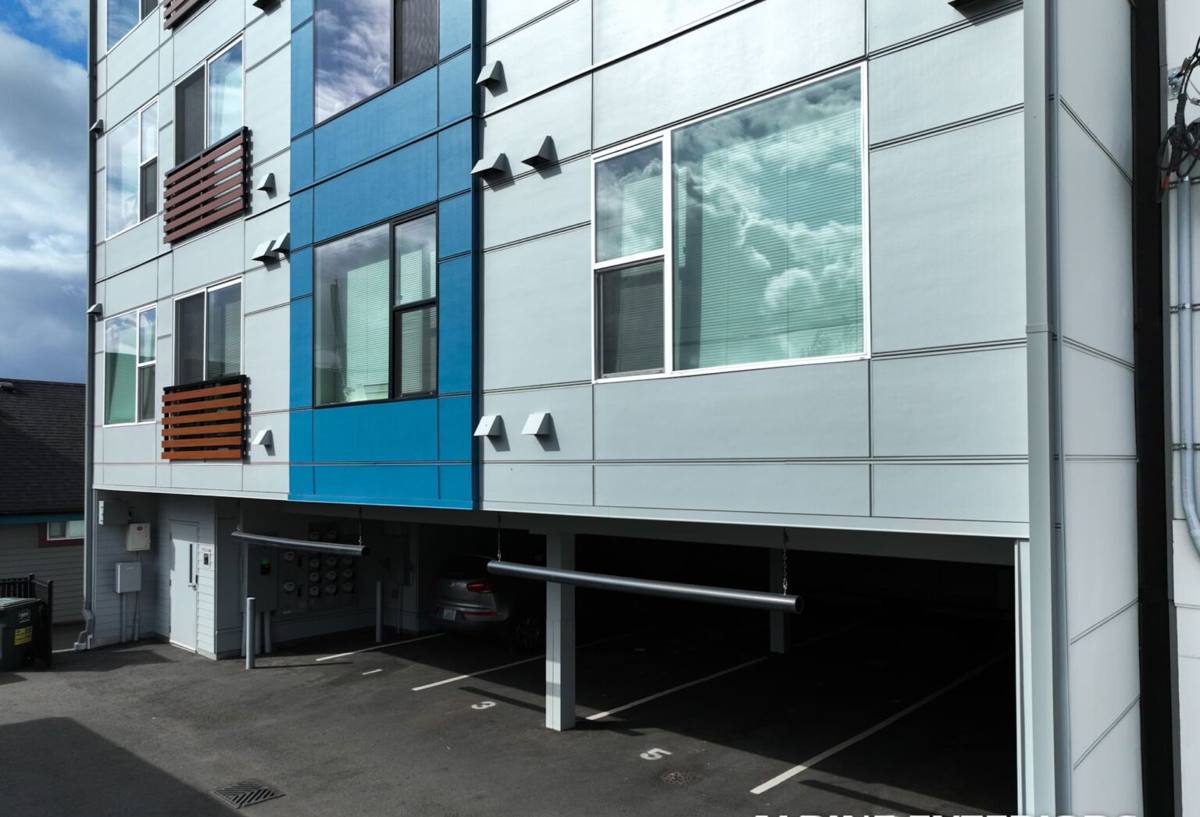
Signs a York Home Needs Replacement, Not Another Repair
Plenty of siding problems can be patched. Replacement becomes the right call when the damage is no longer isolated — when it's telling you something about the whole wall system, not just one board.
- Soft or spongy spots when you press on the siding, especially near the bottom courses or under windows
- Paint that won't hold anymore, even after a fresh coat — a sign moisture is moving through the material
- Persistent dark green or black staining that comes back within a season of cleaning
- Visible cupping, warping, or delamination, particularly common on older wood-based or engineered wood products
- Gaps opening up at seams, corners, or trim that weren't there a few years ago
- Rising energy bills alongside drafts near exterior walls, suggesting the water-resistive barrier behind the siding has failed
If you're seeing two or more of these at once, it usually means the underlying moisture-management layer — not just the visible siding — needs attention, and that's a replacement conversation rather than a caulk-and-paint one.
What a Correct Siding Replacement Actually Involves
A siding replacement done right is mostly about what you can't see once the new boards go up. The visible siding is the last five percent of the job.
Tear-off and inspection
Old siding comes off in sections so the sheathing underneath can be inspected as we go, rather than all at once at the end. In a climate that drives moisture into walls the way ours does, this is where hidden rot, soft sheathing, or failed old house wrap gets found — and it needs to be dealt with before anything new goes on, not covered over.
Water-resistive barrier and flashing
A modern weather-resistive barrier gets installed correctly lapped, sealed, and integrated with window and door flashing so that any water that gets past the siding has a clear path back out, rather than a place to pool. This detail matters more in a marine climate with sustained wind-driven rain than almost anything else in the job.
Fastening and spacing to spec
Fiber cement siding has manufacturer-specified nailing patterns, fastener types, and gap tolerances for a reason — get them wrong and you get problems years later that look like a product failure but are actually an installation failure. We install to the manufacturer's published specifications, not shortcuts that speed up the crew.
Trim, caulking, and paint system
Corners, trim boards, and factory-finish touch-ups are where a lot of long-term failures start if they're rushed. We use compatible sealants and finish products so the whole system — siding, trim, and joints — ages together instead of one part failing early and dragging the rest down with it.
Why We Install Only James Hardie Fiber Cement
We made a decision years ago to install one siding system and install it well, rather than offer every product on the market and hope each one holds up equally. James Hardie fiber cement is non-combustible, engineered specifically for high-moisture climates in its HZ5 product line, and finished at the factory with a baked-on ColorPlus finish that holds color far better than field-applied paint on wood or engineered wood products. It also carries a strong, transferable manufacturer warranty that follows the house if it's sold.
That doesn't mean every other siding product is bad — vinyl, LP SmartSide, and other engineered materials all have legitimate uses. It means that for the specific combination of salt air, sustained rain exposure, and moss growth that homes in this part of Whatcom County deal with year after year, fiber cement is the material we're willing to stand behind with our own installation work.
Comparing Siding Materials for a Marine Climate
| Material | Moisture Behavior | Maintenance | Typical Longevity |
|---|---|---|---|
| James Hardie fiber cement | Non-combustible; engineered HZ5 line for wet, moderate climates | Occasional cleaning; factory finish resists fading | Multiple decades with correct install |
| Vinyl siding | Can warp or gap in temperature swings; water can get behind panels | Low, but repainting isn't possible if faded | Variable; shorter in harsh exposure |
| Engineered wood (e.g. LP SmartSide) | Wood-based core is moisture-sensitive at cut edges and joints | Requires diligent caulk and paint upkeep | Depends heavily on installation and upkeep |
| Cedar or primed spruce | Natural wood; absorbs and releases moisture constantly | Highest — regular staining/painting required | Shorter without frequent maintenance |
This table is a simplification — every material can perform well or poorly depending on the specific install — but it reflects why we standardized on one product rather than offering all of them.
Our Process, Start to Finish
- On-site assessment. We walk the exterior, check for soft sheathing, look at flashing details around windows and rooflines, and talk through what we're seeing with the homeowner directly.
- Written estimate. A clear scope of work — tear-off, sheathing repair allowances if needed, water-resistive barrier, flashing, siding, trim, and finish — so there are no surprises mid-project.
- Permitting. Siding replacement in Whatcom County typically requires permit coordination depending on scope; we handle that step rather than leaving it to the homeowner.
- Tear-off in sections. Old siding comes off in manageable areas so the house isn't fully exposed to weather at once and so sheathing gets inspected as we go.
- Repair and barrier installation. Any damaged sheathing gets replaced before the new water-resistive barrier and flashing go in.
- Hardie installation. Siding, trim, and joints installed to manufacturer spec, with attention to fastening pattern and clearances.
- Final walkthrough. We go over the finished exterior with the homeowner before calling the job complete.
What Affects the Cost of a Siding Replacement in York
Every home is different, so we don't quote sight-unseen — but the same handful of factors drive cost on almost every job in this area.
| Cost Factor | Why It Matters |
|---|---|
| Amount of sheathing repair needed | Hidden rot found during tear-off adds material and labor before new siding can go on |
| House size and complexity | Dormers, multiple stories, and cut-up wall shapes take more time than a simple rectangular footprint |
| Trim and detail work | Corner boards, window trim, and fascia detailing add labor beyond flat wall panels |
| Access | Tight lot lines, slopes, or limited staging area near the water can slow crew logistics |
| Product line and finish | Different Hardie profiles and ColorPlus finish options carry different material costs |
We'd rather walk a property and give a real number than throw out a broad range that doesn't hold up once we're actually on the wall.
Why a Crew That Already Works in York Matters
Siding work in this part of Whatcom County isn't the same job as siding work somewhere dry and inland. A crew that mostly installs in other climates doesn't have the same instinct for where water actually collects on a wall exposed to sustained coastal wind and rain, or how much moss buildup to expect on north-facing walls under tree cover. Working repeatedly in and around York means we've already seen how homes here age — which details hold up and which ones don't — and we bring that directly into how we flash a window or space a fastener, not just how we talk about the job.
There's also a practical side: a local crew is easier to reach if a question comes up two years after the job, and we're not disappearing to the next region once the invoice is paid.
Living With Your New Siding: Maintenance in a Marine Climate
Fiber cement is low-maintenance, not no-maintenance. A rinse-down once or twice a year — more often on shaded, north-facing walls where moss and mildew take hold fastest — keeps the ColorPlus finish looking like new for far longer. Keep an eye on caulked joints and touch up any that show separation, and make sure gutters and downspouts are actually moving water away from the base of the walls rather than letting it splash back against the bottom courses, which is one of the most common causes of premature wear we see on older homes in this area regardless of siding material.
If you're weighing a siding replacement for a home in York, we're glad to come take a look and talk through what we're actually seeing on your walls — no pressure, no sales script, just a straight assessment and a written estimate. Use the form below to request a free estimate.