 Chuckanut
 Why Deck Replacement Looks Different for Larrabee Homes
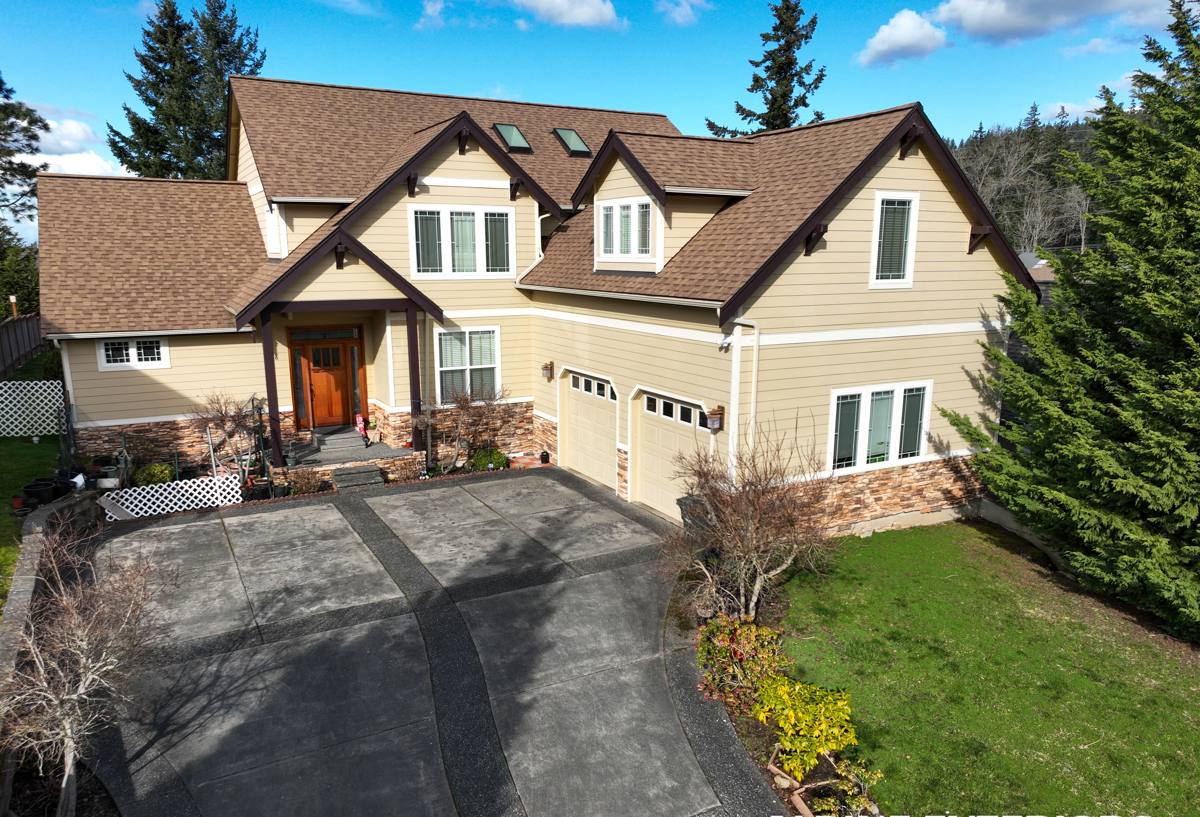
Homes along the Chuckanut Drive corridor near Larrabee, tucked into wooded bluffs above the saltwater shoreline, sit in one of the more demanding spots in Whatcom County for anything built to live outside year-round. A deck out here isn't just weathering ordinary Pacific Northwest rain — it's dealing with salt-laden air drifting up off the water, storms that drive rain sideways instead of straight down, and tree cover dense enough that a lot of decks never get a real chance to dry out between wet spells. That combination wears down an aging deck faster than homeowners moving from a drier, more open part of the county usually expect.
Deck replacement is a different job than a repair or a patch. It's a chance to correct whatever the original build got wrong for this specific site — undersized framing, the wrong fastener grade, a decking material that was never going to hold up under this much shade and moisture — instead of maintaining those same weak points indefinitely. This page covers what a Larrabee-area deck actually needs, when replacement makes more sense than continued repair, and how our process works for a full deck replacement in this part of Whatcom County.
The Site Itself Works Against an Aging Deck
Elevation and grade along this stretch mean a lot of decks sit on sloped lots with limited sun exposure, shaded by mature trees for much of the day. That shade is part of what makes the area appealing to live in, but it also means slower drying times after every storm, more sustained dampness against the framing, and steady conditions for moss and mildew to take hold on horizontal surfaces. A deck built without those site conditions in mind tends to show its age well before a comparable deck on an open, sun-exposed lot would.
When Replacement Makes More Sense Than Repair
Not every aging deck needs a full replacement, and we won't tell you it does just because that's the bigger job. But there's a point where continued repair stops being the economical choice, especially once damage has moved from the visible decking into the structure underneath.
| What You're Seeing | Usually Repairable | Usually Points to Replacement |
|---|---|---|
| A handful of gray, cupped, or splintering boards | Yes, if framing underneath is sound | Only if it's isolated to a small area |
| Soft or spongy decking across multiple sections | Rarely | Yes — usually signals framing moisture damage |
| Ledger board separating or showing rot at the house connection | No | Yes — this is a structural priority regardless of the rest of the deck |
| Railing posts that flex, or hardware rusted through | Sometimes, if isolated | Often, if it's showing up in multiple locations |
| Persistent moss and staining that keeps returning after cleaning | Yes, as ongoing maintenance | Only if it's a sign the surface material was never suited to this shade level |
| Deck is original to a home 20+ years old with no major upgrades | Case by case | Often, once several systems are aging together |
The honest version of this decision usually comes down to the framing, not the surface. Worn decking on solid joists and posts is a strong repair candidate. Moisture-compromised framing, a failing ledger connection, or corrosion showing up in more than one spot on the structure is generally where repair stops making financial sense and replacement becomes the more straightforward path.
What Larrabee's Climate Demands From a New Deck
Salt Air and Fastener Corrosion
Homes close to the water along this shoreline take in a steady dose of salt-laden air, and it works on exposed metal continuously, not just during storms. Standard fasteners, joist hangers, and railing hardware lose holding strength to corrosion well before that corrosion is obvious from the top of the deck, which is part of why a deck can look fine and still have a real hardware problem underneath.
Driving Rain and Wind
Storms coming through this stretch of Whatcom County don't just fall straight down — wind pushes rain sideways, up under railings, and into ledger connections and board gaps that a calm-weather deck design doesn't account for. That's especially true on exposed or elevated sections of a lot where there's less tree cover to break the wind before it reaches the house.
A Moss Season That Runs Most of the Year
The same tree cover that shades Larrabee-area homes also keeps deck surfaces damp far longer after a storm than an open lot would see. Moss and mildew take hold quickly on horizontal surfaces under those conditions, and any decking material with meaningful surface porosity gives it something to grip. This is the single biggest reason a deck built without shade and moisture in mind underperforms out here compared to how it might on a drier, sunnier property.
Choosing the Right Decking Material for This Site
Material choice matters more on a shaded, water-adjacent lot near Larrabee than it does on an average inland property, because the performance gap between a well-suited product and a poorly-suited one shows up faster here. Most homeowners are choosing between wood, capped composite, and cellular PVC.
| Material | Salt Air & Moisture Handling | Moss Resistance in Shade | Ongoing Upkeep |
|---|---|---|---|
| Cellular PVC | Excellent — no wood fiber to absorb moisture | Strong, smooth non-porous surface | Occasional washing |
| Capped composite | Strong — cap layer resists moisture and staining | Good on most product lines | Occasional washing |
| Uncapped composite | Moderate — some absorption at exposed fiber | Fair; more prone to buildup in shade | Periodic cleaning |
| Cedar | Moderate — needs sealing to hold up | Fair, and only when sealed on schedule | Regular oiling or sealing |
| Pressure-treated wood | Weak against sustained salt exposure over time | Poor without regular treatment | Regular sealing or staining |
On a lot with heavy shade, we generally steer homeowners away from uncapped wood products unless they're genuinely committed to a sealing schedule, since shade removes the one thing — sun exposure — that would otherwise help a wood surface dry out and resist moss between storms. Capped composite and PVC give up some of wood's natural look but hold up with far less intervention on a site like this.
What a Correctly Built Replacement Deck Involves
Tearing out an old deck and installing a new one over the same footprint is only part of the job. A replacement done right for this site addresses the structural and moisture details that likely contributed to the old deck's decline in the first place:
- New ledger board flashing at the house connection, since this is the single most common serious failure point on an older deck and worth doing correctly on every replacement
- Framing sized and spaced for the specific decking product's span rating, not reused from whatever the original deck happened to use
- Stainless steel or coastal-grade corrosion-resistant fasteners throughout, given the salt exposure this site sees
- Correct board gapping for drainage and material movement, since a shaded deck depends on airflow between boards more than a sunny one does
- Grading and ventilation underneath the deck so moisture doesn't sit against the framing between storms
- Railing and post attachment sized appropriately for the site's wind exposure, particularly on elevated or partially open sections
- Hidden fastener systems on the decking surface where the product supports it, reducing exposed metal on top
Skip any of these and a new deck can still look good for a season or two before the same underlying issues start over. Getting them right the first time is most of what separates a replacement that lasts from one that needs attention again in a few years.
How Our Process Works
We start with a site visit to look at the existing deck's condition, the framing underneath if it's exposed, drainage and grade around the footprint, and how much shade and moisture the specific location deals with through the day and season. That assessment tells us whether repair is genuinely still on the table or whether we're talking replacement, and we'll say so plainly either way.
Permitting for a deck replacement in this part of Whatcom County generally follows standard setback, structural, and elevation requirements, and on a sloped or wooded lot near the water it can also involve grading or drainage considerations — we handle that as part of the job. Once permitted, tear-out comes first, followed by framing sized and fastened for the site's actual exposure, then the decking surface, railing, and any stairs. We finish with a walkthrough covering what the material you chose actually needs going forward, adjusted for the shade and moisture level this specific lot sees.
Maintaining a New Deck in This Environment
- Rinse the deck surface periodically to clear salt residue and organic buildup before it works into the material or cap layer
- Keep gaps between boards clear of leaves and needles, which accumulate faster under tree cover and hold moisture against the surface
- Check railing hardware once a year for early corrosion or loosening, especially heading into the wet season
- Trim back branches where practical to let more light and airflow reach the deck surface
- Address any soft framing or standing water underneath right away — that's a structural issue, not a cosmetic one, and it won't improve on its own
Why It Matters That We Already Work Larrabee
A crew that mostly builds decks in drier, more open parts of Whatcom County can still do competent work here, but a Larrabee-area replacement has variables that come up more often on this kind of lot than elsewhere in the county — corrosion-grade fastener requirements from sustained salt exposure, moss pressure that runs longer under heavy tree cover, and sloped or wooded sites where drainage and access take more planning than a flat, open yard. Working this stretch regularly means we're not guessing at those requirements on your project. We've seen which decking materials actually hold up against this specific combination of salt air, driving rain, and shade, and which framing and fastener details are worth the extra time rather than an unnecessary upsell.
That familiarity also shows up in the smaller judgment calls — how to orient a new deck for the light a particular lot actually gets, or giving a straight answer about what your site realistically needs to last versus what's just an extra line item.
Get a Straight Answer About Your Deck
Whether your current deck needs a full replacement or you're not sure yet whether repair could still work, we're happy to walk the site and lay out the options plainly. Reach out below for a free, no-pressure estimate.